

Understanding Your Rights When Injury Strikes
Personal injury legal matters arise when you suffer harm—physical, emotional, or reputational—because of someone else’s actions or negligence. This area of law, also known as tort law, exists to make injured people “whole” again through financial compensation.
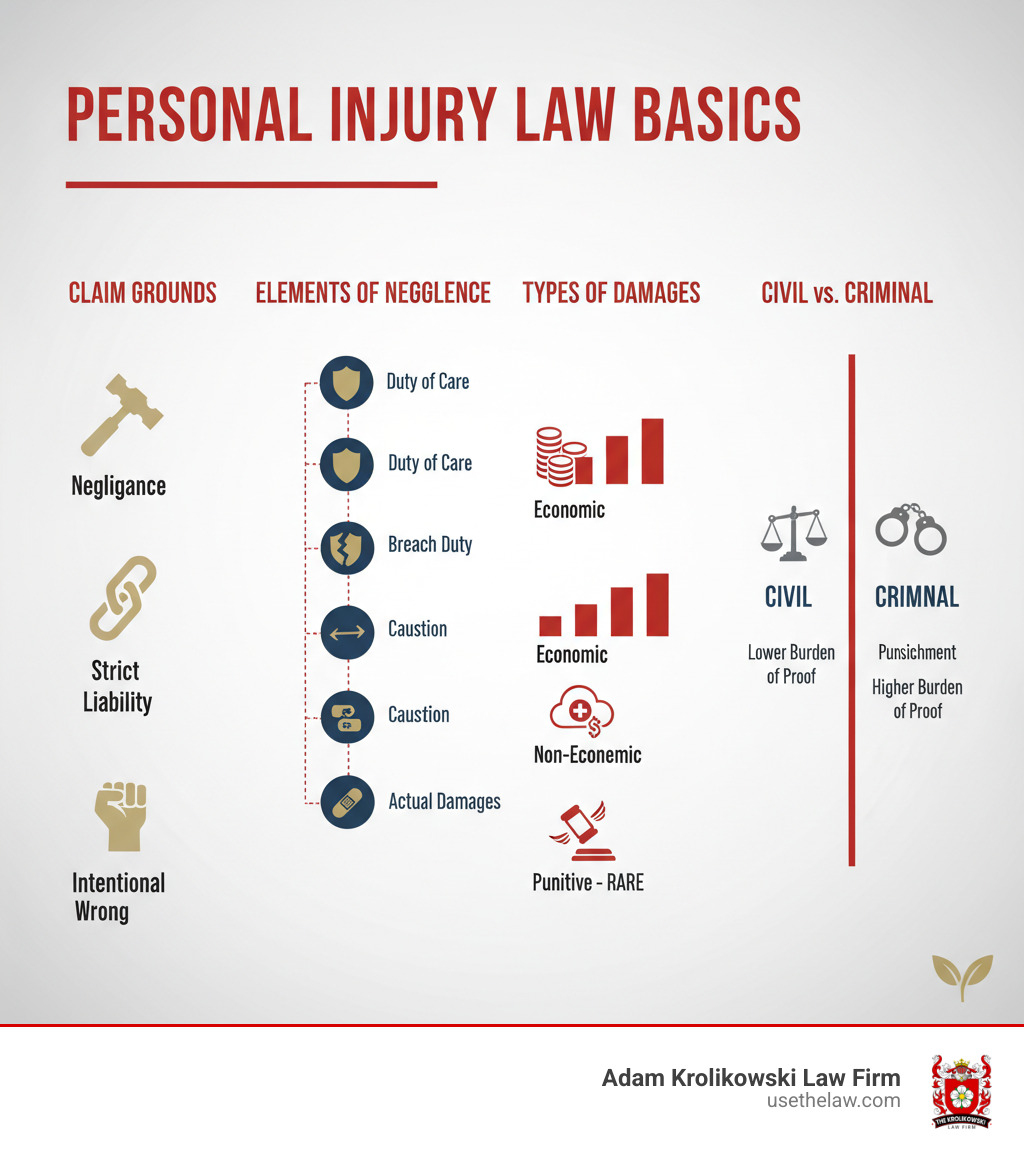
Quick Overview: Key Personal Injury Legal Concepts
- What it is: A civil legal matter (not criminal) where you seek compensation for harm caused by another party
- Main grounds for claims: Negligence (most common), strict liability, or intentional wrongs
- What you must prove: Duty of care, breach of that duty, causation, and actual damages
- Types of compensation: Economic damages (medical bills, lost wages), non-economic damages (pain and suffering), and rarely, punitive damages
- Time limits: Statutes of limitations vary by state, typically 1-3 years from the date of injury
- How attorneys work: Most operate on contingency fees—you pay nothing unless you win
Personal injury legal cases are one of the most common types of civil lawsuits. According to federal court data, personal injury cases made up 25.5% of all cases filed in U.S. federal district courts in 2015.
The history of personal injury law shows a dramatic increase that came with the Industrial Revolution, when powerful machinery and new transportation methods created far more opportunities for serious injuries.
Unlike criminal law, which aims to punish wrongdoers, personal injury legal law focuses on compensating victims. The burden of proof is also lower—you must prove your case by a “preponderance of the evidence” (more likely than not), rather than “beyond a reasonable doubt.”
Relevant articles related to personal injury legal:
What is Personal Injury Law?
When someone else’s actions—or lack of action—cause you harm, personal injury legal law gives you a path to seek compensation. This area of law comes from tort law, which simply means “a civil wrong.” The word “tort” comes from the Latin “tortum,” meaning “twisted” or “wrong.”
The law recognizes several types of harm that deserve compensation.
Bodily harm is the most obvious type, including injuries like fractures, burns, or traumatic brain injuries that come with medical bills and time away from work.
But injuries are not always visible. Emotional distress—such as anxiety, depression, or PTSD following a traumatic event—is also a real and compensable harm.
Reputational harm, or defamation, is another form of personal injury. When someone’s lies damage your standing in the community or cost you business, you can seek compensation.
While property damage often accompanies an accident, personal injury legal law focuses primarily on harm to you as a person, not just your belongings.
A personal injury case is a civil matter between private parties. You are not trying to send anyone to prison; you are seeking compensation to cover your losses. The burden of proof is much lower than in a criminal case: you only need to show that your version of events is more likely true than not—what lawyers call a “preponderance of the evidence.”
Personal Injury vs. No-Fault Systems
Most personal injury legal cases in the U.S. follow an “at-fault” system, meaning you must prove someone else was at fault to get compensation from them or their insurance company.
However, some states and specific claims use “no-fault” systems to provide faster compensation without determining blame. The trade-off is that these systems often limit or block your ability to file a lawsuit.
Workers’ compensation is a common no-fault system. If you get hurt at work, it covers your medical bills and a portion of your lost wages, regardless of who caused the accident. In exchange, you typically give up your right to sue your employer for negligence.
Personal Injury Protection (PIP) auto insurance works similarly in certain states. After a car accident, your own PIP coverage pays for your initial medical expenses and lost wages. These states often prevent you from filing a personal injury legal lawsuit against the at-fault driver unless your injuries meet a certain severity threshold, such as being “serious” or “permanent.” The Insurance Information Institute provides helpful background on no-fault auto insurance.
An extreme example is New Zealand’s Accident Compensation Corporation (ACC), which provides universal coverage for accidental injuries but, in return, eliminates nearly all personal injury lawsuits.
While no-fault systems streamline compensation, they can reduce accountability. Traditional personal injury legal law not only compensates victims but also holds negligent parties responsible, which encourages safer behavior.
Navigating the World of Personal Injury Legal Claims in Santa Ana
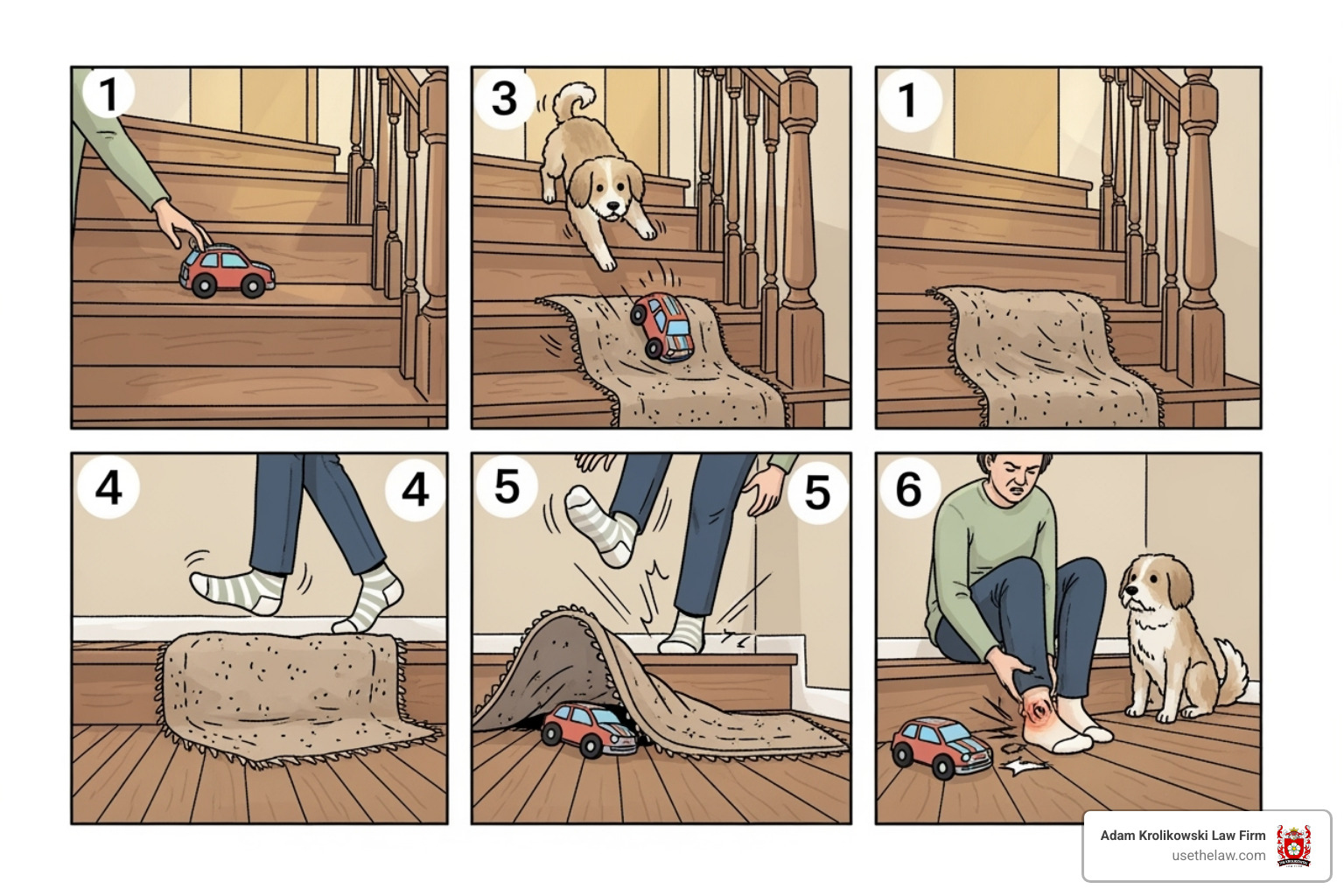
Not every injury leads to a lawsuit. A valid personal injury legal claim must be based on one of three legal grounds: negligence, strict liability, or intentional wrongs.
Negligence is the foundation of most personal injury cases. It occurs when someone fails to act with reasonable care, and their carelessness causes you harm. Examples include a distracted driver or a property owner who ignores a safety hazard.
Strict liability holds a person or company responsible even if they weren’t careless. This usually applies to injuries caused by inherently dangerous activities (like using explosives), dangerous animals, or defective products. A car manufacturer could be liable for faulty brakes that cause a crash, regardless of how careful they were.
Intentional wrongs (or intentional torts) involve deliberate harmful acts like assault or battery. In these cases, you can pursue both a civil lawsuit for damages and criminal charges.
The Four Elements of Negligence
Since most personal injury legal claims are based on negligence, you must prove four essential elements. As contributing attorney Lauren E. Davis explains, “There are four elements to a negligence claim: Duty, breach, causation, and damages.” Cornell Law School’s definition of Negligence provides more context.
1. Duty of Care: The defendant owed you a legal obligation to act with a certain level of care. For example, drivers have a duty to operate their vehicles safely, and store owners have a duty to keep their premises reasonably safe.
2. Breach of Duty: The defendant failed to meet that legal obligation. A driver who speeds or a doctor who provides substandard care has likely breached their duty.
3. Causation: The defendant’s breach directly led to your injuries. This requires proving both cause-in-fact (the injury wouldn’t have happened “but for” the breach) and proximate cause (the injury was a foreseeable result of the breach).
4. Damages: You suffered actual harm as a result of the injury. This includes financial losses like medical bills and non-financial harm like pain and suffering.
The ‘Reasonable Person’ Standard and Foreseeability
To determine if someone breached their duty, courts use the ‘reasonable person’ standard. This is an objective test that asks: what would a reasonably careful person have done in the same situation? This standard is flexible; a trained professional like a surgeon is held to a higher standard of care than an average person.
Foreseeability is a key concept in negligence. A defendant is generally only responsible for harms they could have reasonably predicted. If a restaurant mops a floor and doesn’t put up a “wet floor” sign, it is foreseeable that a customer might slip and fall.
Common Causes and Types of Claims
Personal injury legal cases arise from many situations, but some are more common than others.
- Car accidents: A leading cause of injury claims, including those involving distracted driving, speeding, pedestrians, and bicyclists.
- Slip and fall cases: Part of “premises liability,” these happen when unsafe conditions on someone’s property (like wet floors or icy sidewalks) cause an injury.
- Medical malpractice: When a healthcare provider’s care falls below the professional standard and causes harm, such as through misdiagnosis or surgical errors.
- Product liability: Holds manufacturers and sellers responsible when a defective product (due to design, manufacturing, or warning flaws) causes injury.
- Workplace accidents: While often covered by workers’ compensation, a personal injury legal claim may be possible against a negligent third party, like a contractor or equipment manufacturer.
- Wrongful death: A claim brought by surviving family members when a loved one’s death is caused by someone’s negligence or wrongful act.
- Other claims: Include dog bites, nursing home abuse, toxic torts (exposure to hazardous substances), and assault and battery.
Calculating Compensation: What is Your Claim Worth?

After an injury, a key question is, “What is my case worth?” The goal of a personal injury legal claim is to provide compensation, or “damages,” to restore you to the position you were in before the accident. Damages fall into three main categories.
Economic Damages (Special Damages)
These are the tangible, calculable financial losses from your injury. They are proven with bills, receipts, and financial records. They include:
- Medical expenses: All costs for past and future medical care, from ambulance rides and surgery to physical therapy and medications.
- Lost wages and earning capacity: Compensation for the income you lost while recovering and for any reduction in your ability to earn money in the future.
- Property damage: The cost to repair or replace your vehicle or other personal property damaged in the incident.
- Out-of-pocket expenses: Other costs incurred due to your injury, such as travel for medical appointments or hiring household help.
Non-Economic Damages (General Damages)
These compensate you for intangible losses that don’t have a specific price tag but significantly impact your life. They include:
- Pain and suffering: For the physical pain and discomfort you have endured and may continue to endure.
- Emotional distress: For the psychological impact of the injury, such as anxiety, depression, fear, or PTSD.
- Loss of enjoyment of life: For the inability to participate in hobbies, activities, and life experiences you once enjoyed.
- Loss of consortium: For the negative impact the injury has had on a spouse’s relationship with the injured person, including loss of companionship and intimacy.
As noted in legal scholarship like “Pain and Suffering, Noneconomic Damages, and the Goals of Tort Law,” these damages are essential for making victims whole, even though they are difficult to quantify.
Punitive Damages
Unlike other damages, punitive damages are not meant to compensate the victim. Their purpose is to punish the wrongdoer for particularly outrageous conduct and to deter similar behavior in the future.
Courts award punitive damages only in rare cases involving gross negligence, malice, or a conscious disregard for the safety of others. For example, they might be awarded against a company that knowingly sold a dangerous product. Because the standard is so high, punitive damages are not common in personal injury legal cases.
From Injury to Resolution: The Legal Process

Understanding the steps of a personal injury legal claim can help you regain a sense of control after an accident. The actions you take immediately after an injury are critical.
First Steps to Take After an Injury
- Get Medical Care Immediately. Your health is the priority. A prompt medical evaluation also creates a crucial record linking your injuries to the incident. Some serious injuries, like concussions, may not have immediate symptoms.
- Report the Incident. Call the police after a car accident or notify a manager or supervisor after a fall at a store or at work. An official report documents when and where the injury occurred.
- Document Everything. If possible, take photos and videos of the scene, your injuries, and any property damage. Get contact information from any witnesses. Write down everything you remember about the incident as soon as you can.
- Be Cautious with Insurance Adjusters. Avoid giving a recorded statement or accepting a quick settlement from the other party’s insurer without legal advice. Their goal is to minimize their company’s payout, and they may use your words against you.
- Preserve Evidence. Keep any damaged clothing, defective products, or other physical evidence related to your injury. This tangible proof can be vital to your case.
Statutes of Limitations and Why They Matter
You cannot wait forever to file a personal injury legal lawsuit. Every state has a statute of limitations, which is a strict deadline for filing a case in court. If you miss this deadline, you lose your right to seek compensation, no matter how strong your case is.
These deadlines vary by state and claim type. For example, the “Statute of Limitations – gettingstartedselfhelp” in California is generally two years for most personal injury claims. However, claims against government entities can have much shorter deadlines, sometimes only six months. While some exceptions exist (like the “findy rule” for injuries not finded right away), it is critical to act quickly to protect your rights.
Working with a Personal Injury Attorney in Santa Ana
Navigating a personal injury legal claim alone while recovering can be overwhelming. An attorney can manage the process for you.
Most personal injury attorneys offer a free initial consultation to discuss your case. If you decide to hire them, they typically work on a contingency fee basis. This means you pay no attorney’s fees unless you win your case. The fee is a percentage of the settlement or award recovered for you.
An attorney will investigate your case, gather evidence, handle all communications with insurance companies, and negotiate for a fair settlement. If a fair offer isn’t made, they will be prepared to take your case to trial. As attorney Lauren E. Davis notes, an attorney can help you weigh the practical considerations of whether pursuing a claim makes sense for your situation.
With over 25 years of experience, the Adam Krolikowski Law Firm has built a reputation on taking complex cases. For clients in Orange County, Santa Ana, or Los Angeles, we provide dedicated representation during this difficult time.
Frequently Asked Questions about Personal Injury Legal Matters
After years of working with injured people, we’ve noticed certain questions come up often. Here are answers to some of the most common ones.
What do I have to prove to win my personal injury legal case?
For most cases, which are based on negligence, you must prove four elements: that the other party owed you a duty of care, they breached that duty, their breach caused your injuries, and you suffered actual damages. The standard of proof is a “preponderance of the evidence,” meaning it’s more likely than not that your claim is true.
For other claims, like strict liability for a defective product, you must prove the product was defective and that the defect caused your injury, but you don’t necessarily need to prove the manufacturer was careless.
How long will my personal injury legal case take?
There is no set timeline. A simple case with clear fault might resolve in a few months, while a complex case with serious injuries or a dispute over liability could take several years. Factors that influence the timeline include:
- The severity of your injuries: It is often best to wait until you reach “maximum medical improvement” to fully understand the extent of your damages.
- Disputes over fault: If the other party denies responsibility, more time will be needed for investigation.
- The court’s schedule: If a lawsuit is filed, the court’s calendar can create delays.
Most cases settle through negotiation, which is typically faster than going to trial. However, our priority is to secure the full compensation you deserve, even if it takes longer.
Is my settlement money taxable?
This is an important question. Generally, compensation for physical injuries or physical sickness is not taxable under federal law. This includes money you receive for medical expenses and for pain and suffering related to your physical injuries.
However, some portions of a settlement are typically taxable. Compensation for lost wages is usually taxable because the original income would have been. Punitive damages are almost always considered taxable income. Any interest earned on a settlement is also taxable.
Because the tax rules can be complex, we always recommend consulting with a tax professional about your specific situation. You can also review the IRS guidelines on settlements and taxability for more information.
Conclusion
Understanding personal injury legal matters is about knowing your rights when life takes an unexpected turn. Grasping concepts like negligence, damages, and statutes of limitations empowers you to take control during a difficult time.
The legal journey from injury to resolution can feel overwhelming, but our system exists to hold negligent parties accountable and help injured people get the compensation they need to move forward. Every case is different, but the goal remains the same: securing fair compensation for the harm you’ve suffered.
You don’t have to steer this journey alone.
For those in Orange County, Santa Ana, or Los Angeles facing complex personal injury legal situations, the Adam Krolikowski Law Firm stands ready to help. With over 25 years of experience, we’ve built our reputation on taking on the challenging cases that others might turn away. We are committed to fighting for the justice you deserve.
If you’ve been injured, learn more about how an Orange County personal injury lawyer can help.
