

Understanding Your Rights: Breast Implant Product Liability
Breast implant product liability holds manufacturers and other parties legally responsible when defective implants cause harm. This area of law focuses on the safety of the product itself, not the medical procedure.
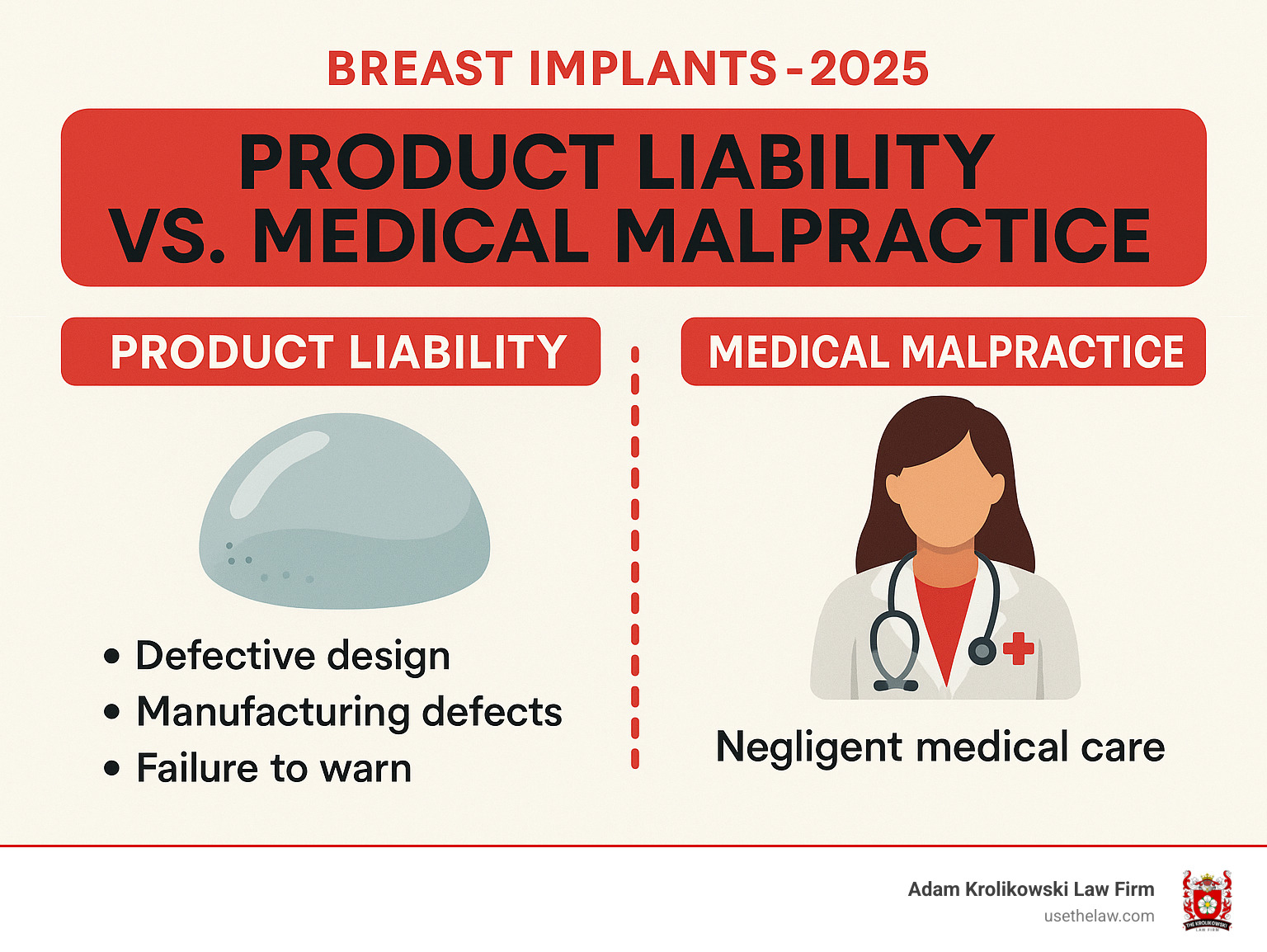
A product liability claim may arise from:
- Defective Design: The implant’s design is inherently unsafe.
- Manufacturing Defects: A flaw occurred during production, making a specific unit or batch dangerous.
- Failure to Warn: The manufacturer did not provide adequate information about known risks.
This is distinct from medical malpractice, which involves a healthcare provider’s negligence.
Millions of women choose breast implants for cosmetic or reconstructive reasons, trusting the device and the professionals who place it. When a defective implant breaks that trust, the consequences can be devastating, leading to physical pain, emotional distress, and significant financial burdens.
If a faulty breast implant has harmed you or a loved one, it is important to understand your legal options. This guide explains the complexities of breast implant product liability and the steps you can take to seek justice.
Health Risks and Complications Linked to Breast Implants
While designed with care, no medical device is risk-free, and breast implants can lead to complications, discomfort, or serious health issues.

Common problems include implant rupture or silicone leakage, which can cause swelling and changes in breast shape. Another frequent issue is capsular contracture, where tight scar tissue forms around the implant, causing the breast to feel hard and look distorted.
Beyond localized issues, some individuals report a wide range of systemic symptoms often called Breast Implant Illness (BII). While not yet an official medical diagnosis, BII encompasses debilitating symptoms like chronic fatigue, joint pain, cognitive issues or “brain fog,” and recurring infections. Understanding these potential complications is a vital first step in advocating for your health and legal rights. For a deeper dive into more serious health implications, you can explore scientific research on BIA-ALCL and find more info about BIA-ALCL claims.
Cancers Associated with Breast Implants
While not linked to an increased risk of typical breast cancer, implants have been associated with rare cancers.
The most well-known is Breast Implant-Associated Anaplastic Large Cell Lymphoma (BIA-ALCL), a rare non-Hodgkin’s lymphoma that develops in the scar tissue around the implant. By 2020, the FDA had identified over 700 cases of BIA-ALCL, resulting in 36 deaths. The risk is primarily linked to textured implants, with a significant number of cases involving Allergan’s ‘Biocell’ implants, which led to the Allergan Biocell recall.
In 2022, the FDA also warned about other rare cancers, including squamous cell carcinoma (SCC) and other lymphomas, found in the scar tissue around implants. Though extremely rare, these findings highlight the importance of being fully informed. We encourage you to consult the FDA information on implant risks for comprehensive details.
The FDA’s Role and Historical Context
The regulation of breast implants has a complex history. After their introduction in 1962, safety concerns grew, leading to a wave of 1990s litigation that forced manufacturer Dow Corning into bankruptcy. This legal pressure culminated in a $4.25 billion class-action settlement.
In 1991, the FDA banned silicone gel implants for cosmetic use due to insufficient safety data. They remained off the market until 2006, when they were re-approved with increased safety requirements. A more recent major event was the July 2019 global recall of Allergan’s Biocell textured implants due to the BIA-ALCL risk. This history shows that issues with defective implants are a recurring challenge requiring ongoing vigilance and, when necessary, legal action. For more information, especially about surgical errors which can sometimes add to problems with defective products, you can find resources here.
Understanding Breast Implant Product Liability and Your Legal Options
When a medical device like a breast implant causes harm due to a flaw, the legal concept of breast implant product liability holds the companies that make and sell them accountable. This area of law ensures that medical devices are safe and perform as promised. You can find a detailed definition of product liability from a trusted legal source.
While breast implants are regulated medical devices, defects can still occur in their design, manufacturing, or marketing. In these cases, the manufacturer is typically the primary party held responsible. Want to learn more about defective products and what your rights are? We’ve got more info on defective products for you.

Key Elements of a Breast Implant Product Liability Claim
A successful claim does not require proving the company intended to cause harm. Instead, it focuses on showing the implant had a flaw that led to your injury. There are three main types of defects:
- Design Defects: The implant’s fundamental design is inherently unsafe.
- Manufacturing Defects: An error during production made a specific batch of implants unsafe.
- Marketing Defects (Failure to Warn): The company failed to adequately inform doctors and patients about known risks, such as the link between textured implants and BIA-ALCL.
For any claim, we must also show the implant was in an Unreasonably Dangerous Condition when it left the manufacturer and that this condition was the direct Causation of Injury. This requires careful documentation, including medical records and product information.
Distinguishing Product Liability from Medical Malpractice
It is crucial to differentiate between product liability and medical malpractice, as they involve different parties and legal standards.
- Product Liability focuses on the implant itself. The claim is against the manufacturer for a defect in the product’s design, production, or warnings.
- Medical Malpractice focuses on the actions of a healthcare provider (surgeon, hospital). A claim may arise from errors like improper surgical technique, incorrect implant size or placement, or failure to inform you of surgical risks.
Generally, a surgeon is not considered the ‘seller’ for product liability purposes. Their responsibility falls under the medical standard of care. However, a medical facility could be liable if it knowingly provided faulty implants or was negligent in its operations. Navigating these cases can be complex. While you might think about suing your plastic surgeon, most lawsuits involving defective breast implants are brought against the manufacturer. If you want to learn even more about medical malpractice or understand your rights if implants are too large, we have detailed information available for you.
The Process of Filing a Defective Breast Implant Lawsuit
Pursuing a lawsuit can feel daunting, but our goal is to clarify the process and support you at every step.
The process generally begins with a legal consultation to discuss your experience and assess your case. A critical factor is the statute of limitations, a legal deadline for filing a lawsuit that varies by state. Missing this deadline can prevent you from seeking compensation, so acting promptly is essential.
Next is the evidence-gathering phase, where we collect medical records, diagnostic tests, and specific product information about your implants. Depending on the situation, your case might proceed as an individual lawsuit, which focuses solely on your unique damages, or as part of a class action lawsuit, which groups together many individuals with similar injuries from the same product. We then enter settlement negotiations to secure fair compensation. If a fair agreement cannot be reached, we are prepared to represent you in court.

Who Can Be Held Liable for Your Injuries?
Identifying the responsible parties is a key step. Liability can extend to several entities:
- Implant Manufacturers: As the designers and producers, they bear the primary responsibility for product safety.
- Plastic Surgeons: They may be liable under medical malpractice for negligence, such as using a known defective implant or performing the surgery incorrectly.
- Medical Facilities (Hospitals or Clinics): A facility could be responsible if it supplied faulty implants or was negligent in its staffing or sterilization procedures.
- Distributors or Sellers: Less commonly, parties in the supply chain could be liable if their actions contributed to the defect.
Our job is to investigate the details to identify all potentially responsible parties. For more information on how we work to prove negligence, you can find resources here.
Types of Legal Claims in a Lawsuit
Several legal claims can be used in a breast implant product liability lawsuit:
- Strict Liability: This claim holds a manufacturer responsible for injuries caused by an unreasonably dangerous product, regardless of their intent or negligence.
- Negligence: This focuses on the manufacturer’s failure to exercise reasonable care in designing, testing, or manufacturing the implant.
- Failure to Warn: This claim applies when a manufacturer knew or should have known about risks but failed to provide adequate warnings to doctors or patients.
- Breach of Warranty: This occurs if the implant fails to meet explicit promises made by the manufacturer (Express Warranty) or is not fit for its basic purpose (Implied Warranty).
- Fraud: This serious claim requires proving the manufacturer knowingly misrepresented the implant’s safety to deceive consumers, which can lead to punitive damages. For example, if you’re dealing with breast implant size disputes, that could involve a breach of contract related to expectations.
We build your case using the strongest claims applicable to your situation to maximize your chances of recovery.
Compensation in a Breast Implant Product Liability Lawsuit
If you’ve been harmed by a defective breast implant, a lawsuit aims to help you recover financially for the full impact on your life. Compensation in a breast implant product liability case is designed to cover both tangible and intangible losses.
Economic Damages
These are for your quantifiable financial losses, including:
- Medical Bills: Costs for corrective surgeries (removal or revision), doctor visits, tests, and medication, both past and future.
- Lost Wages: Income lost due to being unable to work.
- Loss of Earning Capacity: Compensation if your ability to earn a living is permanently affected.
Non-Economic Damages
These compensate for non-financial harms that deeply affect your life:
- Pain and Suffering: For the physical pain and discomfort you have endured.
- Emotional Distress: For anxiety, depression, and other psychological impacts.
- Loss of Quality of Life: For the inability to enjoy hobbies, social activities, or intimacy.
- Loss of Consortium: For the negative impact on your relationship with your spouse.
Punitive Damages
In cases where a manufacturer’s conduct was particularly reckless or deceitful, punitive damages may be awarded. These are not to compensate you for a loss but to punish the company and deter similar behavior from others. A past breast implant case in 1991, for example, resulted in a $6.5 million punitive damages award.
We work to ensure your claim reflects the total cost of what you have been through. For a deeper dive into how we approach compensation, you can visit our page on compensation for damages.
Frequently Asked Questions about Breast Implant Lawsuits
It is natural to have questions when considering legal action. Here are answers to some common concerns about breast implant lawsuits.
What is the difference between a class action and an individual lawsuit?
An individual lawsuit is a claim you file directly against the responsible company, typically the manufacturer. The case focuses entirely on your specific injuries and damages, giving you direct control over the legal strategy and any settlement.
A class action lawsuit combines many people who have suffered similar harm from the same product into a single case. One or more individuals represent the entire group, and any settlement or award is divided among all class members. While class actions can be efficient for widespread issues, individual payouts may be smaller, and you have less control over the outcome.
How long do I have to file a breast implant lawsuit?
The deadline to file, known as the statute of limitations, varies by state. Missing this deadline can permanently bar you from seeking compensation. For product liability claims, the clock often starts not on the date of your surgery, but on the date you finded, or reasonably should have finded, your injury and its link to the defective implant. This is called the “findy rule.” Because implant-related health issues can take years to appear, it is critical to act quickly to protect your rights.
What should I do if I suspect my breast implant is defective?
If you believe your implant is defective, taking prompt, decisive action is crucial for your health and any potential legal claim.
- Seek Medical Attention: Your health is the top priority. See your doctor or a board-certified plastic surgeon immediately to discuss your symptoms.
- Document Everything: Keep detailed records of all medical visits, diagnoses, treatments, and costs. Save any product information you have about your implants.
- Preserve Evidence: If your implant is removed, it is vital to ensure it is preserved. It can be crucial evidence.
- Avoid Signing Waivers: Do not sign any documents or accept offers from the manufacturer or their insurer without first consulting an attorney.
- Contact an Attorney: Reach out to a law firm as soon as you suspect a problem. We can explain your legal options, protect you from missing deadlines, and guide you through the process.
Navigating Your Claim and Seeking Justice
The journey of dealing with a defective breast implant can be overwhelming, affecting your health, emotional well-being, and finances. We’ve covered the health risks, from implant rupture to serious concerns like BIA-ALCL, and the legal options available through breast implant product liability.
Understanding your rights is the first step toward holding manufacturers and other responsible parties accountable. A successful claim can provide compensation not just for medical bills and lost wages, but also for your pain, suffering, and emotional distress. These cases are complex, requiring a thorough understanding of medical facts and legal procedures to achieve the justice you deserve.
At Adam Krolikowski Law Firm, we understand the profound impact these injuries can have. With over 25 years of experience, we handle challenging cases that other attorneys might not. We provide dedicated legal help for accident victims in Santa Ana, CA, and Los Angeles, CA, serving individuals across Orange County and beyond.
If you believe a defective breast implant has harmed you, do not hesitate to act. Taking the first step is critical. We can help you understand your rights and explore your options for seeking the financial recovery and peace of mind you deserve. You can Find a Breast Implant Lawyer in Orange County by connecting with us today.
Contact Us
Practice Areas
Recent Articles
- « Previous
- 1
- 2
- 3
- Next »