

Why Dog Bite Victim Support is Critical for Recovery
Dog bite victim support includes the medical, legal, and emotional resources available to help survivors recover after an attack. Here’s what victims need to know:
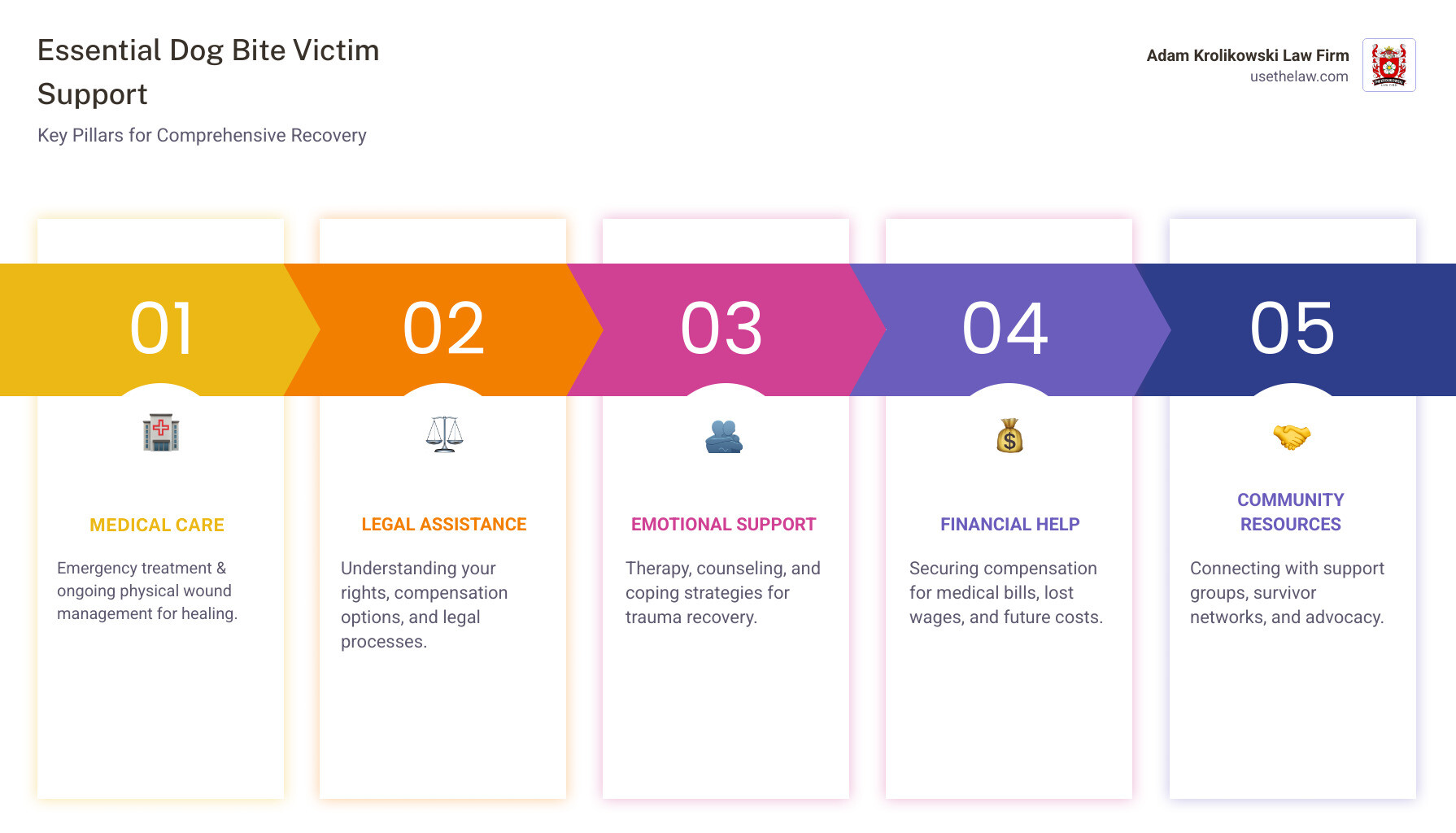
Essential Support Categories:
- Medical care – Emergency treatment and ongoing wound management
- Legal assistance – Understanding your rights and compensation options
- Emotional support – Therapy and counseling for trauma recovery
- Financial help – Compensation for medical bills and lost wages
- Community resources – Support groups and survivor networks
Dog attacks affect nearly 4.5 million Americans annually, with about 1,000 people requiring emergency care daily for serious bite injuries. These incidents are life-altering events that can leave victims with physical injuries, emotional scars, and significant financial burdens.
The aftermath of a dog bite brings unexpected challenges. Victims may face mounting medical bills, time away from work, and lasting psychological effects like anxiety or PTSD. Children, who make up about half of all dog bite victims, are particularly vulnerable to long-term emotional trauma.
Recovery requires a comprehensive approach. From the moment an attack occurs, victims need access to proper medical care, legal guidance, and emotional support. Understanding your rights and available resources can make the difference between struggling alone and finding a clear path forward.
The journey from trauma to triumph is possible with the right support network.
After the Attack: Immediate Steps for Dog Bite Victims
The moments after a dog bite can be overwhelming. Knowing what to do next can make a significant difference in your recovery and protect your rights.
Dog bite victim support begins immediately after an attack. Taking the right steps can prevent complications and set you up for a successful recovery.
1. Ensure Your Immediate Safety and Health
First, get yourself to safety. Move away from the dog to a secure location. Once safe, assess your injuries.
For severe injuries like deep wounds, heavy bleeding, or suspected broken bones, call 911 immediately. Professional medical help can be life-saving.
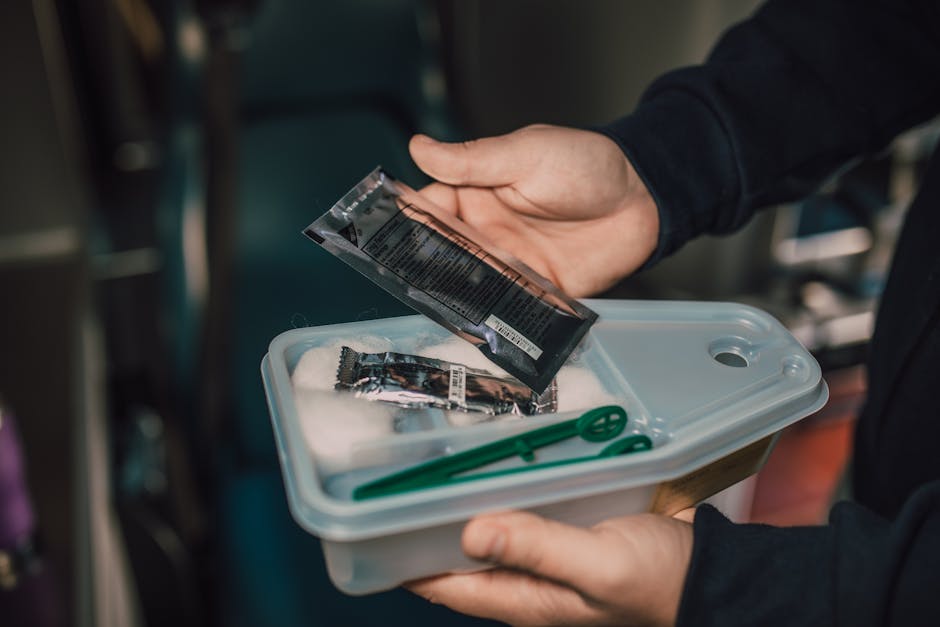
For less severe wounds, act quickly. Clean the wound thoroughly with soap and water. Dog mouths carry bacteria, and cleaning can prevent infection.
If you’re bleeding, apply steady pressure with a clean cloth or bandage to control it.
Even if a bite looks minor, seek medical attention right away. Go to an emergency room, urgent care, or call your doctor. A medical professional can properly clean the wound, determine if you need stitches or antibiotics, and check your tetanus shot status. The risk of infection from bacteria like Staph and Pasteurella is serious and can cause major complications if untreated.
2. Gather Crucial Information
While your health is the priority, collecting information at the scene is valuable for your recovery and any future legal action.
If it’s safe, identify the dog and its owner. Get their name, address, and phone number.
Ask for proof of the dog’s rabies vaccination. If the owner cannot provide this, you might need a series of expensive rabies shots that can exceed $3,000.
Take photos of your injuries immediately. Include torn clothing, bruises, and wounds. Continue taking photos as you heal to create a visual record for medical and legal purposes. Also, photograph the location of the attack.
If there were witnesses, get their contact information. Their accounts can provide crucial details you may have missed.
3. Report the Incident to Authorities
Report the bite to create an official record, even for minor injuries. This protects you and potential future victims.
Contact your local animal control office to report the incident. They can investigate, quarantine the dog if necessary, and take steps to prevent future attacks.
Depending on the severity, you might also file a police report for additional documentation.
This official record not only helps your case but also provides help to the next victim by creating a paper trail for authorities.
Law enforcement and animal control officers investigate incidents, enforce local animal laws, and work to keep the community safe. They can also classify dangerous dogs, which affects future legal proceedings.
Taking these steps ensures you get the dog bite victim support you need to heal and helps prevent others from having the same experience.
The Path to Recovery: Physical and Emotional Healing

Recovery from a dog bite is a journey that involves your body, mind, and daily routines. Understanding the path ahead can help you prepare.
Healing takes time, and it’s okay to have good and bad days. Dog bite victim support during this phase means being patient and recognizing that both physical and emotional healing deserve attention.
Addressing the Physical Aftermath
The physical recovery can be complex. Puncture wounds may look small but can be deep, allowing bacteria into your tissues. Lacerations often need stitches and careful monitoring.
Some injuries are less visible. Nerve damage can affect movement or sensation, sometimes permanently, which is frustrating when it involves hands or the face.
Scarring is another reality. While some scars fade, others may require reconstructive surgery to restore function and appearance.
Infection is a serious concern. Between 10% and 15% of victims develop infections from bacteria like Staph and Pasteurella. Watch for warning signs like increasing redness, severe pain, swelling, pus, or fever, and seek immediate medical attention if they appear.
If the dog’s vaccination status was unknown, rabies concerns add worry and expense, with treatment potentially exceeding $3,000.
Coping with the Emotional Trauma
The emotional aftermath can be intense and persistent. These reactions are normal responses to trauma.
Post-Traumatic Stress Disorder (PTSD) affects many survivors, especially children. Symptoms can include flashbacks, being constantly on edge, and nightmares that disrupt sleep.
Anxiety can extend beyond a fear of dogs. Some develop cynophobia (an intense fear of all dogs), while others may hesitate to go outside or visit parks.
Building a strong support system is crucial. Your friends and family can provide emotional comfort and practical help.
Seeking therapy for trauma provides tools to process the event and develop coping strategies. A mental health professional who understands trauma can guide you through techniques to reduce anxiety and rebuild confidence.
Healing isn’t linear. Progress and setbacks are normal parts of the recovery journey. Give yourself permission to heal at your own pace.
Navigating Your Legal Rights and Financial Compensation

While recovering from a dog bite, you shouldn’t have to worry about bills and legal paperwork. However, these incidents often create significant financial burdens. Understanding your legal rights is a critical part of your recovery.
In California, the law is generally on your side. The state operates under strict liability for dog bites, meaning the owner is typically responsible for damages, even if the dog had no prior history of aggression. Unlike states with a “one-bite rule,” you don’t have to prove the owner knew their dog was dangerous.
There are exceptions. If you were trespassing or provoked the dog, the case can be more complicated. Even then, you may have options under negligence laws. California’s statute of limitations generally gives you two years from the injury date to file a claim.
Understanding Your Right to Compensation
The financial impact of a dog bite can be staggering. Dog bite victim support includes understanding what compensation you deserve for long-term effects.
Medical expenses are a major part of a claim, covering everything from the ambulance ride to future physical therapy, reconstructive surgery, and psychological counseling.
Lost wages can add up if you’re unable to work. This also includes loss of earning capacity if the injury prevents you from returning to your previous job.
The emotional toll is also compensable. Pain and suffering acknowledges impacts that can’t be measured in dollars, like sleepless nights or anxiety. Emotional distress covers the psychological aftermath, such as PTSD or cynophobia (fear of dogs). Even property damage, like torn clothing, can be included.
Finding and Choosing Legal Representation
Dog bite cases can get complicated, especially when dealing with insurance companies. An attorney can help you steer the system and fight for a fair settlement.
Why you may need a lawyer: Insurance adjusters aim to minimize payouts. They might argue you provoked the dog or that your injuries aren’t serious. An attorney knows how to counter these tactics.
How to find a local attorney: Search online for personal injury lawyers in your area. For those in Southern California, a search for a Dog Bite Lawyer in Orange County California can connect you with attorneys who know local laws.
The role of a Dog Bite Accident Attorney is comprehensive. They investigate, gather evidence, interview witnesses, and negotiate with insurance companies so you can focus on healing.
Most personal injury attorneys work on contingency fees, meaning you pay nothing upfront. Their fee is a percentage of your settlement or award. Initial consultations are usually free.
Questions to ask during a consultation include their experience with similar cases, their approach to negotiations, and the expected timeline. A good attorney will be transparent about your case’s strengths and weaknesses.
The right attorney becomes part of your support system, helping you steer the legal and emotional challenges of seeking justice.
Comprehensive Dog Bite Victim Support and Resources

After a dog attack, you don’t have to face the road to recovery alone. Dog bite victim support comes in many forms, and finding the right combination of emotional, psychological, and educational resources can make all the difference in your healing journey.
The path forward isn’t just about treating wounds and handling legal matters. It’s about rebuilding your confidence, processing what happened, and connecting with others who truly understand what you’ve been through. Many survivors find that the right support network becomes their lifeline during the toughest moments.
Finding Emotional and Psychological Dog Bite Victim Support
The emotional aftermath of a dog attack can catch you off guard. One day you might feel strong and ready to move forward, and the next day you might feel anxious just hearing a dog bark in the distance. This rollercoaster of emotions is completely normal.
Therapists who understand trauma can be incredibly helpful during this time. They know how to guide you through techniques that actually work for managing anxiety and fear. Unlike well-meaning friends who might say “just get over it,” these professionals understand that healing takes time and patience.
Support groups for survivors offer something unique that even individual therapy can’t provide – the comfort of knowing you’re not alone in this experience. When you share your story with others who’ve walked this same difficult path, there’s an instant understanding that doesn’t need explanation. These groups become safe spaces where you can discuss your worst fears and celebrate small victories without judgment.
If you can’t find local support groups, online communities can fill that gap. Many survivors connect through forums and social media groups where they share advice, offer encouragement, and remind each other that healing is possible. These digital connections often become genuine friendships that extend far beyond the computer screen.
Taking care of yourself during recovery isn’t selfish – it’s necessary. Self-care activities that help reduce stress include mindfulness and meditation to help you stay present when anxiety tries to pull you into “what if” scenarios, hobbies and creative outlets that remind you there’s still joy to be found, gentle exercise that helps release the tension your body holds onto, and journaling to process your thoughts and feelings on paper.
Starting a journal serves a dual purpose. Not only is writing therapeutic, but documenting your recovery journey can be valuable for any compensation claims, which sometimes take years to complete.
Educational Resources for Dog Bite Victim Support
Knowledge can be incredibly empowering when you’re feeling helpless. Understanding what others have experienced and how they’ve rebuilt their lives can give you hope for your own future.
Books and memoirs from survivors offer intimate glimpses into recovery journeys. Reading personal accounts like The Scar Dance can provide both perspective and solidarity. This novel details the aftermath of a severe dog attack, including medical treatment, legal proceedings, and the long process of rebuilding a life. When you read stories like these, you realize that others have faced similar challenges and found their way through.
Documentaries on dog attacks provide visual narratives that can be equally powerful. These films often highlight not just the trauma, but the incredible resilience people find within themselves during recovery.
Victim advocacy websites serve as treasure troves of information. These organizations understand what you’re going through and provide statistics, legal information, and connections to support networks. They’re often run by people who’ve been in your shoes and want to help others steer this difficult journey.
Understanding your rights and the responsibilities that dog owners should have upheld can also be empowering. When owners fail to prevent their dogs from attacking, their insurance providers are often responsible for compensating victims. This knowledge reminds you that what happened wasn’t your fault, and there are systems in place to help you recover.
By connecting with these resources, you’re not just surviving what happened to you – you’re taking active steps toward reclaiming your life and building a stronger, more resilient version of yourself.
Frequently Asked Questions about Dog Bite Claims
We understand that dog bite victims often have many questions about their legal rights and options. Having handled countless cases over the years, we’ve noticed certain concerns come up repeatedly. Let’s address these common questions to help you better understand your situation, particularly under California law.
What if the dog owner is a friend or family member?
This situation creates one of the most emotionally challenging aspects of dog bite victim support. We completely understand why you might feel uncomfortable about pursuing legal action against someone you care about. Many victims struggle with guilt, worried about damaging relationships or causing financial hardship to loved ones.
Here’s the reassuring truth: you’re not actually suing your friend or family member personally. In most cases, you would be filing a claim against their homeowner’s or renter’s insurance policy, which is designed to cover such incidents without requiring you to sue the person directly for personal assets.
Think of it this way – insurance policies exist for exactly these unexpected situations. Your friend or family member pays premiums specifically so their insurance company can handle incidents like dog bites. When you file a claim, their insurance company takes responsibility for covering your medical bills, lost wages, and pain and suffering.
This approach allows you to get the dog bite victim support and compensation you need while preserving your relationship. Most reasonable people understand that seeking medical bill coverage through insurance isn’t a personal attack – it’s simply using the system as it was designed to work.
How long do I have to file a dog bite claim in California?
In California, the statute of limitations for personal injury claims, including dog bites, is generally two years from the date of the injury. This means you have two years from the day the attack happened to file a lawsuit in court.
While two years might sound like plenty of time, we strongly encourage you not to wait. Time is not your friend when it comes to building a strong case. Here’s why acting quickly matters: witness memories fade, physical evidence can disappear, and medical records become harder to obtain as time passes.
Additionally, your injuries may evolve over time. What seems like a minor bite initially could develop complications, infections, or long-term scarring that affects your compensation amount. Starting the legal process early ensures we can document everything properly and build the strongest possible case for your recovery.
The sooner you reach out for dog bite victim support, the better we can protect your interests and gather crucial evidence while it’s still fresh.
Can I still get compensation if I was trespassing or provoked the dog?
This question touches on some of the more complex aspects of dog bite law. The answer isn’t always straightforward, but you may still have options even in these situations.
If you were trespassing, California’s strict liability law may not apply. However, this doesn’t automatically eliminate your case. You might still have a claim based on negligence if the dog owner acted recklessly or if they knew their dog was dangerous and failed to take reasonable precautions. Each trespassing situation is unique, and the specific circumstances matter enormously.
If you provoked the dog, your compensation could be reduced under California’s “comparative negligence” rules, but you may still have a case. This means if you’re found partially responsible for the incident – perhaps by teasing the dog or ignoring warning signs – your compensation might be reduced by your percentage of fault. For example, if you’re found 30% responsible, your compensation would be reduced by 30%.
The key point is this: even if your actions contributed to the incident, dog owners still have a fundamental responsibility to control their animals. The legal nuances in these situations are significant, and every case has unique factors that can affect the outcome.
We’ve handled complex cases that other attorneys might not take, and we understand how to steer these challenging situations. The best approach is always to discuss your specific circumstances with us so we can provide personalized guidance about your options for dog bite victim support and compensation.
Conclusion: Moving Forward from Victim to Survivor
The path from a traumatic dog bite to full recovery isn’t always easy, but it’s absolutely possible. Throughout this guide, we’ve walked together through the immediate steps you need to take, the healing process for both body and mind, your legal rights, and the comprehensive dog bite victim support available to help you rebuild your life.
Knowledge truly is power in your recovery journey. Understanding what to do in those crucial first moments after an attack, knowing your rights under California’s strict liability laws, and recognizing the importance of both physical and emotional healing can make all the difference between feeling helpless and taking charge of your future.
The healing journey is indeed a process – one that unfolds differently for everyone. Some days will feel harder than others, and that’s completely normal. What matters is that you’re not walking this path alone. Whether it’s connecting with other survivors, working with trauma counselors, or having a legal advocate in your corner, dog bite victim support comes in many forms.
Taking control of your recovery means being proactive about your medical care, documenting your experience thoroughly, and not hesitating to seek professional guidance when you need it. These aren’t just practical steps – they’re acts of self-advocacy that help you reclaim your power after a traumatic experience.
If you’ve been injured in a dog attack in Orange County and find yourself facing a complex situation, the Adam Krolikowski Law Firm has over 25 years of experience handling these challenging cases. We understand that every dog bite case has unique circumstances, and we’re committed to helping you understand your options and pursue the compensation you deserve for your injuries, lost wages, and emotional trauma.
Your experience doesn’t have to define your future. With the right support, legal guidance, and time to heal, you can move from victim to survivor – and eventually to someone who has not just recovered, but grown stronger through the process.
Ready to explore your legal options and take the next step in your recovery? Connect with a dedicated Dog Bite Lawyer in Orange County California who will stand by your side throughout this journey. You deserve justice, healing, and the chance to reclaim your life.