

Understanding Your Rights After an Injury
An injury compensation claim is your legal pathway to recovering financial losses and securing damages after you’ve been hurt due to someone else’s actions or a workplace incident. Whether you were injured on the job, in a car accident, or through someone’s negligence, understanding how to claim what you’re owed is essential.
Quick Answer: What You Need to Know About Injury Compensation Claims
- Two Main Paths: Workers’ compensation (no-fault, faster) or personal injury lawsuit (fault-based, broader damages).
- Act Quickly: Most personal injury claims have a 2-year statute of limitations in California; workers’ comp claims must be filed within one year.
- Types of Compensation: Medical expenses, lost wages, pain and suffering, future care costs, and other economic losses.
- Burden of Proof: Workers’ comp requires no fault; personal injury claims require proving negligence.
- Time to Settlement: Workers’ comp typically resolves in weeks to months; personal injury lawsuits can take months to years.
After an accident, you may face mounting medical bills, lost income, and confusing communication from insurance companies. It’s an overwhelming experience, but you are not alone. The injury compensation system in California, while complex, provides legal pathways to recovery. Understanding your rights is the first step toward securing the compensation you deserve.
This guide breaks down the entire process into clear, actionable steps. You’ll learn when to file a workers’ compensation claim versus a personal injury lawsuit, what damages you can recover, how to prove your case, and when to seek professional help. Whether you’re dealing with a workplace injury, car accident, or other incident, you’ll find the information you need to make informed decisions.
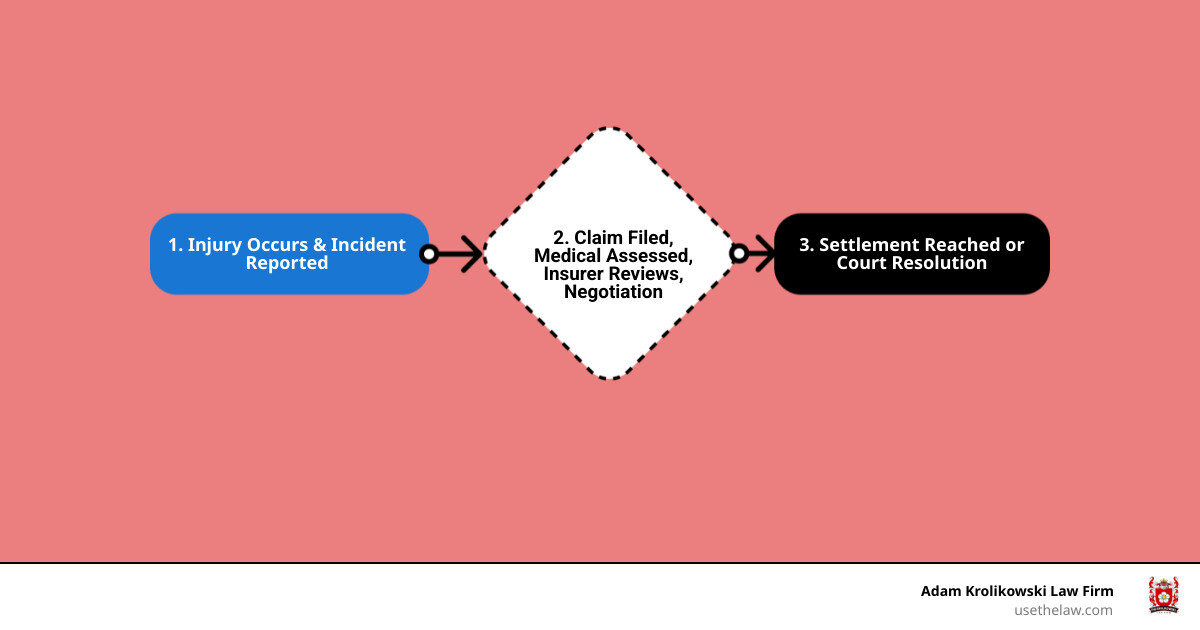
Injury compensation claim terms to remember:
Workers’ Compensation vs. Personal Injury: Which Path is for You?
After an injury, one of the first critical decisions you’ll face is whether to pursue a workers’ compensation claim or a personal injury lawsuit. Both paths aim to get you compensated, but they work in completely different ways. Workers’ compensation is a no-fault system for on-the-job injuries, while personal injury lawsuits require you to prove someone’s negligence caused your harm but typically offer broader compensation.
| Feature | Workers’ Compensation Claim | Personal Injury Lawsuit |
|---|---|---|
| Fault Requirement | No-fault system; you don’t need to prove anyone was negligent | Must prove the other party was at fault (negligence) |
| Types of Benefits | Medical expenses, wage replacement (typically 2/3 of wages), disability benefits | Medical expenses, full lost wages, pain and suffering, future care costs |
| Claim Speed | Generally faster; streamlined administrative process (weeks to months) | Slower; can take months to years depending on complexity |
| Legal Representation | Optional but helpful for complex cases | Highly recommended, especially for serious injuries |
Understanding this choice is crucial to your injury compensation claim. Let’s break down each path.
Workplace Injury Claims (Workers’ Comp)
If you were injured while doing your job, workers’ compensation is your primary option. This is a no-fault insurance system your employer is required to carry. It doesn’t matter if the accident was your fault; as long as the injury happened during your employment, you are generally covered. Covered injuries range from one-time accidents to repetitive stress injuries and occupational diseases. The process is streamlined: you report the injury, your employer files a claim, and benefits for medical care and partial wage loss can begin within weeks. Your duties include reporting the injury promptly (within 30 days) and seeking treatment from approved providers.
Personal Injury Lawsuits (Tort Claims)
If your injury happened outside of work, or was caused by a third party (not your employer), you’ll likely pursue a personal injury lawsuit. These claims are built on negligence—proving someone owed you a duty of care, breached it, and caused you harm. Common examples include car accidents, slip and falls, and defective products. While you have the burden of proving fault, the potential compensation is much broader. A lawsuit can recover full lost wages, all medical costs, and damages for pain and suffering. The tradeoff is time, as these cases can take a year or more to resolve.
The Critical Choice: Election Periods and Time Limits
Timing is critical. In California, you generally have one year to file a workers’ compensation claim and two years for a personal injury lawsuit. Missing these deadlines, known as statutes of limitations, can permanently bar your claim.
In some cases, you might be eligible for both. For example, if a negligent driver hits you while you’re working, you could have a workers’ comp claim and a personal injury claim against the driver. In such third-party situations, you may have a limited time to decide which path to take. Accepting workers’ comp benefits could affect your right to sue the third party, so understand your options. The importance of meeting all deadlines cannot be overstated. If you’re unsure which path to take, consulting with a personal injury lawyer in Orange County can help you understand your options before time runs out.
Workers’ Compensation vs. Personal Injury: Which Path is for You?
After an injury, one of the first critical decisions you’ll face is whether to pursue a workers’ compensation claim or a personal injury lawsuit. This choice isn’t always obvious, and getting it wrong can mean leaving money on the table or missing important deadlines.
Both paths aim to get you compensation, but they work in fundamentally different ways. Think of workers’ compensation as a streamlined insurance system for workplace injuries, while personal injury lawsuits are legal actions for when someone’s negligence causes you harm.
| Feature | Workers’ Compensation Claim | Personal Injury Claim |
|---|---|---|
| Fault Requirement | No-fault system; doesn’t matter who caused the injury | Must prove the other party was negligent and at fault |
| Types of Benefits | Medical expenses, partial wage replacement, disability benefits | Medical expenses, full lost wages, pain and suffering, future losses |
| Claim Speed | Typically faster (weeks to months) | Usually longer (months to years) |
| Legal Representation | Optional but helpful for complex cases | Strongly recommended for maximum compensation |
Workplace Injury Claims (Workers’ Comp)
If you were hurt on the job, workers’ compensation is usually your first option. California requires most employers to carry this insurance. As a no-fault system, you don’t need to prove your employer did anything wrong to be covered. This makes the process faster than a lawsuit. Covered injuries include sudden accidents and conditions that develop over time, like carpal tunnel syndrome. Your duties include reporting the injury promptly (within 30 days) and cooperating with the claims process. Missing these steps can jeopardize your benefits.
Personal Injury Lawsuits (Tort Claims)
Personal injury lawsuits are based on negligence—the legal concept that someone failed to act with reasonable care, causing your injuries. To win, you must prove the other party was at fault. The trade-off for this higher burden of proof is broader compensation. Unlike workers’ comp, personal injury awards can include full wage replacement, compensation for pain and suffering, and emotional distress. Common claims include car accidents, slip and falls, and medical malpractice. The downside is that these lawsuits take much longer, often months or even years to settle.
The Critical Choice: Election Periods and Time Limits
Sometimes you’re eligible for both, such as when a third party (not your employer) causes your workplace injury. For example, if you’re hurt in a car accident while making deliveries, you might have a workers’ comp claim and a personal injury lawsuit against the other driver.
In California, every injury compensation claim faces a statute of limitations. You generally have two years from the date of injury to file a personal injury lawsuit and one year for a workers’ compensation claim. Miss this deadline, and you lose your right to sue.
In certain third-party cases, you may face an election period to decide whether to accept workers’ comp benefits or pursue a tort claim. Accepting benefits might bar you from filing a lawsuit later. Meeting all deadlines is absolutely critical.
The Adam Krolikowski Law Firm handles complex cases involving both workers’ compensation and personal injury claims, helping clients understand their options when the right path isn’t immediately clear.
The Step-by-Step Process for Your Injury Compensation Claim
The actions you take immediately after an injury can make or break your injury compensation claim. This section walks you through what to do, step by step.
Immediately After the Injury
Your health comes first, but your actions also build the foundation for your claim.
Get medical help immediately, even if you feel okay. Adrenaline can mask serious injuries, and a medical visit creates a documented link between the accident and your injuries, which is crucial for countering insurance company arguments.

Report what happened right away. At work, tell your supervisor immediately. For car accidents, call the police. If you fall on someone’s property, report it to the owner or manager. This creates an official record of the incident.
Gather evidence. If it’s safe, take photos of the scene, your injuries, and any property damage. Get names and contact information from any witnesses. Exchange insurance and contact details with other parties involved.
Document everything. Start a journal to record medical appointments, symptoms, and how the injury affects your daily life. Keep every receipt for medical bills, prescriptions, and even mileage to appointments. These expenses are part of your claim.
Reporting and Filing the Claim
Once the immediate crisis is handled, you must formally start your injury compensation claim. For car accidents, contact your insurance company right away, ideally within a few days. Be honest and stick to the facts, but do not speculate or admit fault. You will need to provide:
- Your policy number
- Details about your vehicle
- When and where the accident happened
- Your driver’s license information
- Information on injuries and damage
- Your description of the accident
- Information about other drivers involved
For workplace injuries, your employer must provide you with a claim form (DWC 1) within one working day of learning about your injury. They must also report the injury to the workers’ compensation board (WCAB) if you miss work or require more than first aid. It is illegal for an employer to discourage you from filing a claim.
Understanding the Burden of Proof for an Injury Compensation Claim
The “burden of proof” is what you need to show to win your claim.
Workers’ compensation claims are no-fault. You only need to show that your injury happened at or because of work. This makes the process faster and more straightforward, though the benefits are typically more limited than in a lawsuit.
Personal injury claims require proving negligence. You must show it’s “more likely than not” that the other party’s carelessness caused your injuries. This requires evidence like police reports, witness statements, photos, and medical records.
In California car accidents, comparative negligence rules apply, meaning fault can be divided among parties. An insurance company’s fault determination can be challenged. If you disagree, ask which rule they applied and escalate the issue internally.
What if the other driver has no insurance? You are not out of options. Your own auto insurance policy likely includes Uninsured Motorist (UM) Coverage. In California, you can file a claim under this coverage, typically up to your policy limits, as long as you can identify the at-fault driver. You can also still claim medical and rehabilitation benefits from your own policy, regardless of fault. Don’t assume you have no recourse; a personal injury lawyer in Orange County can explain all your options.
What Are You Owed? Understanding Damages and Compensation
After an injury, a key question is: “What am I entitled to?” Your injury compensation claim is built from different categories of losses, called “damages,” designed to address the impact on your life.
Think of damages as building blocks. Some are easy to measure, like a medical bill. Others are harder to price, like chronic pain or the loss of a favorite hobby.
The Building Blocks: General and Special Damages
Personal injury damages fall into two main categories: General Damages and Special Damages.

General Damages compensate you for non-economic losses that don’t have a receipt. Often called “pain and suffering,” this category covers physical pain, emotional distress, and loss of enjoyment of life—the hobbies, activities, and simple pleasures your injury has taken from you. Courts determine a fair amount by comparing your case to others with similar injuries and impacts.
Special Damages are your calculable, out-of-pocket financial losses. Every medical bill, missed paycheck, and prescription receipt counts here. This includes:
- Past lost wages, including any sick or vacation time you used for recovery.
- Medical expenses, from the emergency room visit to ongoing physical therapy and medications.
- Travel expenses for trips to doctors and therapy sessions.
Calculating Damages for Your Injury Compensation Claim
Your injury compensation claim may also include damages for long-term impacts:
- Future loss of income or diminished earning capacity compensates you if your injury prevents you from returning to your job or limits your career advancement. This is calculated based on what you likely would have earned over your working life.
- Cost of future care is crucial for serious injuries. This covers everything you’ll need for the rest of your life, such as wheelchairs, home modifications, ongoing therapy, and in-home support.
- Loss of housekeeping and valuable services covers the value of the work you did around your home, like cleaning, cooking, or maintenance, that you can no longer perform.
Limits on Compensation: Caps and Deductibles
While the goal is to secure maximum compensation, certain limitations can affect your injury compensation claim.
- Comparative Fault: In California, your total compensation can be reduced by your percentage of fault for the accident. If you are found 20% at fault, your final award will be reduced by 20%.
- Damage Caps: While California does not cap pain and suffering damages in most personal injury cases, there are exceptions. The most notable is in medical malpractice cases, which have a specific cap on non-economic damages.
- Insurance Policy Limits: The at-fault party’s insurance policy will have a maximum payout limit, which can cap your recovery if your damages exceed that amount.
- Deductibles: Your own insurance policy may have deductibles that you must pay before coverage begins, reducing your net recovery for certain claims.
Understanding what you’re owed is about recognizing that all your losses—both financial and personal—have value and deserve to be included in your claim.
Navigating the System and Getting the Help You Need
The claims process can feel like a maze, especially when dealing with insurance companies whose goal is often to pay as little as possible. This section covers your options for getting support and handling disputes.
Handling the Claim: DIY vs. Professional Help
Should you handle your injury compensation claim yourself? For very minor injuries with clear liability and minimal expenses, you might manage on your own. However, if your injuries are significant, if fault is disputed, or if you have future medical needs, going it alone is a serious disadvantage. Insurance companies know when you don’t have legal representation and may use it to offer a lower settlement. An experienced attorney can level the playing field and advocate for the full compensation you deserve.
Working with Legal Professionals
Many people worry, “I can’t afford a lawyer.” The good news is that most personal injury attorneys, including our firm, work on a contingency fee basis. This is often called “No Win, No Fee.” It means you don’t pay our legal fees unless we win your case. Our fees are paid as a percentage of the compensation we recover for you. This allows you to pursue justice without paying upfront costs.
When looking for legal representation, experience matters. Our firm has spent over 25 years handling personal injury, workers’ compensation, and employment law cases. We’ve seen the tactics insurance companies use and know how to counter them.
You can find qualified attorneys through your state’s official resources. The State Bar of California maintains a searchable directory of licensed attorneys. Use the State Bar of California attorney search to verify licensure and standing. Choosing the right legal team provides you with an advocate who can handle the paperwork, translate legal jargon, and shield you from insurance company pressure.
Dealing with Insurance Company Disputes
Disputes are common. An insurer might contest your version of events, question your injuries, or offer a low settlement. Knowing how to respond is essential.
If you disagree with an auto insurer’s fault assessment, ask the adjuster which Fault Determination Rule they applied. If you’re still not satisfied, you can escalate the issue to a manager or the company’s complaint officer. You can also file a complaint with the California Department of Insurance.
When the dispute is about the amount of benefits, you have formal resolution options. Mediation is often an effective step. An impartial mediator helps both sides work toward a voluntary agreement in a confidential setting. It is typically faster and less stressful than going to court. If mediation fails, the next step may be arbitration or filing a lawsuit.
Throughout any dispute, documentation is your best friend. Keep detailed records of every call, email, and letter. If a claim is denied, get the reason in writing. This documentation is crucial evidence if you need to challenge the decision. Insurance companies often count on you getting frustrated and giving up. Having a lawyer to handle these disputes ensures you won’t be intimidated into accepting less than you deserve.
Frequently Asked Questions about Injury Claims
How long does an injury compensation claim usually take?
The timeline for an injury compensation claim depends on the type of claim and its complexity.
- Workers’ compensation claims are streamlined and generally faster. Because they are no-fault, you may start receiving benefits for medical bills and lost wages within weeks or a few months.
- Personal injury lawsuits take longer, typically from several months to a few years. The timeline is affected by the severity of your injuries, disputes over liability, and the negotiation process. A fair settlement should not be rushed; it’s important to wait until the full extent of your long-term needs is understood.
What happens if the at-fault party has no insurance?
Finding the at-fault driver is uninsured is stressful, but you still have options. Check your own auto insurance policy for Uninsured/Underinsured Motorist (UM/UIM) Coverage. This is mandatory for insurers to offer in California and covers your damages up to your policy limits if the other driver is uninsured or underinsured. You must be able to identify the at-fault driver or vehicle for this to apply.
Additionally, your own policy may include Medical Payments (Med-Pay) Coverage, which helps pay for medical expenses for you and your passengers, regardless of who is at fault. An uninsured driver complicates a claim, but it does not mean you are without recourse.
Can a pharmacist’s assessment be used to start a claim?
This is a nuanced question. For a California workers’ compensation claim, a pharmacist’s assessment cannot be used for the initial entitlement decision. A formal diagnosis and treatment plan must come from an approved physician, often one within your employer’s Medical Provider Network (MPN).
However, if a pharmacist provides you with medication for a work-related injury, it can still trigger your employer’s duty to report the incident and provide you with a claim form. Think of the pharmacist’s involvement as a potential first step, but you must follow up with a physician to properly establish your injury compensation claim and secure your right to benefits.
Conclusion
Navigating an injury compensation claim is a challenge no one asks for, but understanding your rights is the first step toward taking control. You now know the two main paths—workers’ compensation and personal injury lawsuits—and that acting quickly is critical. In California, you generally have a two-year deadline for most personal injury lawsuits and one year for workers’ comp claims.
We’ve covered the essential steps to take after an injury: seek medical help, report the incident, and document everything. These actions form the foundation of a strong claim. You’ve learned about the different types of compensation you may be owed, from medical bills and lost wages to pain and suffering, and that proving your case is handled differently for workers’ comp versus personal injury.
Insurance companies have teams working to minimize payouts. For minor claims, you might handle it yourself. But when injuries are serious, fault is disputed, or your future is at stake, having an experienced legal team is invaluable.
Here’s the truth: you deserve to be compensated for what happened to you. The system exists to help make you whole again, but it can feel designed to wear you down.
At Adam Krolikowski Law Firm, we have spent over 25 years helping people steer these complex claims. We take on the tough cases because we believe everyone deserves strong representation. We know the insurance company tactics and are committed to fighting for the compensation you’re owed.
Making an informed decision protects your health, your family’s stability, and your future. You don’t have to do this alone.
If you’ve been injured, understand your options by speaking with a personal injury lawyer in Orange County. Connect with us today for a knowledgeable assessment of your claim.
Your recovery matters. Your future matters. Let’s make sure your claim reflects that.
Contact Us
Practice Areas
Recent Articles
- « Previous
- 1
- 2
- 3