

Why Motorcycle Accident Brain Injuries Demand Immediate Attention
A motorcycle accident brain injury is one of the most serious and life-altering consequences a rider can face. Even with a helmet, the force of a collision can cause damage ranging from a mild concussion to a severe, permanent brain injury that changes how a person thinks, feels, and functions.
Key Statistics on Motorcycle Head Injuries:
- Riders are significantly more likely to die or suffer a head injury in a crash compared to car occupants.
- Helmets reduce head injury risk by 69% and fatality rates by 37%, but they cannot prevent all brain injuries.
During a crash, violent forces cause the brain to collide with the inside of the skull, damaging delicate cells and nerve connections. Unlike other organs, the brain has a very limited ability to heal, meaning the effects can be permanent.
What makes these injuries particularly dangerous is their often-delayed onset. A rider might feel fine after a crash, only to develop symptoms days or weeks later. This is due to secondary injuries, such as swelling and bleeding, that build pressure inside the skull long after the initial impact.
For Southern California residents injured in motorcycle accidents, understanding brain injuries, their symptoms, and your legal rights is the first step toward recovery and securing needed compensation.

Essential Motorcycle accident brain injury terms:
- motorcycle accident lawyer orange county
- motorcycle accident lawyer santa ana
- orange motorcycle accident attorney
How Motorcycle Accidents Cause Devastating Brain Injuries
With no steel frame or airbags for protection, a motorcycle rider’s brain is extremely vulnerable in a collision. The forces involved are complex and brutal.
- Direct impact occurs when the head strikes a hard surface.
- Blunt force trauma can result from violent shaking alone, causing the brain to slam against the skull.
- Penetrating injuries happen when an object pierces the brain tissue.
- Rapid acceleration and deceleration cause the brain to move independently inside the skull, leading to widespread damage.
- Rotational forces from twisting motions can be even more damaging, tearing the microscopic connections between brain cells.
The Initial Impact: Primary Brain Injuries
Primary brain injuries are the immediate physical damage that occurs at the moment of impact. Their effects can last a lifetime.
- Concussions: The most common TBI, a concussion disrupts normal brain function. Even a “mild” concussion can have effects lasting for weeks or months.
- Brain Contusion: A bruise on the brain tissue. While small ones may heal, larger contusions can create dangerous pressure and may require surgery.
- Skull Fractures: A break in the skull indicates a severe impact that likely also injured the brain beneath it.
- Diffuse Axonal Injury (DAI): Caused by rotational forces, DAI involves widespread tearing of the brain’s nerve fibers (axons). This disrupts communication pathways and often results in lasting cognitive and functional impairments.
- Hematomas (Brain Bleeds): These are collections of blood in or around the brain. They can form between the skull and brain (epidural or subdural), in the space around the brain (subarachnoid hemorrhage), or directly within the brain tissue (intra-parenchymal). All types can increase pressure and cause severe damage.
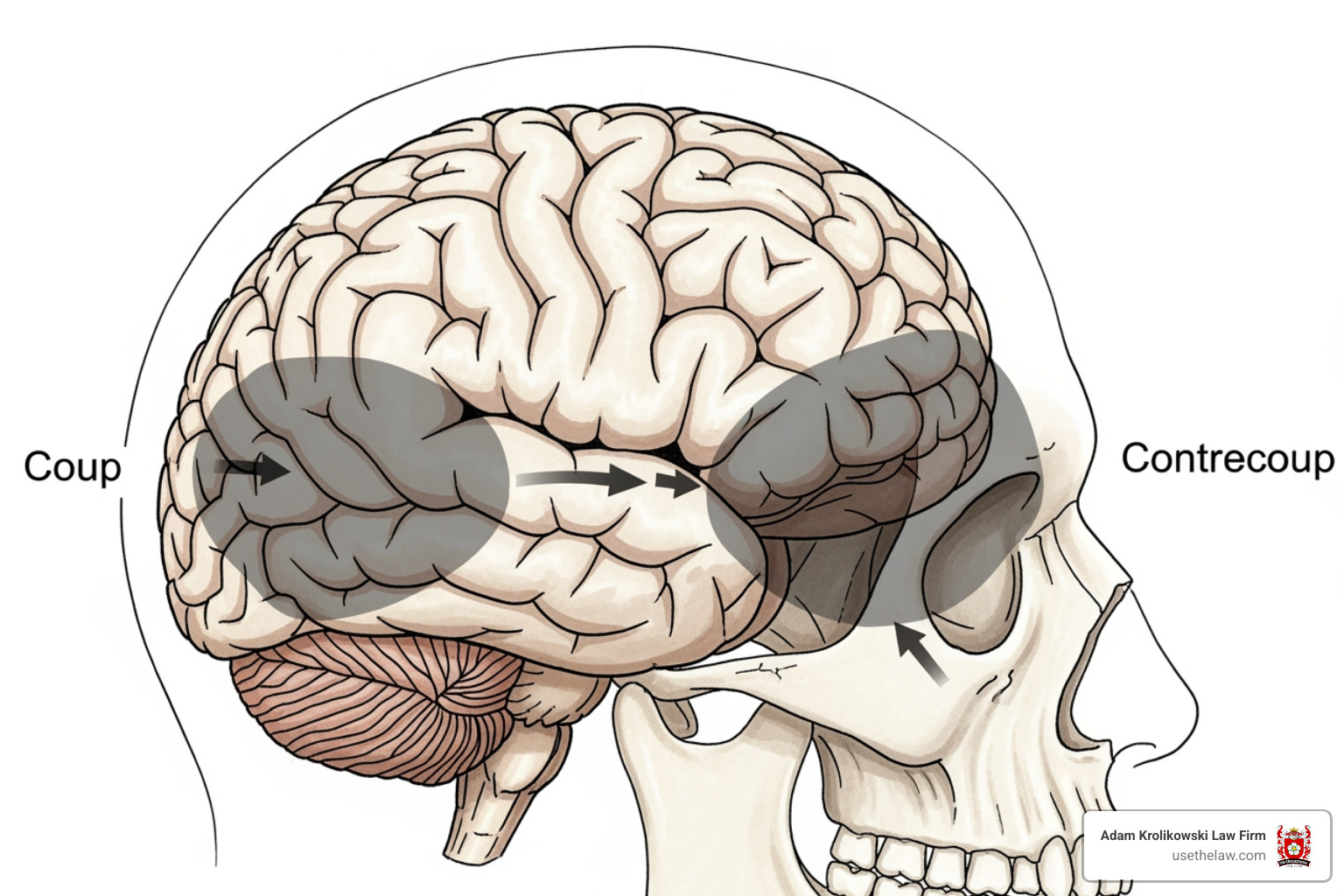
- Coup-Contrecoup Injuries: This occurs when the brain hits one side of the skull (coup) and then bounces back to hit the opposite side (contrecoup), causing damage in two separate areas from a single impact.
More info about Head Trauma Injury Attorney
How Secondary Brain Injuries Develop
The danger doesn’t end with the crash. Secondary brain injuries can develop hours, days, or even weeks later, as the brain reacts to the initial trauma.
This delayed damage is often caused by a cascade of events. Brain swelling (edema) is a natural response, but inside the rigid skull, it increases intracranial pressure (ICP). This rising pressure compresses brain tissue and restricts blood flow, starving cells of the oxygen they need to survive (ischemia). This can cause permanent, irreversible damage to parts of the brain that survived the initial impact.
This is why immediate medical attention is critical after any motorcycle accident, even if you feel fine. Doctors must monitor for these delayed complications to prevent further disability.
Explanation of secondary brain injury from Mayfield Clinic
Recognizing the Signs: Symptoms of a TBI After a Motorcycle Accident
After a crash, the signs of a motorcycle accident brain injury can be subtle and may not appear immediately. Symptoms can be physical, cognitive, or emotional, and may show up days or weeks after the accident.
You might experience physical symptoms like persistent headaches, nausea, or dizziness. Cognitively, you could feel foggy, struggle with memory, or find it hard to concentrate. Emotionally, you might become irritable, anxious, or depressed for no apparent reason. Your senses can also be affected, with increased sensitivity to light and sound.

Immediate Red Flags to Watch For
Some symptoms require immediate medical attention. Even with a helmet, a serious brain injury can occur.
| Symptom Category | Mild TBI (Concussion) | Moderate to Severe TBI |
|---|---|---|
| Consciousness | Brief loss of consciousness (seconds to minutes) | Prolonged loss of consciousness (minutes to hours), coma |
| Cognitive | Confusion, disorientation, memory gaps, difficulty concentrating | Profound confusion, inability to recognize people or places, severe memory loss |
| Physical | Headache, dizziness, nausea, vomiting (single episode) | Persistent headache, repeated vomiting, seizures, slurred speech, clear fluid from nose/ears, weakness or numbness in limbs |
| Behavioral | Irritability, mood changes, feeling “off” | Extreme mood swings, agitation, combativeness, personality changes |
Any loss of consciousness, even for a few seconds, is a major red flag. Other urgent warning signs include confusion or disorientation, seizures, repeated vomiting, and slurred speech. If you notice clear fluid or blood from the nose or ears, unequal pupils, or weakness or numbness in your limbs, get to an emergency room immediately. These signs can indicate dangerous pressure building inside the skull or a skull fracture.
More info about Concussion Injuries Attorney
Long-Term and Delayed Symptoms
Some of the most challenging symptoms of a motorcycle accident brain injury develop over time.
- Cognitive Issues: Chronic headaches, persistent memory problems, and an inability to concentrate can make daily tasks exhausting.
- Emotional & Behavioral Changes: Mood swings, depression, and anxiety are common. The risk of major depressive disorder increases significantly after a TBI. Personality changes can be difficult for families to steer.
- Sleep Disturbances: Insomnia or constant fatigue can worsen all other symptoms.
- Post-Concussion Syndrome: Even “mild” concussions can lead to this condition, where symptoms like headaches and dizziness persist for months or even years.
These long-term effects have a profound impact on life. Before their injury, 80% of people with moderate or severe TBIs had jobs. Three years later, only 55% were working. Many require daily assistance to live independently. If you experience these delayed symptoms, document them and see your doctor. They are real consequences of your injury.
Information on post-concussion syndrome from Mayo Clinic
The Critical Role of Helmets in Preventing Catastrophic Injury
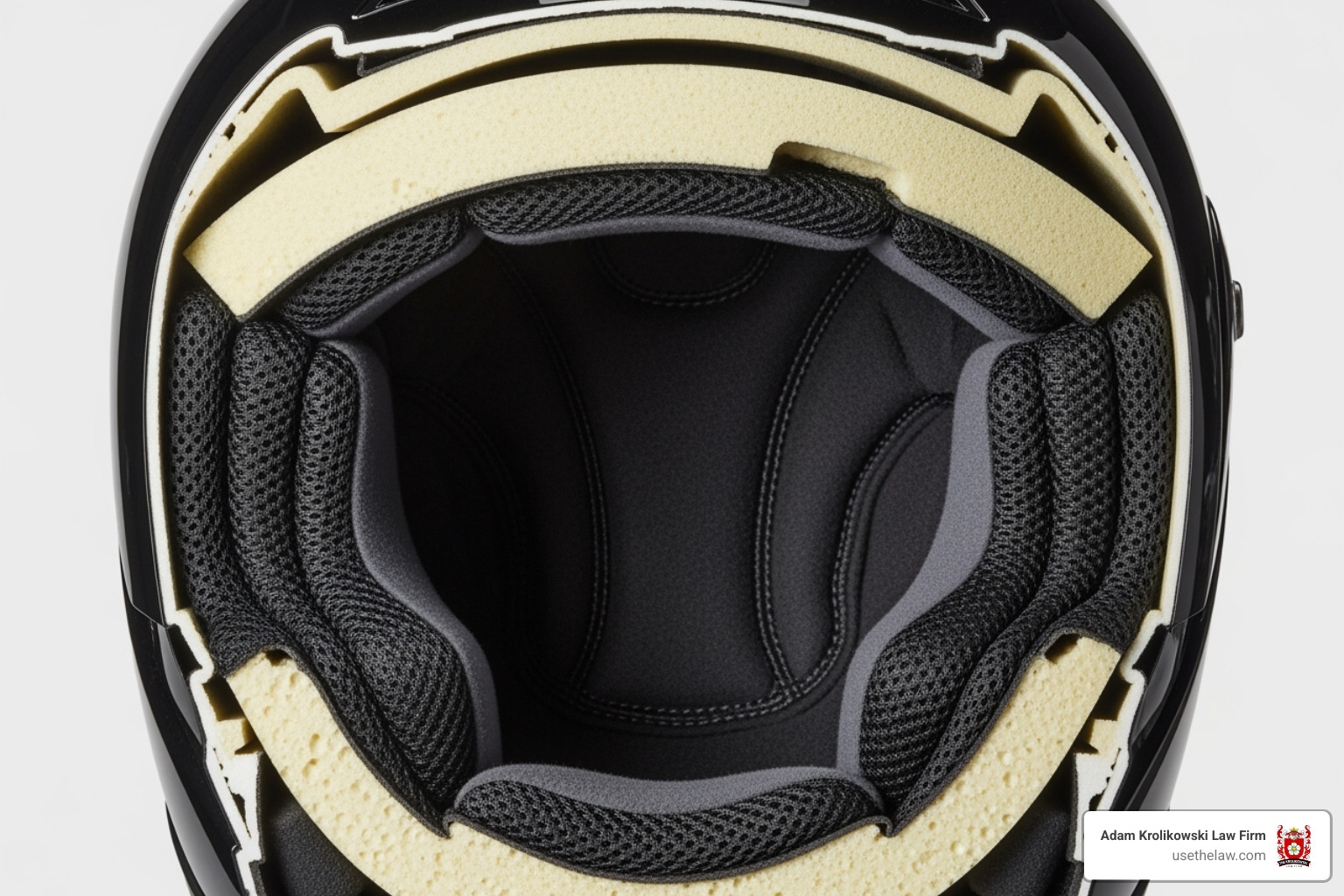
On a motorcycle, your helmet is the single most important piece of protective gear. It can be the difference between walking away from a crash and suffering a life-altering motorcycle accident brain injury. A quality helmet works by absorbing and distributing the force of an impact, and by acting as a barrier to prevent skull fractures.
In California, helmet use is mandatory for all riders—a law that has saved countless lives.
Helmet Effectiveness by the Numbers
The data on helmet effectiveness is overwhelming.
- Helmets reduce the risk of head injury by 69%.
- They are 37% effective at preventing death for riders and 41% for passengers.
- The mortality rate for helmeted patients is just 7%, compared to 25% for unhelmeted patients.
- Unhelmeted riders are more likely to require ICU admission and face longer hospital stays.
Studies also show that states with universal helmet laws have significantly lower rates of traumatic brain injuries from motorcycle accidents. This proves that helmets protect not only individual riders but also reduce the burden on our healthcare system.
More info about Personal Injury Claims Defective Products
The Limits of Protection: Injuries That Can Still Occur
While crucial, even the best DOT-approved helmet cannot prevent every brain injury, especially in severe crashes.
- Rotational Brain Injuries: The added mass of a helmet can sometimes increase rotational forces during a crash, twisting the brain and causing injuries like DAI.
- Concussions: If the impact is strong enough to jolt the brain inside the skull, a concussion can still occur.
- Neck and Facial Injuries: A helmet protects the head, but the neck is still vulnerable to whiplash. Depending on the helmet type and impact angle, facial fractures can also happen.
- Severe Impacts: In extremely high-force collisions, the impact can simply overwhelm a helmet’s protective capabilities.
This is why a helmet should be part of a broader safety strategy that includes defensive riding and proper training. The goal is layered protection to reduce risk wherever possible.
The Path to Recovery: Medical Treatment and Long-Term Consequences
In the emergency room after a motorcycle accident brain injury, doctors work quickly to assess the severity of the injury. They use the Glasgow Coma Scale (GCS) to measure responsiveness and classify the injury as mild, moderate, or severe. Imaging tests like CT scans and MRIs are used to detect bleeding, fractures, and other damage.
Treatment depends on the injury’s severity. A mild TBI (concussion) typically requires rest and careful monitoring. For moderate to severe TBIs, treatment is more urgent and complex. It may involve:
- Medications: Drugs may be used to reduce brain swelling, prevent seizures, or even induce a temporary coma to allow the brain to heal.
- Surgery: An operation may be needed to remove a blood clot (hematoma), repair a skull fracture, or relieve pressure on the brain.
The immediate goal is to stabilize the patient and prevent secondary injuries. For many, however, this is just the beginning of a long recovery journey.
More info about Treatment for Personal Injury Case
Rehabilitation and Living with a Motorcycle Accident Brain Injury
Once the immediate medical crisis is over, the hard work of rehabilitation begins. This process is unique to each survivor and often involves a team of professionals:
- Physical therapists help with strength, balance, and coordination.
- Occupational therapists focus on daily living activities, like dressing and cooking, to help regain independence.
- Speech-language pathologists address communication and swallowing problems.
- Neuropsychologists help with cognitive challenges like memory, concentration, and problem-solving.
Living with a TBI presents profound long-term challenges. Many survivors cannot return to their previous jobs or work at the same capacity. Some require daily assistance with basic tasks. The emotional toll is also significant, with depression, anxiety, and personality changes being common. Relationships can become strained, and social isolation is a frequent struggle.
At Adam Krolikowski Law Firm, we understand that a brain injury is a fundamental change in how you live and work. We approach these complex cases with a genuine understanding of what you and your family are facing.
More info about a Catastrophic Injury Lawyer
Navigating the Aftermath: Legal Rights and Compensation for a Motorcycle Accident Brain Injury
The financial toll of a motorcycle accident brain injury can be staggering, with lifetime treatment costs potentially reaching millions. If someone else’s negligence caused your crash, California law gives you the right to seek compensation.
Proving negligence involves showing that another party (like a careless driver) had a duty to act safely, breached that duty, and directly caused your injury. This requires gathering evidence like police reports, witness statements, and medical records.
Time is critical, as California has a strict statute of limitations for filing a lawsuit. It’s also crucial to have a legal advocate to handle communications with insurance companies, whose goal is to minimize their payout. They may try to get you to accept a low settlement before the full extent of your brain injury is known.
More info about Understanding Liability Personal Injury Cases
Types of Compensation You Can Pursue
Compensation for a motorcycle accident brain injury falls into two main categories.
Economic damages are the calculable financial losses:
- Medical Bills: All costs from the ER visit to future rehabilitation and long-term care.
- Lost Wages: Income lost during recovery.
- Loss of Earning Capacity: Compensation for the reduction in your ability to earn income over your lifetime due to the injury.
Non-economic damages cover the intangible, personal losses:
- Pain and Suffering: For the physical pain and emotional distress caused by the injury.
- Loss of Enjoyment of Life: For the inability to participate in hobbies and activities you once loved.
- Loss of Consortium: A claim your spouse can make for the loss of companionship and support.
More info about Compensation Available Los Angeles Personal Injury Guide
Why Legal Guidance is Crucial for Your Claim
Motorcycle accident brain injury cases are incredibly complex. Insurance companies have teams of lawyers dedicated to challenging these claims. Attempting to steer this alone, especially while recovering, is a significant disadvantage.
At Adam Krolikowski Law Firm, we have over 25 years of experience handling the complex cases other firms may avoid. We know how to:
- Accurately value your claim by working with medical and financial experts to project lifetime costs.
- Gather critical evidence and use expert witnesses to explain the full impact of your injury.
- Negotiate aggressively with insurance companies and reject lowball offers.
- Take your case to trial if a fair settlement cannot be reached.
Our role is to take the legal burden off your shoulders, allowing you to focus on your recovery. We act as your advocate and shield throughout the entire process.
More info about a Brain Injury Lawyer
Your Path Forward After a Devastating Injury
A motorcycle accident brain injury changes everything in an instant. The path to recovery is often long, and the damage can be permanent, affecting your ability to think, work, and live as you did before. The financial burden of medical bills and lost income only adds to the stress.
The truth is, brain injuries are unlike other injuries. The consequences can be silent, delayed, and last a lifetime. But you do not have to face this future alone.
If you or a loved one in Orange County, Santa Ana, or Los Angeles suffered a motorcycle accident brain injury due to someone else’s negligence, you have the right to seek justice. The Adam Krolikowski Law Firm has over 25 years of experience fighting for victims with severe injuries—the complex cases that require a deep understanding of both the law and the medicine involved.
While no amount of money can erase the trauma, fair compensation can provide the resources for medical care, replace lost income, and give your family the financial stability to focus on healing. Let us handle the legal battle so you can focus on your recovery.
Contact an Orange County Motorcycle Accident Lawyer for a consultation