

When Property Owners Fail to Protect You: Understanding Your Rights
A negligence security lawyer helps victims injured due to inadequate security on someone else’s property. These attorneys handle premises liability cases where property owners failed to provide reasonable protection against foreseeable crimes at locations like apartment complexes, hotels, and parking lots.
When you enter a property, you have a right to be safe. Property owners have a legal obligation to protect you not just from physical hazards like spills, but also from foreseeable criminal acts. When they fail in this duty—for example, by not fixing broken locks or providing adequate lighting—and someone is attacked, the owner can be held responsible.
This area of law is known as negligent security. It holds property owners accountable when their security failures contribute to crimes against innocent people. To have a valid claim, you must prove the crime was foreseeable, the security was insufficient, and this failure led to your injuries. Victims can sue for compensation to cover medical bills, lost wages, pain and suffering, and other damages.
These cases often involve serious injuries from assaults, shootings, or robberies and can result in significant settlements. Understanding your rights is the first step toward getting the justice you deserve.
What is Negligent Security? The Property Owner’s Duty of Care
When you visit a hotel, shopping mall, or apartment complex, you expect to be safe. This expectation is backed by law. Negligent security occurs when a property owner fails to provide reasonable protection from foreseeable criminal acts, and someone is harmed as a result.
Businesses that invite you onto their property have a responsibility to ensure your safety. This duty extends beyond fixing physical hazards to include protecting you from crimes by third parties. The level of security required varies; a nightclub in a high-crime area needs more protection than a suburban office building. When owners fail to meet this standard, victims of assaults, robberies, or shootings may have a claim.
A negligence security lawyer can help victims recover compensation for medical bills, lost wages, and trauma. Successful claims can result in substantial financial recovery. You can learn more about the broader scope of these cases at Negligent Security.
Defining the Legal Duty
Every property owner has a legal obligation to maintain a safe environment for lawful visitors. The specific security measures required depend on factors like the property’s location, type, and history. A property in a high-crime area or one with a history of previous incidents requires stronger security.
Owners are expected to be aware of local crime trends and police warnings. Your status as a visitor also matters, as customers and tenants are owed the highest level of protection. As established in legal precedent, owners must take reasonable steps to prevent foreseeable crimes against visitors.
When is a Crime “Foreseeable”?
A crime is foreseeable if a reasonable property owner should have anticipated it could happen. Owners are not expected to predict every crime, but they must respond to clear warning signs.
Key indicators of foreseeability include:
- History of crime: A pattern of robberies or assaults on the property makes future incidents foreseeable.
- Neighborhood crime data: Owners should be aware of crime trends in the surrounding area, which can be tracked with tools like crime mapping services.
- Direct warnings: Complaints from tenants or reports from security about suspicious activity are red flags that cannot be ignored.
- Prior similar incidents: A pattern of crime nearby, even if not on the exact property, can establish foreseeability.
When property owners ignore these signs, they can be held liable for the harm that results.
Proving a Negligent Security Claim: Evidence and Liability
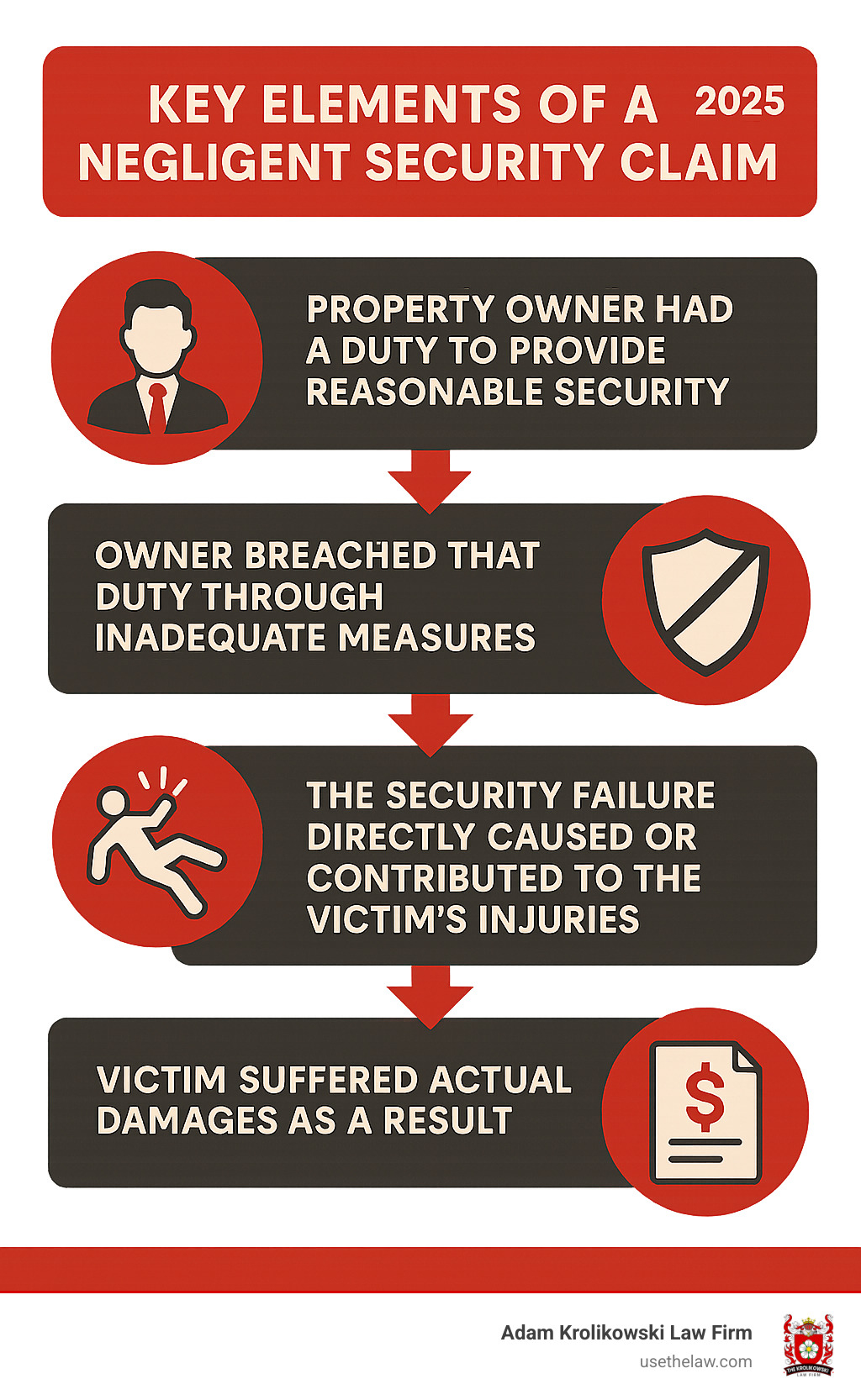
To win a negligent security claim, you must prove four key elements: the property owner had a duty of care to provide security, the owner breached that duty with inadequate measures, this failure caused your injuries, and you suffered actual damages.
Our job is to connect the owner’s failure to the dangerous conditions that led to your harm. We work to show the crime was foreseeable and that reasonable precautions could have prevented it. For a comprehensive understanding of how these cases work, you can explore more about negligent security cases.
Common Examples of Inadequate Security
Security failures create opportunities for criminals. Common examples include:
- Poor lighting in parking lots, stairwells, and hallways.
- Broken or defective locks on doors, gates, and windows.
- Malfunctioning alarm systems that are not monitored or tested.
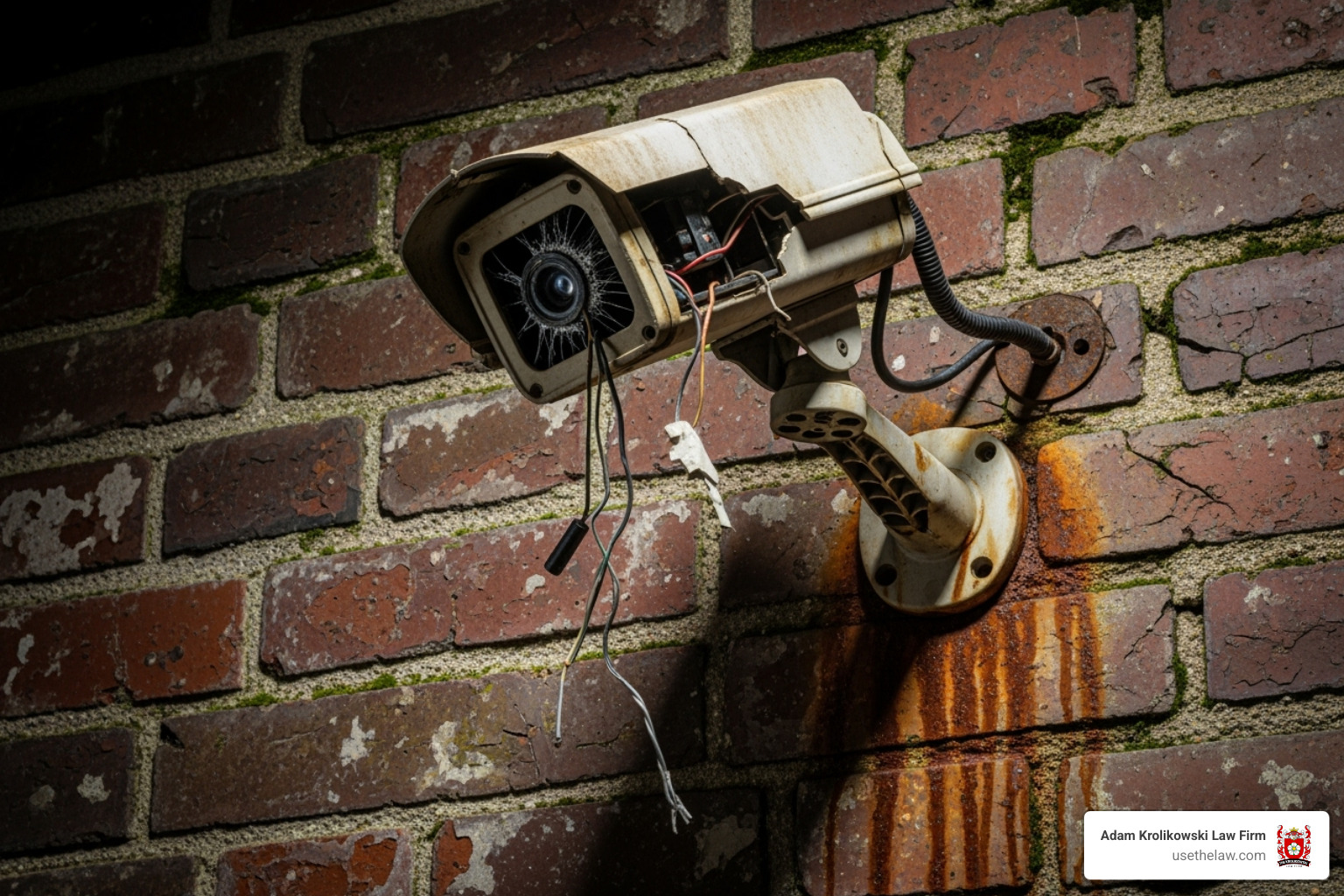
- Inadequate surveillance cameras that are broken, poorly placed, or unmonitored.
- Untrained or insufficient security guards for the property’s size and risk level.
- Failure to screen employees with access to sensitive areas.
- Unsecured entry points like open gates or propped-open doors.
These failures are common at apartment complexes, hotels, parking garages, nightclubs, and hospitals. Hotels present unique risks, as guests are often unfamiliar with the area. You can learn more about specific issues in hotel negligent security lawyer cases.
Gathering Crucial Evidence
Building a strong case requires compelling evidence. We gather items such as:
- Police and incident reports documenting the crime.
- Witness statements from people who saw the incident or knew of prior security issues.
- Medical records to prove the extent of your injuries.
- Photos and videos of the scene showing the poor security conditions.
- Security footage, which we act quickly to preserve.
- Maintenance logs that may show ignored repair requests for security equipment.
We also may work with security professionals who can testify about industry standards and how the owner failed to meet them.
Who Can Be Held Liable?
Liability can extend to multiple parties who had a duty to keep the property safe. This includes property owners, who have the ultimate responsibility, as well as business owners who invite customers onto their premises. Other potentially liable parties include management companies that handle daily operations, security companies hired to provide protection, maintenance contractors responsible for systems like lighting, and landlords who owe a duty to their tenants.
The Role of a Negligence Security Lawyer in Your Claim
After being harmed due to a property owner’s negligence, navigating the legal system can be overwhelming. A negligence security lawyer acts as your advocate, handling the complexities of your case so you can focus on recovery.
We investigate the incident, identify what went wrong, and negotiate with insurance companies on your behalf. Our goal is to manage the legal process and help you get the compensation you deserve. If you need to find a lawyer near you who understands these laws, taking that first step is crucial.
How a Lawyer Builds Your Case
Building a strong negligent security case requires a methodical approach. Here’s how we handle your case:
- Investigating the incident: We gather police reports, witness statements, and surveillance footage. We also research the property’s crime history to establish foreseeability.
- Identifying all liable parties: We look beyond the property owner to include management companies, security contractors, or anyone else who shared responsibility for security.
- Hiring security professionals: These individuals can analyze the property’s security measures and explain how they fell short of industry standards.
- Calculating your total damages: We document all your losses, including medical bills, lost income, future care needs, and pain and suffering.
- Filing a negligent security lawsuit: We initiate formal legal action against all responsible parties.
- Communicating with insurance companies: We protect you from lowball settlement offers and handle all negotiations to ensure any offer is fair.
What to Look for in a Negligence Security Lawyer
Choosing the right lawyer is critical. Look for these key qualities:

- Experience with premises liability: These cases have unique rules that require specific knowledge.
- Track record in similar cases: A history of handling complex security cases demonstrates capability.
- Understanding of local laws: Knowledge of local crime patterns and court procedures is invaluable.
- Contingency fee structure: This means you pay no upfront fees, and the lawyer only gets paid if you win.
- Client communication: You should be kept informed and feel supported throughout the process.
Proving Your Case with a Negligence Security Lawyer
Winning a negligent security case requires proving specific legal elements. We use our experience to gather and present evidence effectively.
We work to establish foreseeability by documenting prior crimes and warnings the owner received. We demonstrate the security breach by pinpointing the exact failures, like broken cameras or inadequate lighting. We then link the breach to your injuries, arguing that proper security would have prevented the harm.
Presenting this evidence clearly with photos, crime maps, and professional testimony is key. We then argue for maximum compensation by detailing all your economic and non-economic damages. Our job is to prove the owner failed to exercise reasonable care and that this failure led to a preventable crime.
Compensation and Statutes of Limitation for Victims
If you were harmed because a property owner failed to provide adequate security, you deserve financial recovery for your losses. Understanding the types of compensation available and the strict deadlines for filing a claim is critical.
Damages are divided into two categories. Economic damages cover tangible financial losses, while non-economic damages compensate for the personal, non-monetary impact of the incident.
| Economic Damages | Non-Economic Damages |
|---|---|
| Medical Bills | Pain and Suffering |
| Lost Wages | Emotional Distress |
| Loss of Earning Capacity | Loss of Enjoyment of Life |
| Property Damage | Disfigurement and Impairment |
| Rehabilitation Expenses | Loss of Consortium (for spouses) |
| Funeral and Burial Costs | Punitive Damages (in rare cases) |
As your negligence security lawyer, our job is to ensure every loss is documented and included in your claim. For those in California, specific laws apply. You can find more information from a California Negligent Security Attorney.
Types of Compensation Available
Compensation aims to make you as whole as possible. Available damages include:
- Medical expenses: This covers everything from emergency care and hospital stays to future therapy and medication.
- Lost wages and earning capacity: This compensates you for missed work and any long-term impact on your ability to earn a living.
- Pain and suffering: This acknowledges the physical pain and emotional trauma you have endured, including anxiety, depression, and PTSD.
- Property damage: This covers the value of personal belongings damaged or stolen during the crime.
- Rehabilitation costs: This includes physical, occupational, and psychological therapy needed for your recovery.
- Wrongful death damages: In fatal incidents, this helps surviving family members with funeral costs, lost financial support, and loss of companionship.
Significant settlements in these cases reflect the seriousness of a property owner’s failure to protect innocent people.
Understanding the Statute of Limitations
The statute of limitations is a strict legal deadline for filing a lawsuit. If you miss this deadline, you lose your right to sue, regardless of how strong your case is.
These state-specific deadlines vary, but the clock usually starts ticking on the date of the injury. Acting quickly is essential. Delay can cause crucial evidence to be lost. Security footage is often deleted, witnesses’ memories fade, and property owners may fix the security issue, erasing proof of their prior negligence.
While there are limited exceptions, such as for victims who were minors, you should not rely on them. Waiting to contact a negligence security lawyer can weaken or even destroy your case. Protect your rights by acting promptly.
Frequently Asked Questions about Negligent Security Claims
After a traumatic incident, it’s natural to have questions. Here are answers to some of the most common questions we receive.
What if I was trespassing when the crime occurred?
Your legal status on the property is important. Property owners owe the lowest duty of care to trespassers, which generally means they cannot intentionally harm you. However, there are exceptions. If an owner knows that people (especially children) frequently trespass, they may have a duty to warn of or fix known dangers. Your status as an invitee, licensee, or trespasser significantly impacts the owner’s duty, but being a trespasser does not automatically bar a claim.
How much is my negligent security case worth?
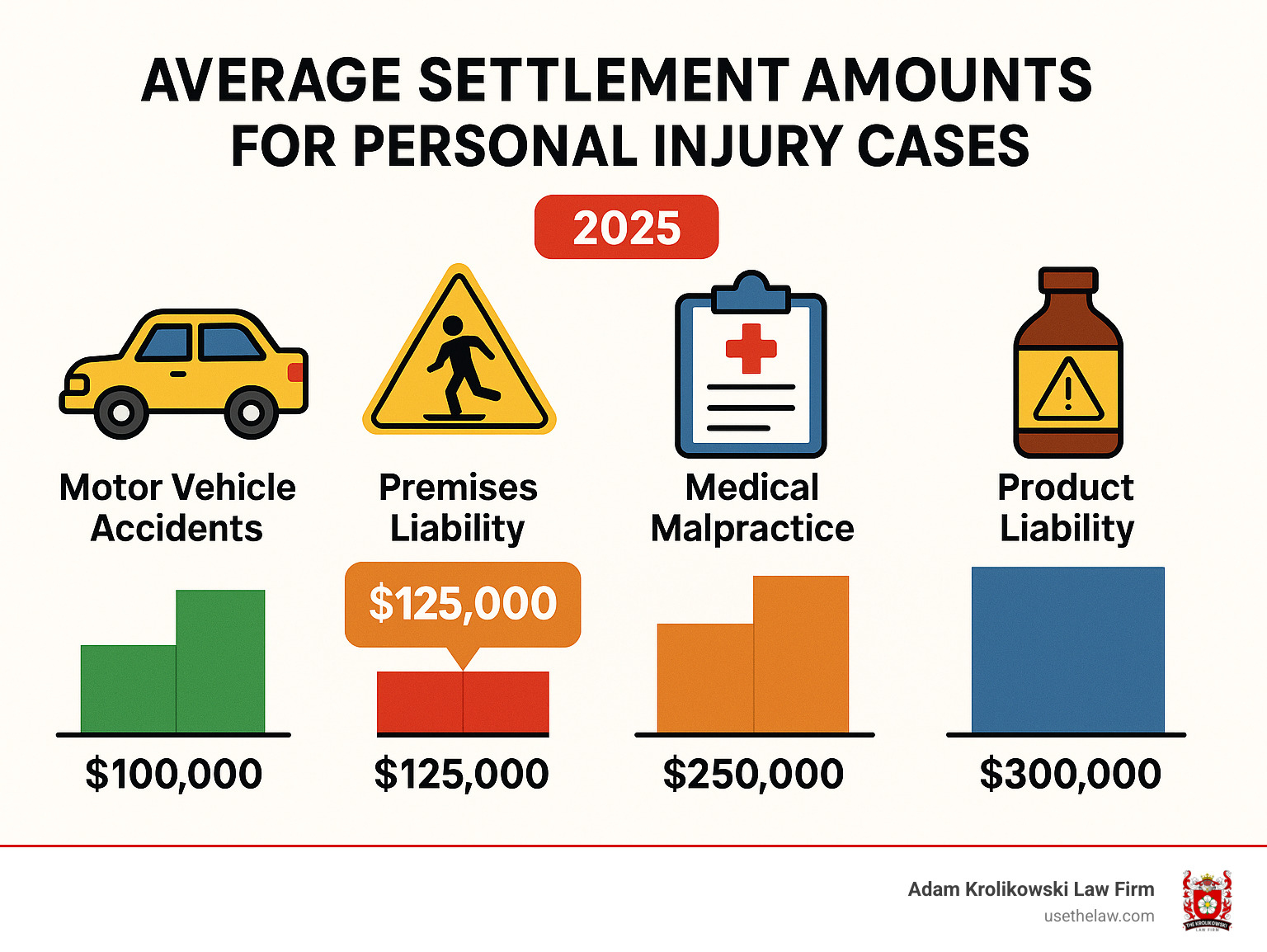
There is no average settlement amount, as each case is unique. The value depends on many factors, including the severity of your injuries, total medical bills, lost income, the obviousness of the owner’s negligence, and available insurance coverage. Cases can range from tens of thousands of dollars to multi-million dollar awards for catastrophic injuries or wrongful death.
We will conduct a thorough assessment of all your damages to pursue the maximum compensation you are owed.
Can I still sue if the criminal who attacked me was never caught?
Yes, absolutely. A negligent security claim is a civil action against the property owner, separate from any criminal case against the attacker. The criminal justice system focuses on punishing the perpetrator. Our focus as your negligence security lawyer is on the property owner’s failure to provide a safe environment.
You can pursue compensation from the property owner even if the attacker is never identified or convicted. What matters is proving the crime was foreseeable and that the owner’s lack of reasonable security measures contributed to it. The owner’s responsibility is independent of the outcome of the criminal case.
Take the First Step Towards Justice
When you enter a hotel, parking garage, or apartment complex, you have a right to be safe from criminal harm. If a property owner’s failure to provide reasonable security led to you or a loved one being injured, you may be entitled to compensation. This failure is a serious breach of their legal duty.
Navigating a premises liability claim is complex and requires proving that better security could have prevented the crime. An experienced negligence security lawyer can make all the difference.
The Adam Krolikowski Law Firm has over 25 years of experience handling complex cases in Orange County, including challenging premises liability claims. We serve clients in Santa Ana, CA, Los Angeles, CA, and surrounding areas. We understand the devastating physical, emotional, and financial impact of these incidents.
The consultation is completely free, and you pay no attorney fees unless we win your case. Don’t let the statute of limitations expire on your right to seek justice.
Contact a Negligent Security Attorney in Orange County, CA today for a free consultation and case review.
