


The Hidden Crisis Affecting Vulnerable Seniors
Nursing home abuse is a serious, often hidden problem affecting thousands of vulnerable residents. Families trust these facilities to provide safe, dignified care, but that trust is too often betrayed.
Quick Answer: Nursing home abuse includes:
- Physical abuse – hitting, slapping, or improper restraint use
- Emotional abuse – yelling, threatening, or isolating residents
- Sexual abuse – any non-consensual sexual contact
- Financial exploitation – stealing money or misusing resident funds
- Neglect – failing to provide basic needs like food, water, medication, or hygiene
The statistics are alarming: 2 in 3 staff members in nursing homes have admitted to committing abuse in the past year. Nearly half of all residents report mistreatment, and for those with dementia, the number is close to 50%.
These numbers represent real people who deserve to live with dignity. Many victims cannot report abuse due to cognitive impairment, fear, or physical limitations.
This guide will help you recognize the warning signs, understand the causes, and take action if you suspect mistreatment.
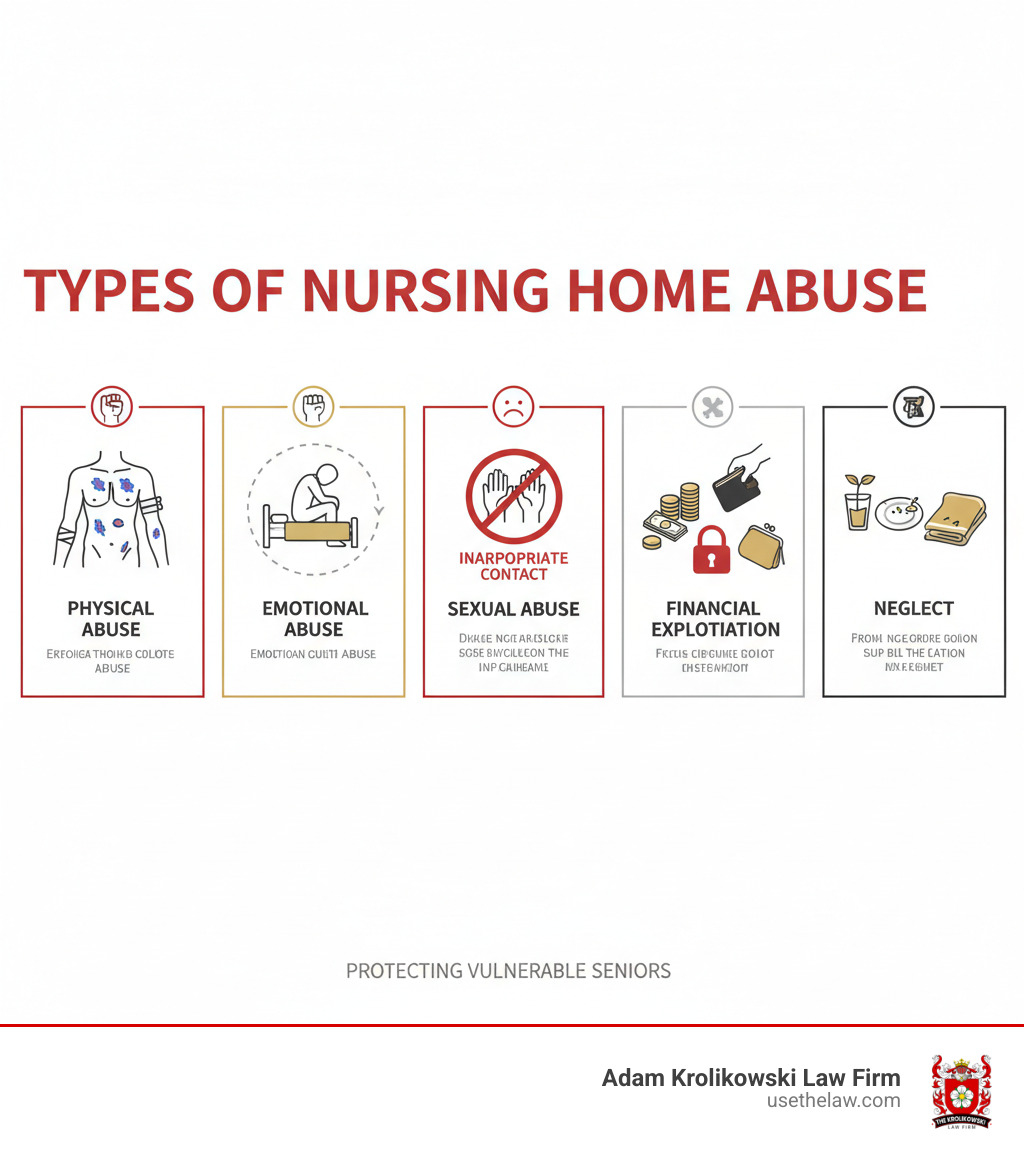
Basic nursing home abuse glossary:
Identifying the Unseen: Types and Signs of Abuse
Nursing home abuse is intentional harm, while nursing home neglect is the failure to provide necessary care. While neglect can be unintentional, it often results from understaffing or poor training. Both violate a resident’s fundamental rights under the Patient’s Bill of Rights.
- Physical abuse is any intentional act causing bodily harm, such as hitting, pushing, or improperly using physical or chemical restraints.
- Emotional abuse inflicts mental pain through yelling, threats, ridicule, or isolation. It is harder to detect but is considered the most common form of nursing home abuse.
- Sexual abuse is any non-consensual sexual contact. It is especially devastating for residents with cognitive impairments who cannot consent or report it.
- Financial exploitation is the illegal use of a resident’s money or assets, including theft, forgery, or coercion.
- Neglect is the failure to provide care that keeps residents safe, such as adequate food, water, medication, hygiene, or medical attention.
- Self-neglect occurs when residents cannot care for themselves, signaling the facility is not providing proper monitoring.
- Abandonment is the desertion of a resident who depends on care.
For more detailed information, A guide on spotting abuse provides valuable resources.
Recognizing the Warning Signs of Nursing Home Abuse
Since many victims cannot report abuse due to fear or cognitive issues, family members must watch for these warning signs:
- Unexplained injuries: Bruises, welts, cuts, sprains, or broken bones with inadequate explanations are red flags.
- Bedsores (pressure ulcers): These painful wounds indicate neglect, as they develop when residents are not repositioned. Untreated, they can lead to fatal infections.
- Sudden weight loss or malnutrition: Significant weight loss, constant hunger or thirst, and signs of dehydration (dry mouth, sunken eyes) point to unmet basic needs.
- Poor hygiene: Dirty clothes, body odor, unkempt hair, or an unsanitary room suggest staff are not providing personal care.
- Behavioral changes: Watch for withdrawal, fear, anxiety around certain staff, depression, or agitation. These can signal emotional distress.
- Unsanitary or unsafe living conditions: Dirty rooms, pests, strong odors, or trip hazards reflect facility-wide neglect.
- Staff attitude: Evasive answers, defensiveness, or slow responses to call lights can indicate understaffing or a culture of indifference.
- Financial irregularities: Look for missing belongings, unexplained bank account changes, or sudden alterations to wills.
Trust your instincts. If something feels wrong, document your observations with photos and notes. For more guidance, refer to Nursing Home Abuse: How to Spot it and How to Get Help.
Understanding Nursing Home Neglect
Neglect is often a slow accumulation of unmet needs rather than a single dramatic event. Its consequences can be just as devastating as abuse.
- Failure to provide basic care: This includes not helping with hygiene, eating, or drinking, leading to infections, malnutrition, and bedsores.
- Medication errors: Giving the wrong drug, incorrect dosages, or skipping medications can be life-threatening.
- Lack of supervision: This puts residents with cognitive impairments at risk of wandering, falls, or other injuries.
- Failure to prevent falls: Inadequate fall risk planning, unsafe environments, or slow responses can lead to broken hips and head injuries.
- Untreated medical conditions: Delaying medical attention for infections or injuries can turn minor issues into major crises.
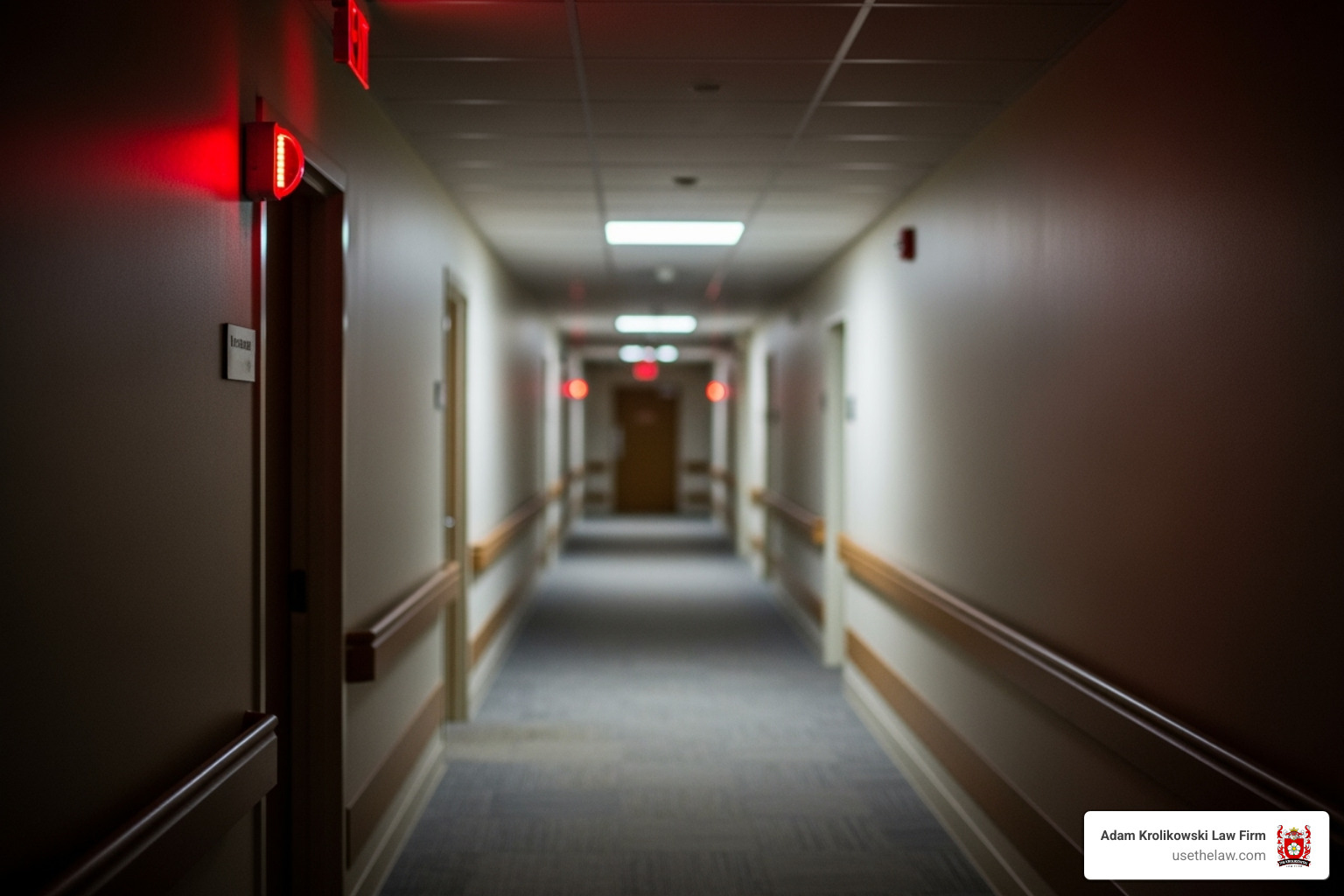
An unanswered call light is a symbol of a facility failing its residents. When you visit, notice how quickly staff respond. It reveals a lot about the quality of care and whether systemic problems like understaffing are putting residents at risk.
The Root Causes: Why Does Nursing Home Abuse Happen?
Nursing home abuse stems from multiple systemic failures. While about 1 in 6 seniors in the community experience abuse, an alarming 2 in 3 nursing home staff admit to committing it, signaling a broken system.
- The staffing crisis: Understaffing is a core problem. Overworked caregivers cannot meet every resident’s needs, leading to dangerous neglect and burnout.
- Burnout and stress: Low pay and exhausting work lead to staff burnout. This increases the risk of neglect and frustration-driven abuse.
- Inadequate training: Many facilities fail to properly train staff, especially for residents with dementia. Without knowing how to handle complex situations or what constitutes abuse, caregivers are ill-equipped to prevent it.
- Profit over people: Some for-profit homes prioritize their bottom line over resident care. Research links private equity ownership to more preventable ER visits. Funds may be diverted from staffing to boost profits.
- Lack of accountability: Many facilities are repeat offenders who face few consequences for safety violations. When penalties are weak, non-compliance becomes normalized, and the cycle of nursing home abuse continues.
Resident and Systemic Risk Factors
Certain residents are more vulnerable to abuse due to specific risk factors.
- Dementia or cognitive impairment: These residents are at high risk, as they may be unable to communicate or remember abuse. Nearly 50% of residents with dementia experience abuse or neglect, as confirmed by Scientific research on elder abuse risk factors.
- Physical dependence: Residents who rely on staff for all basic needs are completely at their caregivers’ mercy.
- Social isolation: Residents with few visitors are easier targets for abusers who know no one is watching.
- Other vulnerabilities: Mental illness, veteran status, and being an LGBTQ+ elder also increase risk, with studies showing 8% of LGBTQ+ seniors have been physically abused by a caregiver.
These individual risks are compounded by systemic failures. When facilities face no consequences for repeat violations, reporting systems are poor, and inspections are weak, abuse can flourish. This normalization of non-compliance creates a culture where poor care is accepted, and vulnerable residents suffer.
Taking a Stand: How to Report Nursing Home Abuse and Seek Justice
Finding potential nursing home abuse is overwhelming, but taking action is critical.
First, ensure safety. If your loved one is in immediate danger, call 911. This includes serious injuries, falls, or signs of assault.
Next, document everything. Keep detailed notes of incidents (dates, times, people involved), take photos of injuries or poor conditions, and record changes in your loved one’s health or behavior. This evidence is vital.
Report concerns to the facility’s administration in writing and keep a copy. They are legally obligated to investigate.
If the facility is unresponsive or you are uncomfortable reporting to them, contact external agencies:
- The Long-Term Care Ombudsman Program advocates for residents. In California, you can Find your local Ombudsman.
- Adult Protective Services (APS) investigates abuse and neglect. California families can Contact Adult Protective Services (APS) directly.
- State licensing agencies, like California’s Department of Public Health, enforce regulations. For an Example of a state complaint process, you can see how other regions handle these cases.
- For suspected criminal acts like assault or theft, contact local law enforcement.

Making that call takes courage, but it is one of the most important steps you can take.
Reporting Abuse and Filing a Complaint
When filing a complaint, be specific: provide the names of those involved (resident, facility, staff), a detailed description of the incident, and the location, date, and time. The Patient’s Bill of Rights legally protects residents from abuse, neglect, and retaliation for voicing grievances. Violating these rights is breaking the law.
Legal Options for Victims of Nursing Home Abuse
Families also have legal options to hold facilities accountable. At Adam Krolikowski Law Firm, we have over 25 years of experience fighting for those harmed by negligence. We handle complex nursing home abuse cases that others may turn away, standing up to corporations that prioritize profits over people.
Legal actions can include:
- Wrongful death lawsuits: If abuse or neglect led to a death, this can help recover damages for funeral costs, medical bills, and loss of companionship.
- Personal injury claims: For survivors, these claims seek compensation for medical care, therapy, and other needs.
Compensation can cover medical expenses as well as pain and suffering for the emotional trauma endured. In egregious cases, punitive damages may be awarded to punish the facility.
The legal process is complex and involves strict statutes of limitations (deadlines for filing). Consulting with a law firm early is crucial. We guide families through each step, handling the legal work so you can focus on your loved one. Our goal is to secure resources for recovery and hold negligent facilities accountable. If you suspect a loved one is a victim, learn about your legal options as an Orange County resident.
Whether you’re in Santa Ana or elsewhere in Orange County, we are ready to fight for what’s right.
Frequently Asked Questions about Abuse in Care Facilities
What is the most common type of abuse in nursing homes?
While physical abuse is a serious concern, psychological or emotional abuse is the most common type. This includes yelling, threats, isolation, or ridicule that harms a resident’s dignity.
A major study found that, in the past year, 32.5% of staff admitted to committing psychological abuse, compared to 9.3% for physical abuse and 12.0% for neglect. You can explore this research further in Data on abuse prevalence in institutions. The actual rates are likely higher, as these figures are self-reported.
Emotional abuse is often tied to staff burnout and frustration, highlighting the impact of systemic problems like understaffing.
What is considered nursing home negligence?
Nursing home negligence is a facility’s failure to provide the required standard of care, resulting in harm. Unlike intentional abuse, negligence often stems from systemic issues like understaffing or poor training, not malicious intent. For example, a resident becoming malnourished because there are not enough aides to help with meals is negligence.
Common examples include:
- Bedsores from not repositioning residents.
- Falls due to lack of supervision or unsafe conditions.
- Medication errors like wrong dosages or missed medications.
- Poor hygiene and untreated medical issues.
The consequences can be severe, turning preventable issues like a small sore or a fall into a life-threatening infection or permanent disability. These are often the predictable result of a facility not meeting its basic obligations.
What are the first steps if I suspect abuse?
If you suspect nursing home abuse, act quickly.
- Ensure immediate safety: If there is immediate danger, call 911.
- Document everything: Take notes, photos, and keep records of all observations and communications.
- Report your concerns: Inform the facility administration in writing. Also, contact external agencies like the Long-Term Care Ombudsman Program and Adult Protective Services (APS). For criminal acts, call the police.
- Seek legal advice: A law firm with experience in these cases can help you understand your options and hold the facility accountable. We have over 25 years of experience with complex cases and are committed to fighting for victims. You do not have to face this alone.
Conclusion
Entrusting a loved one to a nursing home requires faith that is too often broken. Nursing home abuse and neglect are a troubling reality, but awareness is a powerful tool. Knowing the signs—from unexplained bruises to unanswered call lights—allows you to advocate for those who cannot speak for themselves.
Systemic issues like understaffing and weak enforcement create environments where abuse can occur, but your vigilance can make a difference. Every report filed and question asked helps protect residents.
At the Adam Krolikowski Law Firm, we have spent over 25 years standing up for victims of negligence. We understand the emotional toll and legal complexity of these situations. We handle the difficult cases, aiming to secure compensation and hold negligent facilities accountable.
If you suspect abuse, trust your instincts, document what you see, and ask for help. You are not alone.
If you suspect a loved one is a victim, learn about your legal options as an Orange County resident.
Together, we can work toward a future where every senior receives the safe, dignified care they deserve.