

Understanding Your Rights After a Dog Bite Incident
Personal injury dog bite cases are frightening and traumatic events. While dogs are often our best friends, a bite can lead to serious physical and emotional harm.
Quick Answer for Dog Bite Victims:
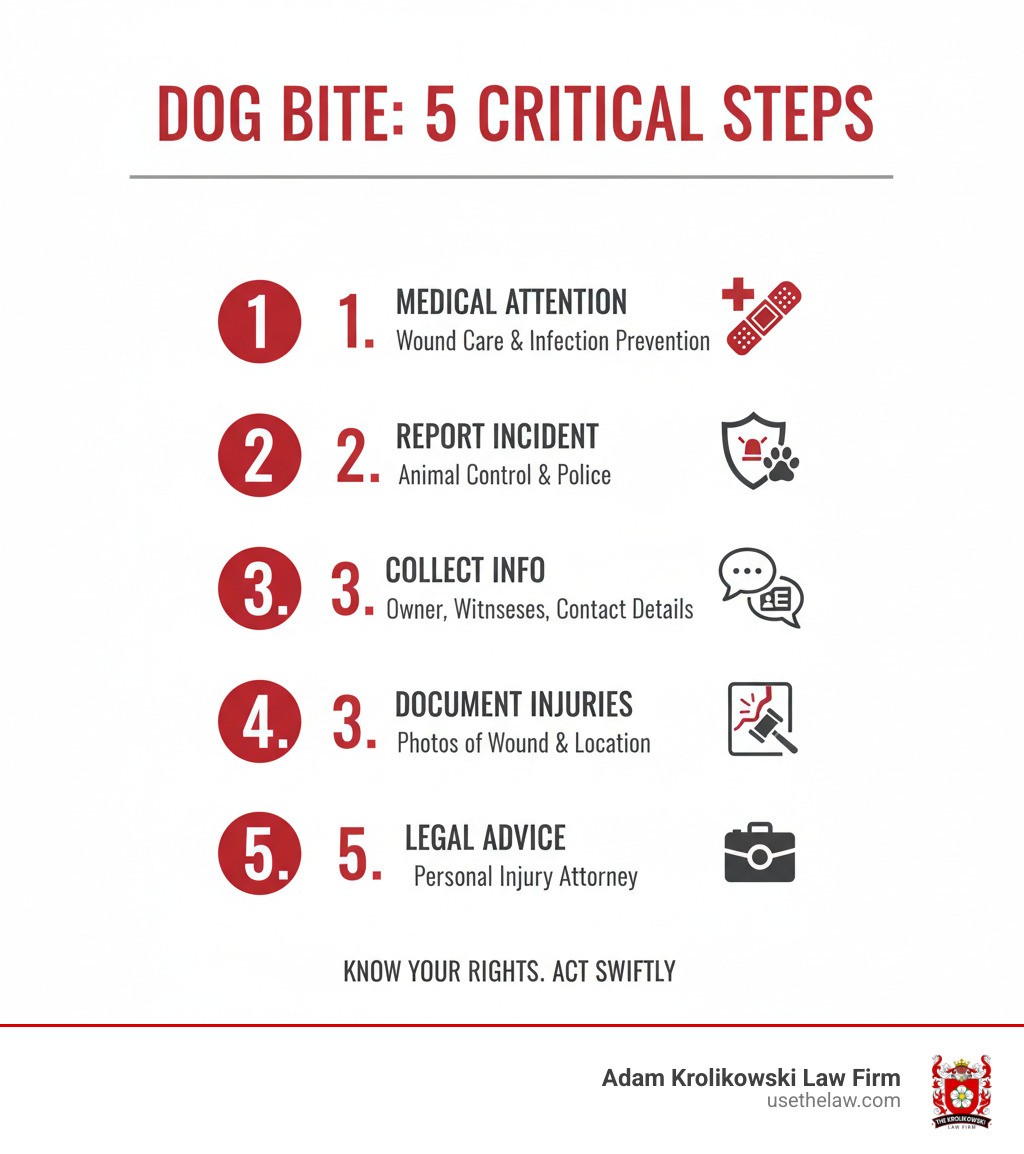
- Seek immediate medical care for potential infections.
- Report the incident to animal control and the police.
- Document everything: photos, witness info, and owner details.
- Know your rights: California’s strict liability laws typically hold owners responsible.
- Act quickly: A 2-year statute of limitations applies to claims.
- Contact a lawyer for serious injuries or complex cases.
Over 4.5 million Americans are bitten by dogs annually, with children under 12 being the most frequent victims. These incidents can cause severe injuries, emotional trauma, and financial strain from medical bills and lost income.
California’s strict liability law means dog owners are responsible for damages even if their dog has never been aggressive before. However, navigating the claims process to secure fair compensation can be challenging. Understanding your legal rights is crucial to avoid shouldering the financial burden alone.
Personal injury dog bite word guide:
Immediate Steps to Take After a Dog Bite
The actions you take immediately after a dog bite can significantly impact your health and a potential personal injury dog bite claim.
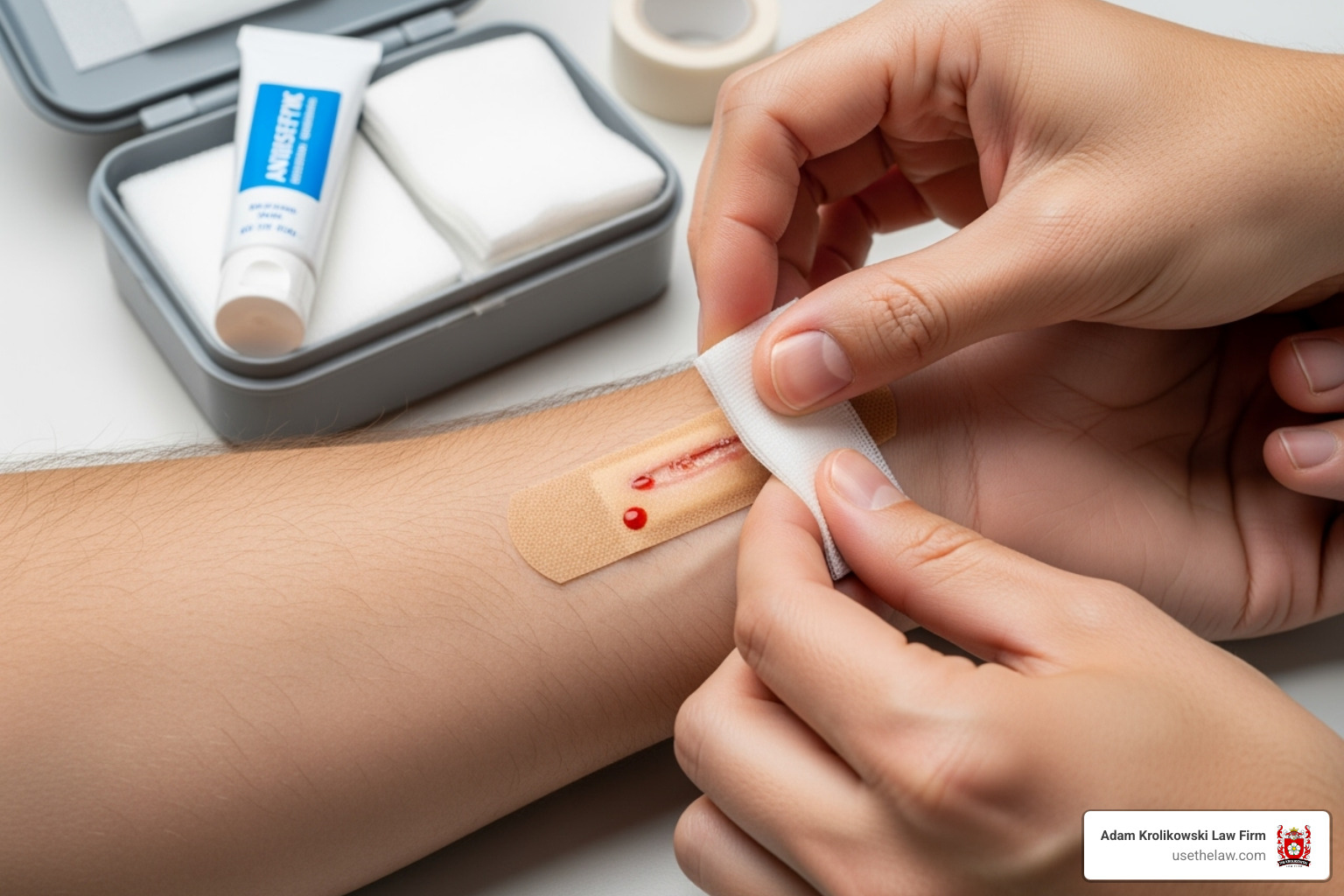
Get medical help right away. Even minor bites can cause serious infections like cellulitis or tetanus due to bacteria in a dog’s mouth. A medical professional can properly clean the wound, check for underlying damage, and determine if antibiotics or rabies treatment is necessary. These medical records also serve as crucial evidence for your claim.
Report what happened to local animal control and, if necessary, the police. An official report from animal control helps track the dog’s vaccination history and ensures it is quarantined if required. A police report provides a neutral, third-party record of the incident.
If it is safe, gather information about the dog and owner. Get the owner’s name, address, and phone number, along with the dog’s breed and description. Ask any witnesses for their contact information, as their statements can be invaluable.
Document everything. Take photos of your injuries immediately and throughout the healing process. Photograph the location of the bite. Keep a detailed journal of your medical treatments, expenses, and how the injury impacts your daily life. Save all bills and receipts.
For more guidance on documenting your case, see Dog Bites Recourse Personal Injury Attorney. Thorough documentation strengthens your position when seeking compensation.
Understanding Legal Liability for a Personal injury dog bite
After a dog bite, victims often wonder who is responsible for their medical bills and other losses. In a personal injury dog bite case, the law provides clear answers about liability, often favoring the injured person.
The Concept of ‘Strict Liability’ in Dog Bite Cases
California follows a “strict liability” law for dog bites. This means if a dog bites someone, the owner is responsible for the injuries, regardless of whether the dog had a history of aggression or the owner was being careful. Unlike states with a “one-bite rule,” California law does not give a dog a free pass.
To establish a claim under strict liability, you generally only need to prove the dog bit you and you were lawfully on the property where the bite occurred. This places the responsibility on the dog owner for the animal’s actions. Other jurisdictions, like Ontario under its Dog Owner’s Liability Act, have similar owner-focused liability laws. To understand how this applies to your case, learn more at Attorney Dog Bite.
Exceptions and Defenses: Provocation and Trespassing
While strict liability is powerful, there are exceptions. A dog owner may argue they are not fully responsible if certain defenses apply.
Provocation is a common defense, where the owner claims the victim’s actions caused the dog to bite. This involves more than accidentally startling a dog; it typically requires intentional teasing or harming the animal.
Trespassing is another defense. The strict liability rule generally applies only if the victim was lawfully on the property. If you were trespassing, the owner may not be held responsible.
In these situations, a court may apply principles of “comparative fault,” potentially reducing compensation if you are found partially responsible for the incident. If an owner claims you provoked the dog, it is important to gather evidence and witness statements to counter their argument. Learn more about handling these defenses at Dog Bite Accident Attorney.
Who Can Be Held Liable? Beyond the Owner
Liability for a personal injury dog bite can extend beyond the dog’s owner. Identifying all potentially responsible parties is key to securing fair compensation, especially if the owner is uninsured.
- Landlords may be liable if they knew a tenant’s dog was dangerous and failed to act.
- Keepers or harborers, such as dog sitters or friends caring for the animal, can be held responsible as they had control of the dog during the incident.
- Property managers and homeowners’ associations (HOAs) could be liable if they failed to enforce rules regarding dangerous animals.
- Employers might be responsible if the bite occurred at a workplace where the dog was present for business purposes.
An attorney can help identify all potential sources of compensation. For local information, see Santa Ana Dog Bite.
Injuries Without a Bite: Can You Still File a Claim?
A dog can cause serious harm without actually biting. You may still have a valid claim for injuries sustained in these situations.
For example, a large dog could knock you down, causing broken bones or a back injury. You might also fall and injure yourself while trying to escape a charging dog. The psychological trauma from being chased or threatened by an aggressive dog can also be significant, leading to anxiety or PTSD.
These non-bite injury cases are typically pursued under general negligence principles rather than strict liability. This requires showing that the owner failed to properly control their animal, and this failure led to your injuries. If a dog’s actions caused you harm, with or without a bite, you may have a valid claim.
Navigating the Dog Bite Claim Process
After a dog bite, the path to recovery involves navigating insurance claims, legal proceedings, and settlement negotiations. Understanding this process can make it less overwhelming while you heal.

Proving Your Personal injury dog bite Claim: The Role of Evidence
To succeed in a personal injury dog bite claim, you must provide evidence to support your case. Key pieces of evidence include:
- Medical records: These documents prove the severity of your injuries, the treatment received, and the associated costs.
- Photos and videos: Visual evidence of your injuries, the healing process, any scarring, and the location of the incident (e.g., a broken fence) can be very powerful.
- Animal control and police reports: Official reports provide an unbiased account of the incident, the dog’s history, and other important details.
- Witness statements: Testimony from people who saw the attack can corroborate your version of events, especially if provocation is alleged.
- Your own detailed account: Write down everything you remember about the incident and how your injuries have affected your life.
Gathering this information quickly is vital. For more on building a strong case, see Dog Bite Attorneys.
The Statute of Limitations: Why Acting Promptly is Crucial
In California, you have a limited time to file a personal injury dog bite lawsuit. The statute of limitations is two years from the date of the injury. If you miss this deadline, you will likely lose your right to seek compensation.
Two years can pass quickly, especially when dealing with ongoing medical treatment. Acting promptly is crucial because evidence can disappear, witnesses’ memories can fade, and insurance companies may not take a delayed claim as seriously.
Starting the legal process early ensures that all evidence is preserved and that you meet all legal deadlines. For more on timing, see our Orange County Dog Bite Complete Guide.
How a Personal Injury Lawyer Can Help
Handling a personal injury dog bite claim alone can be difficult. A lawyer can manage the complexities of your case so you can focus on recovery.
An attorney can help by:
- Navigating the legal system: We understand California’s strict liability laws and common defenses.
- Dealing with insurance companies: Insurers aim to minimize payouts. We know their tactics and negotiate for a fair settlement.
- Calculating your full damages: We assess all your losses, including medical bills, lost wages, future care costs, and pain and suffering.
- Building a strong case: We gather evidence, meet deadlines, and handle all legal procedures.
- Fighting for your interests: We are prepared to negotiate a settlement or take your case to trial to protect your rights.
Most personal injury lawyers work on a contingency fee basis, meaning you don’t pay unless we win your case. For local assistance, review our Santa Ana Dog Bite Attorney Guide.
Compensation and Damages in Dog Bite Cases
After a dog attack, victims face medical bills, lost income, and lasting emotional trauma. Understanding the compensation you can claim is a key part of your recovery from a personal injury dog bite.
Types of Compensation You Can Receive
Compensation is divided into two main categories: economic and non-economic damages.
Economic damages are tangible financial losses that can be calculated, including:
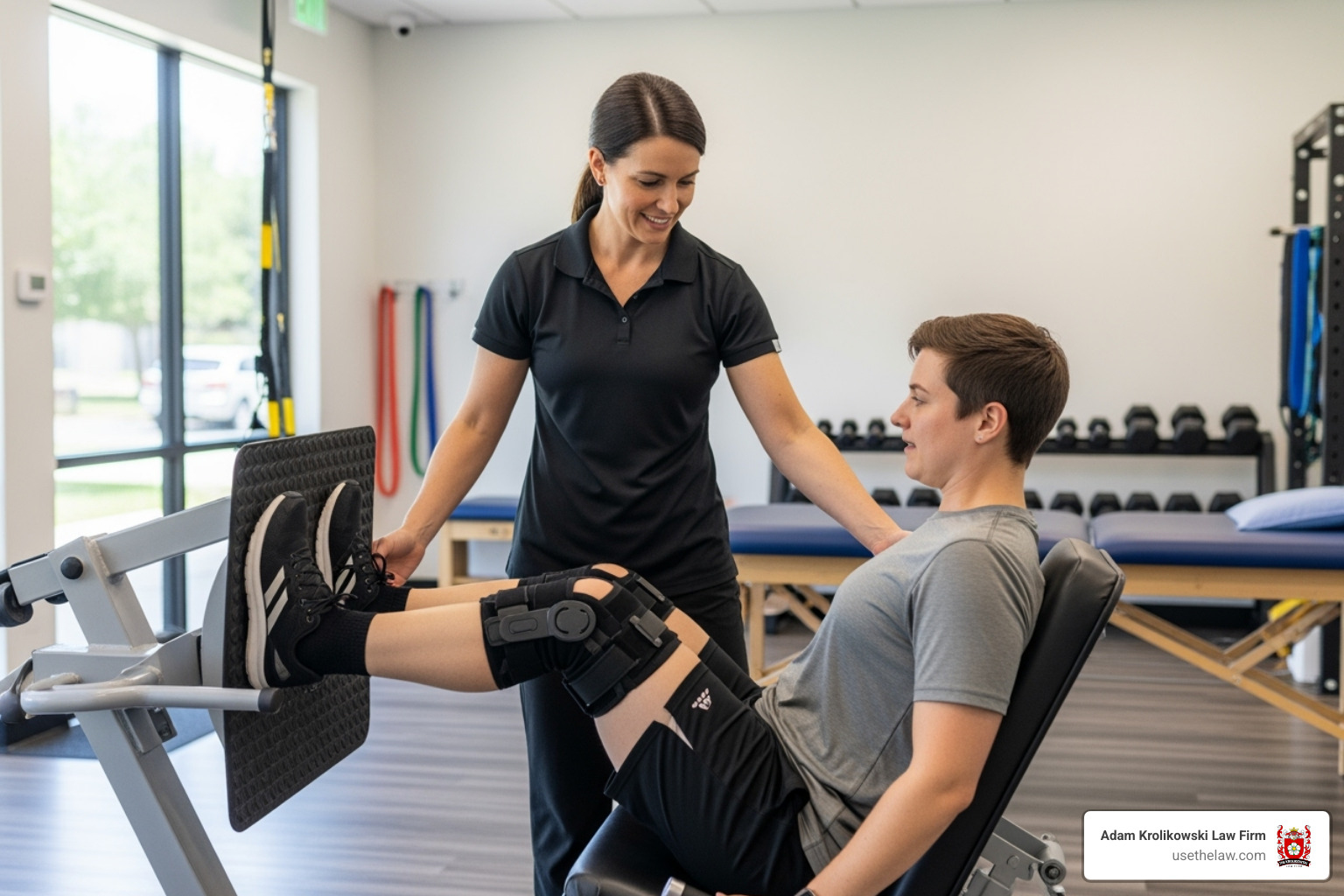
- Medical expenses: Ambulance rides, ER visits, surgery, physical therapy, and psychological counseling.
- Lost wages: Income lost from being unable to work, as well as future loss of earning capacity.
- Property damage: Torn clothing, broken glasses, and other damaged personal items.
Non-economic damages compensate for intangible losses that don’t have a specific price tag, such as:
- Pain and suffering: For the physical pain and discomfort you have endured.
- Emotional distress: For anxiety, fear, depression, or PTSD resulting from the attack.
- Permanent scarring and disfigurement: Especially for visible scars that impact self-confidence.
- Loss of enjoyment of life: For the inability to participate in hobbies and activities you once loved.
Calculating Pain and Suffering and Long-Term Consequences
Placing a monetary value on pain and suffering is complex. The long-term consequences of a personal injury dog bite are significant factors in this calculation.
Physical trauma can include permanent scarring, chronic pain from nerve damage, and reduced mobility. The psychological impact is often just as severe, with many victims developing phobias, anxiety, or PTSD that affects their daily lives.
To calculate these damages, we consider the severity of the injury, its impact on your daily life, your long-term prognosis, and awards in similar cases. Working with medical professionals helps build a comprehensive picture of your suffering to advocate for fair compensation. For more information, see Dog Bite Lawyer Orange County CA.
Special Considerations When a Child is the Victim
Dog bites are especially devastating for children, who are more vulnerable and represent a large percentage of victims. The impact can be severe.
- Psychological trauma: A child’s sense of safety can be shattered, leading to long-term phobias, anxiety, and social difficulties.
- Future medical needs: Scars on a growing child may require multiple reconstructive surgeries over many years.
- Court approval: Any settlement for a minor must be approved by a court to ensure it is in the child’s best interest. The funds are often placed in a protected account until the child reaches adulthood.
We understand the unique challenges of cases involving children and are committed to protecting their long-term interests.
Frequently Asked Questions about Personal Injury Dog Bite Claims
It’s normal to have questions after a dog bite. Here are answers to some common concerns for personal injury dog bite victims.
What should I do if the dog owner argues I provoked the dog?
This is a common defense, but it doesn’t automatically defeat your claim. Legally, “provocation” is more than just walking past a dog or startling it; it usually involves intentional teasing or abuse. Your consistent account of the incident, along with witness testimony and any evidence of the dog’s prior aggression, can effectively counter this claim. An attorney can help challenge these allegations and protect your rights.
Can I file a claim if a friend’s or relative’s dog bit me?
Yes. This is a sensitive situation, but personal injury dog bite claims are typically paid by the owner’s homeowner’s or renter’s insurance policy, not out of their own pocket. Your loved one has this insurance for protection in such events. An attorney can handle communications professionally, explaining that the claim is against the insurance company, which helps preserve your personal relationship while you seek the compensation you need for your injuries.
For more on this topic, see Dog Bite Attorneys.
What happens if the dog’s owner is unknown or has no insurance?
These cases are more challenging but not without options. If the owner is unknown (a “hit-and-run” dog attack), report the incident to animal control, as they may be able to locate the owner. If the owner is found but has no insurance, you can sue them directly, but recovery will depend on their personal assets.
In either scenario, an attorney can explore all possible avenues for compensation, including other potentially liable parties or coverage under your own insurance policies. We can provide a realistic assessment of your options.
Conclusion
A personal injury dog bite can be a devastating event, leaving you with physical wounds, medical bills, and emotional trauma. As we’ve discussed, it is critical to seek medical care, report the incident, and document everything.
Key takeaways include understanding your rights under California’s strict liability law, acting within the two-year statute of limitations, and preserving all evidence. These steps are fundamental to building a strong claim for the compensation you deserve.
At Adam Krolikowski Law Firm, we have over 25 years of experience helping clients steer these challenging situations. We handle complex cases that other firms may not, focusing on your physical, emotional, and financial recovery. Our role is to manage the legal details so you can focus on healing.
Don’t let uncertainty prevent you from seeking help. We offer a free consultation and work on a contingency basis, so you pay no fees unless we win your case.
Find out more about your options with a Dog Bite Lawyer in Orange County, California
