
Understanding Your Rights After an Injury on Someone’s Property
If you are searching for premises liability attorneys near me after an unexpected injury, understanding what they do is key. These legal professionals can:
- Investigate your incident and gather important evidence.
- Help prove property owner negligence, which is vital for your claim.
- Seek fair compensation for your medical bills, lost income, and suffering.
- Fight for your rights, even against large insurance companies.
A serious fall or another accident caused by dangerous property conditions can be a life-changing event, leading to painful injuries, expensive medical bills, and lost wages.
This is where premises liability law comes in. It’s the area of personal injury law stating that property owners must keep their property reasonably safe for visitors. If they fail to do so, and you get injured because of an unsafe condition, they might be held accountable.
This guide explains what premises liability means and what steps you can take to protect your rights. To have a valid claim, you must show the property owner was negligent. This means they knew about a hazard, or should have known, and didn’t fix it or warn you.
Understanding Premises Liability: From Slip and Falls to Inadequate Security
Premises liability is about a property owner’s responsibility to keep a property safe. If you get hurt because a property wasn’t well-maintained, these laws come into play. To win a case, you usually need to show the owner was negligent—that they failed to do what they should have to keep things safe, and that failure led to your injury. The owner’s responsibility can even change based on why you were on their property.

The Legal Duty of Property Owners
Property owners have a basic “duty of care” to keep their space reasonably safe for anyone who comes onto it. This means meeting reasonable safety standards and warning you about any known dangers. For example, a grocery store should clean up a spill or put up a “wet floor” sign. Owners are also often expected to look for dangers they don’t know about yet but reasonably should find. If they spot a problem, they need to fix it.
However, an injury on someone else’s property doesn’t automatically make them responsible. Most places don’t have “strict liability” for these cases. You typically need to show they were negligent: they knew (or should have known) about a danger and didn’t act quickly enough to fix it or warn you. Understanding this difference is key.
How Your Visitor Status Affects Your Claim
The level of care a property owner owes you can depend on your “visitor status.” This status can significantly affect your claim.
Here’s a simple breakdown of how your visitor status changes the property owner’s duty to you:
| Visitor Status | Definition | Duty of Care Owed by Property Owner |
|---|---|---|
| Invitee | Someone invited onto the property for the owner’s benefit (e.g., customers in a store, guests at a hotel). | Highest duty of care. Owners must actively inspect for hazards, even those they are unaware of, and either fix them or warn about them. |
| Licensee | Someone on the property with the owner’s permission but for their own purpose (e.g., social guests at a home). | Lower duty of care. Owners must warn about known hazards that the licensee is unlikely to find on their own. They generally don’t need to inspect for unknown dangers. |
| Trespasser | Someone on the property without permission. | Lowest duty of care. Owners generally owe no duty beyond not intentionally or willfully harming them. However, exceptions exist, like the “attractive nuisance” doctrine for children. |
Usually, property owners owe little to trespassers beyond not intentionally harming them. A major exception is the “attractive nuisance” doctrine, especially for children. If a property has something tempting to a child, like an unfenced swimming pool, the owner might be responsible if a child gets hurt. This is because young children don’t always understand danger, and owners must secure things that might lure them into harm’s way.
Common Types of Premises Liability Incidents
Premises liability covers a wide range of incidents where an unsafe condition leads to injury. When people look for premises liability attorneys near me, they are often dealing with one of the following:
- Slip and fall accidents: Caused by hazards like spills, uneven pavement, or uncleared ice and snow.
- Inadequate security assaults: When a property owner fails to provide basic safety measures like good lighting or working locks, leading to an assault.
- Dog bite cases: The owner may be responsible if their dog bites you, especially if they knew the dog was aggressive.
- Swimming pool injuries: Often involving children, these can happen if a pool isn’t properly fenced, supervised, or maintained.
- Poor maintenance: Injuries from broken stairways, shaky railings, or collapsing decks.
- Inadequate lighting: Poorly lit hallways, parking lots, or stairwells can hide dangers and lead to falls or other incidents.
- Exposure to toxic substances: Illness from mold, lead paint, or dangerous chemicals.
- Elevator, escalator, and fire-related injuries: Accidents due to poor upkeep or negligence, such as bad wiring or blocked exits.
The core principle is the same: if you were hurt because a property owner didn’t fix a dangerous condition they should have known about, you might have a claim.
Navigating a Claim: Key Legal Problems and Why You Need a Premises Liability Attorney Near Me
Dealing with the legal side of an injury can be a major hurdle. It involves proving someone else’s carelessness, facing tricky legal terms, and dealing with insurance companies. This is why finding the right premises liability attorneys near me can make all the difference.

Proving Negligence: The Four Elements You Must Establish
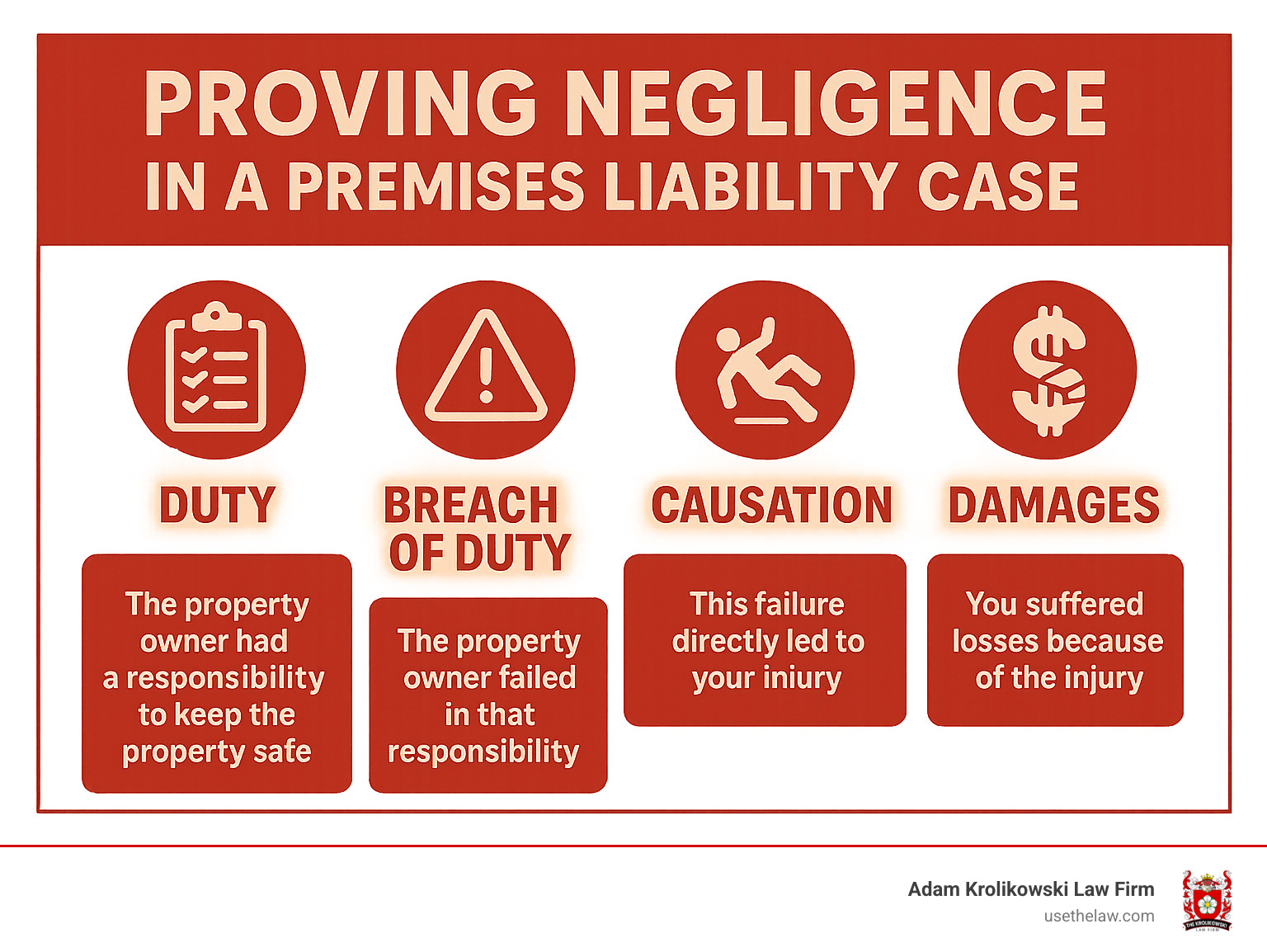
To make a strong claim, you must show the property owner’s carelessness directly caused your injury. This requires proving four elements:
- Duty of Care: The property owner had a legal duty to keep you safe, defined by your visitor status.
- Breach of Duty: The owner failed to act as a reasonable property owner should have, for instance, by not fixing a known hazard. A key part is proving they knew or should have known about the danger.
- Causation: The owner’s breach of duty directly caused your injury.
- Damages: You suffered losses, such as medical bills and lost wages, because of the injury.
Collecting evidence like accident reports, photos, witness statements, and medical records is vital to prove these points.
Why Finding the Right “Premises Liability Attorneys Near Me” is Crucial
Handling a claim alone is difficult, as insurance companies aim to pay as little as possible. An attorney can be priceless. We can:
- Investigate what happened: We dig deep to find out what went wrong, gathering proof like security footage and witness statements.
- Gather all the evidence: We know what proof is needed to build a strong case, including documenting the scene and your medical records.
- Calculate your total damages: We work to ensure all your potential losses, both financial and emotional, are fully considered.
- Negotiate with insurance adjusters: We handle all talks with the insurance company, pushing back against their tactics to get you fair compensation.
- Navigating complex legal procedures: We understand the complex legal requirements, court processes, and deadlines.
- Representing you in court: If a fair agreement isn’t reached, we are prepared to fight for your rights in court.
Facing the legal system alone can feel overwhelming. We’re here to guide you, every step of the way.
Understanding California’s Laws for Your Case
California has specific rules for premises liability. First, the statute of limitations gives you a time limit to file a lawsuit. For personal injury claims, you generally have two years from the day the incident happened to file your lawsuit. Missing this deadline could mean losing your right to compensation.
California also follows a pure comparative negligence rule. This principle, outlined in state law such as California Civil Code § 1714, means you can still get compensation even if you were partly to blame for your accident. Your total compensation is simply reduced by your percentage of fault. For example, if you had $100,000 in damages but were 20% at fault, you could still recover $80,000. This prevents property owners from avoiding all responsibility by just blaming you.
What to Do After an Accident and What Compensation You Can Seek
After an injury on someone else’s property, the moments that follow can feel chaotic. What you do right after an accident can make a huge difference for your health and any potential legal action. It’s about protecting your rights and ensuring you’re cared for.
Immediate Steps to Protect Your Health and Your Claim
If you’ve been injured on someone else’s property, we strongly recommend taking these steps:
- Seek Medical Attention Immediately: Your health is the priority. Seeing a doctor creates an official record connecting your injuries to the accident.
- Report the Incident to the Property Owner or Manager: Tell the property owner or manager what happened. Ask for a copy of the incident report to create a paper trail.
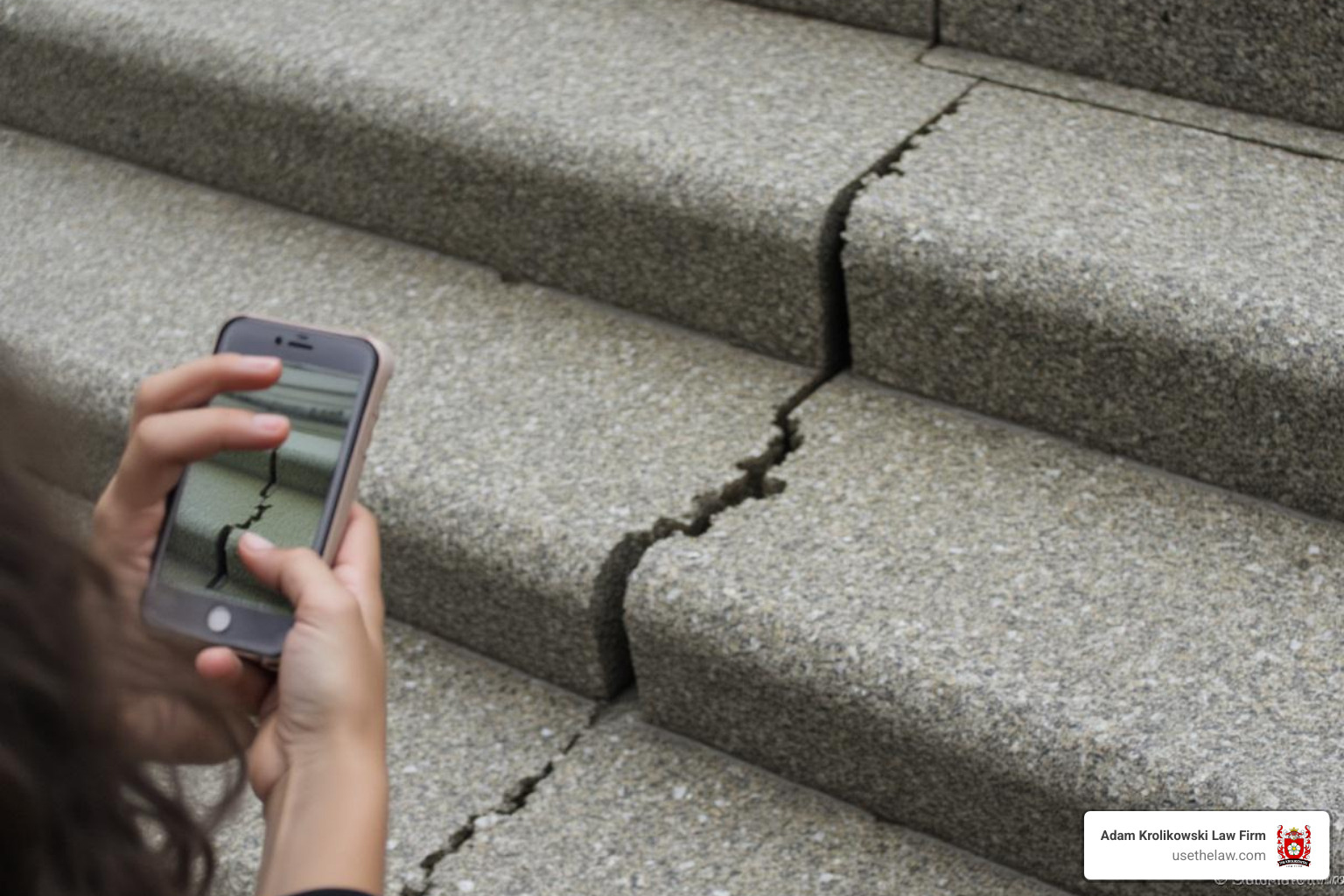
- Take Photos and Videos of the Hazard and Your Injuries: If it’s safe, document the hazard that caused your injury and the injuries themselves. Visual evidence is powerful.
- Get Contact Information from Any Witnesses: If anyone saw what happened, ask for their name and contact information. Their testimony can support your story.
- Avoid Giving Recorded Statements to Insurance Companies Without Legal Counsel: The owner’s insurance company may call you. Be polite, but do not give a recorded statement or sign anything without talking to a lawyer first. Their goal is often to minimize your claim.
Types of Damages You Can Recover
Our main goal in a premises liability claim is to help you get compensation for every way your injury has affected your life. This compensation includes two types of damages.
Economic damages are your direct financial losses, including:
- Medical expenses: All costs from ER visits and surgery to future care needs.
- Lost wages: Income you missed from being unable to work.
- Loss of earning capacity: Compensation if the injury affects your future ability to earn money.
- Property damage: Costs to repair or replace personal items damaged in the accident.
- Rehabilitation costs: Physical or occupational therapy expenses.
Non-economic damages cover the non-financial impacts of your injury, such as:
- Pain and suffering: For your physical discomfort and ongoing pain.
- Emotional distress: For anxiety, depression, or fear resulting from the injury.
- Loss of enjoyment of life: If the injury prevents you from enjoying hobbies and activities.
In tragic cases where an injury leads to a fatality, a wrongful death claim can be filed by family members to seek compensation for funeral costs, lost support, and more.
Frequently Asked Questions about Premises Liability Claims
It’s normal to have questions when considering a premises liability claim. Here are answers to some common concerns.
How much does it cost to hire a premises liability attorney?
We work on what’s called a contingency fee basis for personal injury cases. This means:
- There are no upfront costs to get your case started.
- We only get paid if we successfully recover compensation for you. This is often called “no win, no fee.”
- Our fee is a pre-agreed percentage of the final settlement or verdict amount.
This payment structure allows everyone to pursue justice, as we take on the financial risk of litigation.
What if the property owner says the accident was my fault?
It’s a common tactic for property owners to shift blame. However, California’s pure comparative negligence rule allows you to recover damages even if you are found partially at fault. Your compensation is simply reduced by your percentage of fault. For example, if you are 30% at fault for an accident with $100,000 in damages, you could still receive $70,000. An attorney can fight against unfair accusations of blame to maximize your recovery.
How long will my premises liability case take to resolve?
There’s no single answer; a case can take a few months or several years. The timeline depends on several factors:
- Severity of your injuries: More severe injuries requiring long-term care often take longer to resolve, as we must wait to understand the full extent of your damages.
- Clarity of the evidence: Cases with clear, undisputed evidence of negligence may move faster.
- Cooperation of the insurance company: A resistant insurance company can prolong the process, potentially requiring a lawsuit.
- Court backlogs: If a case goes to trial, court schedules can cause delays.
We will always keep you informed and work to resolve your case as efficiently as possible.
Conclusion: Taking the Next Step to Protect Your Rights
An injury on someone else’s property can turn your world upside down with pain, medical bills, and lost income. Remember: you have rights, and laws exist to protect you when property owners fail to keep their premises safe.
We’ve covered the key aspects of premises liability, from the owner’s legal duty to the elements of negligence. We’ve also stressed the importance of acting quickly after an accident to seek medical care and document everything.
Time is not on your side. California’s two-year statute of limitations means you must act quickly to preserve your rights before evidence is lost and memories fade.
The legal process is complex, and insurance companies have teams working to minimize payouts. That’s why having experienced premises liability attorneys near me can make a significant difference.
For those facing complex situations in Orange County, the Adam Krolikowski Law Firm has over 25 years of experience handling these types of cases. We are committed to helping injured individuals pursue the compensation they deserve. We handle cases on a contingency fee basis, which means you don’t pay unless we win your case.
Your injuries matter. Your financial recovery matters. And your rights matter. Don’t let a property owner’s negligence derail your life without fighting for the compensation you deserve.
Learn more about how a premises liability attorney can help you