

More Than Just a “Slip and Fall”: Understanding Premises Liability
When someone gets hurt on another person’s property, it often falls under the legal area of premises liability injury cases. This can feel confusing. But the basic idea is quite simple.
Here’s what premises liability means:
- It’s about responsibility. Property owners have a legal duty to keep their spaces safe.
- It covers injuries. If you get hurt because of a dangerous condition on someone else’s property, that’s where premises liability comes in.
- It’s not just slip and falls. While those are common, premises liability also includes things like dog bites, poor security leading to an assault, or injuries from falling objects.
- It focuses on negligence. This means the property owner didn’t act with reasonable care, and their oversight led to your injury.
Getting hurt unexpectedly is tough. You might face medical bills and lost wages. This guide will help you understand your rights and what to do next.
What is Premises Liability? The Legal Foundation
Premises liability is the legal principle that holds property owners and controllers responsible for keeping their property safe for others. It’s a legal obligation to act with reasonable care. When someone is injured due to a dangerous condition on a property, premises liability law provides a path to hold the responsible parties accountable. For more on how responsibility is determined, see our article on understanding liability in personal injury cases.
Who is Responsible? Owners, Tenants, and Occupiers
Determining who is responsible isn’t always simple. The law looks at who had “control” over the property where the injury occurred. This person or entity is known as the “occupier.”
An occupier can be the property owner, but it can also be a tenant, a landlord, or a property management company. For example, a tenant might be responsible for a hazard they create inside their rented space, while a landlord could be liable for neglecting common areas. It’s common for multiple parties to share responsibility, depending on who had the power to prevent the accident.
The “Duty of Care” in California
At the heart of every premises liability injury case is the “duty of care.” This is the legal obligation for property owners and occupiers to take reasonable steps to keep their property safe. This usually involves proper maintenance, fixing hazards, and warning visitors of potential dangers.
California’s standard is guided by California Civil Code Section 1714, which states that everyone is responsible for injuries caused by their failure to use reasonable care in managing their property. While older laws once based the level of care on a visitor’s status (like invitee, licensee, or trespasser), California now focuses on a single standard of reasonable care for most situations.
The key question is whether the property owner could have reasonably foreseen that a dangerous condition might cause an injury. If so, they had a duty to act. Understanding the legal duty of care explained is crucial, as it’s the foundation for proving negligence.
Not-So-Common Accidents: A Look at Real Premises Liability Injury Cases
While many think of slip-and-falls, premises liability injury cases cover a wide range of incidents where a dangerous property condition causes harm. Proving these cases requires showing the property owner was negligent. Let’s explore some common and surprising examples. For more insights, you can check out our Category: Premises Liability.
The Classic Slip-and-Fall (With a Twist)
Slip-and-falls are a frequent basis for premises liability injury cases. These incidents often involve:
- Wet floors or spills: From spilled drinks, leaky pipes, or mopping without warning signs.
- Icy surfaces: Uncleared snow or ice on sidewalks and parking lots.
- Poor lighting: In stairwells, parking lots, or walkways that hide hazards.
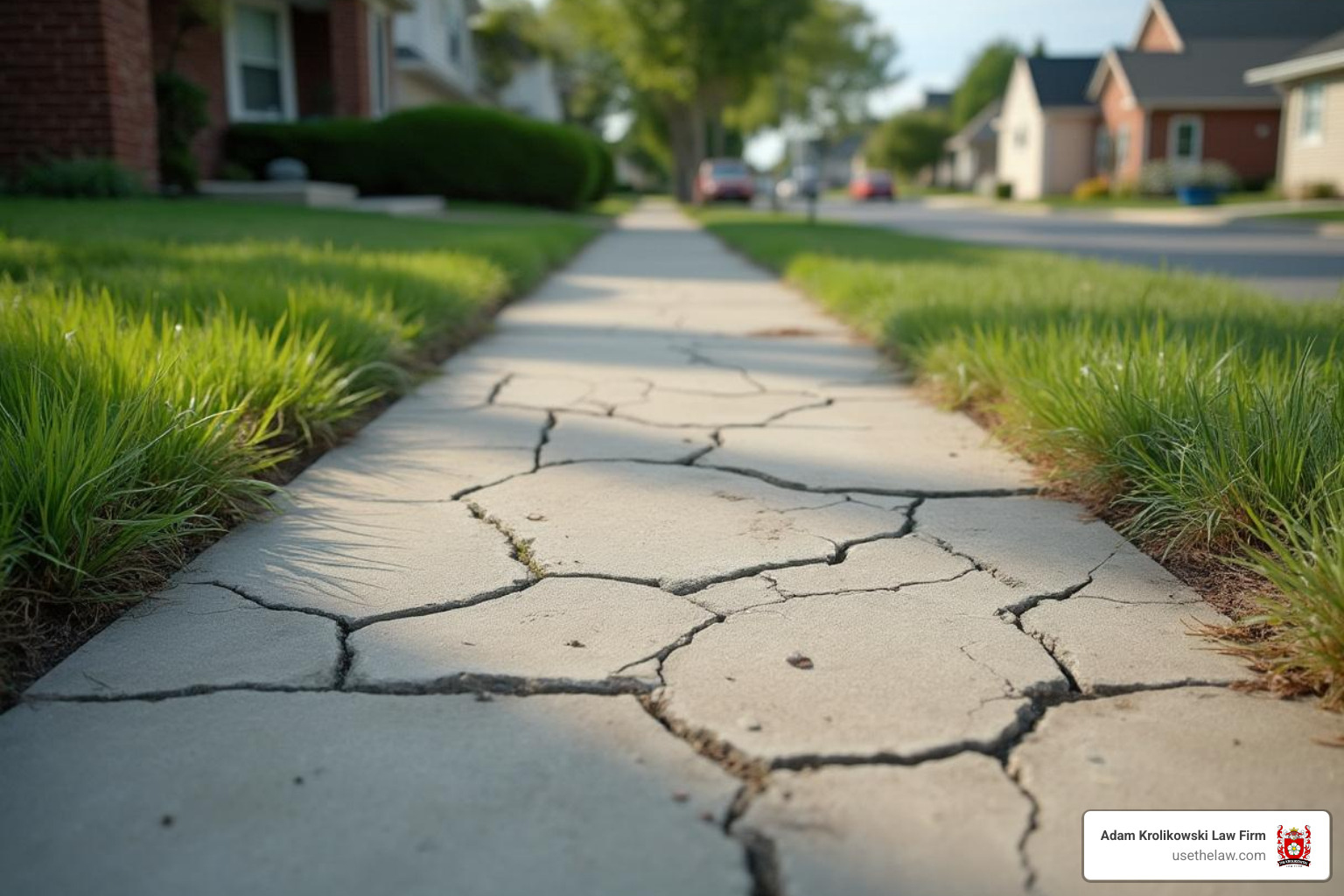
- Uneven flooring: Cracked pavement, broken stairs, or loose floorboards.
A key challenge is proving “notice”—that the owner knew or should have known about the hazard. This is called “constructive notice,” meaning the danger existed long enough that a reasonable owner would have found and fixed it. The complexities of these cases show why understanding the financial impact of a Los Angeles slip and fall lawyer can be important.
When Security Fails: Negligent Security Claims
Sometimes the danger is not a physical defect but the threat of crime. Premises liability injury cases can arise from inadequate security that leads to assaults or robberies. This is known as negligent security.
Common scenarios include poor lighting in parking lots, broken locks or gates, or a lack of security personnel in high-risk areas. The key is foreseeability: if a property owner should know about a risk of criminal activity, they must take reasonable steps to protect visitors. A California negligent security attorney can investigate these complex situations.
Man’s Best Friend? Dog Bite Liability
Dog bites are a major source of premises liability injury cases, and California leads the nation in these attacks. The harm is not just physical but can also cause lasting emotional trauma.
California has a “strict liability statute” (Civil Code Section 3342) for dog bites. This means if a dog bites someone in a public place or lawfully on private property, the owner is typically responsible for the damages, regardless of the dog’s history. Exceptions are rare but can include provocation by the victim.
Unexpected Dangers: From Wild Geese to Falling Objects
Beyond the usual incidents, premises liability injury cases can stem from bizarre circumstances. The principle remains: if a property owner’s negligence creates a dangerous condition that causes injury, they can be held liable.

Consider these scenarios:
- Falling debris: At construction sites, where owners and contractors must secure tools and materials.
- Swimming pool accidents: Due to inadequate fencing, lack of supervision, or faulty equipment.
- Elevator and escalator malfunctions: Resulting from poor maintenance or design defects.
- Toxic fumes: Exposure to mold or chemicals from a failure to maintain safe air quality.
- Wild animal attacks: A property owner could be liable if they created conditions that attracted dangerous wildlife or failed to warn of known animal hazards.
These examples show the broad scope of premises liability and the importance of investigating all potential sources of negligence.
Building Your Case: How to Prove Negligence
If you’re hurt on someone else’s property, the legal burden is on you (the plaintiff) to prove the owner was negligent. This means building a clear case showing their negligence directly caused your injuries. You can learn more about our approach in the Category: Personal Injury.
The Four Key Elements of a Claim
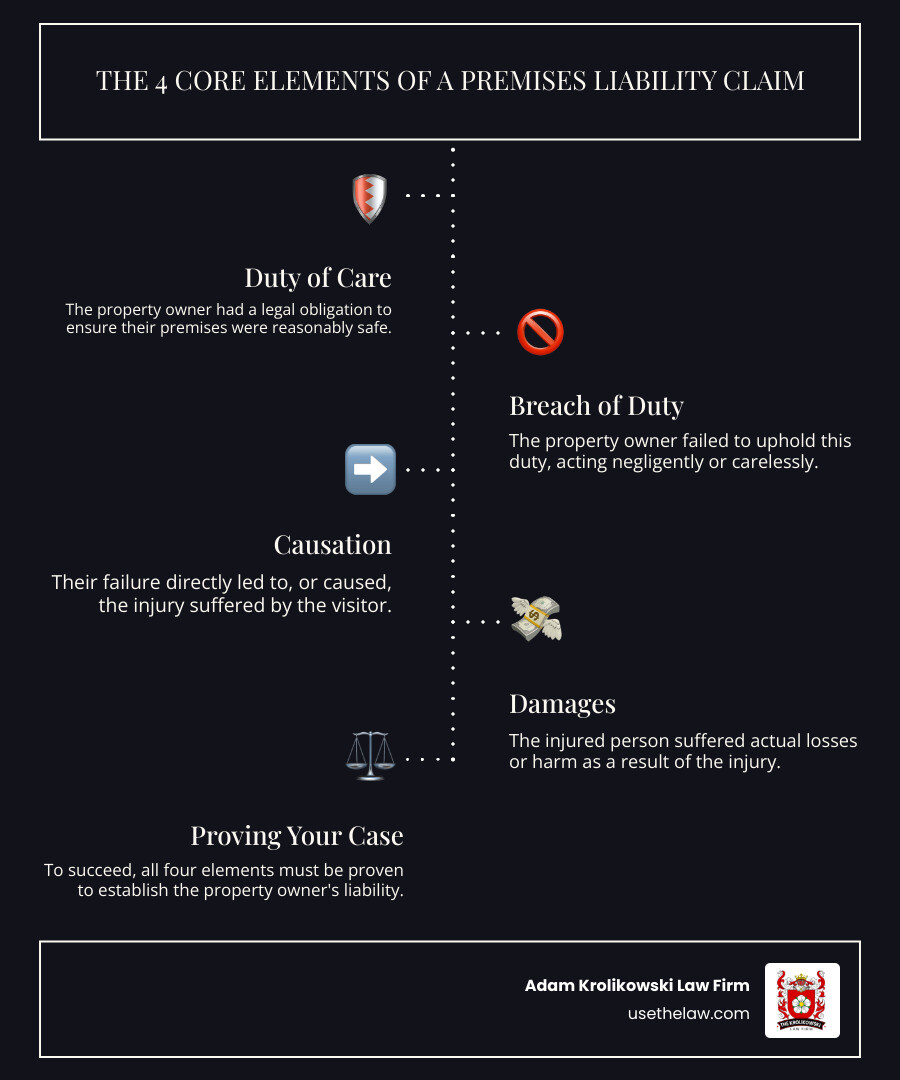
To prove negligence in a premises liability injury case, we must establish four key elements:
- Duty of Care: The property owner had a legal obligation to keep their property reasonably safe.
- Breach of Duty: The owner failed to meet that obligation, for example, by not fixing a known hazard or warning visitors about it.
- Causation: The owner’s failure was a “substantial factor” in causing your injury. In other words, the injury wouldn’t have happened if they had acted responsibly.
- Damages: You suffered actual losses, such as medical bills, lost wages, or pain and suffering, because of the injury.
Understanding how to go about proving negligence is the backbone of these cases.
Gathering Crucial Evidence for Premises Liability Injury Cases
Building a strong premises liability injury case requires solid evidence. The more information gathered right away, the better.

Key evidence includes:
- Photos and Videos: Of the hazard, the surrounding area, and your injuries immediately after the incident.
- Surveillance Footage: From security cameras, which can be powerful proof.
- Incident Reports: A copy of any report filed with the property owner or manager.
- Witness Statements: Contact information and accounts from anyone who saw the incident.
- Medical Records: Documents from doctors, hospitals, and therapists that show the extent of your injuries.
- Maintenance Logs: Business records can show if a property was properly inspected and maintained.
Common Defenses: How Property Owners Fight Back
Property owners and their insurance companies will use certain strategies to reduce or deny a premises liability injury case. Common defenses include:
- Comparative Negligence: They will argue your own actions contributed to the injury, like being distracted. In California, the “pure comparative negligence” rule applies. This means you can still recover damages even if you are partially at fault, but your compensation is reduced by your percentage of fault. Understanding shared fault in injury cases is a big part of these cases.
- Open and Obvious Hazard: The defense may claim the danger was so clear that a reasonable person would have avoided it.
- Lack of Knowledge/Notice: The owner might claim they didn’t know, and couldn’t have reasonably known, about the hazard. This is why proving “constructive notice” (that they should have known) is so important.
Our role is to challenge these defenses with strong evidence to ensure your story is fairly presented.
The Aftermath: Compensation and Legal Deadlines
After an injury on someone else’s property, questions about compensation and the legal process arise. Navigating insurance claims, settlement negotiations, and potential lawsuits can be complex. Our firm helps clients in Orange County with these challenges. You can learn more about how we assist at Personal Injury Lawyer in Orange County.

What Kind of Compensation Can You Recover?
In a successful premises liability injury case, compensation aims to cover your financial and emotional losses. This can include several types of damages:
- Medical Expenses: All past and future costs for medical care related to the injury.
- Lost Wages: Income you missed during recovery, as well as future loss of earning capacity if the injury is long-term.
- Pain and Suffering: Compensation for the physical pain and discomfort you’ve endured.
- Emotional Distress: For anxiety, fear, or depression stemming from the accident.
- Property Damage: Reimbursement for personal items damaged in the incident.
- Loss of Enjoyment of Life: For the inability to participate in hobbies or daily activities.
The total compensation varies greatly depending on the severity of your injury and the specifics of your case.
The Clock is Ticking: California’s Statute of Limitations
One of the most critical factors in any personal injury claim is the statute of limitations—a strict legal deadline for filing a lawsuit. Missing this deadline usually means losing your right to seek compensation.
In California, the deadline for most premises liability injury cases is two years from the date of the injury. You must file your lawsuit in court within this timeframe.
Acting quickly is crucial because evidence can disappear, witness memories fade, and legal investigations take time. It’s also important to know that claims against government entities have much shorter deadlines, sometimes as little as six months. Contacting a legal team promptly ensures all deadlines are met and your rights are protected.
Frequently Asked Questions about Premises Liability Injury Cases
When you’re hurt on someone else’s property, you’re bound to have questions. Here are answers to some of the most common ones we hear about premises liability injury cases.
What should I do immediately after being injured on someone’s property?
Taking the right steps immediately after an accident can significantly impact your premises liability injury case.
- Seek medical attention first. Your health is the priority, and this creates an official record of your injuries.
- Report the incident to the property owner or manager and ask for a copy of the incident report.
- Document the scene. If you can, take photos of the hazard, the area, and your injuries.
- Get witness information. Collect contact details from anyone who saw what happened.
- Do not admit fault. Avoid saying things like “I’m sorry.” Stick to the facts of what occurred.
Can I still file a claim if I was partially at fault for my accident?
Yes. California follows a pure comparative negligence rule. This means you can still recover damages even if you were partially at fault for the accident. Your total compensation will simply be reduced by your percentage of fault. For example, if you are found 25% at fault, you can still recover 75% of your damages. This ensures property owners are held accountable for their negligence, even if you weren’t perfect.
Who can be held responsible? Is it just the property owner?
No, liability in premises liability injury cases can extend to any person or entity that had control over the dangerous condition. This can include:
- Property owners
- Tenants renting the space
- Property managers handling daily operations
- Maintenance or security companies whose negligence contributed to the injury
- Landlords, especially for common areas or known structural problems
We investigate to identify all parties who had the power to prevent your injury and failed to do so.
Conclusion: Getting Justice for Your Injuries
Navigating premises liability injury cases can feel like walking through a maze. These situations are often far from simple, involving detailed investigations, complex legal arguments, and dealing with property owners and their insurance companies who might push back. There’s a lot to prove: from showing the property owner had a duty to keep you safe, to demonstrating they failed that duty, and then clearly linking their oversight directly to your injury, all while carefully documenting every loss you’ve experienced. It truly takes a keen eye and a steady hand.
We know how overwhelming it can be when you’re unexpectedly hurt on someone else’s property. Beyond the physical pain, there’s the stress of medical bills piling up, lost time at work, and the emotional toll. That’s why our firm, Adam Krolikowski Law Firm, is here. We have a long history of taking on challenging cases, often the ones that other legal teams might shy away from. With over two decades of experience, we’re dedicated to standing by your side, helping you understand your rights, collecting the important evidence needed, and working tirelessly to help you pursue the compensation you deserve.
If you’ve been injured on someone else’s property, knowing your rights is truly the first step on your road to recovery. For clear, compassionate guidance through the complexities of your unique situation, don’t hesitate to reach out. Contact a Premises Liability Attorney in Orange County, CA today.
