

What Every Pregnant Woman in Orange County Should Know About Breast Implants
Can breast implants cause birth defects? Based on the current body of research, the answer is: most likely not — but the full picture is more nuanced than a simple yes or no.
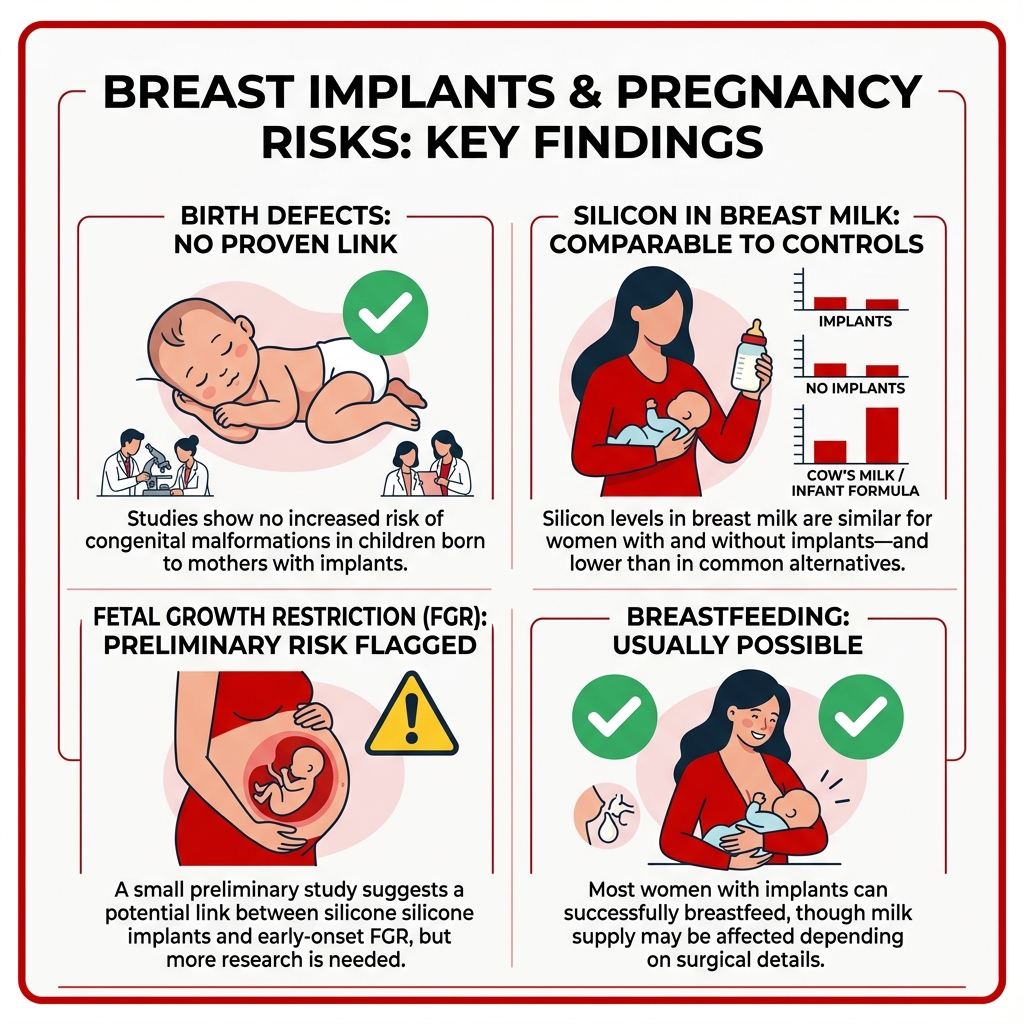
Here’s what the evidence shows at a glance:
- Birth defects: Two human studies found no increased risk of congenital malformations in children born to mothers with breast implants
- Silicone in breast milk: Silicon levels in breast milk from women with implants are similar to those without — and actually lower than levels found in cow’s milk or infant formula
- Fetal growth restriction (FGR): A smaller preliminary study found a potential link between silicone implants and early-onset FGR, though researchers acknowledge the findings need to be validated with larger samples
- Stillbirth: One large post-approval study flagged an elevated stillbirth rate in women with silicone implants, but the FDA disputed the methodology
- Breastfeeding: Most women with implants can breastfeed, though some may experience reduced milk supply depending on incision type and implant placement
So the mainstream scientific and regulatory consensus — including from the FDA — is that breast implants have not been shown to cause birth defects or significantly increase the risk of pregnancy complications. However, emerging research raises questions worth taking seriously, especially for women in Orange County who are planning a pregnancy or are already pregnant.
If you believe a complication from your breast implants affected your pregnancy or your child’s health, you may have legal options. The Adam Krolikowski Law Firm offers a Free Consultation to help you understand your rights.
What makes this topic so important — and sometimes confusing — is the gap between the official regulatory position and some of the more recent clinical findings. The FDA has reviewed large-scale post-approval data and concluded there is no confirmed association between breast implants and adverse reproductive outcomes. At the same time, researchers like Hoirisch-Clapauch have published preliminary data suggesting silicone implants may contribute to inflammation that impairs placental function in some women.
For a pregnant woman — or someone hoping to become pregnant — in Orange County, sorting through that conflicting information while managing your health and potentially your legal situation can feel overwhelming. This guide breaks it all down clearly.
Can Breast Implants Cause Birth Defects?
When we look at the core question—can breast implants cause birth defects—we have to rely on large-scale epidemiological data. One of the most significant pieces of evidence comes from a Danish registry study. This research tracked hundreds of children born to mothers with implants and compared them to a control group. The findings were reassuring: there were no significant increases in congenital malformations among children born after their mother received implants.
Interestingly, the study noted a slight, non-significant increase in malformations, but this same trend was seen in children born before the mothers had surgery and in women who had breast reductions. This suggests that any slight variation in data likely stems from other lifestyle or health factors rather than the implants themselves.
According to a comprehensive review of offspring health outcomes, there is no evidence that maternal cosmetic breast implants are associated with higher rates of rheumatic disorders, esophageal issues, or perinatal mortality in children. For families in Orange County, this means that based on current science, having had a breast augmentation does not mean your child is at a higher risk for structural birth defects.
Do silicone leaks from breast implants cause birth defects?
A common fear is that silicone might “leak” or “bleed” through the implant shell, cross the placenta, and reach the developing fetus. However, animal toxicity studies involving rats and rabbits have shown no teratogenic or reproductive toxicity from silicone (polydimethylsiloxane).
The NCBI review of silicone effects on children explains that there is no biologically plausible mechanism for silicone to cause health effects in a fetus via the placenta. While silicone molecules are used with a platinum catalyst during manufacturing, the amounts are minuscule and have not been linked to fetal exposure or developmental harm. We often see that concerns regarding “silicone migration” are more related to local tissue inflammation in the mother rather than systemic danger to the baby.
Research on silicone gel-filled implants and infant health
The Institute of Medicine has stated they are not aware of any studies showing reproductive or teratologic effects of silicone in humans. Furthermore, the FDA information on breast implant risks maintains that silicone gel-filled implants have not been detected to have an association with reproductive problems.
In Orange County, medical standards for prenatal care are exceptionally high, and doctors generally do not consider breast implants a high-risk factor for birth defects. While the FDA continues to monitor post-approval studies, the current clinical observation is that silicone does not absorb into the system in a way that interferes with the healthy development of an infant.
Impact on Fetal Development and Pregnancy Complications
While structural birth defects aren’t a primary concern, some recent studies have looked at how implants might affect the pregnancy environment. Specifically, researchers have investigated Fetal Growth Restriction (FGR) and stillbirth risk. FGR occurs when a baby does not grow at the expected rate inside the womb, and it can lead to prematurity or intrapartum asphyxia.
A notable study published in the Annals of Surgery analyzed nearly 100,000 patients and suggested that women with silicone implants might face a higher risk of stillbirth and melanoma. However, it is important to note that the FDA remains critical of these findings, citing methodological flaws, data inconsistencies, and significant loss to follow-up in the study participants.
| Feature | Saline Implants | Silicone Gel Implants |
|---|---|---|
| Birth Defect Risk | No proven link | No proven link |
| Stillbirth Risk | General population levels | Potential association (disputed by FDA) |
| FGR Risk | Not significantly linked | Preliminary link in small studies |
| Capsular Contracture | Lower (approx 2.8%) | Higher (approx 5.0%) |
Can breast implants cause birth defects or early-onset growth restriction?
Recent research by Hoirisch-Clapauch has introduced a new theory: that silicone implants might contribute to an inflammatory state known as ASIA (Autoimmune/Inflammatory Syndrome Induced by Adjuvants). This study suggested that silicone could trigger an immune response that leads to “hypofibrinolysis”—a condition where the body’s ability to break down blood clots is reduced. This can impair blood flow through the placenta, potentially leading to early-onset FGR.
In this specific cohort, FGR was diagnosed significantly earlier (at 27 weeks) in mothers with silicone implants compared to those without (at 30 weeks). The study also noted that factors like maternal weight gain and co-existing conditions like giardiasis could worsen this inflammatory response. While this research is considered preliminary and involves a small sample size, it highlights the importance of rigorous prenatal care in Orange County to monitor fetal growth closely.
Breastfeeding with Implants: Safety and Success in Orange County
One of the most frequent questions we hear is whether implants interfere with breastfeeding. The short answer is that most women can breastfeed successfully, but there are some hurdles to be aware of. According to CDC guidance on breastfeeding after surgery, the primary concern isn’t the safety of the milk, but the quantity.
Lactation insufficiency is 3 to 5 times more common in women who have had breast surgery. This is often due to:
- Incision Type: Periareolar incisions (around the nipple) are more likely to damage the nerves and milk ducts than incisions made in the fold under the breast (inframammary).
- Implant Placement: Submuscular placement (under the chest muscle) generally interferes less with the milk-producing glands than subglandular placement.
- Pressure: Large implants can sometimes put pressure on the breast tissue, leading to atrophy of the milk-producing glands over time.
The Academy of Breastfeeding Medicine protocol emphasizes that even a single breast can produce enough milk for a healthy infant. If you are struggling with supply, working with a lactation consultant in Santa Ana or surrounding areas can help you develop a supplementation plan.
Silicon levels in breast milk and infant safety
Is the milk safe? Yes. Studies measuring elemental silicon in breast milk found no significant difference between mothers with implants and those without. In fact, levels of silicon in human breast milk (0.05–0.17 μg/ml) are significantly lower than the levels found in cow’s milk (0.7 μg/ml) or commercial infant formula (up to 13 μg/ml).
The AAP statement on silicone transfer clarifies that there is insufficient evidence to classify silicone implants as a contraindication to breastfeeding. Older myths about implants causing “esophageal dysmotility” in babies have been largely debunked by the scientific community, as those early case reports were found to have significant selection bias.
Legal Rights and Medical Malpractice for Implant Complications
While the medical consensus is generally positive regarding pregnancy, things can go wrong during the surgical process itself. If a surgeon fails to warn you about the risks to breastfeeding or if an implant is placed incorrectly, leading to severe complications during pregnancy, you may have grounds for a legal claim.
In Orange County, we handle various cases involving:
- Breast Implant Product Liability: When the implant itself is defective or ruptures prematurely.
- Informed Consent: If your doctor did not explain that a periareolar incision could permanently impact your ability to nurse.
- Negligence in Surgery: Errors during the augmentation or reconstruction process that lead to infection or tissue damage.
If you have experienced Breast Implant Complaints or believe you are entitled to Compensation Damages, it is vital to speak with a professional who understands the intersection of medical device law and personal injury. We offer a Free Consultation to review your medical records and determine if malpractice occurred.
Frequently Asked Questions About Implants and Pregnancy
Are saline implants safer than silicone for a developing fetus?
Both types of implants are considered safe for pregnancy. Saline implants are filled with sterile saltwater, so if a rupture occurs, the body simply absorbs the liquid. Silicone implants use a cohesive gel that stays together even if the shell breaks. According to FDA post-approval study data, neither material has been definitively linked to birth defects. The choice usually comes down to aesthetic preference and local complication rates, such as capsular contracture.
What are the signs of implant rupture during pregnancy?
Pregnancy causes natural breast swelling and tenderness, which can mask the signs of a rupture. A “silent rupture” in a silicone implant often has no symptoms at all. While MRI is the gold standard for detection, the AAFP guide on breast implants notes that ultrasound is an acceptable and safe alternative for pregnant women to screen for issues without using radiation or contrast dyes.
Can breast implants cause birth defects if they were placed many years ago?
The age of the implant is a factor in the risk of rupture, but not necessarily in the risk of birth defects. As implants age, the shell can degrade, increasing the chance of silicone “gel bleed.” However, even in long-term silicone outcome studies, there is no evidence that older implants suddenly become toxic to a fetus. If your implants are 10–15 years old, we recommend a check-up in Orange County before becoming pregnant to ensure they are still intact.
Conclusion
Navigating the complexities of maternal health when you have breast implants requires a balance of medical facts and personal vigilance. While the answer to “can breast implants cause birth defects” remains a reassuring “no” based on current epidemiological evidence, the potential for complications like FGR or lactation issues means you should stay closely connected with your healthcare providers.
At the Adam Krolikowski Law Firm, we have over 25 years of experience handling complex personal injury and medical negligence cases in Orange County and Santa Ana, CA. We understand that your health and the health of your child are your top priorities. If you feel that a medical professional or a defective product has compromised your pregnancy, we are here to help.
Contact a Breast Implant Lawyer in Orange County today for a Free Consultation. Let us put our experience to work for you while you focus on your family.
Contact Us
Practice Areas
Recent Articles
- « Previous
- 1
- 2
- 3
- Next »