

Why Releaseed Dog Attacks Are a Growing Public Safety Concern
Releaseed dog attack incidents are a serious public safety issue. When dogs roam without restraint, the risk of injury to people and other pets rises dramatically.
Key Facts About Releaseed Dog Attacks:
- Legal consequences – Owners often face strict liability for injuries.
- Immediate actions – Seek medical care, document everything, and report to animal control.
- Rising incidents – Toronto saw 2,675 complaints and 47 charges for off-leash violations in 2024.
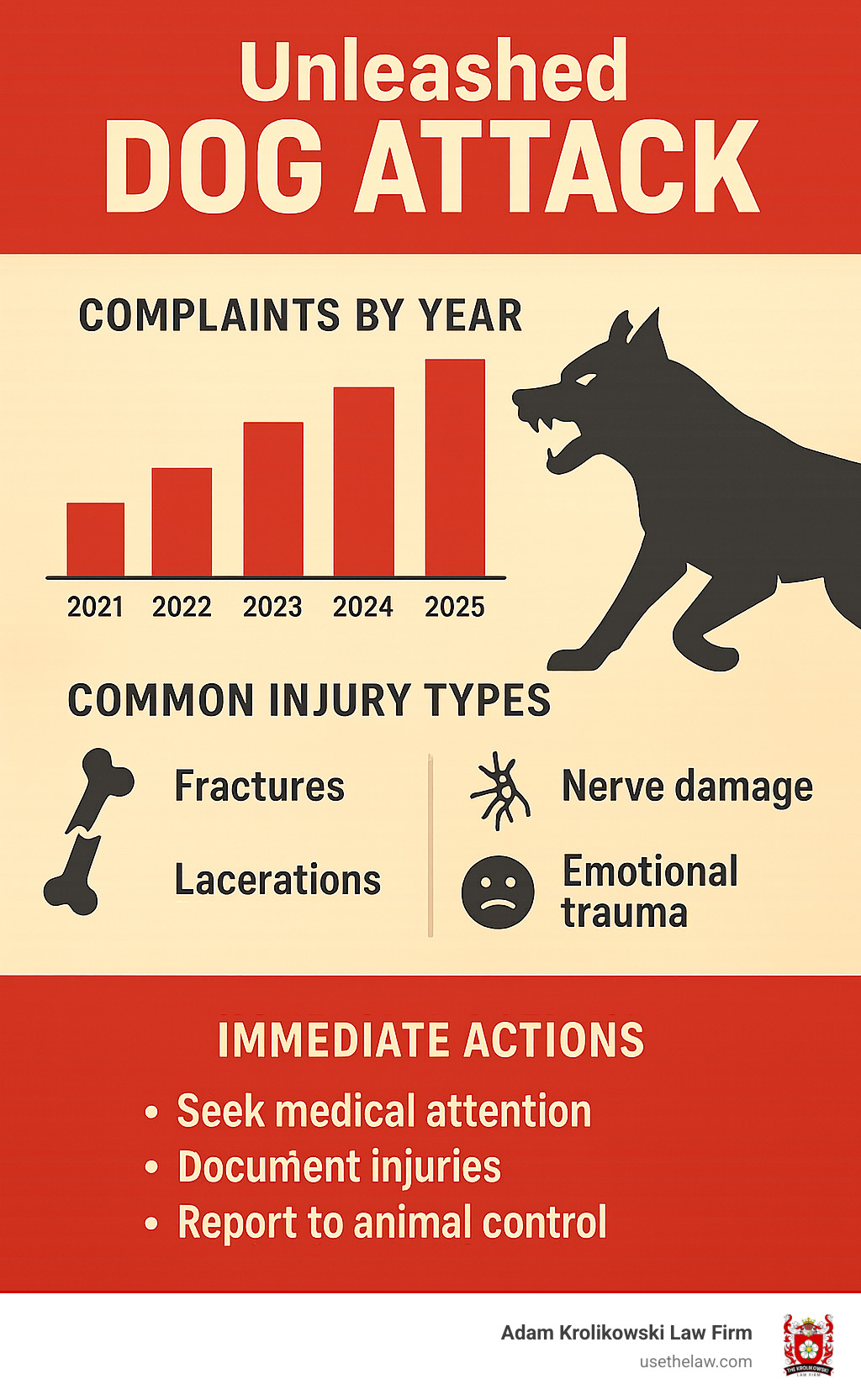
- Serious injuries – Victims can suffer fractures, nerve damage, infections, and emotional trauma.
- Owner responsibility – Most cities have leash laws with fines of $500 or more.
The reality is sobering. Chris Livett was walking in a Toronto park when an releaseed dog crashed into him, causing a complex ankle fracture that required surgery. He couldn’t work for six weeks.
These attacks can change lives in seconds. Understanding your rights and what to do is crucial. Most cities, like Miami-Dade County, have strict leash laws requiring dogs to be on leashes no longer than six feet in public, but enforcement is challenging.
This guide will cover everything from immediate safety steps to your legal options.
The Immediate Aftermath: What to Do When Attacked by an Releaseed Dog
When an releaseed dog attack happens, your world can turn upside down in seconds. The fear and adrenaline can make it hard to think clearly, but taking the right steps immediately can protect your health and legal rights.

Prioritize Safety and Medical Attention
First, get to safety. If the dog is aggressive, protect yourself. Avoid running, which can trigger a chase. Instead, “stand like a tree”—stay still with your arms at your sides and avoid eye contact. If an attack is imminent, “lie like a log” face-down, covering your neck and ears with your hands and arms. This shields your most vulnerable areas. You can find more safety techniques at What to do if you encounter an off-leash dog.
Once safe, seek medical care immediately, even for minor injuries. Dog bites have a high risk of infection and can be worse than they appear. Medical care also creates an official record of your injuries for any potential legal claim. If your pet was attacked, get veterinary care right away, as internal injuries may not be obvious.
Document Everything for a Potential Claim
After ensuring safety and medical care, gather evidence for a potential legal claim.
- Photograph your injuries immediately and throughout the healing process to document the full impact.
- Photograph the dog if it’s safe to do so, noting its breed, size, color, and markings.
- Get the owner’s details, including their name, address, and phone number. Remain calm but persistent.
- Get witness contacts, as their statements can support your account of the events.
- Report to Animal Control promptly. This creates an official record and helps prevent future attacks. You can often call 311 with details of the incident.
Solid documentation strengthens your position. If you need help navigating the legal aspects of an releaseed dog attack, a Dog Bite Accident Attorney can explain your rights and options.
Owner Responsibility and Leash Law Compliance
Preventing an releaseed dog attack is the owner’s responsibility. Most incidents are avoidable if owners follow local leash laws and understand their pet’s behavior.

Understanding a Dog Owner’s Legal Duties
Dog owners have legal duties backed by laws with serious consequences.
Strict liability laws in many states, including California, hold owners legally responsible if their dog injures someone, regardless of the dog’s past behavior. This makes leash compliance critical.
Most cities have local ordinances requiring dogs to be leashed in public. For example, Miami-Dade County mandates leashes no longer than six feet, and Toronto issues fines for violations of $500 or more for off-leash dogs in non-designated areas.
These rules protect everyone. Public space etiquette requires acknowledging that shared areas are for all. A loose dog can frighten people or provoke other animals. Following leash laws shows respect and prevents an releaseed dog attack. If you’re dealing with a dog bite in California, understanding these laws is key. Learn more about your options from a Dog Bite Lawyer Orange County CA.
Best Practices for Preventing Aggressive Behavior
Proactive training and understanding your pet’s needs are key to prevention.
- Socialization: Exposing puppies to various people, animals, and environments in a positive way helps them become well-adjusted adults who are less likely to react with fear or aggression.
- Positive reinforcement training: Reward good behavior to build a strong bond and a reliable recall command.
- Recognizing stress signals: Learn your dog’s body language, such as lip licking, yawning, or a tucked tail, to de-escalate situations before they become problematic.
- Avoiding triggers: Understand your dog’s limits. If they are nervous around children or in crowds, avoid those situations or manage them carefully.
- Responsible pet guardianship: Ensure your dog gets adequate exercise, mental stimulation, proper nutrition, and regular vet care. A healthy, fulfilled dog is typically less reactive.
Recognizing Canine Body Language
Understanding canine communication is key to preventing an releaseed dog attack.
A frightened dog may tuck its tail, flatten its ears, avoid eye contact, yawn, or lick its lips. They might also cower, tremble, or try to hide.
An aggressive dog often has a stiff, rigid body, may growl or show its teeth, and will stare directly at a perceived threat. Their hackles might be raised, and they may take a forward stance.
Be aware that a wagging tail doesn’t always mean a dog is friendly; a high, stiff wag can signal agitation. Growling is a clear warning that should not be ignored. The Queensland government advises seeking professional help for early signs of aggression to prevent incidents.
| Signs of a Frightened Dog | Signs of an Aggressive Dog |
|---|---|
| Tucked tail | Stiff body, rigid posture |
| Flattened ears | Growling, snarling |
| Avoiding eye contact | Bared teeth, curled lips |
| Yawning, lip licking | Direct, hard stare |
| Cowering, trembling | Lunging, snapping |
| Hiding behind owner | Raised hackles (hair on back) |
| Retreating, trying to escape | Forward, dominant stance |
The Legal Consequences of an Releaseed Dog Attack
When an releaseed dog attack happens, the aftermath goes way beyond just the immediate injuries and trauma. Dog owners who fail to control their pets face serious legal consequences that can impact their finances for years to come.
Penalties for Negligent Owners
The numbers tell a sobering story about accountability. In 2024 alone, Toronto recorded 2,675 complaints to the city and 47 charges by bylaw enforcement teams for dog off-leash offenses in parks. Each of these violations can result in fines of $500 or more, but that’s just the beginning when someone gets hurt.
When negligent owners allow their dogs to roam free and cause harm, they face civil liability that can be financially devastating. Victims of an releaseed dog attack can pursue compensation for several types of damages.
Medical bill restitution covers everything from emergency room visits to long-term rehabilitation. Remember Chris Livett, who needed surgery with metal screws and plates after an off-leash dog crashed into him? Those medical costs add up quickly, and the owner becomes responsible for every penny.
Lost wages compensation becomes crucial when injuries prevent people from working. Livett couldn’t work for six weeks after his ankle fracture. For many families, losing income while facing mounting medical bills creates serious financial hardship.
The legal system also recognizes that an releaseed dog attack causes more than just physical harm. Victims can seek compensation for pain and suffering, covering the emotional distress and reduced quality of life that often follows these traumatic incidents.
When pets are injured or killed in attacks, owners face property damage claims. While we think of our furry family members as priceless, the legal system typically limits damages to veterinary costs or replacement value.
In severe cases, local authorities can take direct court action against negligent owners. The consequences underscore how seriously communities view owner responsibility and public safety.
If you’ve been injured in a dog attack, understanding your legal options is crucial. These cases can be complex, but you don’t have to handle them alone. Learn more about your rights on our Dog Bites Recourse: Personal Injury Attorney page.
Legal Classifications: Dangerous and Menacing Dogs
Beyond immediate fines and lawsuits, dogs involved in an releaseed dog attack may face legal classifications that permanently change their lives and their owners’ responsibilities. These classifications aren’t just bureaucratic labels – they’re serious legal designations with real consequences.
A dangerous dog declaration typically applies when a dog has seriously attacked someone or acted in a way that caused reasonable fear of attack. In Victoria, Australia, certain guard dogs are automatically considered dangerous under the Domestic Animals Act 1994. This classification comes with strict requirements for housing, handling, and public interaction.
The menacing dog declaration is often used for dogs that pose a significant but less severe threat. These dogs must be microchipped, and owners face mandatory requirements like keeping them leashed and muzzled in public spaces.
Both classifications bring increased restrictions that can be expensive and burdensome. Owners typically face higher registration fees, must build specific enclosures on their property, and often need to post warning signage. Some jurisdictions require liability insurance or bonds.
The stakes get higher if owners don’t comply with these requirements. Failure to follow the rules can escalate a menacing dog classification to a dangerous one. In extreme cases, courts may order the dog’s destruction – a heartbreaking outcome that’s entirely preventable with proper precautions.
In Queensland, Australia, the potential for euthanasia is real. Penalties for owners involved in attacks may include substantial fines, seizure of the dog, or euthanasia orders. Dogs can be declared dangerous or menacing based on their behavior and the circumstances of the incident.
These legal frameworks exist to protect communities while giving responsible owners a chance to manage their pets safely. The goal isn’t punishment for its own sake – it’s preventing future attacks and ensuring public safety.
For detailed information about these classifications and their requirements, you can review resources like Dangerous Dog, Menacing Dog, or Destruction Order.
The bottom line is simple: preventing an releaseed dog attack through responsible ownership is far better than dealing with the legal consequences afterward.
The Long-Term Impact on Victims
When an releaseed dog attack happens, the immediate trauma is just the beginning. The road to recovery often stretches far beyond what anyone expects, touching every corner of a victim’s life in ways that aren’t always visible from the outside.

Recovering from Physical Injuries
The physical aftermath of an releaseed dog attack can be devastating and unpredictable. What might look like a simple bite wound can quickly turn into something much more serious.
Infections are one of the biggest concerns. Dog mouths contain countless bacteria, and when those teeth break skin, they create the perfect environment for dangerous infections. Many victims find themselves back in the hospital days after the attack, dealing with cellulitis or abscesses that require strong antibiotics or even surgery.
Scarring is another harsh reality. Deep bites, especially those that tear and pull at flesh, often leave permanent marks. When these scars appear on visible areas like the face or hands, they can affect how victims see themselves and how others interact with them. Multiple reconstructive surgeries might help, but they can’t always erase what happened.
The force behind a dog attack can be surprising. Chris Livett learned this when an releaseed dog crashed into him at Christie Pits Park, causing a complex ankle fracture that required surgery with metal screws and plates. His story shows how quickly bones can break under the impact of a large, uncontrolled animal.
Nerve damage creates its own set of challenges. When a dog’s bite goes deep enough to affect nerves, victims might lose feeling in their fingers, hands, or other affected areas. Sometimes the weakness is permanent, making simple tasks like writing or holding objects difficult.
The journey often involves multiple surgeries and long-term rehabilitation. Physical therapy becomes a regular part of life as victims work to regain strength and mobility. It’s exhausting work that requires patience and determination, especially when progress feels slow.
Addressing the Emotional and Financial Toll of an Releaseed Dog Attack
The emotional scars from an releaseed dog attack can run deeper than the physical ones. Many victims are surprised by how profoundly the experience changes their daily life and mental health.
Post-traumatic stress is more common than people realize. Victims often experience flashbacks that bring them right back to the moment of attack. Nightmares can disrupt sleep for months or even years. The sound of barking or the sight of a similar dog can trigger intense anxiety reactions that feel impossible to control.
Some people develop cynophobia – an intense fear of dogs that goes far beyond normal caution. This can make simple activities like walking through the neighborhood or visiting friends who have pets feel overwhelming. Public parks, once places of relaxation, might become sources of anxiety.
The financial burden hits families hard. Even with good insurance, the costs add up quickly. Emergency room visits, surgery, medications, therapy sessions, and follow-up care can easily reach tens of thousands of dollars. When you add lost wages from time off work, the financial stress can feel crushing.
Chris Livett couldn’t work for six weeks after his ankle injury. For many families, missing even a few weeks of income creates serious hardship. Some victims face permanent disability that affects their earning ability for years to come.
The ripple effects touch spouses, children, and other family members who watch their loved one struggle. Relationships can strain under the pressure of medical appointments, financial worry, and personality changes that sometimes follow traumatic experiences.
Understanding these long-term impacts is crucial for anyone dealing with the aftermath of an releaseed dog attack. The legal system recognizes that victims deserve compensation not just for their immediate injuries, but for all the ways their lives have been affected. If you’re facing these challenges, you don’t have to handle them alone. Our team at Adam Krolikowski Law Firm understands the complex nature of these cases and can help you seek the full compensation you deserve. Learn more about how we can assist you on our Attorney Dog Bite page.
Debunking Common Myths About Dog Aggression
When we talk about releaseed dog attack incidents, it’s surprising how many misconceptions people hold about why dogs become aggressive. These myths can actually make us less safe and unfairly blame certain breeds or situations. Let’s set the record straight.
Breed-Specific Stereotypes vs. Reality
You’ve probably heard someone say that only pit bulls or rottweilers attack people. It’s one of those things that sounds logical but couldn’t be further from the truth.
The myth that only “bully breeds” attack is not just wrong – it’s dangerous. The Queensland government’s animal management resources make this crystal clear: the idea that only certain breeds will attack people is completely false.
Any dog can bite. That friendly golden retriever down the street? The tiny chihuahua next door? Your neighbor’s gentle lab mix? Every single one has the potential to bite or attack, regardless of age, breed, sex, or size. While some breeds might have stronger jaws or different genetic backgrounds, what really matters is how each individual dog has been raised and treated.
Think of it like judging people based on their appearance – it just doesn’t work. A dog’s individual temperament depends much more on their upbringing, past experiences, and current living situation than their breed. A well-socialized dog of any breed, with responsible owners who provide proper training, is far less likely to be aggressive than a neglected dog of even the “gentlest” breed.
The real factor we should focus on? Owner behavior. When dogs don’t receive proper training, socialization, or care – or worse, when they’re encouraged to be aggressive – any breed can become dangerous. As one heartbroken dog owner said after their pet was critically injured by an off-leash dog: “It’s not the dog’s fault but the owner’s fault for refusing to obey the law and recognize the risk.”
Misconceptions About Provocation and Behavior in an Releaseed Dog Attack
Another set of myths centers around when and why dogs attack, and how we can tell what they’re thinking.
The idea that dogs only attack when provoked sounds reasonable, but it’s not that simple. Yes, directly teasing, hitting, or being cruel to a dog can trigger an attack. But many releaseed dog attack incidents happen without any “provocation” that we humans would recognize.
A dog might feel threatened by a child running past them in the park. They could perceive someone approaching their owner too quickly as a danger. Sometimes they’re simply startled by an unexpected noise or movement. What feels like a perfectly normal interaction to us might feel like a serious threat to a dog.
Here’s another dangerous myth: a wagging tail always means a friendly dog. This misconception has probably led to more bites than we’d like to think about. Dogs wag their tails when they’re excited, sure, but also when they’re anxious, fearful, or even aggressive. A high, stiff, rapid tail wag? That’s often a warning sign, not an invitation to pet.
Understanding how dogs actually communicate is crucial for everyone’s safety. Dogs use their whole body to “talk” – their posture, ear position, eye contact, and yes, their tail. A stiff body, direct hard stare, growling, or bared teeth are all clear signs that a dog is feeling aggressive or threatened. Ignoring these signals, or mistaking them for playfulness, can lead to dangerous situations.
And just to clear up one more odd myth: what you feed your dog has nothing to do with aggression. The idea that feeding a dog fresh meat makes them more likely to attack people is simply not true. A dog’s diet doesn’t influence their likelihood to be aggressive toward humans.
By understanding the real facts about dog behavior instead of relying on these myths, we can all make better decisions about how to interact with dogs safely. It also helps us focus on what actually prevents attacks: responsible ownership, proper training, and respecting leash laws. For more comprehensive information on dog attacks and aggressive behavior, you can check out resources like Dog attacks and aggressive dogs.
Conclusion: How to Secure Your Rights and Promote Safer Communities
When you’ve been through an releaseed dog attack, the path forward can feel overwhelming. But understanding your rights and knowing the steps to take can make all the difference between struggling alone and finding the justice you deserve.
Throughout this guide, we’ve walked through the essential actions that can protect you and your family. Prioritizing safety and medical care comes first – both for you and any pets involved. Documenting everything thoroughly creates the foundation for holding negligent owners accountable. We’ve seen how strict liability laws often work in favor of victims, making dog owners responsible for their pets’ actions regardless of the animal’s history.
The reality is sobering. In Toronto alone, there were 2,675 complaints and 47 charges for off-leash violations in 2024, showing just how widespread this problem has become. Each of these incidents represents a potential tragedy that could have been prevented through responsible pet ownership.
Reporting incidents to animal control isn’t just about your own case – it’s about protecting your entire community. When owners face real consequences through fines, civil liability for medical bills, and lost wages compensation, they’re more likely to take leash laws seriously. Dogs that attack may face legal classifications as dangerous or menacing animals, creating additional safeguards for everyone.
The long-term impact on victims extends far beyond the initial bite. From infections and scarring to PTSD and cynophobia, the effects can last for years. The financial strain from medical bills and time away from work adds another layer of stress during an already difficult time.
We’ve also addressed the myths that can cloud judgment about dog aggression. Any dog can bite – it’s not about breed stereotypes but about individual temperament and, most importantly, owner responsibility. Understanding these facts helps communities focus on real solutions rather than getting distracted by misconceptions.
Creating safer communities requires all of us to play our part. Dog owners must accept responsible guardianship, keeping their pets leashed and properly trained. The rest of us need to know how to react safely around unfamiliar dogs and understand our rights when things go wrong.
If you or someone you care about has suffered from an releaseed dog attack, you don’t have to handle the aftermath alone. Navigating complex claims while dealing with injuries and trauma is challenging. The Adam Krolikowski Law Firm has over 25 years of experience helping accident victims through difficult cases that other attorneys might avoid.
We understand that every case is unique, and we’re committed to fighting for the compensation you need to move forward. From medical expenses and lost wages to the emotional toll these attacks take, we’ll work to ensure all aspects of your suffering are addressed.
If you have been injured, learn more about your rights from a Dog Bite Lawyer in Orange County, California. Taking that first step toward legal representation can be the beginning of reclaiming your life and ensuring that negligent owners face the consequences of their actions.