

Why Fall Down Accidents in Orange County Demand Immediate Attention
A fall down accident in Orange County can happen in an instant, but its consequences can last a lifetime. Whether you slipped on a wet floor, tripped over uneven pavement, or fell at your workplace, understanding what to do next is crucial for protecting your health and legal rights.
Key Facts About Fall Down Accidents:
- Falls are the second leading cause of unintentional injury deaths worldwide.
- Over $50 billion in medical costs are spent treating fall injuries in the U.S. each year.
- 1 in 4 adults over age 65 experiences a fall annually.
- Common injuries include fractures, traumatic brain injuries, and spinal cord damage.
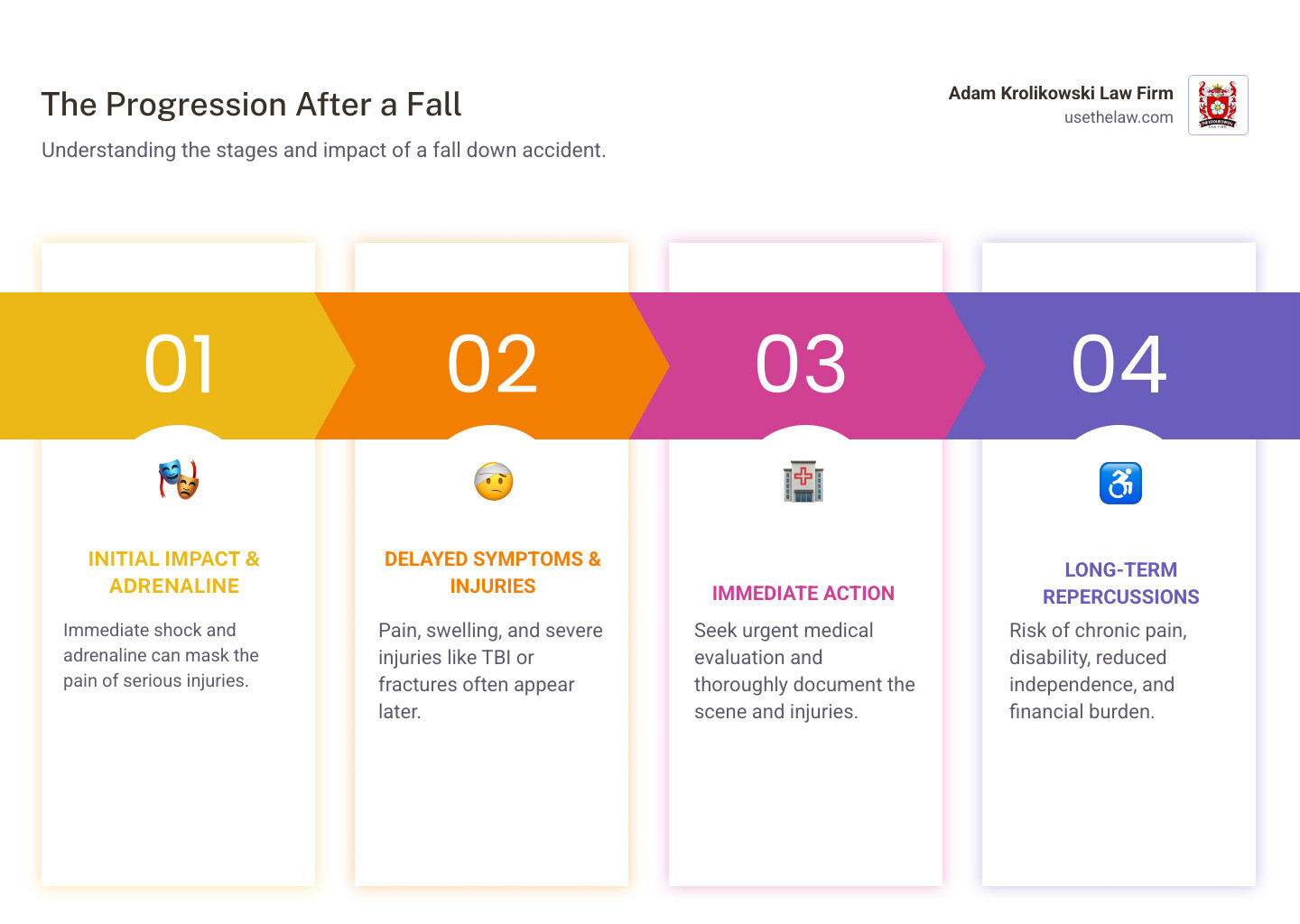
- Many victims experience delayed symptoms as adrenaline initially masks pain.
- In California, you generally have two years to file a personal injury claim after a fall.
While some falls may seem like minor, embarrassing incidents, they can result in injuries ranging from mild to severe. Falls account for about 15 percent of all accidental deaths in the United States, second only to car accidents. For Orange County residents injured in a fall, the aftermath involves not just physical recovery but also navigating insurance claims, medical bills, and potential lost income.
A particularly dangerous aspect of fall accidents is that pain and symptoms often appear hours or even days later. Adrenaline can mask injuries, leading victims to believe they are unhurt when they may have suffered concussions, soft tissue damage, or internal bleeding that requires prompt medical attention.
This guide covers everything you need to know about fall down accidents in Orange County—from common injuries and delayed symptoms to the crucial steps that protect your health and right to compensation.
Easy fall down accident glossary:
Understanding the Impact: Common Injuries and Symptoms After a Fall
A fall down accident can subject the body to sudden, violent forces, leading to a wide range of injuries. A slip-and-fall incident generally refers to a fall caused by a hazardous condition on someone else’s property, whether it’s a business, public space, or private residence.
Common injuries resulting from these accidents include:
- Soft Tissue Damage: Injuries to muscles, ligaments, and tendons that cause significant pain, swelling, and limited mobility.
- Sprains and Strains: The stretching or tearing of ligaments (sprains) or muscles/tendons (strains), often affecting ankles, wrists, and knees.
- Fractures: Broken bones are a serious concern. Over 95% of hip fractures are caused by falls, particularly among older adults. Wrists, arms, and ankles are also common fracture sites.
- Head Injuries & Traumatic Brain Injury (TBI): Falls are a leading cause of TBIs. Even a minor bump can cause a concussion, with symptoms ranging from headaches and dizziness to confusion and memory loss. All head injuries should be taken seriously.
- Back and Spinal Cord Injuries: The impact from a fall can cause herniated discs, pinched nerves, or severe spinal cord damage, leading to pain, numbness, or weakness.
- Internal Bleeding: A life-threatening condition that may not have immediate symptoms. Abdominal pain after a fall requires immediate medical evaluation.
- Dislocations: When bones in a joint are forced out of alignment, causing severe pain and swelling.
- Cuts and Abrasions: Visible injuries that can lead to infection or scarring if not properly treated.
For a more detailed look at potential injuries, you can review resources like this Cleveland Clinic overview of fall injuries.

Immediate vs. Delayed Pain: Why You Might Hurt More Later
One of the most confusing aspects of a fall down accident is the delayed onset of pain. This happens because a sudden injury triggers an adrenaline rush. Adrenaline is a natural painkiller that can mask the severity of your injuries, creating a false sense of security. As the adrenaline wears off hours or even days later, the true extent of the damage becomes apparent.
Delayed soreness is often due to soft tissue damage. The body’s inflammatory response causes swelling, bruising, and stiffness, leading to increased pain and discomfort. This biological response, detailed by organizations like the National Mental Health Association, is why you should never dismiss a fall, even if you feel fine immediately afterward.
When to Seek Medical Attention in Orange County
Given the potential for delayed and serious injuries, seeking medical attention after a fall down accident in Orange County is critical. While it’s always wise to get checked out, certain red flags demand immediate professional evaluation:
- Headaches, dizziness, confusion, or memory loss (signs of a TBI).
- Numbness or tingling in your limbs (potential nerve or spinal damage).
- Severe back pain or stiffness.
- Abdominal pain or swelling (could indicate internal bleeding).
- Difficulty walking, standing, or breathing.
- Any visible deformity of a limb or joint (suggests a fracture or dislocation).
If you are taking blood thinners, suspect a broken bone, or may have a head injury, go to the hospital immediately. For less severe but concerning symptoms, an urgent care clinic is a good option. A prompt medical diagnosis is vital for your health and for documenting your injuries for a potential personal injury claim.
The Anatomy of a Fall Down Accident: Slips, Trips, and Common Causes
While often used interchangeably, understanding the difference between a “slip and fall” and a “trip and fall” is important in a legal context for determining premises liability in Orange County. A fall down accident generally falls under premises liability law, which requires property owners to maintain their premises in a reasonably safe condition. If they fail to address hazardous conditions and someone gets hurt, they may be held liable for negligence.
Common locations for fall down accidents in Orange County include grocery stores, restaurants, workplaces, parking lots, and hospitals.
Here’s a quick comparison of the two main types of fall down accidents:
| Slip and Fall | Trip and Fall | |
|---|---|---|
| Action | Foot loses traction, slides forward | Foot catches on an object, stops abruptly |
| Fall Direction | Typically backward | Typically forward |
| Common Causes | Wet floors, spills, ice, waxed surfaces | Uneven pavement, clutter, torn carpets, poor lighting |
| Common Injuries | Head, back, and tailbone injuries | Hand, wrist, knee, and facial injuries |
Common Causes of a Slip and Fall Accident
A slip and fall happens when a person’s foot loses traction, often causing them to fall backward. Common causes in Orange County include:
- Wet and uneven surfaces: Spills, recently mopped floors without warning signs, or tracked-in rainwater. The HSA guide on slippery surfaces provides more insight.
- Weather conditions: Rain can create slick sidewalks and entryways.
- Recently waxed or polished floors: Especially without proper warning signs.
- Loose rugs or mats: Unsecured mats can slide or bunch up.
Common Causes of a Trip and Fall Accident
A trip and fall occurs when a person’s foot hits an object, causing them to lose balance and fall forward. These accidents are often linked to:
- Clutter or obstacles in walkways: Merchandise, boxes, or tools left in walking paths.
- Poor lighting: Dimly lit stairwells, hallways, or parking lots that hide hazards.
- Damaged stairs: Broken steps, missing handrails, or worn treads.
- Uneven sidewalks or pavement: Cracks, potholes, or raised concrete.
- Unsecured cords or wires: Cables running across floors.
- Wrinkled or torn carpeting: Loose carpet can easily catch a foot.
The Alarming Statistics: The True Scope of Fall Accidents
The statistics surrounding fall down accidents reveal a significant public health and safety issue, both nationally and in Orange County.

Consider these alarming statistics:
- Global Impact: Falls are the second leading cause of unintentional injury deaths worldwide, according to the World Health Organization fact sheet on falls.
- Emergency Room Visits: About 8 million people visit U.S. emergency rooms for fall-related injuries each year.
- Vulnerability of Older Adults: More than one in four Americans aged 65 or older falls each year. For those 85 and older, it’s about one in three. Falls are a major cause of death and injury in this demographic.
- Financial Burden: The total medical cost for treating falls in the U.S. exceeded $50 billion in 2015 alone, a cost borne by individuals, families, and the healthcare system.
- Serious Injuries: Over 800,000 patients are hospitalized annually due to a fall, often for a head injury or hip fracture. Falls are the most common cause of traumatic brain injuries (TBIs) and account for over 95% of hip fractures.
- Workplace Accidents: Slips, trips, and falls are a major cause of work-related injuries, accounting for 15% of all job-related injuries and a significant portion of workers’ compensation claims. In 2020, 805 workers died from falls, and over 211,000 suffered injuries requiring time away from work.
These numbers from sources like the National Floor Safety Institute are a stark reminder that a fall down accident is a serious event with far-reaching consequences.
What to Do Immediately After a Fall in Orange County
The actions you take immediately after a fall down accident in Orange County are crucial for both your health and any potential legal claim. Stay as calm as possible and follow these steps:
- Assess Injuries and Seek Medical Attention: Your health is the priority. Check for injuries and call 911 if you suspect a serious injury. Even if you feel fine, see a doctor, as adrenaline can mask pain.
- Report the Incident: Notify the property owner, manager, or supervisor immediately. Ask to file an official incident report and get a copy for your records.
- Document the Scene: Use your phone to take photos and videos of the exact location and the hazard that caused your fall (e.g., a spill, broken step, poor lighting). Photograph your visible injuries as well.
- Get Witness Information: If anyone saw you fall, politely ask for their name and contact information. Their testimony can be invaluable.
- Preserve Evidence: Keep the shoes and clothing you were wearing at the time of the fall. Do not wash or repair them, as they may be important evidence.
- Avoid Admitting Fault: When reporting the incident, stick to the facts. Do not apologize, speculate, or give a recorded statement to an insurance company without first consulting an attorney.
Protecting Your Health: Seeking Medical Care
Seeking prompt medical care is non-negotiable after a fall down accident. A professional medical evaluation is critical for two main reasons:
- Diagnosing Hidden Injuries: A doctor can identify injuries like concussions, soft tissue damage, or internal bleeding that aren’t immediately apparent.
- Creating an Official Record: Medical records provide objective proof of your injuries, their severity, and the required treatment. This documentation is essential for any personal injury claim.
Always follow your doctor’s treatment plan. Doing so is not only best for your recovery but also demonstrates the seriousness of your injuries for your legal case.
Protecting Your Rights: Documenting Your Fall Down Accident
Protecting your legal rights after a fall in Orange County depends on thorough documentation. This evidence is key to proving negligence and linking the fall to your injuries.
- Visual Evidence: Photos and videos of the hazard and your injuries are powerful proof.
- Written Account: Write down every detail you can remember about the incident as soon as possible.
- Official Report: An incident report creates a formal record of the event with the property owner.
Strong documentation helps establish the facts and proves that the property owner’s negligence led to your injuries. This evidence is essential for building a strong case.
Navigating the Aftermath: Long-Term Consequences and Prevention
A fall down accident can have repercussions that extend far beyond the initial injury, often involving a challenging journey of physical, emotional, and financial recovery.
Long-Term Consequences of Fall Injuries
The lasting impact of a significant fall can be profound:
- Chronic pain: Persistent pain that lasts for months or years, significantly affecting quality of life.
- Long-term disability: Severe injuries like TBIs or spinal cord damage can lead to permanent disabilities requiring ongoing care.
- Psychological impact: Many victims develop a fear of falling, leading to anxiety, depression, and social withdrawal.
- Reduced mobility and independence: Physical limitations and fear can cause individuals to reduce their activities, leading to weakness and an increased risk of future falls.
- Financial strain: The combination of medical bills, lost wages, and long-term care costs can create immense financial pressure on Orange County families.
Mitigating Future Risks: How to Prevent a Fall Down Accident
While not all falls are preventable, proactive safety measures can significantly reduce the risk of a fall down accident at home and in the workplace.
Home safety modifications:
- Remove trip hazards: Clear walkways, secure loose rugs, and manage electrical cords.
- Improve lighting: Use bright bulbs and nightlights in hallways, stairs, and bathrooms.
- Install grab bars: Add support in showers and next to toilets.
- Wear appropriate footwear: Choose shoes with good traction.
- Maintain physical fitness: Regular exercise focusing on balance and strength can improve stability.
- Schedule regular eye exams and medication reviews: Poor vision and side effects from medication can increase fall risk.
Workplace safety protocols:
- Follow OSHA guidelines: Employers must provide fall protection and adhere to safety regulations.
- Address environmental hazards: Promptly clean spills, clear walkways, and ensure adequate lighting.
- Use personal protective equipment (PPE): This includes slip-resistant footwear and fall arrest systems for work at heights.
For more tips, the National Institute on Aging provides excellent guidance on fall prevention.
Frequently Asked Questions about Fall Accidents in California
Here are answers to common questions we receive from Orange County residents about their rights after a fall down accident.
Who is liable for a slip and fall accident on someone else’s property?
In California, property owners have a “duty of care” to keep their premises reasonably safe. Liability for a fall down accident depends on proving negligence. This means showing that the property owner knew or should have known about a dangerous condition but failed to repair it, block it off, or provide adequate warning, and this failure directly caused your injuries.
Can I still have a case if I was partially at fault for the fall?
Yes. California follows a “pure comparative negligence” rule. This means you can still recover damages even if you were partially at fault for your fall down accident. A court will assign a percentage of fault to each party, and your total compensation will be reduced by your percentage of fault. For example, if you were found to be 20% at fault, you could still recover 80% of your damages.
How long do I have to file a claim after a fall accident in California?
It is crucial to act quickly. In California, the “statute of limitations” for filing most personal injury claims is generally two years from the date of the injury. If you fail to file a lawsuit within this period, you will likely lose your right to seek compensation forever. There are some exceptions, such as when an injury is not immediately finded or for claims against government entities, which have much shorter deadlines. It is always best to consult with an attorney as soon as possible to ensure all deadlines are met.
How an Orange County Personal Injury Attorney Can Help
After a fall down accident, navigating medical bills and complex legal issues while recovering can be overwhelming. An Orange County personal injury attorney can provide crucial support and guidance.
At Adam Krolikowski Law Firm, we can assist you by:
- Handling Insurance Companies: We manage all communications with insurance adjusters to protect your claim from being devalued or denied.
- Proving Negligence: We gather the evidence needed—such as incident reports, witness statements, and maintenance records—to build a strong case showing the property owner was negligent.
- Calculating Full Damages: We assess all your losses, including current and future medical costs, lost income, and non-economic damages like pain and suffering.
- Offering a Free Consultation: We handle difficult personal injury and workers’ compensation cases in Orange County and have over two decades of experience. We are dedicated to helping accident victims and employees understand their legal options.
If you’ve been injured in a fall, don’t let a fall down accident define your future. Contact us for a Free Consultation to discuss your case and learn how we can help you pursue the compensation you deserve.
Learn more about representation for your slip and fall case in Orange County, California.
Contact Us
Practice Areas
Recent Articles
- « Previous
- 1
- 2
- 3
- Next »