


Compensation pedestrian hit by a car 2025: Ultimate Guide
Understanding Pedestrian Accident Compensation in Santa Ana: What Your Claim Is Really Worth
Compensation pedestrian hit by a car can range from $10,000 for minor injuries to over $1,000,000 for catastrophic injuries. The final amount depends on your specific injuries, medical costs, lost wages, and the details of your accident.
Quick Settlement Range Guide:
- Minor Injuries (sprains, bruises, minor fractures): $10,000 – $75,000
- Moderate Injuries (significant fractures, surgeries needed): $50,000 – $150,000
- Severe Injuries (TBI, spinal injuries, permanent disability): $150,000 – $1,000,000+
- Catastrophic/Fatal Injuries: Often exceed $1,000,000
If you’ve been hit by a car in California, you’re likely facing medical bills and lost income. While it’s tempting to search for an “average settlement,” the reality is that every case is unique. The payout you receive depends on factors ranging from the severity of your injuries to the at-fault driver’s insurance limits. A broken arm might settle for $30,000, while a traumatic brain injury could result in a multi-million dollar recovery.
This guide breaks down how pedestrian accident settlements are calculated in California, what factors drive value, and the steps you can take to maximize your compensation.
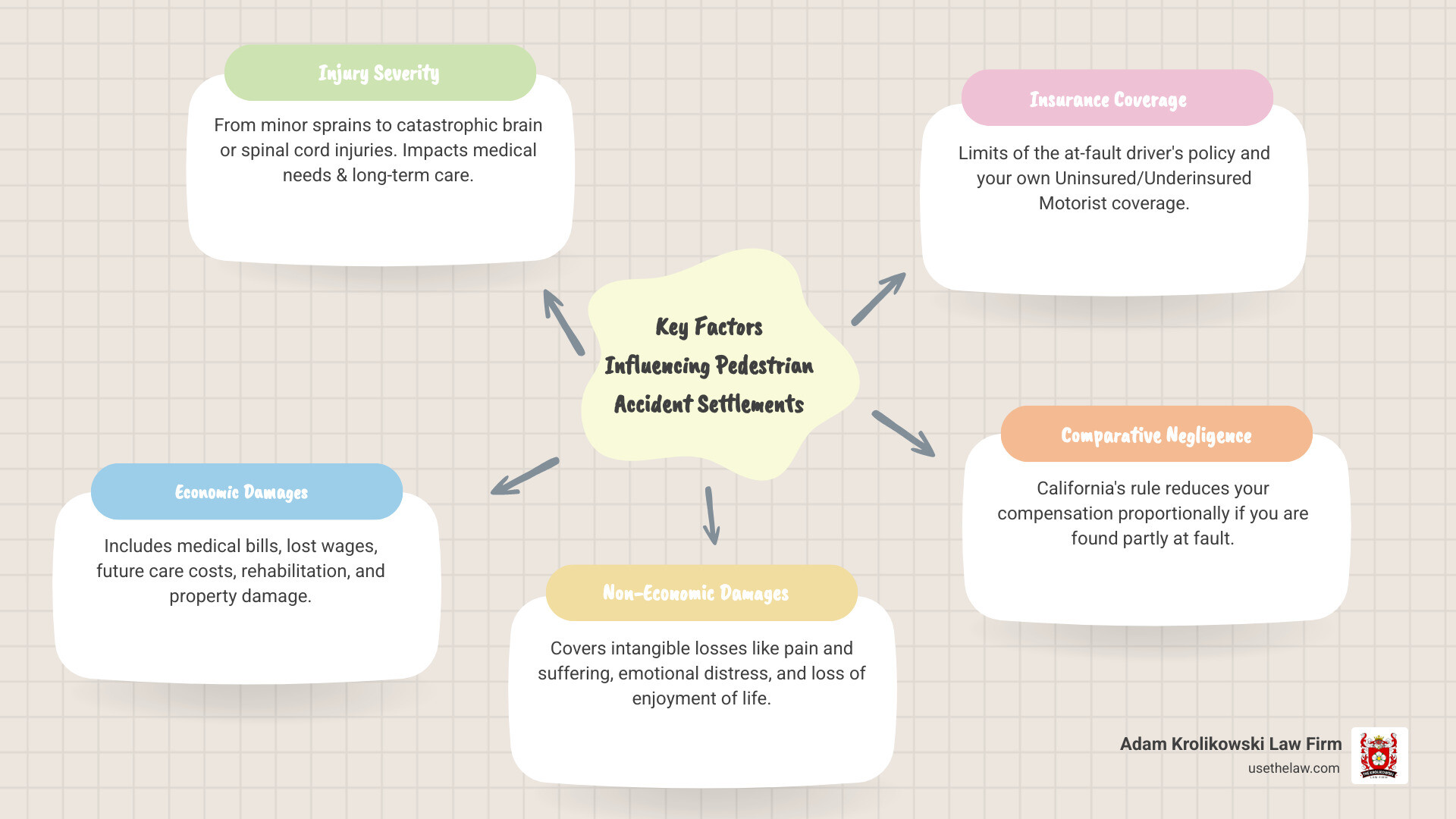
The Myth of the “Average” Settlement: What the Numbers Really Mean
It’s natural to wonder, “What’s the average settlement for someone hit by a car?” You’re looking for a number to expect while dealing with medical bills and missed work. The truth is, the concept of an “average” settlement is misleading.
Online figures might claim the average payout is around $67,512, but this number is skewed by a few multi-million dollar cases for catastrophic injuries. A more realistic figure is the “median” settlement—the middle value—which sits closer to $30,000. This difference shows that most people receive far less than the skewed “average.”
Your case is unique, shaped by your specific injuries, medical treatment, and the driver’s insurance. Understanding your potential compensation pedestrian hit by a car requires looking beyond simple averages. The Role of Medical Evidence in Car Accident Claims is critical in building an accurate picture of your case’s value.
What is the typical compensation a pedestrian hit by a car receives?
Instead of an elusive “average,” it’s more helpful to look at settlement ranges based on injury severity:
-
Minor injuries like sprains, bruises, or a simple fracture typically settle between $10,000 and $75,000. These injuries usually heal with standard care and don’t cause lasting damage.
-
Moderate injuries, such as significant fractures requiring surgery or a moderate concussion, often result in settlements from $50,000 to $150,000. These cases involve more complex treatment and longer recovery times.
-
Severe injuries like traumatic brain injuries (TBI), spinal cord damage, or permanent disabilities push settlements much higher, from $150,000 to well over $1,000,000. These injuries fundamentally change a person’s life and require ongoing care.
-
Catastrophic or fatal injuries regularly exceed $1,000,000, as they may require lifelong care or compensate a family for the loss of a loved one.
Many settlements are confidential, but these ranges provide a realistic starting point. For more on injuries, see Common Car Accident Injuries: How to Handle.
Why do settlement amounts vary so much?
The large gap between a $15,000 settlement and a $1,500,000 one comes down to a few key factors. The severity and permanence of your injuries are the most significant drivers of value. A sprained ankle is valued differently than a lifelong disability. Other critical factors include the total of your economic and non-economic damages, the at-fault driver’s insurance policy limits, and how clearly liability can be established. The quality of your legal representation also plays a major role in navigating these factors to build a strong case.
The Building Blocks of Your Claim: Factors That Drive Settlement Value

Understanding the value of your compensation pedestrian hit by a car claim means accounting for every loss. Your claim is built on two main pillars: the severity of your injuries and your total economic losses. For a comprehensive look at these elements, see our guide on Car Accident Injury Compensation.
Severity and Permanence of Your Injuries
Pedestrians have no protection in a collision, which is why injuries are often serious and carry the most weight in a settlement.
- Medical Documentation: Every doctor’s visit, X-ray, and MRI creates a record of your injuries and the treatment required. This evidence is the foundation of your claim.
- Long-Term Care: Your claim isn’t just about past medical bills. It must include future costs for physical therapy, psychological counseling, or in-home care.
- Permanent Disability: If your injuries result in a permanent impairment—like a traumatic brain injury affecting memory or a spinal cord injury limiting mobility—the compensation must reflect this lifelong change.
- Impact on Quality of Life: The inability to enjoy hobbies, play with your children, or live without pain is a significant loss that must be accounted for in your settlement.
It is crucial to seek medical attention immediately after an accident. Any delay can be used by insurance companies to argue your injuries are not severe. Following through with your Treatment for a Personal Injury Case is vital for both your health and your claim.
Total Economic Losses: Past, Present, and Future
Economic damages are the tangible financial losses resulting from the accident. These are easier to calculate but require meticulous documentation.
- Medical Bills: This includes everything from the ambulance ride and hospital stay to surgeries, medications, and follow-up appointments.
- Lost Wages & Earning Capacity: This covers paychecks you missed during recovery. If you cannot return to your previous job, your claim must also include loss of earning capacity—the income you will lose over your entire career. For a young person, this can amount to millions.
- Rehabilitation Costs: Physical, occupational, and speech therapy are necessary treatments to help you reclaim your life, and their costs must be included.
- Property Damage: Costs to replace personal items destroyed in the accident, like a phone or glasses, are also part of your claim.
To maximize your economic damages, save every bill, receipt, and pay stub. Keep a log of missed work days and travel to medical appointments. These details are essential for building your case for full compensation pedestrian hit by a car.
Calculating the Full Scope of Your Compensation for a Pedestrian Hit by a Car
Compensation pedestrian hit by a car falls into two main categories: economic and non-economic damages. Economic damages cover financial losses, while non-economic damages address the intangible impact on your life. In rare cases of extreme recklessness, punitive damages may be awarded to punish the wrongdoer.
For a broader perspective, see Compensation Available in Los Angeles Personal Injury Cases.
Tangible Costs: Economic Damages
Economic damages are the specific financial losses you’ve incurred. These are the most straightforward part of your claim and include all past and future medical expenses, lost income and earning capacity, rehabilitation costs, and property damage, as detailed previously.
| Economic Damages | Non-Economic Damages |
|---|---|
| Medical Bills | Pain and Suffering |
| Lost Wages | Emotional Distress |
| Future Care Costs | Loss of Consortium |
| Property Damage | Loss of Enjoyment of Life |
Intangible Losses: Non-Economic Damages
Non-economic damages compensate for losses that don’t have a price tag but are just as real.
- Pain and Suffering: This covers the physical pain from the accident, during recovery, and any chronic pain that remains.
- Emotional Anguish: Many victims develop anxiety, depression, or PTSD after a traumatic accident. This psychological impact is a compensable damage.
- Loss of Enjoyment of Life: This addresses how your injuries prevent you from participating in hobbies, sports, and other activities you once loved.
- Loss of Consortium: This compensates your spouse for the loss of companionship, affection, and support resulting from your injuries.
In California, there is no cap on non-economic damages in most personal injury cases. A common method to estimate their value is to use a multiplier (typically 1.5 to 5) of the economic damages. For severe or permanent injuries, this multiplier can be much higher. Building a compelling case with strong Evidence in a Strong Personal Injury Case is key to securing fair compensation for these intangible losses.
Punitive damages are rare and only awarded when a driver’s conduct was particularly egregious, such as in a drunk driving or intentional hit-and-run case. They serve to punish the defendant and deter similar behavior.
Navigating California Law: Liability, Negligence, and Insurance Rules
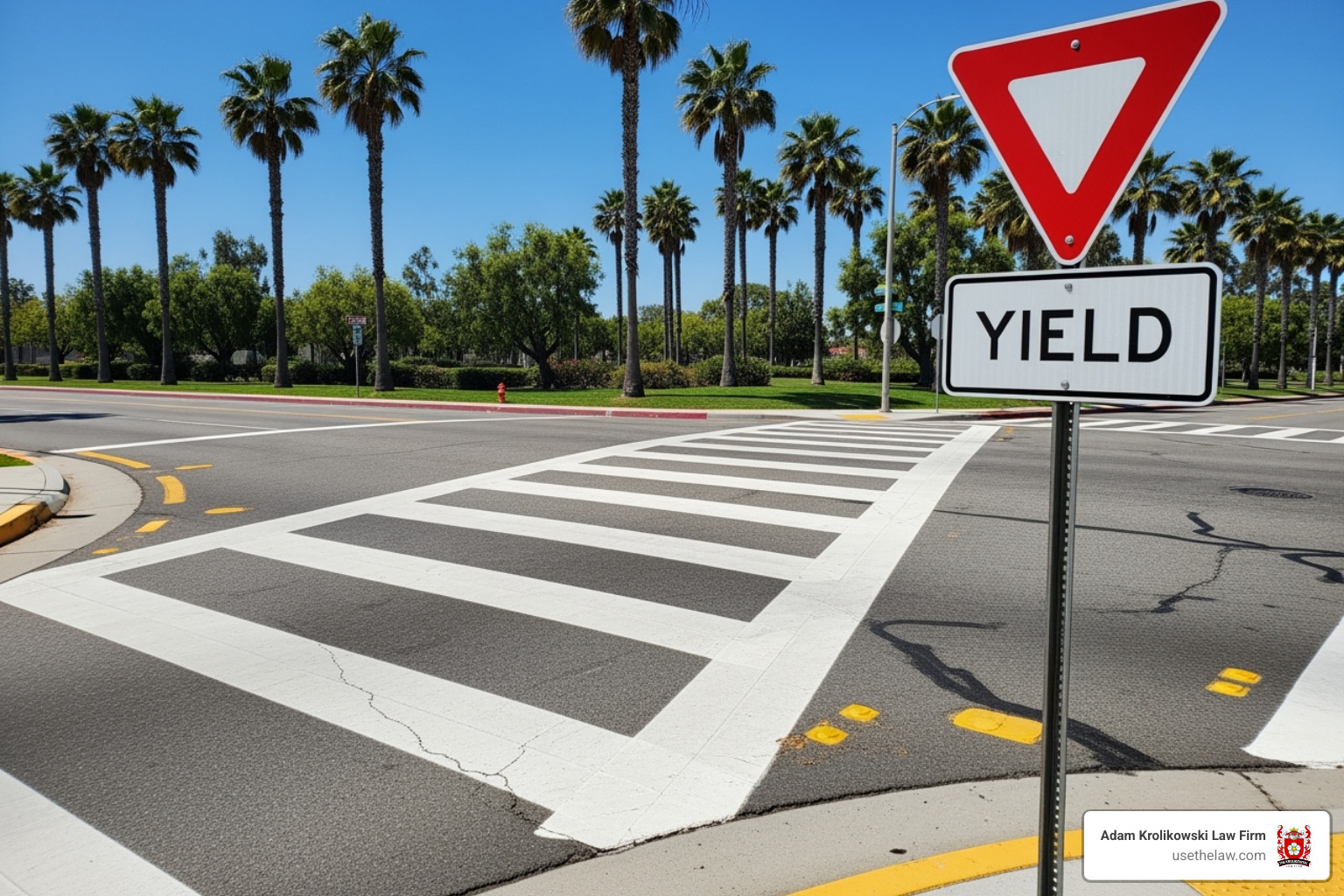
Determining fault is crucial, as it directly affects your compensation pedestrian hit by a car. While California law generally favors pedestrians, insurance companies will try to shift blame to reduce their payout. Understanding liability is key to protecting your claim. For context on fault, see Understanding Fault in Rear-End Collisions in California: How Car Crash Lawyers Can Help.
Proving the Four Elements of Negligence
To recover compensation, we must prove the driver was negligent by establishing four legal elements:
- Duty of Care: All drivers have a legal duty to operate their vehicles safely and watch for pedestrians.
- Breach of Duty: The driver failed to meet this duty through actions like speeding, distracted driving, or failing to yield.
- Causation: The driver’s breach directly caused the accident and your injuries.
- Damages: You suffered actual losses (medical bills, lost wages, pain and suffering) as a result.
According to The four elements of negligence, conduct is negligent when it falls below a reasonable standard of care.
How does fault affect the compensation a pedestrian hit by a car can claim?
California follows a pure comparative negligence rule. This means you can still recover damages even if you were partially at fault for the accident. For example, if you are found 20% at fault for crossing mid-block and your total damages are $100,000, you can still recover $80,000.
Insurance companies will use any argument—such as jaywalking or being distracted by your phone—to assign you a higher percentage of fault and reduce your settlement. An attorney can counter these tactics and work to minimize any fault assigned to you.
California Pedestrian Rights and Driver Responsibilities
California law provides strong protections for pedestrians. Under California Vehicle Code Section 21950, drivers must yield the right-of-way at intersections, and this applies to both marked and unmarked crosswalks.
While drivers have a duty to exercise caution, pedestrians are also expected to act with reasonable care for their own safety. This includes obeying traffic signals and not darting into traffic. However, even if a pedestrian makes a mistake, a driver still has a duty to try and avoid a collision.
There are strict time limits for filing a claim. The California Statute of Limitations for Car Accident Claims is generally two years from the accident date. Don’t wait to protect your rights.
Actionable Steps to Maximize Your Pedestrian Accident Claim

The actions you take immediately after being hit by a car can significantly impact your ability to receive fair compensation pedestrian hit by a car. While you’re recovering, this simple roadmap can help protect your health and your financial future. Understanding the Benefits of Hiring a Personal Injury Law Attorney can also provide crucial guidance.
Critical Steps to Take After an Accident
-
Seek Immediate Medical Attention: This is critical for your health and creates an official medical record linking your injuries to the accident. Adrenaline can mask serious injuries, so get checked out even if you feel okay.
-
Report the Accident to the Police: A police report is an important piece of evidence that provides an official account of the incident.
-
Gather Evidence at the Scene: If you are able, take photos of the scene, vehicles, your injuries, and traffic signals. Get the driver’s contact and insurance information, and ask any witnesses for their contact details.
-
Document Everything: Keep a journal detailing your daily pain levels and how the injuries affect your life. Save all accident-related receipts, bills, and records of missed work.
-
Avoid Speaking to the At-Fault Driver’s Insurer: Direct all communication through your attorney. Insurance adjusters are trained to get you to downplay your injuries or admit partial fault to minimize their payout.
-
Do Not Post on Social Media: Insurance companies monitor social media for any posts they can use against you. A simple photo could be twisted to suggest your injuries aren’t severe. It’s best to stay offline until your case is resolved.
-
Consult with a Lawyer for Pedestrian Hit by Car: The sooner you involve a legal team, the better. An attorney can preserve evidence, handle insurance communications, and ensure you meet all deadlines, allowing you to focus on healing.
Frequently Asked Questions about Pedestrian Accident Compensation
We know you have questions about what comes next. Here are answers to some of the most common concerns about compensation pedestrian hit by a car.
How long do I have to file a claim in California?
In California, you generally have two years from the date of the accident to file a personal injury lawsuit. This deadline, known as the statute of limitations, is strict. If you miss it, you will likely lose your right to seek compensation. There are some exceptions—for example, the timeline may be different for minors or when a government entity is involved (which can be as short as six months). It is crucial not to wait. Understanding When to Contact a Personal Injury Law Attorney can help you act in time.
What if the driver who hit me was uninsured or fled the scene?
Being hit by an uninsured or hit-and-run driver is frustrating, but you still have options.
-
Uninsured/Underinsured Motorist (UM/UIM) Coverage: Your own auto insurance policy may include this coverage, which can pay for your damages when the at-fault driver has no insurance or not enough. This coverage typically applies even though you were a pedestrian.
-
Hit-and-Run Accidents: Your UM/UIM coverage is also the primary source of compensation in a hit-and-run. While police will investigate, finding the driver doesn’t guarantee a financial recovery from them, as many lack assets.
Without UM/UIM coverage, your options are more limited but may include pursuing the driver’s personal assets if they are found.
Should I accept the insurance company’s first settlement offer?
No, you should almost never accept the first offer. Insurance companies are businesses that profit by minimizing payouts. Their initial offer is typically a lowball amount designed to close your case quickly and cheaply.
Accepting it is a mistake because:
- You may not know the full extent of your injuries. Some conditions take time to develop. Once you settle, you can’t ask for more money later.
- The offer won’t cover future costs. Initial offers rarely account for long-term care, future lost wages, or permanent disability.
- You haven’t reached Maximum Medical Improvement (MMI). It’s best to wait until your medical condition has stabilized to accurately calculate the full cost of your injuries.
Before accepting any offer, have it reviewed by an attorney. We know the tactics used by insurers, including those discussed in our work with Sentry Insurance with Personal Injury Attorneys, and we will fight to ensure you receive a fair settlement.
Securing Your Fair Recovery
Being hit by a car is a traumatic experience, creating physical, emotional, and financial burdens. The key takeaway is that there is no “average” settlement for compensation pedestrian hit by a car. Your recovery is determined by the unique facts of your case: the severity of your injuries, your total financial losses, the driver’s degree of fault, and the quality of the evidence presented.
As we’ve covered, California’s laws provide protections for pedestrians, but navigating the claims process requires careful documentation and strategic negotiation. Taking the right steps after an accident—seeking medical care, reporting the incident, and avoiding direct talks with insurers—is crucial to protecting your rights.
At Adam Krolikowski Law Firm, we’ve spent over 25 years representing accident victims throughout Orange County, CA, and Los Angeles, CA. We take on the complex cases that other attorneys sometimes avoid, and we’re known for fighting hard for our clients. We understand what you’re going through, and we’re here to help you rebuild your life while holding negligent drivers accountable.
You don’t have to face this alone. If you’ve been injured and need guidance, an experienced pedestrian accident lawyer in Orange County, CA can help you steer the complexities of your claim and fight for the full compensation you deserve.