

Emotional Distress Injury Lawyer: Your 2025 Guide
Why Understanding Emotional Distress Claims in Orange County Matters After Your Accident
Emotional distress injury lawyer services help accident victims recover compensation for psychological harm that often accompanies physical injuries. If you’re dealing with anxiety, depression, or PTSD after a workplace accident in Orange County, you may have a valid claim for emotional distress damages—either as part of your injury case or as a separate legal action.
Quick Answer: What an Orange County Emotional Distress Injury Lawyer Does
- Evaluates your claim to determine if you qualify for Negligent Infliction of Emotional Distress (NIED) or Intentional Infliction of Emotional Distress (IIED)
- Gathers crucial evidence including medical records, therapy notes, and witness statements
- Calculates damages using methods like the multiplier or per diem approach
- Steers California’s two-year statute of limitations to file your claim on time
- Fights insurance company pushback on emotional distress claims, which are often disputed
After an accident, people often expect physical pain and medical bills. But many don’t anticipate the emotional toll—the sleepless nights, the fear of driving again, the anxiety that makes daily life feel impossible. These aren’t just temporary feelings. They’re real injuries that can last for years.
Emotional distress is legally recognized in California as a compensable injury. Whether you witnessed a traumatic event at work, suffered psychological harm from someone’s negligence, or developed PTSD after a serious accident, you may be entitled to financial recovery.
The challenge? Proving emotional harm is complex. Unlike a broken bone that shows up on an X-ray, psychological injuries are invisible. Insurance companies often dismiss these claims as exaggerated or unrelated to the accident. That’s where the right legal guidance becomes essential.
In Orange County, emotional distress claims fall under personal injury law and must meet specific legal standards. California recognizes two main types: claims where emotional distress accompanies physical injury, and standalone claims where psychological harm exists independently. Each has different proof requirements and legal problems.
This guide walks you through everything you need to know about emotional distress claims in California—from understanding the legal definitions to gathering evidence, calculating damages, and working with a lawyer who can steer the complexities of your case.
Emotional distress injury lawyer terms you need:
- Accident compensation lawyer
- Accident victim legal help
- Serious injury law group
Understanding Emotional Distress in Orange County Law
In a legal context, emotional distress goes beyond the everyday emotions we all experience. It encompasses the profound negative mental consequences a person endures after a traumatic event, accident, or incident caused by another’s negligence or intentional actions. This can include severe anxiety, persistent depression, post-traumatic stress disorder (PTSD), and chronic sleep loss, among other debilitating conditions.
While we often associate personal injury with visible physical harm, emotional distress is a psychological injury that can be just as, if not more, devastating. It’s not merely feeling upset; it’s a “highly unpleasant emotional reaction (as anguish, grief, terror, or indignation)” that significantly impacts a person’s life.
Emotional distress can manifest in various ways, often with physical symptoms that underscore its severity. According to the Mayo Clinic, emotional stress can affect the entire body, leading to:
- Headaches
- Panic attacks
- Pain in the chest
- Muscle pain or tension
- Upset stomach
- Fatigue
The long-term impacts of emotional distress can be severe. The Harvard Medical School highlights that emotional trauma from events like car accidents or violent assaults can potentially trigger serious diseases later in life, such as stroke, heart attack, diabetes, and even cancer. This shows that emotional distress isn’t just about feeling bad; it can have profound and lasting health consequences.
The Two Main Ways to Claim Emotional Distress
In California, you can generally pursue compensation for emotional distress through two primary avenues:
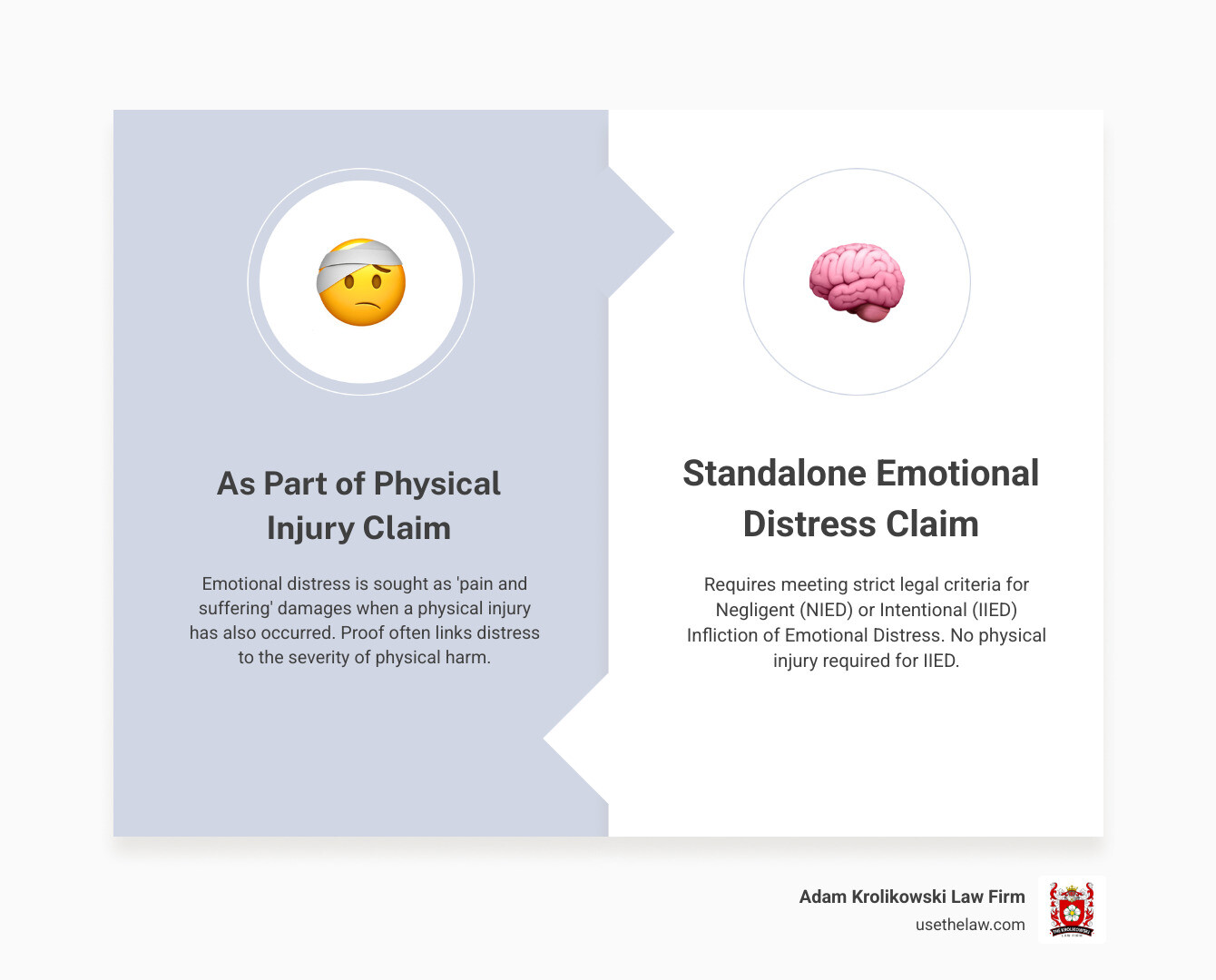
- As part of a larger personal injury claim: Most commonly, emotional distress damages are claimed as a component of “pain and suffering” alongside physical injuries. If you’ve been physically injured in an accident due to someone else’s negligence—say, a car accident or a slip and fall—the emotional anguish, anxiety, and mental suffering you experience as a result of those physical injuries and the incident itself are compensable. This is often referred to as non-economic damages.
- As a standalone claim (independent cause of action): In certain, more specific circumstances, emotional distress can be the primary injury you are suing for, even without accompanying physical harm. These are typically known as Intentional Infliction of Emotional Distress (IIED) or Negligent Infliction of Emotional Distress (NIED) claims. These types of claims have stricter requirements for proof and are generally more challenging to pursue.
Understanding the differences and the specific criteria for each type of claim is crucial. Our firm helps clients in Orange County steer these distinctions to determine the most effective path forward.
Types of Emotional Distress Claims in Orange County
When we talk about suing for emotional distress, we’re typically referring to two distinct legal theories: Negligent Infliction of Emotional Distress (NIED) and Intentional Infliction of Emotional Distress (IIED). Both aim to provide compensation for psychological harm, but they differ significantly in what you need to prove.
Negligent Infliction of Emotional Distress (NIED)
NIED claims arise when someone’s careless actions, rather than deliberate malice, cause severe emotional distress. In these situations, the defendant didn’t intend to cause you harm, but their negligence led to your psychological suffering.
In California, NIED claims are often complex and have specific requirements. They typically fall into one of two categories:
- The “Bystander” Rule: This applies when you witness a traumatic event involving a close family member and suffer severe emotional distress as a result. To qualify, you generally must:
- Be closely related to the injured person (e.g., spouse, parent, child, sibling).
- Be present at the scene of the injury-producing event at the time it occurs and be aware that it is causing injury to the victim.
- Suffer serious emotional distress, which is beyond that which a disinterested witness would suffer.
- The defendant’s negligence caused the injury to the third party.
- The “Direct Victim” Rule: This applies in situations where the defendant’s negligence was directed at you personally, and it was reasonably foreseeable that their actions would cause you severe emotional distress. This doesn’t necessarily require physical presence at an accident or witnessing harm to another. Examples might include a doctor misdiagnosing a serious illness, leading to extreme emotional distress, even if no physical harm results from the misdiagnosis itself.
Generally, for NIED, courts in California may look for some accompanying physical symptoms or a direct impact on your life to validate the severity of the emotional distress. As explained by AllLaw, this type of claim does not require the presence of purpose; it focuses on the negligent act causing mental distress.
Intentional Infliction of Emotional Distress (IIED)
IIED claims are for situations where someone deliberately or recklessly engages in outrageous conduct with the intent of causing you severe emotional distress. This is where the term “outrageous” takes on a very specific legal meaning. It’s not about being rude or annoying; it’s about behavior that is “so extreme as to exceed all bounds of that usually tolerated in a civilized community.”
To prove an IIED claim in California, we typically need to establish four key elements:
- Extreme and Outrageous Conduct: The defendant’s conduct must be truly shocking and beyond what any reasonable person should have to endure. This is a high bar.
- Intent or Recklessness: The defendant must have either intended to cause you emotional distress or acted with reckless disregard for the high probability that emotional distress would result.
- Causation: There must be a direct link between the defendant’s conduct and your emotional distress.
- Severe Emotional Distress: Your emotional distress must be so severe that no reasonable person could be expected to endure it. This often means distress that leads to debilitating physical or psychological symptoms.
Unlike NIED, IIED claims often do not require an accompanying physical injury. The emotional harm itself is the injury. For example, IIED can be prevalent in the workplace, as noted by Consumer Shield, where deliberate harassment or bullying might meet the criteria. Cornell’s Legal Information Institute further clarifies that IIED occurs when someone acts with the goal of causing significant emotional pain, such as in cases of nursing home abuse or sexual abuse.
Proving Your Claim and Calculating Damages in Orange County
A challenge in emotional distress claims is proving an injury that isn’t visible. Unlike a broken bone, emotional suffering is subjective. However, with the right approach and documentation, we can build a compelling case for our clients in Orange County.
Essential Evidence for an Emotional Distress Claim
To demonstrate the severity and impact of emotional distress, we rely on a variety of crucial evidence:
- Medical and Mental Health Records: This is perhaps the most vital evidence. Records from therapists, psychiatrists, psychologists, and even your primary care physician documenting your symptoms, diagnosis, treatment, and progress (or lack thereof) are essential. Showing that you received treatment because of this distress is strong evidence.
- Testimony from Mental Health Professionals: A licensed mental health professional can provide testimony or reports confirming your diagnosis, explaining the link between the incident and your distress, and detailing the prognosis for your recovery. Their professional opinion carries significant weight.
- Personal Journal or Diary: A detailed, consistent journal where you document your daily feelings, symptoms, challenges, and how the emotional distress impacts your life can be incredibly powerful. It provides a real-time account of your suffering.
- Witness Statements: Friends, family members, co-workers, or even neighbors who have observed changes in your behavior, mood, or daily functioning since the incident can provide valuable testimony. They can corroborate the severity and duration of your emotional distress.
- Employment Records: If your emotional distress has affected your ability to work, employment records showing lost wages, reduced hours, or performance issues can serve as objective evidence of the impact.
- Other Documentation: This can include school records (if a child is affected), receipts for medications, sleep studies, or any other documents that illustrate the extent of your suffering and its consequences.
seeking professional help for your emotional distress is not only crucial for your well-being but also for strengthening your legal claim.
How Damages for Emotional Distress Are Valued
Calculating the monetary value of emotional distress, often categorized as “non-economic damages,” is complex because it doesn’t have a direct price tag. Judges and juries consider the severity and duration of your suffering, its impact on your daily life, and the nature of the defendant’s conduct.
In Orange County, as in other parts of California, attorneys often use a few methods to estimate these damages:
- The Multiplier Method: This common approach involves multiplying your total economic damages (like medical bills, lost wages, etc.) by a factor, typically between 1.5 and 5. The multiplier increases with the severity and permanence of your emotional distress. For instance, if your economic damages are $50,000 and your emotional distress is severe, a multiplier of 3 or 4 might be applied, leading to $150,000 or $200,000 in non-economic damages.
- The “Per Diem” Method: This method assigns a daily dollar amount for each day you experienced emotional distress, from the date of the incident until you reach maximum medical improvement or are expected to recover. This daily rate might be tied to your daily earnings or a similar benchmark.
Factors that influence the valuation include:
- The severity and intensity of your emotional symptoms.
- The duration of your suffering and whether it’s expected to be long-term or permanent.
- How the distress has impacted your daily activities, relationships, and quality of life.
- The extent of medical or psychological treatment required.
- The egregiousness of the defendant’s conduct.
Some states have damage caps on non-economic damages, particularly in medical malpractice cases. While California has some caps, especially in medical malpractice, a qualified emotional distress injury lawyer can advise you on how these apply to your specific case in Orange County.
The Role of an Orange County Emotional Distress Injury Lawyer
Navigating an emotional distress claim can be overwhelming, especially when you’re already coping with significant psychological suffering. This is where a dedicated emotional distress injury lawyer in Orange County becomes an invaluable ally. We bring over 25 years of experience to complex cases, taking on claims that other attorneys might shy away from.
Navigating the Legal Process with an Emotional Distress Injury Lawyer
Our role is to guide you through every step of the legal journey, ensuring your rights are protected and your story is heard:
- Case Evaluation: We start by thoroughly evaluating your situation, listening to your experience, and determining if your emotional distress meets the legal criteria for a claim in California. We’ll identify whether you have a claim for NIED, IIED, or emotional distress as part of a broader personal injury case.
- Evidence Gathering: As discussed, proving emotional distress requires meticulous documentation. We help you collect all necessary evidence, including medical records, therapy notes, witness statements, and any other documentation that strengthens your case. We can also help coordinate witness testimony from mental health professionals.
- Filing the Lawsuit: We handle all the legal paperwork and procedures involved in filing your lawsuit, ensuring it’s done correctly and within the strict deadlines.
- Negotiating with Insurance Companies: Insurance companies often try to minimize or deny emotional distress claims, arguing they are subjective or exaggerated. We stand firm against these tactics, negotiating vigorously on your behalf to achieve a fair settlement.
- Litigation Support and Court Representation: If a fair settlement cannot be reached, we are prepared to take your case to court. We will represent you throughout the litigation process, presenting a compelling case to a judge or jury.
Key Legal Problems an Emotional Distress Injury Lawyer Can Help Overcome
Emotional distress claims come with unique legal problems. We are here to help you overcome them:
- Statute of Limitations: This is a critical deadline for filing your claim. For claims tied to a personal injury in California, the statute of limitations is generally two years from the date of the injury. However, this deadline can vary depending on the specifics of your case. Missing this window means losing your right to sue, so prompt legal consultation is essential.
- Proving Causation: We must clearly demonstrate that the defendant’s actions directly caused your emotional distress. This link can be challenging to establish without strong evidence and legal argumentation.
- Common Legal Defenses: Defendants and their insurance companies often employ defenses such as claiming your distress is not “severe,” it’s not causally linked to their actions, or that you had pre-existing psychological conditions. We anticipate these defenses and build a robust case to counter them. While pre-existing conditions don’t necessarily preclude a claim, it’s easier to recover if we can definitively show your emotional distress began after the incident.
- Exaggeration Claims: Due to the subjective nature of emotional distress, defendants frequently argue that the plaintiff is exaggerating their symptoms. Our meticulous evidence gathering and reliance on professional testimony help to validate your suffering.
Common Scenarios Leading to Emotional Distress Claims in Orange County
Emotional distress can arise from a wide range of incidents, often when someone else’s negligence or intentional misconduct disrupts your sense of safety and well-being. Here are some common situations where clients in Orange County might pursue emotional distress claims:

Accidents and Personal Injury
- Car Accidents: Beyond physical injuries, car accidents can leave victims with severe anxiety, fear of driving, or PTSD, especially after traumatic collisions.
- Trucking Collisions: The sheer force and devastating impact of a truck accident can lead to profound emotional trauma, including flashbacks and long-term psychological distress.
- Premises Liability: Incidents like slip and fall accidents, particularly those resulting in serious injury, can cause victims to develop anxiety about public spaces or loss of confidence.
- Dog Attacks: Being attacked by a dog can be a terrifying experience, leading to lasting phobias, anxiety, and even PTSD, especially for children.
Intentional Torts and Abuse
- Nursing Home Abuse: When elderly loved ones are subjected to physical, emotional, or psychological abuse in nursing homes, the victims often suffer severe emotional distress, fear, and depression.
- Assault and Battery: Direct physical or threatened harm can lead to intense fear, anxiety, and lasting psychological trauma for victims.
- Sexual Abuse: This horrific experience almost always results in profound and long-lasting emotional distress, including PTSD, depression, and anxiety, which can be the primary basis of a claim.
- Defamation: False statements that harm someone’s reputation can lead to severe emotional distress, humiliation, and damage to their personal and professional life.
Workplace and Professional Incidents
- Workplace Injury: Accidents at work can cause not only physical pain but also anxiety about returning to work, financial stress, and depression.
- Harassment and Discrimination: Persistent and severe harassment or discrimination in the workplace can lead to significant emotional distress, impacting mental health and career prospects.
- Medical Malpractice: Errors by medical professionals can lead to severe emotional distress, such as anxiety over future medical care, depression due to worsened health, or trauma from botched procedures.
Frequently Asked Questions about Emotional Distress Claims in Orange County
We understand you have questions about emotional distress claims. Here are some of the most common inquiries we receive from clients in Orange County:
Can I sue for emotional distress in California if I wasn’t physically hurt?
Yes, it is possible in specific situations. While emotional distress is often claimed alongside physical injuries, California law recognizes standalone claims for emotional distress in certain circumstances. These include:
- Intentional Infliction of Emotional Distress (IIED): If someone’s extreme and outrageous conduct was intended to cause you severe emotional distress, you may have a claim even without physical injury.
- Negligent Infliction of Emotional Distress (NIED): In very specific instances, such as witnessing a close family member being severely injured (the “bystander” rule) or being a “direct victim” of negligence where emotional harm was foreseeable, you may have an NIED claim without physical impact to yourself. These cases have very strict legal requirements.
What is the statute of limitations for an emotional distress claim in Orange County?
For claims tied to a personal injury, the statute of limitations in California is generally two years from the date of the injury. This means you typically have two years from the date of the incident that caused your emotional distress to file a lawsuit. However, this deadline can vary depending on the specifics of your case, such as when the distress was finded or if the victim was a minor. It is crucial to consult with an emotional distress injury lawyer in Orange County promptly to ensure your claim is filed within the appropriate timeframe.
How much is my emotional distress claim worth?
The value of an emotional distress claim is highly dependent on the unique facts of your case. It is not a fixed amount and cannot be determined without a detailed review. Factors that significantly influence the potential value include:
- Severity and Duration: How intense and long-lasting is your emotional suffering?
- Impact on Life: How has your emotional distress affected your daily activities, work, relationships, and overall quality of life?
- Medical Evidence: The extent and consistency of your treatment by mental health professionals.
- Nature of the Defendant’s Conduct: Whether the conduct was negligent or intentionally malicious.
- Economic Damages: The amount of your medical bills, lost wages, and other financial losses, as these often influence the non-economic damages.
Because of these complexities, it’s impossible to provide an accurate estimate without thoroughly evaluating your specific situation.
How an Orange County Lawyer Can Help Your Claim
Emotional distress is a valid and often debilitating injury that can result from another party’s negligence or intentional actions. While it’s an invisible injury, it is compensable under California law. However, proving these claims is complex, requiring meticulous evidence gathering, a deep understanding of legal standards, and strong advocacy against skeptical insurance companies.
Our firm understands the profound impact emotional distress can have on your life. We are dedicated to helping victims in Orange County steer these challenging legal waters. With over 25 years of experience, we handle complex cases that others might not, ensuring you receive the comprehensive representation you deserve.
If you or a loved one in Orange County has suffered emotional distress due to an accident or incident, don’t face the legal system alone. We can help you understand your rights, gather the necessary evidence, and fight for the compensation you need to heal.
Contact Us
Practice Areas
Recent Articles
- « Previous
- 1
- 2
- 3