

Why Heavy Equipment Accidents Are a Critical Safety Concern
A heavy equipment accident can change your life forever. These incidents represent some of the most serious workplace injuries in America, often resulting in permanent disability or death.
Key facts about heavy equipment accidents:
- 4,000+ construction workers die annually from workplace accidents, according to OSHA
- 75% of struck-by accidents involve excavators, bulldozers, cranes, and other heavy equipment
- 400 U.S. workers are killed each year specifically by heavy equipment
- Most common causes: operator error, inadequate training, mechanical failures, and poor communication
- Typical injuries: crushing injuries, traumatic brain injuries, amputations, and spinal cord damage
Construction ranks as one of the most dangerous industries in terms of workplace accidents. Heavy machinery – weighing thousands of pounds and operating with tremendous force – poses unique risks to operators and nearby workers alike.
These accidents don’t just happen by chance. Research shows they stem from preventable causes like insufficient training, lack of proper maintenance, missing safety protocols, and failure to follow established procedures.
The human cost is staggering. Beyond the immediate physical trauma, victims face mounting medical bills, lost wages, and uncertain futures. Families lose breadwinners. Communities lose skilled workers.
But there’s hope. Understanding how these accidents occur, implementing proper safety measures, and knowing your legal rights can make all the difference in prevention and recovery.
Common Types of Heavy Equipment and the Accidents They Cause
Walk onto any construction site, and you’ll see massive machines that are the backbone of modern construction. Unfortunately, they are also responsible for some of the most serious workplace injuries.
Machinery on the Modern Job Site
Each piece of heavy equipment has a specific purpose and its own set of dangers.
- Excavators, Bulldozers, and Cranes: These giants move earth, clear terrain, and lift massive loads. Their power and size create significant risks, including large blind spots, detached parts, and catastrophic failures like tip-overs or dropped loads. A detached excavator bucket, for example, can be fatal, as detailed in this FACE Report on bucket detachment.
- Dump Trucks and Forklifts: Dump trucks are a leading cause of heavy equipment fatalities due to their size and the hazards of loading operations. Forklifts, while smaller, are involved in thousands of accidents annually, from rollovers to striking pedestrians.
- Backhoes, Loaders, and Trenchers: This group of machinery also weighs thousands of pounds and operates with immense force, where simple mistakes can lead to life-changing accidents.
Frequent Types of Heavy Equipment Accidents
A heavy equipment accident often falls into one of several predictable categories.
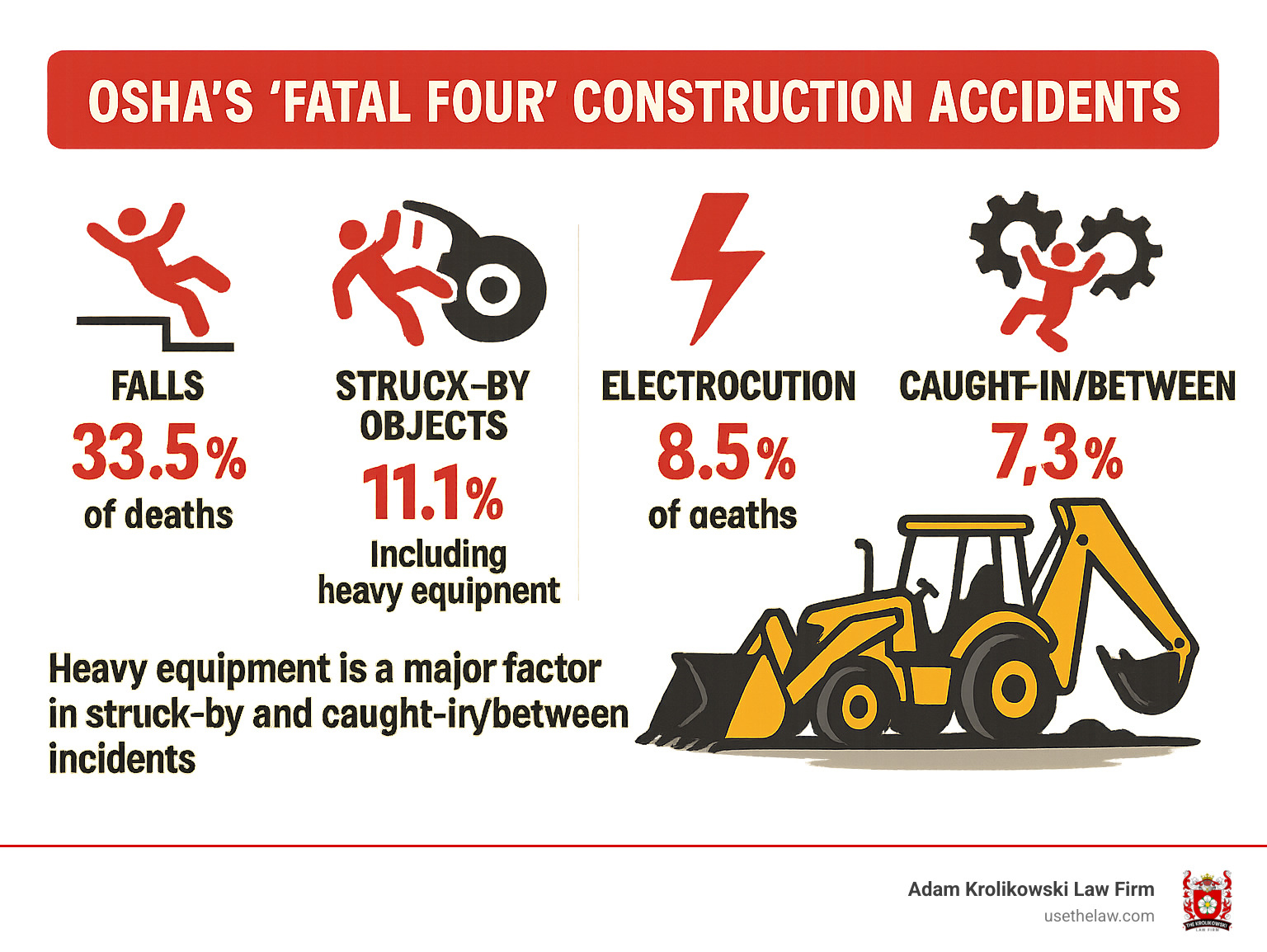
- Struck-by incidents are a leading cause of fatalities, occurring when workers are hit by moving equipment or falling parts.
- Rollovers happen when equipment tips on uneven ground or due to operator error, often resulting in crushing injuries for the operator.
- Caught-in/between accidents trap workers between machinery and a fixed object or within moving parts.
- Falls from equipment are common and dangerous, happening as workers climb on or off machines or work from liftd platforms.
- Electrocution is a deadly risk when equipment like cranes or excavators contacts overhead power lines.
- Crushing incidents are among the most devastating, as the human body cannot withstand the force of multi-ton machinery.
The common thread is that these accidents are largely preventable, often stemming from inadequate training, mechanical failures, or poor safety protocols.
Why Accidents Happen: Uncovering the Root Causes
A heavy equipment accident is rarely just bad luck. These incidents typically result from a combination of preventable factors. Understanding these root causes is key to prevention and, when accidents happen, to determining responsibility.
Human and Environmental Factors
Human factors play a massive role in heavy equipment accidents.
- Inadequate Training and Operator Error: Workers are sometimes put behind the controls of massive machinery with minimal preparation, despite OSHA’s emphasis on proper training. Even with training, a moment of distraction or a miscalculation can lead to tragedy.
- Fatigue and Complacency: Long shifts slow reaction times. Over-familiarity with a machine can lead operators to skip safety checks or take risky shortcuts.
- Poor Communication: On a noisy construction site, misunderstood hand signals or failed radio contact between an operator and a spotter can have dire consequences.
- Site Conditions: Adverse weather like rain or high winds, along with uneven terrain, can make routine operations hazardous.
- Insufficient Supervision: When supervisors are absent or fail to enforce safety rules, dangerous practices can become the norm.
Mechanical and Systemic Failures
Sometimes, the fault lies with the equipment or the safety systems in place.
- Lack of Maintenance: Skipping regular maintenance to save time or money is a gamble with workers’ lives. Brake failures, hydraulic leaks, and engine malfunctions are often the predictable result of neglect.
- Defective Parts or Equipment: Manufacturers may cut corners or make design mistakes that only become apparent when a component fails and someone gets hurt.
- Missing Safety Guards and Procedures: When protective guards are removed and not replaced, or when lockout/tagout procedures are ignored during maintenance, workers are exposed to extreme danger.
- Systemic Negligence: The most troubling cause is when employers foster a culture where safety takes a backseat to speed and profit. This can involve pressuring operators to work unsafe hours or ignoring known hazards. As seen in many construction site injury cases, this negligence often leads to major accidents.
Most heavy equipment accidents are preventable incidents resulting from specific failures in training, maintenance, or safety culture.
A Blueprint for Safety: How to Prevent Heavy Equipment Accidents
The good news is that most heavy equipment accidents are preventable. When everyone on a job site, from operators to company owners, commits to safety, these life-changing incidents can be dramatically reduced.

Operator and Site-Level Prevention
Operators are the first line of defense against accidents. Key practices include:
- Comprehensive Training: Operators must understand their machine’s capabilities, limitations, and blind spots.
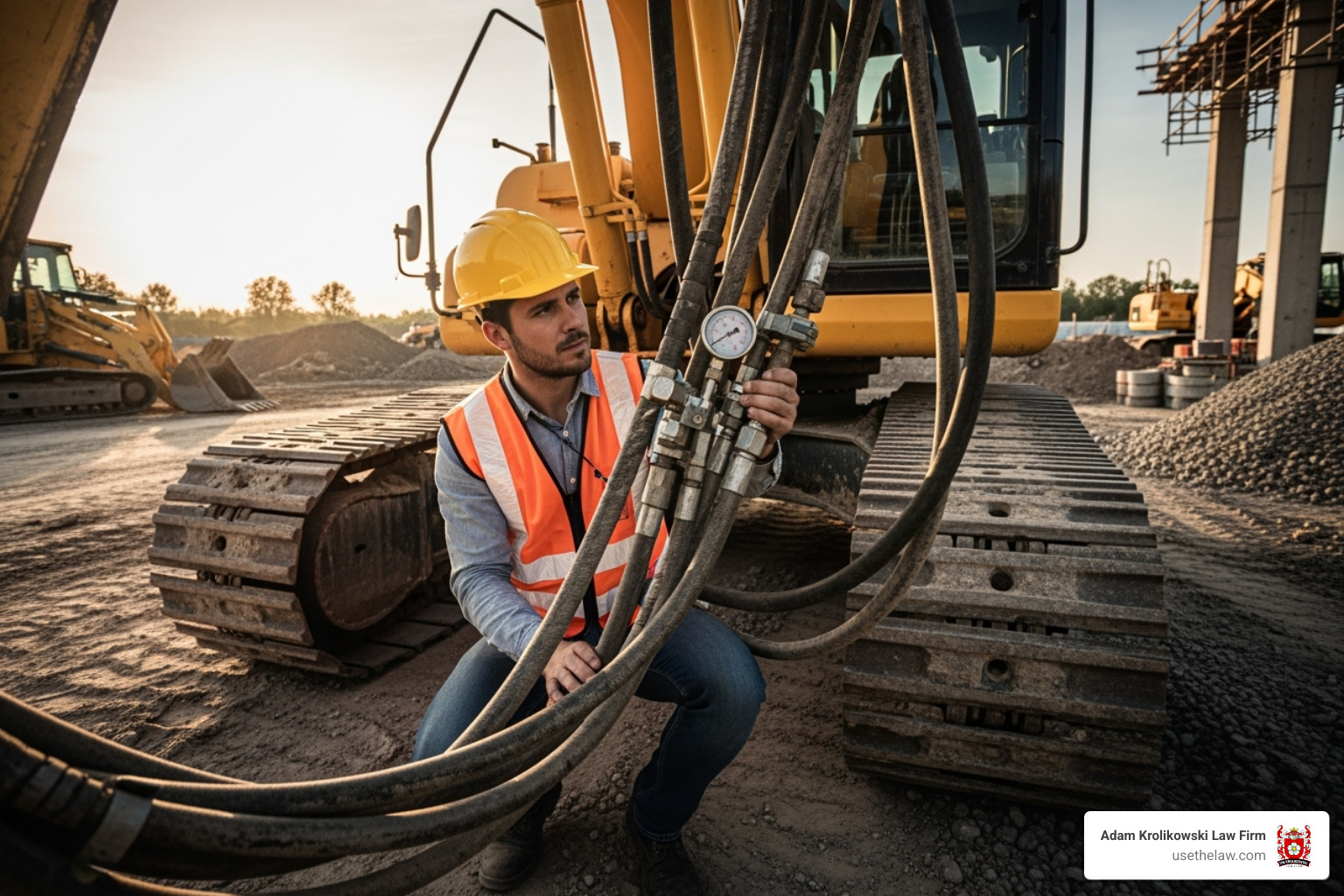
- Daily Inspections: A few minutes checking hydraulic lines, brakes, and tires can prevent a mechanical failure. OSHA provides clear inspection standards.
- Clear Communication: Using established hand signals and radios prevents dangerous misunderstandings, especially when visibility is limited.
- Using Spotters: A spotter acts as the operator’s eyes and ears during backing, loading, or working in tight spaces.
- Blind Spot Awareness: Both operators and ground workers must know where the machine’s blind spots are and avoid these danger zones.
Employer Responsibilities and Safety Culture
Employers control the work environment and set the tone for safety. Their responsibilities include:
- Developing and Enforcing a Safety Program: A written program provides a clear playbook, and consistent enforcement shows that safety is a priority.
- Regular Maintenance: Sticking to a maintenance schedule keeps machines running safely and catches problems before they cause a heavy equipment accident.
- Proper Equipment Storage: Parking machines on level ground with brakes set and wheels blocked prevents runaway accidents.
- Providing PPE: Hard hats, high-visibility clothing, and other personal protective equipment can reduce the severity of injuries when accidents occur.
- Fostering a Culture of Safety: The most important step is creating an environment where workers feel empowered to report hazards without fear of retaliation. Prioritizing safety over speed is crucial, especially considering how California Workplace Safety Violations Impact Workers’ Comp Claims.
Prevention requires everyone’s participation. When the entire team commits to safety, devastating accidents become increasingly rare.
Navigating the Aftermath of a Heavy Equipment Accident
When a heavy equipment accident happens, the aftermath can be overwhelming. Understanding your injuries and legal options is the first step toward taking control of your recovery.
Common Injuries and Their Long-Term Impact
The power of heavy machinery often results in severe, life-changing injuries.
- Traumatic Brain Injuries (TBI): Common when workers are struck or thrown, TBIs can cause permanent cognitive or physical disabilities.
- Spinal Cord Damage: Crushing accidents or falls can lead to partial or complete paralysis, altering every aspect of a person’s life.
- Amputations: Limbs caught in machinery or crushed beyond repair may require amputation, leading to a long road of rehabilitation and prosthetics.
- Crushing Injuries and Broken Bones: These can cause severe internal damage, shattered bones, chronic pain, and limited mobility.
- Severe Burns: Contact with power lines, fuel leaks, or explosions can cause burns that require painful surgeries and leave permanent scars.
- Wrongful Death: Tragically, many accidents are fatal, leaving families with grief and financial uncertainty.
The physical, emotional, and financial toll of these injuries is immense. That is why working with a Construction Accident Law Firm that understands these complex cases is so important.
Understanding Your Legal Avenues for Compensation
After a heavy equipment accident, you may have several legal options for seeking compensation.
Workers’ Compensation Benefits
This is typically your first line of support. If you were hurt on the job, you generally qualify for benefits covering medical bills and a portion of lost wages, regardless of who was at fault. The process involves filing a workers’ compensation claim with your state’s board. However, these benefits don’t cover all lost wages or compensate for pain and suffering.
Third-Party Liability Lawsuits
If someone other than your direct employer contributed to the accident, you may be able to file a separate personal injury lawsuit. This can provide more comprehensive compensation. Potentially liable third parties include:
- Equipment manufacturers for defective or poorly designed products.
- Other contractors on the job site who created unsafe conditions.
- Property owners who failed to address known hazards.
- Maintenance companies that performed negligent repairs.
A third-party claim can help you recover damages for your full lost wages, future earning capacity, pain and suffering, and emotional distress. Navigating these legal paths while recovering is challenging. An Orange County Construction Accident Attorney can investigate your case, identify all at-fault parties, and pursue every available source of compensation to protect your family’s financial future.
The Role of Legal Counsel in Your Recovery
After a heavy equipment accident, you’re dealing with pain, medical bills, and uncertainty about your future. You don’t have to handle the legal complexities alone. At Adam Krolikowski Law Firm, we manage the legal process so you can focus on getting better.

How an Attorney Investigates Your Claim
Our job is to uncover the full story of what happened and who should be held accountable. We conduct a thorough investigation by:
- Preserving Evidence: We act quickly to secure accident reports, photograph the scene, and preserve damaged equipment before evidence disappears.
- Interviewing Witnesses: We speak with coworkers, supervisors, and other witnesses to gather accounts that may not be in the official reports.
- Consulting Professionals: We work with accident reconstructionists, engineers, and medical professionals to build a strong technical and medical foundation for your case.
- Identifying All At-Fault Parties: A heavy equipment accident often has multiple causes. We investigate manufacturers, maintenance companies, and general contractors to find every source of compensation. Our work as a Construction Accident Attorney Los Angeles has prepared us to handle these complex scenarios.
Securing the Compensation You Deserve
We fight to get you the resources needed to support your family and afford your care. This involves:
- Calculating Full Damages: We account for all current and future medical bills, lost wages, reduced earning capacity, and the physical and emotional pain and suffering your injury has caused.
- Negotiating with Insurance Companies: Insurance adjusters often make lowball offers. We handle all negotiations, using the evidence we’ve gathered to push for a fair settlement.
- Representing You in Court: If a fair settlement isn’t offered, we are always prepared to take your case to trial and present your story to a judge and jury.
With over 25 years of experience, we handle complex cases that other attorneys might avoid. Your recovery is our priority, and we will fight to get you the compensation you need to move forward.
Conclusion
The reality is that heavy equipment accidents continue to devastate families. These incidents are not just statistics; they represent real people whose lives are changed in an instant, often due to preventable causes like inadequate training, poor maintenance, or systemic safety failures.
Prevention is paramount. A strong safety culture, with comprehensive training and diligent inspections, can save lives. Both operators and employers share the responsibility to make job sites safer.
However, accidents still happen. When they do, the aftermath is overwhelming, with mounting medical bills and lost income. Victims have rights and legal options. Workers’ compensation offers initial support, while third-party liability lawsuits can provide more complete compensation for negligence by manufacturers, contractors, or property owners. These avenues are designed to help you rebuild.
At Adam Krolikowski Law Firm, we have over 25 years of experience with complex injury claims. We handle the difficult cases others may avoid, investigating thoroughly to fight for the full compensation you deserve.
If you or a loved one has been hurt in a heavy equipment accident, you don’t have to face this difficult time alone. We are here to help you understand your options and protect your rights. For those with specific injuries, learn about your legal options if you’ve been injured in a trenching or excavation accident. Your recovery and your justice matter.
