

Understanding When Your Workplace Crosses the Line
A hostile work environment is more than just a difficult boss or workplace stress. It’s a legal term for when harassment or discrimination becomes so severe or frequent that it alters your working conditions. For a situation to be legally hostile, the conduct must be unwelcome, discriminatory, and significant enough that a reasonable person would find the environment abusive.
Key legal requirements include:
- Discrimination-based: The conduct targets a protected characteristic (race, gender, age, etc.).
- Unwelcome: The behavior is uninvited and offensive.
- Severe or Pervasive: The issue involves extremely serious incidents or an ongoing pattern of abuse.
- Alters Employment: The environment negatively impacts your ability to do your job.
While one in five Americans experiences a hostile work environment, many cases go unreported due to fear or uncertainty. Many workers mistakenly believe they must tolerate offensive or intimidating behavior. However, California law offers strong protections. An employer can demand high performance, but they cannot permit an abusive environment based on discriminatory harassment.
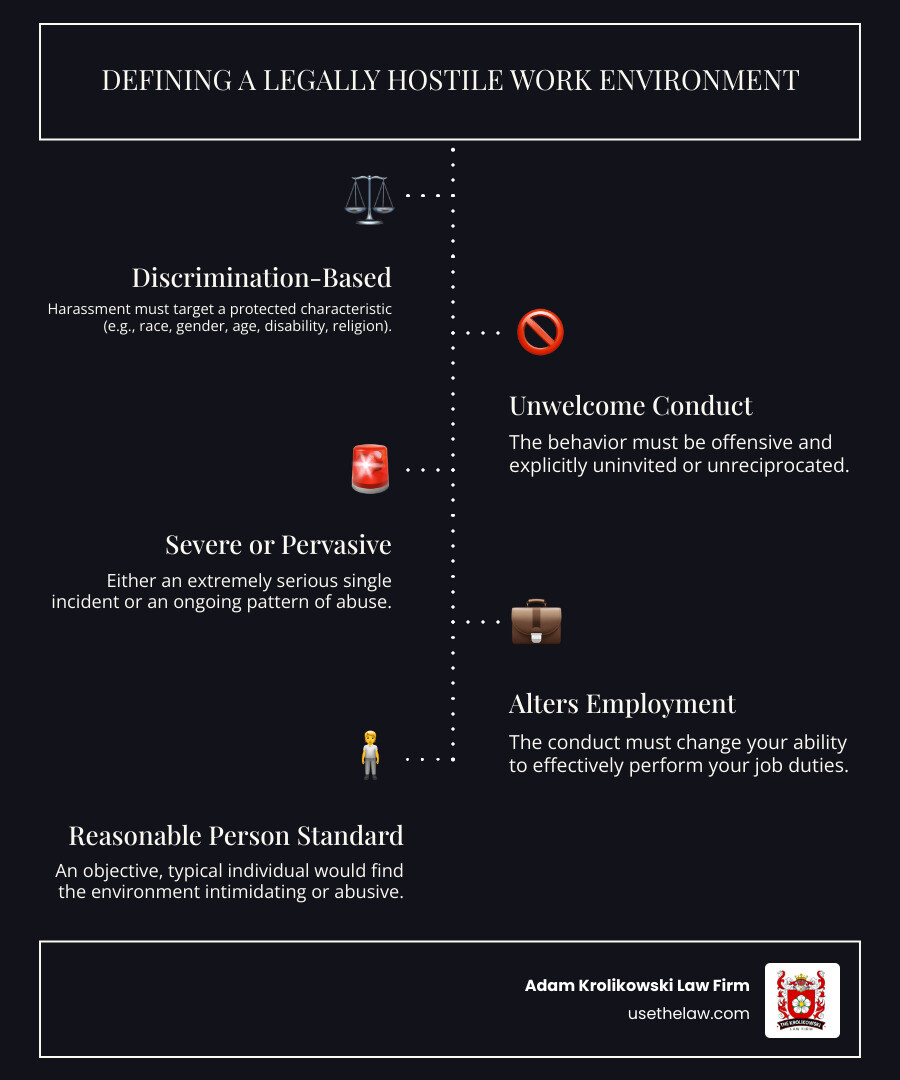
Simple guide to Hostile work environment terms:
The Legal Threshold: What Makes a Work Environment “Hostile”?
Not every difficult workplace qualifies as a legally hostile work environment. Frustration with a micromanaging boss or stress from deadlines typically doesn’t meet the legal standard. The law distinguishes between general unpleasantness and illegal harassment.
Based on The Civil Rights Act of 1964, a hostile environment claim requires specific criteria. The behavior must be discriminatory, targeting you because of a protected characteristic like race, gender, religion, or age. A boss who is equally difficult with everyone is not creating a legally hostile environment.
Courts use the reasonable person standard to evaluate claims, asking if a typical person in your situation would find the environment intimidating or abusive. This objective test separates valid complaints from personal grievances.
| Unpleasant Workplace (Not Legally Hostile) | Legally Hostile Workplace |
|---|---|
| Micromanagement and excessive oversight | Discriminatory harassment based on protected characteristics |
| High pressure and unrealistic deadlines | Severe or pervasive unwelcome conduct |
| Rude or unprofessional boss behavior | Behavior that alters your employment conditions |
| General workplace conflict | Conduct that creates an intimidating or abusive environment |
The conduct must also be severe or pervasive enough to alter your working conditions. A single off-color joke is rarely enough, but a pattern of discriminatory behavior or one extremely serious incident can qualify.
Protected Characteristics That Form the Basis of a Claim
Harassment must be based on a protected characteristic to be legally actionable. Federal law protects against discrimination based on race, gender, religion, national origin, age (40+), disability, sexual orientation, and genetic information. California law often provides even broader protections, such as for gender discrimination claims. Harassment due to personality conflicts or work performance is not protected.
Severity vs. Pervasiveness: The Tipping Point for a Hostile Work Environment Claim
Harassment becomes legally actionable when it is either severe or pervasive. Severe conduct includes serious incidents like physical threats or explicit slurs that can create a hostile environment even if they only happen once. Pervasive conduct involves an ongoing pattern of less serious acts that accumulate over time, creating a toxic atmosphere. The key is whether the conduct alters your employment conditions, making you feel intimidated or unable to perform your job.
The Legal Threshold: What Makes a Work Environment “Hostile”?
While your boss may be demanding or your workload overwhelming, these issues alone do not meet the legal definition of a hostile work environment. The law draws a clear line between workplace unhappiness and illegal harassment, which occurs when conduct is so severe or frequent that it fundamentally changes your job conditions.
To be legally actionable, the hostility must target a protected characteristic. This means the behavior is not just general rudeness but is specifically directed at you because of your race, gender, religion, age, or other traits protected by laws like The Civil Rights Act of 1964. Courts apply a reasonable person standard, asking if a typical person would find the workplace intimidating or abusive. Isolated comments or minor incidents usually don’t meet this standard.
| Unpleasant Workplace (Not Legally Hostile) | Legally Hostile Workplace |
|---|---|
| Micromanagement and excessive oversight | Discriminatory treatment based on protected characteristics |
| High-pressure deadlines and demanding workload | Severe or pervasive harassment targeting race, gender, religion, etc. |
| Rude or unprofessional behavior from supervisors | Conduct that alters working conditions and creates fear or intimidation |
| General workplace conflicts and personality clashes | Unwelcome behavior that interferes with job performance |
| Poor communication or unclear expectations | Environment a reasonable person would find abusive |
Protected Characteristics That Form the Basis of a Claim
Federal and California laws protect employees from harassment based on specific protected classes. These include race, ethnicity, gender, religion, national origin, age (40+), disability, sexual orientation, and gender identity. For example, a Los Angeles gender discrimination lawyer can address cases involving unequal treatment or inappropriate comments based on gender. General rudeness is not illegal, but it crosses a line when it targets these protected traits.
Severity vs. Pervasiveness: The Tipping Point for a Hostile Work Environment Claim
Workplace harassment becomes illegal when it is either severe or pervasive. You do not need both. Severe conduct involves extremely serious incidents, like physical threats or degrading verbal abuse, that can alter your work environment immediately. Pervasive conduct refers to an ongoing pattern of harassment. While individual incidents may seem minor, their cumulative effect creates an abusive environment. The tipping point is when the conduct, through its severity or frequency, alters your employment conditions and creates an intimidating atmosphere.
The Legal Threshold: What Makes a Work Environment “Hostile”?
A legally hostile work environment is not about general workplace frustrations but about discrimination or harassment so serious it changes your working conditions. Understanding this distinction is key to protecting your rights.
To meet the legal definition, the unwelcome behavior must be based on discrimination against a protected characteristic, such as race, gender, religion, or age. It is not about personality clashes. The conduct must also be objectively offensive under the “reasonable person standard,” meaning a typical person would find the environment abusive. As established by laws like The Civil Rights Act of 1964, isolated comments or minor incidents usually don’t qualify.
Most importantly, the harassment must be severe or pervasive enough to interfere with your ability to do your job.
| Unpleasant Workplace (Not Legally Hostile) | Legally Hostile Workplace |
|---|---|
| Micromanagement and excessive oversight | Discriminatory treatment based on protected characteristics |
| High-pressure deadlines and demanding workload | Severe or pervasive harassment that alters working conditions |
| Rude or unprofessional boss behavior | Unwelcome conduct targeting race, gender, religion, age, etc. |
| General workplace conflicts and tension | Intimidating or abusive environment a reasonable person would find offensive |
Protected Characteristics That Form the Basis of a Claim
Federal and California law protect employees from harassment based on race, gender, religion, national origin, age (40+), disability, sexual orientation, and genetic information. For instance, if comments about your appearance target your gender or include unwelcome sexual advances, you may have a claim. Cases of gender discrimination often involve patterns of unequal treatment or inappropriate conduct.
Severity vs. Pervasiveness: The Tipping Point for a Hostile Work Environment Claim
A claim can arise from severe conduct (a single, extreme incident like a physical threat) or pervasive conduct (an ongoing pattern of smaller incidents). The key question is whether the behavior alters the conditions of employment, causing you to dread work or hurting your performance. While isolated incidents that aren’t extreme typically don’t qualify, an ongoing pattern of discriminatory treatment may be grounds for legal action.
The Legal Threshold: What Makes a Work Environment “Hostile”?
Not every difficult workplace is legally hostile. While a demanding boss or high pressure can be unpleasant, the law distinguishes between general stress and illegal harassment. A true hostile work environment involves conduct so severe or pervasive it fundamentally changes your job conditions.
The behavior must target a protected characteristic under federal law, such as your race, gender, religion, age (40+), disability, or sexual orientation. It must also meet the “reasonable person standard,” meaning an average person would find the workplace intimidating or abusive. As noted in The Civil Rights Act of 1964, minor incidents or isolated comments typically do not qualify.
Finally, the behavior must be severe or pervasive enough to interfere with your ability to do your job effectively.
| Unpleasant Workplace (Not Legally Hostile) | Legally Hostile Workplace |
|---|---|
| Micromanagement and excessive oversight | Discriminatory treatment based on protected characteristics |
| High-pressure deadlines and demanding workload | Severe or pervasive harassment targeting race, gender, religion, etc. |
| Rude or unprofessional behavior from supervisors | Conduct that alters employment conditions and creates an abusive environment |
| General workplace stress and difficult personalities | Unwelcome behavior that a reasonable person would find intimidating or hostile |
The core of the problem must be discrimination. A boss who is unpleasant to everyone creates a poor work environment, but not necessarily an illegal one. However, a supervisor who makes racist comments or excludes employees based on gender has crossed into illegal territory.
The Legal Threshold: What Makes a Work Environment “Hostile”?
In employment law, a hostile work environment has a specific legal meaning that goes beyond a difficult boss or office drama. The law focuses on discrimination or harassment that is so severe it fundamentally changes your ability to do your job.
To be legally considered a hostile work environment, conduct must meet criteria from laws like The Civil Rights Act of 1964. The behavior must be based on a protected characteristic (e.g., race, gender, religion) and pass the “reasonable person standard,” meaning a typical person would find the environment abusive. It must be serious enough to interfere with your work.
| Unpleasant Workplace (Not Legally Hostile) | Legally Hostile Workplace |
|---|---|
| Micromanagement – Boss constantly checking your work | Discriminatory harassment – Comments about your race, gender, or religion |
| High pressure – Unrealistic deadlines and demands | Severe conduct – Physical threats or extremely offensive behavior |
| Rude boss – General meanness not tied to protected traits | Pervasive pattern – Ongoing harassment that makes work unbearable |
| Office politics – Favoritism and unfair treatment | Alters employment conditions – Creates an abusive atmosphere you must endure |
Protected Characteristics That Form the Basis of a Claim
A claim requires harassment based on a legally protected characteristic. These include race, color, religion, gender (including sexual orientation and gender identity), national origin, age (40+), disability, and genetic information. More info about gender discrimination can clarify how these cases take different forms. Without a link to a protected trait, unpleasantness is likely not illegal harassment.
Severity vs. Pervasiveness: The Tipping Point for a Hostile Work Environment Claim
Conduct crosses the legal line when it is “severe or pervasive.” Severe conduct is a single incident so extreme (e.g., physical assault, credible threats) that it immediately creates a hostile environment. Pervasive conduct is more common and involves ongoing patterns of harassment that create an abusive atmosphere over time. The key is whether the conduct alters your employment conditions, making it unreasonably difficult to do your job. Petty slights or isolated incidents usually do not qualify unless they are extremely serious.
Recognizing the Signs: Common Examples of Workplace Hostility
Knowing what a hostile work environment looks like can help you identify when a situation crosses a legal line. The signs are not always obvious.

Common examples of workplace hostility include:
- Verbal Abuse: This is more than a raised voice. It’s a consistent pattern of insults, yelling, or demeaning comments targeting your protected characteristics (e.g., slurs related to race or gender).
- Physical Threats or Intimidation: This includes threats of harm, aggressive posturing, or invading personal space, making you feel unsafe.
- Sabotage and Undermining: Deliberately withholding information, spreading false rumors, or actively working to make you fail, especially when tied to your protected status.
- Exclusion: Systematically being left out of meetings, training, or social events because of your race, gender, or other protected trait.
- Inappropriate Materials: Displaying sexually suggestive images, racist symbols, or other offensive materials that degrade certain employees.
The key factor is unwelcome conduct—behavior that makes you uncomfortable and that you did not invite or encourage.
More info from a California workplace harassment lawyer
Unwelcome Conduct That Contributes to a Hostile Work Environment
“Unwelcome conduct” is defined by its effect on you, not the harasser’s intent. If the actions created an offensive environment, they may be legally actionable. Examples include:
- Sexual Advances: Unwanted jokes, suggestive remarks, inappropriate touching, or displaying explicit materials. Even persistent comments about your appearance can contribute to a hostile work environment.
- Racist or Discriminatory Remarks: Using racial epithets, stereotyping based on national origin, or displaying offensive symbols.
- Religious or Age-Related Mockery: Making fun of someone’s faith, religious practices, or age.
- Disability-Related Harassment: Mocking physical or mental conditions or the need for accommodations.
Harassment can also occur through cyberbullying on work emails, messaging systems, or social media.
More info about sexual harassment
Employer Duties and Potential Consequences
Employers have a legal responsibility to prevent and address a hostile work environment. Under federal law, prevention is the most effective tool, meaning employers must be proactive.
Their responsibilities include establishing clear anti-harassment policies, providing regular training, and creating an effective and accessible complaint process. When harassment is reported, an employer must conduct a prompt and thorough investigation. If harassment is confirmed, they must take immediate corrective action to stop the behavior and prevent it from recurring.
The consequences for employers who fail to act can be severe. They can become legally responsible for fostering a hostile work environment, leading to significant financial and reputational damage. Potential consequences include:
- Legal Liability: Lawsuits can result in substantial damages for lost wages, emotional distress, and attorney’s fees.
- Damaged Reputation: News of a toxic workplace makes it difficult to attract and retain talented employees.
- Productivity Costs: Harassment leads to lower morale, increased absenteeism, and high turnover, all of which impact the bottom line.
U.S. Equal Employment Opportunity Commission (EEOC) guidance
The Role of Company Policies and Training
Strong policies and consistent training are essential for preventing workplace hostility. A comprehensive employee handbook should clearly define unacceptable behavior and outline a safe, confidential reporting process. Anti-retaliation policies are critical, as retaliating against an employee for reporting harassment is illegal.
Regular, mandatory training for all employees should cover what constitutes harassment, explain employee rights, and detail the reporting procedure. Managers and supervisors require additional training on how to recognize and respond to complaints appropriately. Building a positive culture where employees feel valued and heard is the best defense against harassment.
Taking Action: A Step-by-Step Guide for Employees
If you believe you are in a hostile work environment, taking the right steps can help you resolve the situation and protect your rights.

- Speak to the Person (If Safe): If you feel comfortable, tell the person their conduct is unwelcome and must stop. This can sometimes resolve the issue quickly. If you feel threatened or the harasser is a superior, skip this step.
- Review Company Policies: Check your employee handbook for policies on harassment and reporting procedures. This is your roadmap for getting help internally.
- Report Internally in Writing: Send an email to HR or the designated person. Be specific about what happened, including dates and times. A written record is crucial.
- Document Everything: Keep detailed records of every incident. This is the foundation of your claim.
- Gather Witness Support: If others saw the harassment, their support can strengthen your case. Approach them privately.
- Be Aware of Deadlines: There are strict time limits (statutes of limitations) for filing legal claims. In California, you generally have 300 days to file with the EEOC and one year to file with the state’s DFEH.
- Consult a Legal Professional: If your company ignores your complaint or retaliates against you, contact an employment attorney. California law protects employees from retaliation for making good-faith complaints.
Find an attorney for workplace harassment
How to Gather Evidence for Your Claim
Strong evidence is key. The more detailed your documentation, the clearer the picture of harassment becomes.
- Keep a Written Journal: Immediately write down the date, time, location, what was said or done, and who was present for each incident. Note how it affected you.
- Save Communications: Keep all related emails, texts, voicemails, and notes. Take screenshots of chat messages or social media posts.
- Collect Personnel Files: Gather copies of performance reviews and commendations, especially if your reviews turned negative after the harassment began.
- Identify Witnesses: Get contact information from coworkers who witnessed incidents and would be willing to share what they saw.
- Photograph Offensive Materials: If you can do so safely, take pictures of any offensive objects, images, or graffiti in the workplace.
Frequently Asked Questions about Hostile Work Environments
Here are answers to some of the most common questions employees have when facing workplace harassment.
Can a single incident be severe enough to be considered a hostile work environment?
Yes. While most hostile work environment claims involve a pattern of harassment, a single incident can be enough if it is exceptionally severe. This typically involves extreme conduct like a physical assault, a serious sexual advance, or a profoundly offensive slur that creates an immediate atmosphere of fear or intimidation. According to the EEOC, such isolated incidents must be “extremely serious” to qualify. A single rude comment is usually not enough.
What is the time limit for filing a hostile work environment claim in California?
Strict deadlines apply, so it’s important to act promptly. For federal claims with the EEOC, you generally have 180 days from the discriminatory act. However, because California has its own anti-discrimination laws, this deadline is extended to 300 days. State law may provide different time limits. Consulting with an employment attorney can help you understand the specific deadlines for your case and ensure you don’t miss them.
What should I do if my direct supervisor is the one creating the hostile environment?
This situation can feel isolating, but you have specific protections. Your first step should be to bypass the chain of command. Your employee handbook should outline how to report harassment to Human Resources or a higher-level manager.
When you make your report, do so in writing. Clearly explain the situation and state that you are bypassing your supervisor because they are the source of the harassment. Document every incident with dates, times, and witnesses. Employers have a higher level of liability when a supervisor is the harasser, especially if it results in negative employment actions like a demotion or firing. If your internal complaints are ignored or you face retaliation, contact an employment attorney immediately.
Conclusion
Dealing with a hostile work environment is an isolating and stressful experience, but you have legal rights that protect you. The law distinguishes between a difficult job and illegal harassment, which involves severe or pervasive discrimination that alters your ability to work.

Documentation is your strongest tool. Keeping detailed notes, emails, and witness information provides powerful evidence. You do not have to handle this alone. Speaking up protects both you and your coworkers.
At Adam Krolikowski Law Firm, we have helped employees in Orange County, Santa Ana, and Los Angeles for over 25 years. We handle complex employment law cases because we believe everyone deserves a workplace free from illegal harassment.
Your career and dignity matter. If you believe your workplace has crossed the line from difficult to hostile, don’t wait to seek help. The sooner you act, the more options you have.
