

Understanding Workplace Injuries and Your Path Forward
When you are Injured at work, it can be a confusing and stressful time. Knowing what to do immediately is key to protecting your health and your rights.
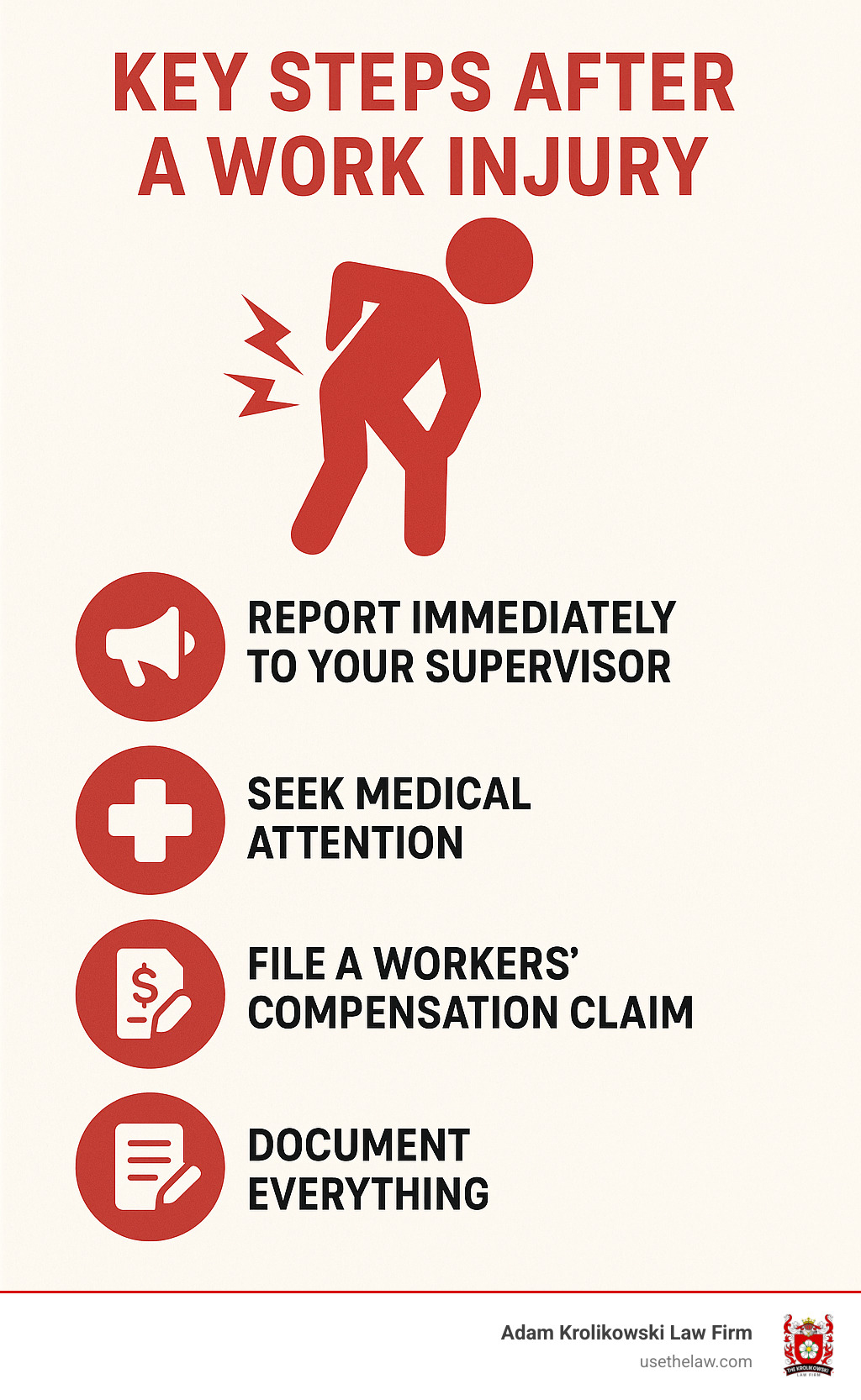
Here are the essential first steps:
- Seek Medical Help: Get first aid or see a doctor right away. Tell them your injury is work-related.
- Tell Your Employer: Report your injury to your supervisor as soon as possible, preferably in writing.
- File Your Claim: Your employer should provide the necessary forms to start your workers’ compensation claim.
- Document Everything: Keep detailed records of your injury, medical visits, and all communications.
This guide will help you understand your options and secure the support you need. Knowing the process helps you focus on healing and ensures you get the benefits you deserve, such as medical care and coverage for lost wages.
What to Do When You Are Injured at Work: A Step-by-Step Guide
This section covers the immediate actions an employee must take to protect their health and their right to compensation.
1. Prioritize Your Health: Seek Immediate Medical Attention
Your health is the top priority after a work accident. When you are Injured at work, seek immediate medical help. For emergencies, such as a bad fall or deep cut, call 911 or go to the nearest emergency room. For less serious injuries, use workplace first aid but see a doctor if pain persists or you have concerns.
Always tell medical staff your injury is work-related. This is a vital step for your workers’ compensation claim, as it connects your medical care to the workplace accident. The California Department of Industrial Relations (DIR) provides helpful information on this topic: I was injured at work – California Department of Industrial Relations. Your employer should also cover your transportation to a medical facility on the day of the injury. Prompt medical care, even for what seems like a minor issue, can prevent future complications.
2. Reporting When You Are Injured at Work
After your immediate medical needs are addressed, you must report the injury to your employer. A verbal report is a start, but follow up with a written report to create a clear record. Your employer is then required to give you a DWC-1 Claim Form within one working day of being notified.
For injuries that develop over time, such as carpal tunnel syndrome, report them as soon as you realize or believe they are caused by your job. Be aware of these critical deadlines: you must notify your employer of your injury within 30 days. You then generally have one year from the date of injury to file the DWC-1 form. Reporting quickly helps ensure a smoother claims process and prevents delays in receiving benefits.

3. Document Everything Carefully
Careful and organized record-keeping strengthens your position during the claims process. Keep track of the following:
- Injury Journal: Write down the date, time, and details of how you were hurt. Describe your symptoms and how the injury affects your daily life.
- Witness Information: Collect the names and contact information of anyone who saw the accident.
- Photos: Take pictures of your visible injuries and the scene where the accident occurred.
- Medical Records: Keep copies of all doctor reports, test results, prescriptions, and therapy notes.
- Communication Logs: Note the date, time, and a summary of every conversation about your injury with your employer, HR, doctors, and insurance adjusters.
- Receipts for Expenses: Save all receipts for medical bills, prescription costs, and travel to appointments.
This documentation provides proof for your claim and creates a clear timeline, which can be invaluable if disagreements arise.
Navigating the California Workers’ Compensation Claims Process
This section explains the journey from filing a claim to receiving a decision and benefits, explaining the process for injured workers.
How the Claims Process Works
Once you report your injury, the formal claims process begins with filing the DWC-1 form. This officially notifies your employer and their insurer that you were Injured at work and are seeking benefits. Your employer completes their portion and forwards it to their insurance company.
The insurer then reviews your claim, gathering information from you, your employer, and your doctors. After the review, the insurer will either accept or deny your claim. If accepted, you will receive a claim number, which is essential for all future communications and appointments. The California Department of Industrial Relations offers a detailed guidebook, “Workers’ Compensation in California: A Guidebook for Injured Workers,” that explains this process.
Understanding Your Benefits if You Are Injured at Work
Workers’ compensation benefits are designed to cover your medical care, help with lost wages, and support your return to work. Unlike personal injury lawsuits, these benefits do not cover “pain and suffering.” The main types of benefits include:
- Medical Care Coverage: Pays for all necessary medical treatment for your work injury, including doctor visits, surgery, and medication.
- Temporary Disability Benefits: Replaces a portion of your lost wages if your injury prevents you from working or reduces your earnings while you recover.
- Permanent Disability Benefits: Compensates you for any lasting impairment from your injury that affects your ability to work.
- Supplemental Job Displacement Benefits: A voucher for retraining if you cannot return to your old job and your employer doesn’t offer suitable alternative work.
- Death Benefits: Paid to dependents if a work injury results in death.
These benefits are vital for your recovery and are often available to temporary and part-time workers. For more details, see our guide on Work Injury Claims Workers Comp Lawyer.
What to Do if You Disagree with a Claim Decision
If your claim is denied or you disagree with a decision about your benefits, you have the right to challenge it. Denials can happen for many reasons, such as disputes over whether the injury was work-related or a lack of medical evidence. The insurance company must provide a written explanation for the denial.
You can request a review of the decision. If that fails, you can file an appeal with the Workers’ Compensation Appeals Board (WCAB) in California. This process involves forms, hearings, and strict deadlines, so it’s important to act quickly. The appeals process can be complex. Legal guidance can be invaluable in understanding the denial, gathering evidence, and representing you during the appeal. Our resource on Appealing Denied Workers Compensation Claim California offers more specific advice.

Know Your Rights and Your Employer’s Responsibilities
This section details the legal obligations of employers and the protected rights of employees throughout the workers’ compensation process.
Employer Obligations After an Injury
When you are injured at work, your employer has clear legal responsibilities. After you report your injury, they must promptly:
- Provide the DWC-1 form to start your claim.
- Report the injury to their workers’ compensation insurance carrier.
- Pay for your necessary medical treatment, even if you don’t miss work.
Crucially, your employer cannot punish or fire you for reporting an injury or filing a claim. This protection against retaliation is a core part of the law. For more on these protections, see our guide on Worker Rights Workmans Comp Lawyer. Employers must also maintain a safe workplace, as California Workplace Safety Violations Impact Workers Comp Claims.
Your Right to Return to Work
The workers’ compensation system aims to help you return to your job safely after being injured at work. If your doctor places you on work restrictions, your employer may offer “modified duties” or “suitable work.” This involves tasks that fit your physical limitations.
Your employer is generally required to make reasonable accommodations for your medical restrictions, such as altering job tasks or adjusting your schedule. In California, if you cannot return to your original job, your employer may be required to offer you modified or alternative work. These re-employment rights can last for a set period, providing a path back to work.

Consequences for Employer Non-Compliance
Employers who fail to meet their workers’ compensation responsibilities face serious legal and financial consequences. For instance, failing to report an injury promptly or discouraging an employee from filing a claim is illegal and can result in penalties.
If an unsafe work environment causes you to be injured at work, the employer may face additional penalties from agencies like OSHA. Furthermore, retaliating against an employee for filing a claim can lead to significant fines and lawsuits. It’s also important to note that Workers compensation fraud, by either an employer or employee, is a serious crime. If your employer is not complying with the law, you have options to protect your rights.
Common and Complex Workplace Injury Claims
This section explores the different types of injuries covered by workers’ compensation, from common physical ailments to more complex cases.
Types of Physical Injuries to Report
Workplace accidents can cause many types of injuries. Understanding common physical injuries can help you report them clearly if you are injured at work. Frequently reported injuries include:
- Sprains and Strains: Affecting muscles and ligaments from overexertion, twisting, or falls.
- Fractures: Broken bones resulting from falls, impacts, or crushing incidents.
- Lacerations and Punctures: Cuts from sharp objects, tools, or machinery.
- Overexertion Injuries: Caused by heavy lifting, pushing, or pulling.
- Repetitive Motion Injuries: Conditions like carpal tunnel syndrome from repeated movements.
These injuries are common across many industries and often result in time away from work.
| Injury Type | Common Causes | High-Risk Industries |
|---|---|---|
| Sprains & Strains | Overexertion, awkward movements, falls | Manufacturing, Construction, Transportation |
| Fractures | Falls, impacts, crushing | Construction, Manufacturing, Transportation |
| Lacerations & Punctures | Contact with objects, machinery, tools | Manufacturing, Construction |
| Overexertion | Lifting, pushing, pulling, repetitive tasks | Transportation, Healthcare, Manufacturing |
| Falls (same level/from height) | Slippery surfaces, uneven ground, ladders | Construction, Manufacturing, Transportation |
Handling Mental Health Conditions
Not all work injuries are physical. Mental health conditions caused or worsened by work, such as anxiety, depression, and Post-Traumatic Stress Disorder (PTSD), may be covered by workers’ compensation. These can stem from a single traumatic event or from ongoing stress.
Proving a mental health claim is work-related can be challenging. Generally, your job must be the primary cause of the condition, and you will need a diagnosis from a psychologist or psychiatrist. If you believe your mental health has been harmed by your job, seek professional help and document the workplace stressors and their impact on you. For more information, see our guide on Workers Mental Health in Santa Ana Claims.
Reporting Serious Incidents and Fatalities
Serious incidents, including fatalities and severe injuries, have special and immediate reporting requirements. Catastrophic injuries are those with life-altering consequences, such as amputations, severe burns, or spinal cord injuries. These require immediate medical attention and prompt reporting.
In the event of a workplace fatality or critical injury, employers have a legal duty to report the incident immediately to the appropriate government safety agency, like Cal/OSHA. The accident scene must often be preserved to allow for an investigation. For families dealing with a workplace fatality, specific support and benefits are available. Our guide on Death Benefits Workers Compensation Legal Options Los Angeles provides more information.
High-Risk Industry Claims
Some industries, such as manufacturing, construction, and transportation, have inherently higher risks. These jobs often involve heavy machinery, hazardous materials, and strenuous physical labor.
- Construction Site Injuries: Workers face risks from falls, falling objects, and machinery accidents. Learn more in our resource on Construction site injuries.
- Manufacturing Accidents: Common injuries include cuts, crush injuries, and repetitive strain from assembly line work.
- Transportation Incidents: This sector sees injuries from vehicle crashes and strains from loading/unloading.
- Firefighter Workers’ Compensation: Firefighters face unique dangers and have special considerations for burns, smoke inhalation, and certain cancers. Read more about Firefighter workers compensation.
Understanding industry-specific risks is key to safety and to properly reporting a claim if you are injured at work.
Frequently Asked Questions about Being Injured at Work
It’s normal to have questions when you find yourself injured at work. Getting clear answers can make a significant difference. Here are some of the most common concerns.
Can I be fired for filing a workers’ compensation claim?
No. California law makes it illegal for your employer to fire, punish, or otherwise retaliate against you for filing a workers’ compensation claim or reporting a work-related injury. If you experience negative actions like a demotion, reduced hours, or harassment after your report, document everything—dates, times, individuals involved, and what occurred. This documentation is vital for protecting your rights.
How long do I have to file a workers’ compensation claim in California?
In California, there are two key deadlines when you’re injured at work. First, you must notify your employer of your injury within 30 days. Failing to meet this deadline can jeopardize your right to benefits. Second, you generally have one year from the date of your injury to file the official DWC-1 claim form with your employer. Meeting these deadlines is crucial.
Do I need a lawyer for my workers’ compensation claim?
Whether you need a lawyer depends on your situation. For a minor injury with an accepted claim, you may not need one. However, legal guidance is often essential, especially if:
- Your claim is denied.
- Your injury is severe or will have long-term effects.
- Your case is complex (e.g., involves a third party or pre-existing conditions).
- You have disputes with the insurance company over treatment or benefits.
An attorney can steer the legal system for you, taking a significant burden off your shoulders and protecting your rights.
Conclusion
Navigating life after being Injured at work can be overwhelming, but you don’t have to go through it alone. Remember the crucial first steps: seek medical care, notify your employer, document everything, and understand your rights and benefits. Acting promptly, especially by reporting your injury within the 30-day window, is essential for protecting your right to workers’ compensation benefits under California law.
While some cases are straightforward, many become complex due to medical disputes or disagreements with employers. These situations can be difficult to handle on your own.
Adam Krolikowski Law Firm has over 25 years of experience helping injured workers in Orange County and Los Angeles with their workers’ compensation claims. We are known for handling challenging cases that other firms may not take. Our goal is to manage the legal details so you can focus on your recovery.
If you are dealing with a work injury, help is available. Understanding your options is the first step toward getting the support you deserve. Whether it was a fall, a trench accident, or another work-related incident, we are here to guide you. For specific help, like if you need to Get help with your trench or excavation accident claim, please reach out.
Contact Us
Practice Areas
Recent Articles
- « Previous
- 1
- 2
- 3
- Next »