

Why Truck Accident Injuries Are So Devastating
Injury from truck accident cases are some of the most catastrophic incidents on our highways. When a massive commercial vehicle collides with a passenger car, the results are often life-changing.
The most common truck accident injuries include:
- Head and brain injuries – Concussions and traumatic brain injuries (TBIs)
- Spinal cord injuries – Paralysis, herniated discs, and chronic back pain
- Broken bones – Multiple fractures requiring extensive surgery
- Internal injuries – Organ damage and internal bleeding
- Burns – From fires or hazardous cargo spills
- Lacerations – Deep cuts requiring reconstructive surgery
- Whiplash – Severe neck and soft tissue damage
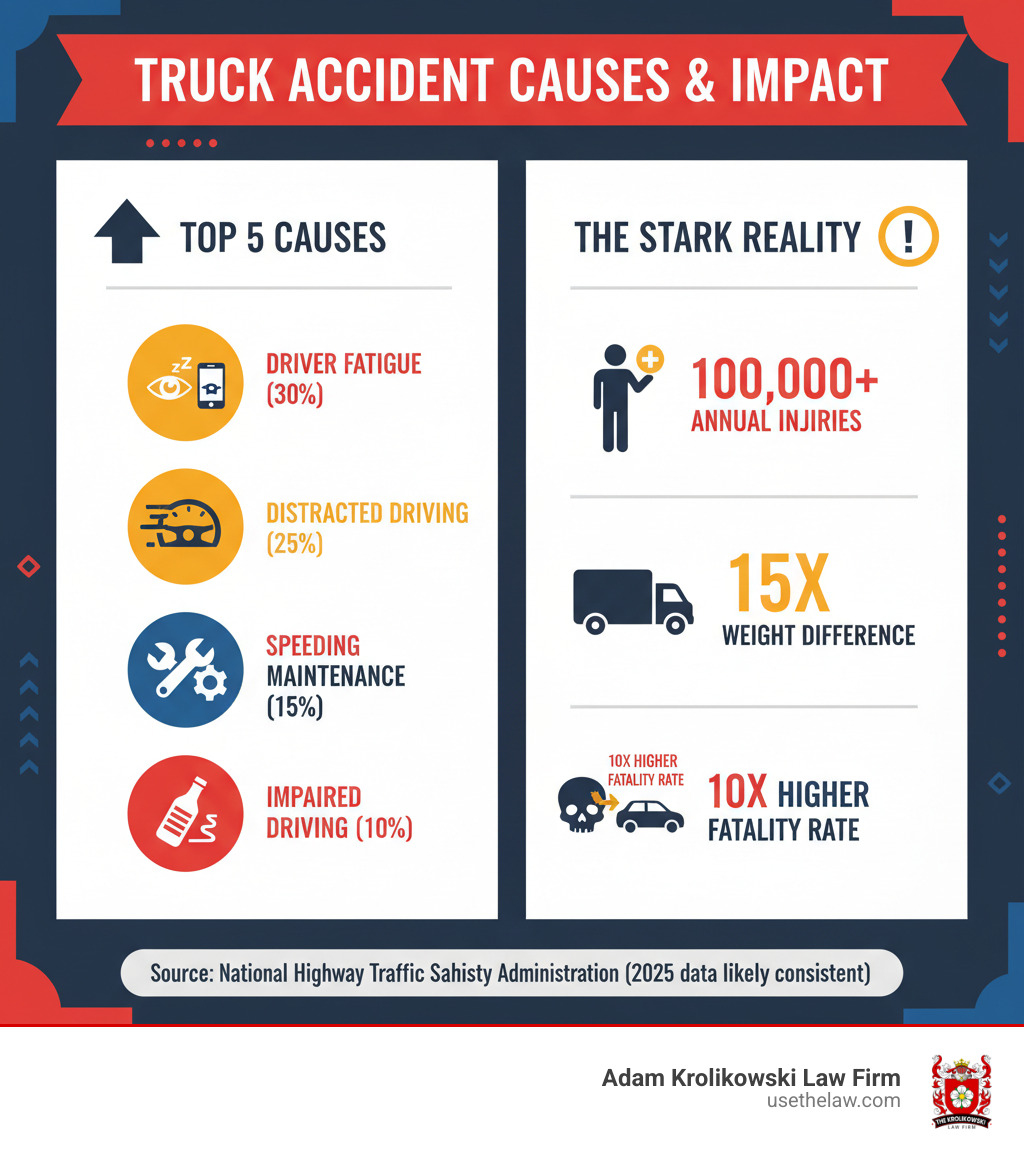
Over 100,000 people are injured each year in truck accidents across the U.S. The physics are simple but brutal: the average 18-wheeler is 15 times heavier than a passenger vehicle. When an 80,000-pound truck hits a 4,000-pound car, the smaller vehicle absorbs most of the force.
Research shows that tractor trailer accidents are 10 times more likely to kill you than crashes with other cars. Survivors often face years of medical treatment and financial hardship. The full extent of injuries may not be immediately apparent, as adrenaline can mask pain from internal damage or brain trauma.
For families in Southern California, understanding these injuries is the first step toward protecting your rights and securing the compensation needed for recovery.
Why Truck Collisions Cause Devastating Injuries
The sheer size of a commercial truck makes any collision a lesson in brutal physics.
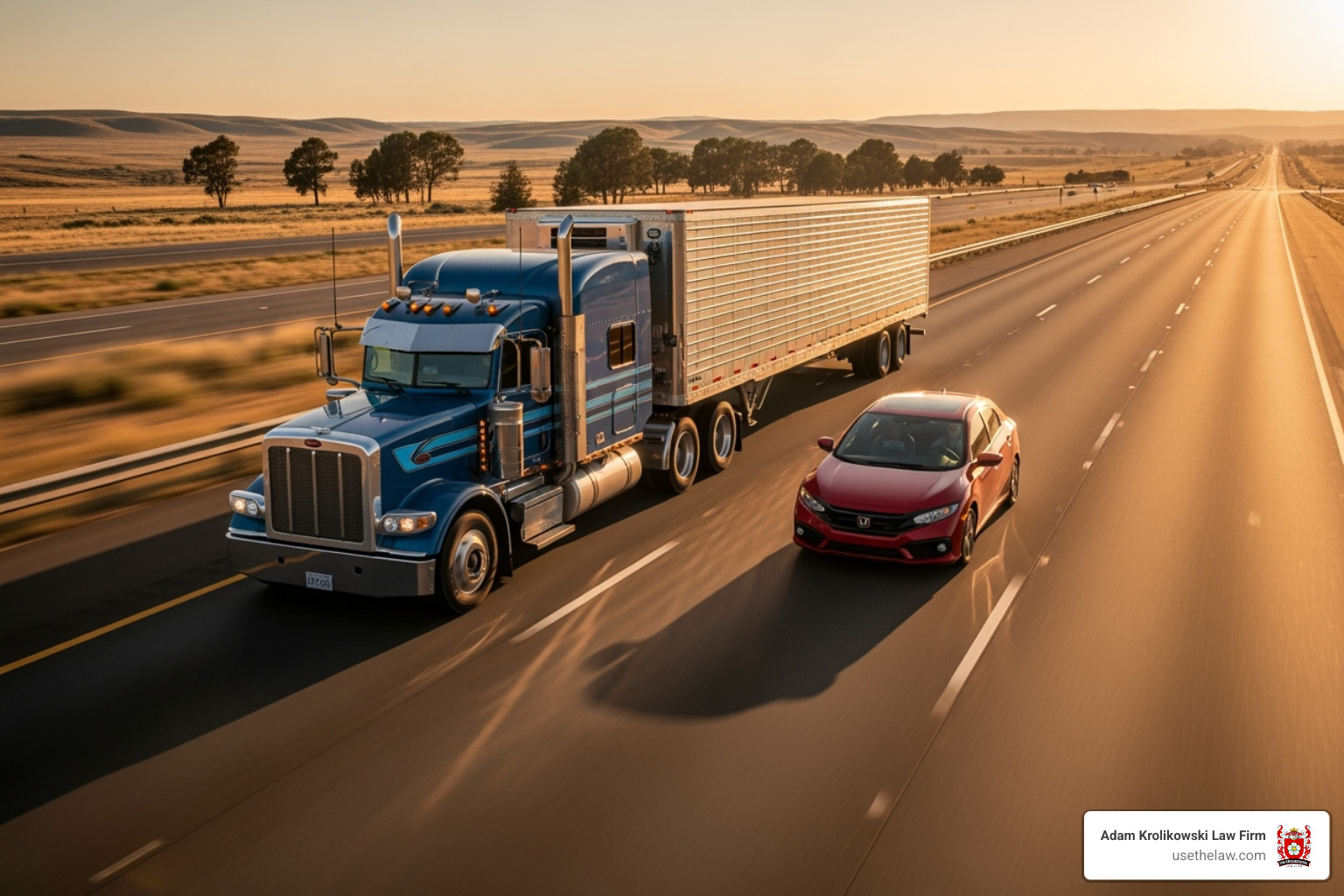
A fully loaded truck can weigh 80,000 pounds, while a typical car weighs around 4,000 pounds. This means the truck is 15 times heavier. The enormous kinetic energy generated in a crash can completely crush a passenger vehicle, which absorbs most of the force when an injury from truck accident occurs.
Furthermore, a loaded semi-truck needs nearly 200 yards—almost two football fields—to come to a complete stop. This massive stopping distance means truck drivers often cannot avoid a collision even if they see it coming.
The statistics are grim: tractor trailer accidents are 10 times more likely to kill you than regular car crashes. The forces involved are simply more than the human body can withstand. With millions of trucks on our roads, the risk of these life-changing accidents is constant.
If you’re dealing with the aftermath of a collision in California, you can learn more about California truck accidents and how these cases differ from regular car accidents.
The Role of Federal and State Regulations
The trucking industry is heavily regulated by the Federal Motor Carrier Safety Administration (FMCSA) to mitigate these dangers. These safety rules are not suggestions; they are requirements.
- Hours of service rules prevent driver fatigue.
- Vehicle maintenance requirements ensure that critical systems like brakes and tires are in safe working order.
- Weight limits prevent trucks from being overloaded, which makes them harder to stop and control.
- Commercial driver’s license (CDL) requirements ensure drivers have the necessary training to operate these large vehicles.
When companies or drivers ignore these regulations, they put lives at risk. Such violations often become crucial evidence in injury from truck accident cases, helping to prove negligence. Understanding these complex rules is key. For more details, see federal trucking regulations explained and how they impact Santa Ana truck accident cases.
Common Types of Injury from Truck Accident
The force of an 80,000-pound truck causes trauma that changes lives. An injury from truck accident often requires years of medical treatment and rehabilitation, leading to significant financial and emotional strain.
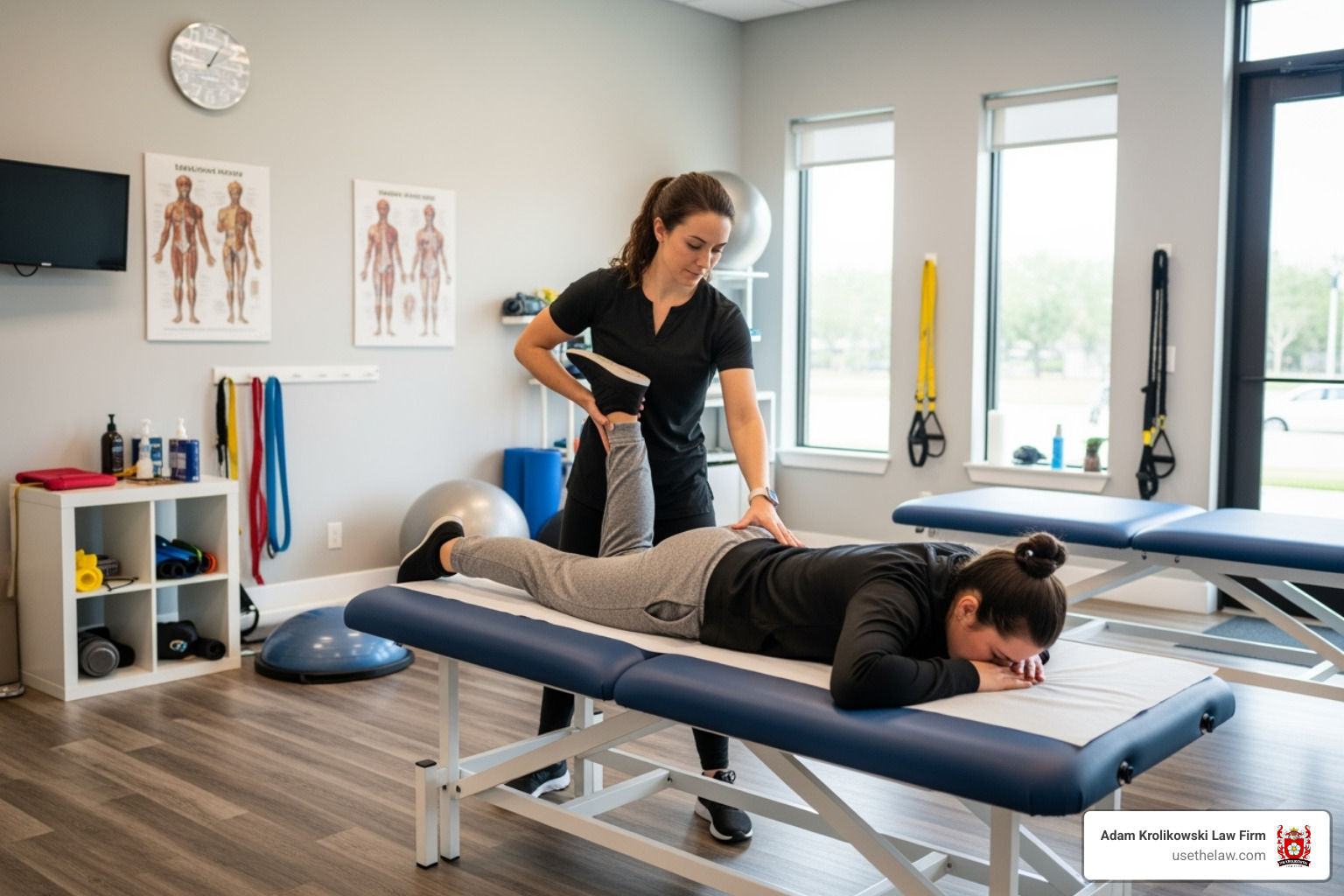
Because adrenaline can mask pain, some of the most serious damage—like internal bleeding or brain trauma—may not show symptoms immediately. It is critical to seek medical attention after any truck collision. Common injuries include head and brain trauma, spinal cord damage, internal injuries, broken bones, burns, lacerations, and amputations.
Head and Brain Injuries
The brain is extremely vulnerable in a truck crash. The violent impact can cause it to strike the inside of the skull, leading to a range of injuries.
- Concussions: These can cause lasting confusion, headaches, and dizziness, sometimes leading to post-concussion syndrome.
- Traumatic Brain Injuries (TBIs): Severe TBIs can result in memory loss, cognitive difficulties, and personality changes. The most serious cases may lead to permanent disability, requiring lifelong care.
Spinal Cord, Back, and Neck Injuries
The spine often absorbs significant force in a collision.
- Whiplash: In a truck accident, whiplash is far from a minor injury. It can cause severe, chronic neck and shoulder pain, stiffness, and numbness. You can learn more about symptoms of whiplash.
- Herniated Discs: When the cushions between vertebrae rupture, they can press on nerves, causing excruciating pain that may require surgery.
- Spinal Cord Injuries: Damage to the spinal cord is catastrophic, potentially causing paralysis, chronic pain, and loss of sensation. These injuries require years of physical therapy and adaptation for victims and their families.
Internal Injuries, Broken Bones, and Amputations
Some of the most dangerous injuries are not visible.
- Internal Injuries: Organ damage and internal bleeding are life-threatening and require emergency surgery. A victim may seem fine at first, only to collapse hours later.
- Broken Bones: Truck accidents often cause multiple, complex fractures that require surgery with plates, screws, and rods. Recovery can take months, with some victims never regaining full mobility.
- Crushing Injuries and Amputations: When a body part is compressed, tissue damage can be so severe that amputation is necessary. Losing a limb is a life-altering event with profound physical and psychological impacts.
- Lacerations and Burns: Deep cuts from twisted metal may need reconstructive surgery, while burns from fires or hazardous materials can cause disfigurement requiring extensive treatment.
Navigating the Legal Aftermath of a Collision
An injury from truck accident leads to a complex legal battle against large trucking companies and their insurers. These companies have resources and investigators dedicated to minimizing their payouts, making the steps you take after an accident crucial.

Protecting your rights requires a proactive approach to preserving evidence and understanding the legal landscape.
Immediate Steps to Take After a Truck Wreck
What you do immediately after a truck accident can significantly impact your health and legal claim.
- Seek Medical Attention: Get a medical evaluation immediately, even if you feel fine. Adrenaline can mask serious injuries, and this creates an official record linking your injuries to the crash.
- Report the Accident: Call 911 to get law enforcement and medical services to the scene. A police report is invaluable.
- Document the Scene: If it’s safe, take photos and videos of vehicle damage, their positions, visible injuries, road conditions, and skid marks.
- Gather Information: Collect contact and insurance details from the truck driver, along with the trucking company’s name and truck identification numbers. Get contact information from any witnesses.
- Avoid Admitting Fault: Do not apologize or admit fault. Stick to the facts when speaking with anyone. Insurers can use your words against you.
- Notify Your Insurer: Inform your insurance company, but avoid giving detailed statements to the trucking company’s insurer without legal counsel.
Understanding the Legal Implications for an Injury from a Truck Accident
The legal process after an injury from truck accident involves strict deadlines and complex rules.
A critical factor is the statute of limitations. In California, you typically have two years from the accident date to file a personal injury lawsuit. Missing this deadline means you may lose your right to seek compensation. You can review California’s two-year deadline and learn more about California’s statute of limitations for truck accidents.
California also uses a “pure comparative negligence” system. This means you can still recover damages even if you are partially at fault, but your compensation will be reduced by your percentage of fault. For example, if you are 20% at fault for an accident with $100,000 in damages, you would receive $80,000. This rule makes it vital to counter attempts by insurers to shift blame onto you.
Establishing Fault and Seeking Fair Compensation
Proving fault after an injury from truck accident is a complex process involving multiple parties and federal regulations. A thorough and rapid investigation is essential, as evidence can disappear quickly.
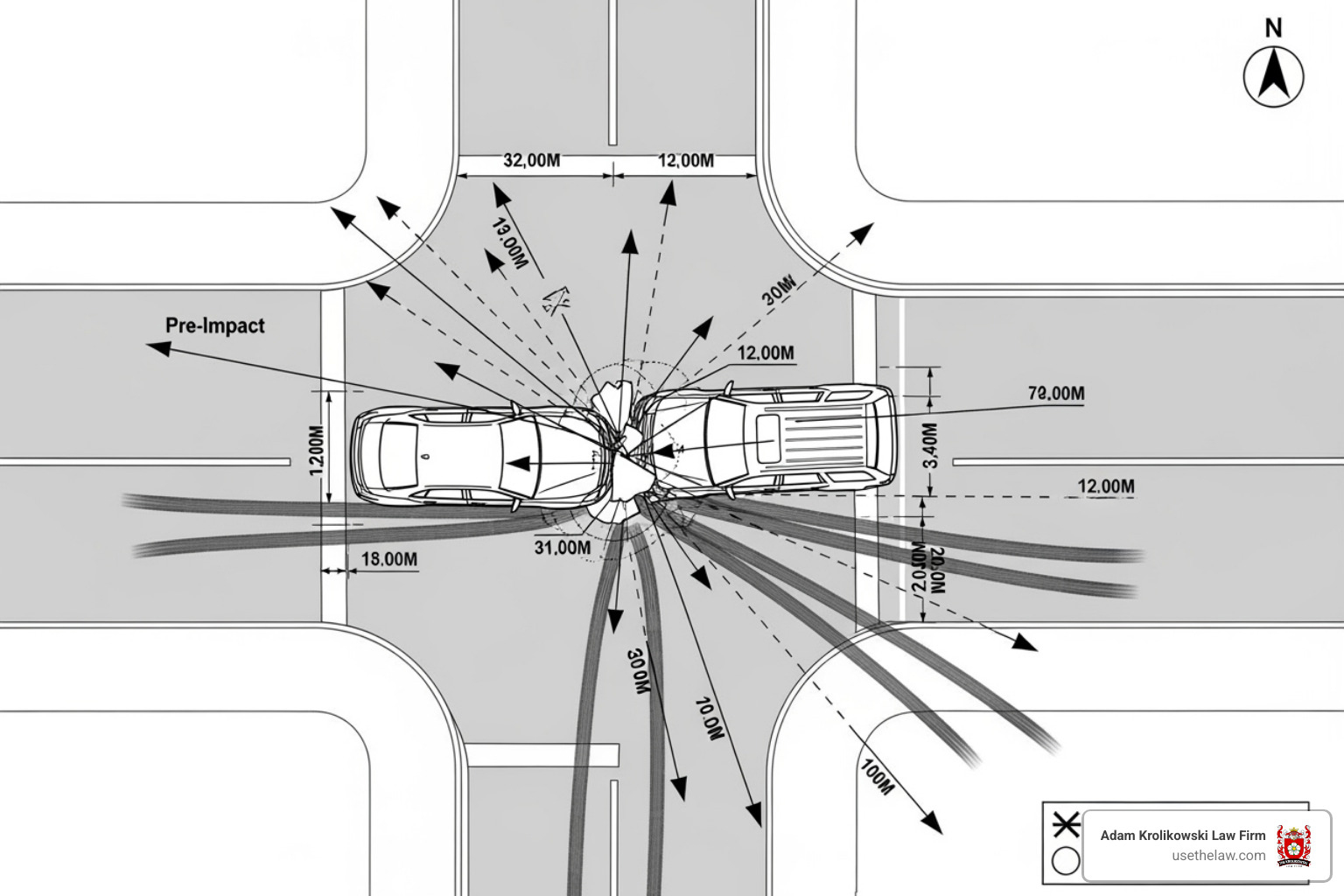
Key evidence includes police reports, photos, driver logbooks, “black box” data from the truck, maintenance records, and drug test results. Witness statements and surveillance footage can also be critical. This approach helps identify all responsible parties and build a strong case for compensation.
Identifying All Potentially Liable Parties
Unlike a typical car crash, an injury from truck accident can involve several responsible parties:
- The Truck Driver: May be at fault for fatigue, distraction, speeding, or impairment.
- The Trucking Company: Can be held liable for negligent hiring, pushing drivers too hard, or poor maintenance. They also have “vicarious liability” for their driver’s actions on the job.
- Cargo Loaders: Improperly secured or overloaded freight can cause a truck to become unstable.
- Maintenance Providers: Third-party mechanics can be at fault for negligent repairs.
- Parts Manufacturers: A crash caused by a defective part, like faulty brakes or tires, can lead to manufacturer liability.
- Other Parties: In some cases, other drivers or even government entities (for poor road design) may share responsibility.
A full investigation is needed to identify all liable parties. Learn more about strategies for proving liability.
Types of Compensation for an Injury from a Truck Accident
Compensation for an injury from truck accident is intended to help you rebuild your life. It is divided into two main categories:
Economic Damages cover tangible financial losses:
- Medical Expenses: All past and future medical care, from ambulance rides to lifelong therapy.
- Lost Wages and Earning Capacity: Income lost during recovery and future earnings lost due to disability.
- Property Damage: Repair or replacement of your vehicle and other property.
Non-Economic Damages compensate for intangible losses:
- Pain and Suffering: For the physical pain and emotional trauma of the accident.
- Emotional Distress: For anxiety, depression, or PTSD resulting from the crash.
- Loss of Enjoyment of Life: For the inability to participate in hobbies and activities you once loved.
- Loss of Consortium: For the negative impact on a marital relationship.
In cases of extreme recklessness, punitive damages may be awarded to punish the defendant. If insurance is insufficient, it may be possible to find other ways of pursuing compensation beyond insurance limits.
Frequently Asked Questions about Truck Accident Injuries
After a truck crash, it’s normal to have many questions. Here are answers to some of the most common concerns about an injury from truck accident.
Who can be held responsible for a truck accident in California?
In California, multiple parties can share responsibility for an injury from truck accident. This can include the truck driver (for negligence), the trucking company (for poor maintenance or hiring practices), cargo loaders (for improper loading), parts manufacturers (for defective equipment), and third-party maintenance companies. A thorough investigation is needed to identify all at-fault parties.
How is compensation calculated in a truck accident case?
Compensation is calculated based on the full impact of the crash on your life. It includes:
- Economic damages: All past and future medical bills, lost wages, loss of future earning capacity, and property damage.
- Non-economic damages: Compensation for physical pain, emotional suffering, and loss of enjoyment of life.
The severity of your injuries is the most significant factor in determining the final amount.
Do I have to go to court for a truck accident claim?
The vast majority of truck accident cases settle without going to trial. The process usually begins with negotiations with insurance companies. If a fair settlement cannot be reached, mediation or arbitration may be used to resolve the dispute.
Filing a lawsuit and going to court remains an option if necessary to secure fair compensation. The decision to accept a settlement or proceed to trial is always yours. We provide guidance on the pros and cons of each option based on your case. With over 25 years of experience, we know how to evaluate an approach that serves your interests. Insurance companies are often more willing to offer a reasonable settlement when they know you are prepared to go to trial.
Conclusion
An injury from truck accident can reshape your life in an instant, leading to severe physical trauma like brain and spinal cord damage. The aftermath involves a complex legal battle against powerful trucking corporations and their insurers.
These cases are complicated by multiple liable parties, federal regulations, and strict legal deadlines like California’s two-year statute of limitations. Trucking companies begin building their defense immediately, which is why taking prompt action to protect your rights is critical.
You should not have to face this challenge alone. Your focus should be on healing. At the Adam Krolikowski Law Firm, we have over 25 years of experience handling these complex cases. We understand the devastating impact of these accidents and are committed to helping you steer this difficult time. We investigate thoroughly, identify all responsible parties, and fight for the compensation you deserve.
Contact an Orange County truck accident lawyer for a consultation today, and let us help you on your path to recovery.
