

Understanding Your Rights: When Property Owners Face Dog Bite Claims
Landlord dog liability can create serious financial consequences for property owners when a tenant’s dog injures someone. While the dog’s owner typically bears primary responsibility for bite incidents, landlords can face legal claims under specific circumstances that many property owners don’t fully understand.
Quick Answer: Landlords are generally liable for tenant dog bites only when two conditions are met:
- Knowledge – The landlord knew or should have known the dog was dangerous
- Control – The landlord had the power to remove the dog or prevent the incident
Most landlord liability cases fail because one of these elements is missing. Simply renting to someone with a dog doesn’t create automatic liability.
Dogs and humans have coexisted well for thousands of years, but dangerous incidents do occur. When they happen on rental property, injured victims often look beyond the dog owner for compensation – especially when the tenant lacks adequate insurance coverage.
The legal landscape varies significantly by state. In California, landlords face liability under an “actual knowledge” standard, meaning they must have specific awareness of the dog’s dangerous propensities. Other states apply broader “constructive knowledge” rules where landlords “should have known” about the risk.
Location plays a crucial role in these cases. Incidents in common areas like hallways or parking lots create higher liability risk than bites occurring inside a tenant’s private unit. The landlord’s duty of care extends more clearly to shared spaces under their control.
This guide will walk you through the key legal principles, practical protection strategies, and real-world scenarios that determine when property owners face financial responsibility for tenant dog incidents.
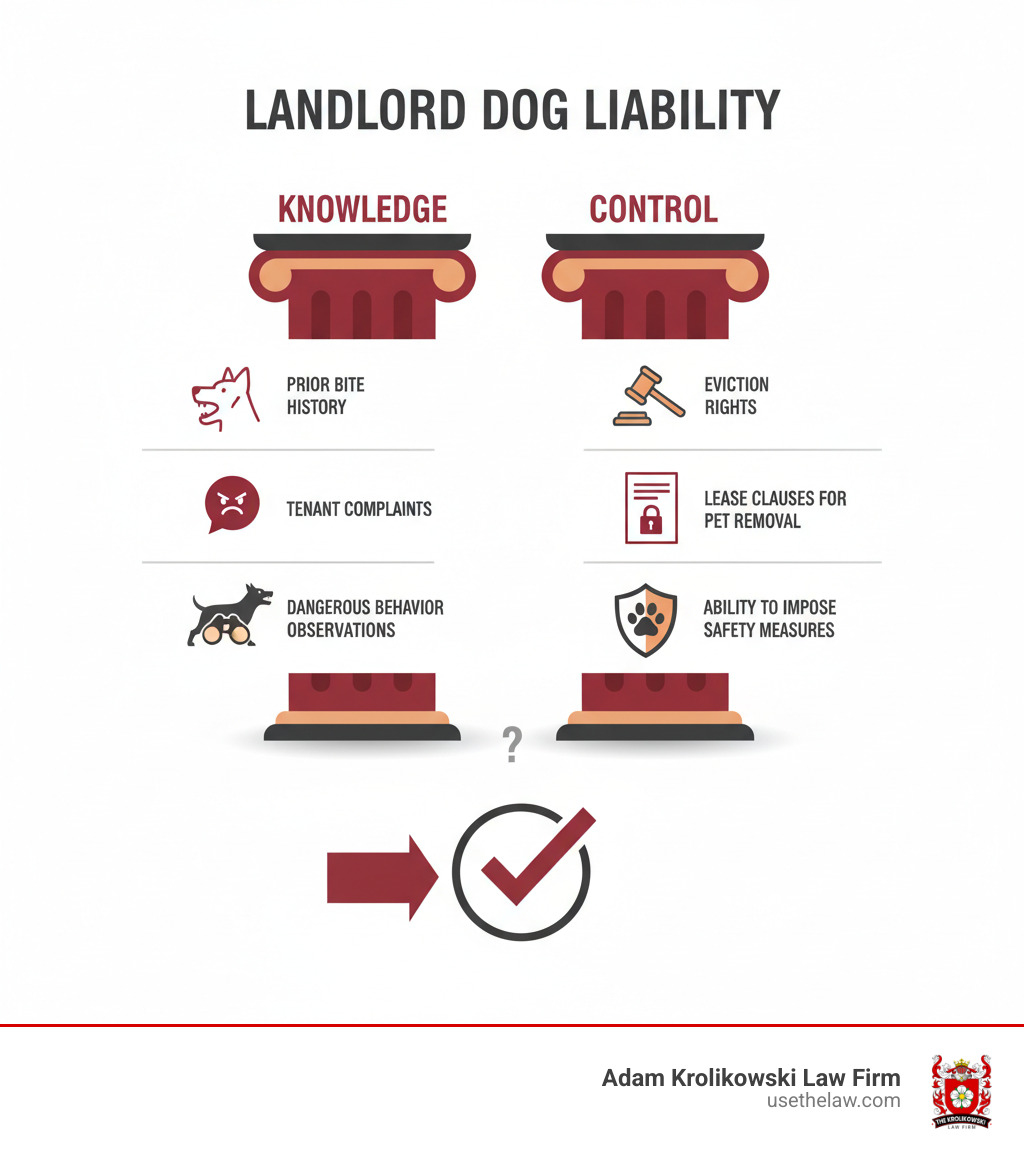
Basic Landlord dog liability terms:
The Legal Framework: When Can a Landlord Be Held Liable?
Here’s something that might surprise you: when a dog bites someone, the dog’s owner usually takes the blame first. Most states have strict liability laws for dog owners, which means they’re responsible for bite damages whether they knew their dog was dangerous or not. It’s pretty straightforward when it comes to the person holding the leash.
But landlord dog liability? That’s where things get interesting – and complicated.
The good news for landlords is that you’re not automatically on the hook just because your tenant’s dog bit someone. After all, you don’t own the dog, you don’t walk it, and you probably don’t even feed it. The legal system recognizes this reality.
Instead of applying dog bite laws directly to landlords, courts treat these situations as premises liability cases. Think of it this way: a dangerous dog becomes like any other hazardous condition on your property – similar to a broken staircase or a pothole in the parking lot.
This means proving landlord dog liability requires showing negligence. Someone has to prove you had a duty to keep your property safe, you failed in that duty, and that failure directly caused the injury. It’s not easy, which is why many of these cases don’t succeed.
For a deeper dive into how liability works in personal injury cases generally, check out our guide on Understanding Liability in Personal Injury Cases.
The “Knew or Should Have Known” Standard
The heart of any landlord dog liability case comes down to one crucial question: What did you know about that dog, and when did you know it?
This legal concept has a fancy name – the “scienter” doctrine – but it’s really just about knowledge. Courts look at two different types:
Actual knowledge means you had clear, specific information that the dog was dangerous. Maybe the dog had bitten someone before and you knew about it. Perhaps other tenants complained directly to you about aggressive behavior. Or you might have personally seen the dog act threatening toward people.
One case involved a landlord who had actually cared for a tenant’s dogs before they moved in. During that time, the dogs scared his grandchild. When he rented to them anyway and the dogs later attacked another child, the court found he had actual knowledge of their dangerous nature.
Constructive knowledge is trickier. This means you should have known the dog was dangerous, even without direct information. Maybe a known aggressive dog regularly roamed the common areas of your property, and you were aware of its presence but didn’t connect the dots about the risk.
But here’s the thing – general complaints about barking or seeing a dog on a chain usually won’t cut it. Courts need evidence of actual dangerous behavior, not just neighborhood annoyance.
Most states require landlords to have both knowledge of the dog’s dangerousness and the legal power to remove it before liability kicks in. If you knew about a dangerous pet but couldn’t legally do anything about it, you’re probably in the clear.
The Power to Prevent Harm: Control Over the Dog or Property
Knowing about a dangerous dog is only half the equation. The other half is whether you could have actually done something about it.
This is where your lease agreement and local landlord-tenant laws become critical. Your ability to evict or demand pet removal makes all the difference in liability cases.
If you’re dealing with a month-to-month lease, you typically have the power to terminate the tenancy with proper notice, effectively removing the dangerous animal. But with a long-term fixed lease, your options might be much more limited unless you planned ahead.
Smart lease clauses can give you the power to demand removal of an aggressive animal. If your lease includes this protection and you fail to use it despite knowing about a dangerous dog, you could face liability.
Control over the property itself also matters. One case involved a landlord whose tenant had a vicious dog and a broken gate. The landlord promised to “take care of the problem” but never fixed the gate. When the dog escaped through the defective gate and attacked a child off the property, the landlord was held responsible.
The key legal test is whether you had a “sufficient opportunity to prevent” the harm. If you knew about the danger and had the tools to address it – whether through eviction rights, lease enforcement, or property repairs – but chose not to act, you might be looking at liability.
This control element is a core part of Premises Liability Injury Cases, where property owners face responsibility for hazardous conditions they could have addressed.
Understanding California’s Approach to Landlord Dog Liability
California keeps things relatively straightforward for landlords with its “actual knowledge” rule. Unlike the strict liability that dog owners face, landlord dog liability in California requires proof that you actually knew about the dog’s dangerous tendencies.
This “actual knowledge” standard is more protective of landlords than the “constructive knowledge” rules some other states use. In California, it’s not enough that you should have known – someone has to prove you genuinely knew the dog was dangerous.
While California dog owners face strict liability for bites (meaning they’re liable even without prior knowledge of aggression), this strict standard doesn’t extend to landlords. Instead, landlord dog liability falls under negligence principles, requiring that crucial proof of actual knowledge plus the ability to prevent harm.
Here’s what actual knowledge might look like: You knew the tenant’s dog had bitten someone before, and your lease gave you the power to demand its removal, but you didn’t act. If the dog bites again, you could face liability.
But if you only knew the dog was loud or frequently chained up, that general awareness usually won’t establish the “actual knowledge of dangerousness” that California courts require.
This focus on actual knowledge makes proving landlord fault more challenging, but it’s certainly not impossible. Success requires thorough investigation into what you knew and what actions you took or failed to take.
For more specific guidance on how these laws apply in our area, our Orange County Dog Bite Complete Guide offers detailed local insights.
Location Matters: Common Areas vs. Private Rental Units

Where a dog bite happens can make or break a landlord dog liability case. Think of it this way: a landlord has much more responsibility for what happens in a shared hallway than what goes on behind a tenant’s closed apartment door.
The key difference comes down to control. Landlords maintain and oversee common areas, but tenants have exclusive control over their private spaces. This creates very different legal responsibilities depending on where an incident occurs.
If you’re dealing with a premises liability situation, understanding these location-based differences is crucial. Our team helps people steer these complex cases – learn more about Premises Liability Attorneys Near Me.
Liability in Shared Spaces
Common areas are the spaces everyone shares – hallways, lobbies, parking lots, shared yards, laundry rooms, and stairwells. These are the landlord’s domain, and with that control comes responsibility.
When a dangerous dog frequents these shared spaces, landlords face much higher liability risk. Courts treat a known aggressive dog in a hallway similarly to a broken stair or icy walkway – it’s a dangerous condition the landlord should address.
Real-world example: A landlord knew their tenant’s two dogs had bitten the mail carrier. When those same dogs later attacked someone in the building’s hallway, the landlord was held liable. They had both knowledge of the danger and control over the common area where it happened.
Responding to complaints about aggressive animals in shared spaces is critical. When tenants report scary encounters with a neighbor’s dog in the parking lot or lobby, ignoring those complaints can come back to haunt landlords legally.
The landlord’s duty to maintain safety extends to keeping dangerous animals out of common areas, just like fixing broken fixtures or clearing ice from walkways.
Incidents Inside a Tenant’s Private Unit
Dog bites inside a tenant’s apartment or house create a completely different legal picture. Here, the tenant has exclusive control over their space, and the landlord’s responsibility drops dramatically.
When someone gets bitten inside a tenant’s private unit, liability almost always falls squarely on the dog owner. The landlord simply doesn’t control what happens behind closed doors in someone’s home.
However, there are rare exceptions where landlords might still face liability for private unit incidents. If a landlord actively cares for the dog – feeding it, walking it, or exercising control beyond just being the property owner – they could be considered a “harborer” of the animal.
Another exception involves extreme circumstances where a landlord has overwhelming knowledge of a dog’s severe dangerousness and clear power to remove it immediately, but consciously chooses not to act. This is a very high bar to clear legally.
Property defects can also shift liability back to landlords. If a dog escapes and bites someone because of a broken fence the landlord was supposed to maintain, that’s a premises liability issue rather than just a dog owner problem.
The bottom line: reduced landlord control in private spaces means reduced responsibility. Tenants control their own homes, and that includes responsibility for their pets’ actions within those spaces.
For local guidance on these complex liability questions, check out our Premises Liability Lawyer Santa Ana resource.
Proactive Protection: How Landlords Can Mitigate Risk

Smart landlords don’t wait for problems to happen. Taking the right steps upfront can save you thousands of dollars and countless headaches down the road. While landlord dog liability cases can be complicated, most can be prevented with proper planning and clear communication.
The key is building multiple layers of protection. Think of it like home security – you don’t just rely on one lock. You want good tenant screening, solid lease terms, and proper insurance coverage all working together.
Crafting an Ironclad Lease Agreement
Your lease agreement is your best friend when it comes to avoiding liability issues. A strong pet addendum doesn’t just protect you legally – it sets clear expectations from day one so everyone knows the rules.
Start with clear pet policies that spell out exactly what’s allowed. If you permit pets, be specific about types, sizes, and breeds. Some cities have their own restrictions on certain breeds, so check your local laws first. Don’t leave anything to interpretation.
A thorough pet screening process can catch problems before they start. Ask for photos, vaccination records, and information about the dog’s temperament and training history. Meeting the pet in person gives you valuable insight that paperwork can’t provide. Trust your instincts – if something feels off, it probably is.
The tenant responsibility clause should make crystal clear that your renter is solely responsible for their pet’s behavior. This includes any property damage or injuries to other people. Add an indemnification clause where the tenant agrees to defend you against any lawsuits related to their pet.
Rules for common areas need special attention since this is where your liability risk increases. Require leashes in hallways, designate specific relief areas, and mandate immediate cleanup. These aren’t just courtesy rules – they’re legal protection.
Here’s where many landlords miss a crucial piece: include your right to demand removal of a dangerous animal. This clause gives you the power to act if a pet becomes aggressive or violates lease terms. Without this power to remove the threat, you could face liability even if you know about a dangerous situation.
Pet deposits or fees help cover potential damage, though state laws vary on how much you can charge. Check your local regulations to stay compliant.
The Crucial Role of Insurance in Landlord Dog Liability
Even with perfect screening and bulletproof lease terms, accidents can still happen. That’s where insurance becomes your financial lifeline. It’s not just about protecting others – it’s about protecting your investment and your peace of mind.
Make sure your landlord liability insurance includes adequate coverage for animal-related injuries. Some policies exclude certain dog breeds or require notification when tenants have pets. Always inform your insurance company about pets on the property, even if it seems minor. Review your policy limits carefully – medical bills from serious dog attacks can reach six figures quickly.
Requiring tenant renter’s insurance should be non-negotiable in your lease agreement. Specifically demand that their policy includes pet liability coverage. Don’t just take their word for it – request proof before move-in and annually after that. When a tenant’s dog causes injury, their insurance should handle the medical bills, lost wages, and other damages instead of leaving you exposed.
Verifying insurance policies takes a few extra minutes but provides enormous protection. Ask to be listed as an “additional insured” on their policy if the insurance company allows it. At minimum, require a certificate of insurance and set a reasonable minimum liability coverage amount.
Consider this: most landlord dog liability cases happen because either the landlord knew about a dangerous animal and didn’t act, or because proper insurance wasn’t in place when an incident occurred. Taking these proactive steps addresses both potential problems.
Even though landlords generally aren’t held liable for tenant pets unless they knew about danger and failed to act, having proper protections benefits everyone involved. For guidance on personal injury matters and protecting your rights as a property owner, our team at Personal Injury Lawyer Orange County can help you understand your options.
Frequently Asked Questions about Landlord Dog Liability
Property owners dealing with landlord dog liability often find themselves scratching their heads over the legal nuances. Let’s clear up some of the most common questions we hear from landlords who want to understand their potential exposure.
Can a landlord be liable if they didn’t know about the dog at all?
In most cases, absolutely not. Remember those two pillars we talked about earlier? Knowledge is the first one, and it’s pretty hard to hold someone responsible for something they genuinely had no idea about.
If you’re a landlord who had zero knowledge that Fluffy even existed on your property, let alone that Fluffy had anger management issues, you’re typically in the clear. The injured party would need to prove you knew about the dog and its dangerous tendencies – that’s a tough burden to meet when you truly didn’t know.
Now, here’s where it gets a bit tricky. Let’s say your lease strictly says “no pets allowed” and your tenant sneaks in a German Shepherd anyway. If that dog later bites someone, you’re still likely not liable – unless you somehow found out about the dog and its aggressive behavior but chose to look the other way.
The key is that genuine lack of knowledge usually protects you. But once you gain that knowledge, the clock starts ticking on your responsibility to act.
Does a “Beware of Dog” sign protect the landlord from liability?
Here’s where good intentions can sometimes backfire. A “Beware of Dog” sign might seem like a smart protective measure, but it doesn’t give you a free pass from landlord dog liability. In fact, it could work against you.
Think about it from a legal perspective – if you post a sign warning people about a dangerous dog, you’re essentially admitting you know there’s a potentially dangerous dog on the premises. That’s the “knowledge” element right there. If you also have the power to remove that dog through your lease agreement but choose to just put up a sign instead, a court might not be impressed with your half-hearted effort.
The sign shows you were aware of the risk, but it doesn’t show you took reasonable steps to eliminate the actual danger. It’s like knowing your stairs are broken and putting up a “Watch Your Step” sign instead of fixing them. The warning is nice, but it doesn’t address the root problem.
If you know a dog is dangerous and you have the legal means to have it removed, that’s usually what you need to do – not just warn people to stay away.
What’s the difference in liability for residential vs. commercial properties?
The basic rules of landlord dog liability – knowledge and control – apply whether you’re renting out apartments or office space. But the practical differences can be significant.
In residential properties, tenants typically have complete control over their living space. Your tenant’s apartment is their castle, and what happens inside is usually their responsibility. You have less control and therefore less liability for incidents that occur within those private spaces.
Commercial properties often tell a different story. You might retain more control over common areas, and there’s often more foot traffic from customers, delivery people, and vendors. If you rent space to a business owner who keeps an aggressive dog in their shop, the risk to the public is much more obvious.
Courts have looked at commercial situations where landlords knew about dangerous animals and found them liable when those animals hurt customers or visitors. The reasoning is simple – in a business setting, there’s a higher likelihood that innocent people will encounter the dangerous animal.
The inspection duties can also differ. While you generally can’t just walk into someone’s apartment whenever you feel like it, commercial properties often require more regular maintenance and oversight. This means you might be expected to notice and address dangerous conditions, including aggressive animals.
The bottom line? Whether it’s residential or commercial, your liability still comes down to what you knew about the dog’s dangerous behavior and whether you had the power to do something about it.
Navigating a Claim and Protecting Your Rights

When it comes to landlord dog liability, knowledge is truly power – both for property owners trying to protect themselves and for people who’ve been hurt by a tenant’s dog. The law might seem complicated, but it really comes down to those two simple pillars we’ve discussed: did the landlord know the dog was dangerous, and could they have done something about it?
If you’re a landlord reading this, the message is clear: don’t wait for problems to find you. Thorough tenant and pet screening can save you from headaches down the road. Nobody enjoys playing detective, but asking the right questions upfront beats dealing with lawyers later.
Your lease agreement isn’t just paperwork – it’s your safety net. Comprehensive pet policies that give you the right to act when a dog becomes dangerous aren’t about being mean to pet owners. They’re about protecting everyone who lives on or visits your property. And yes, that includes protecting yourself from financial disaster.
Insurance coverage might not be the most exciting topic at dinner parties, but it’s absolutely crucial. Make sure your landlord policy covers animal-related incidents, and don’t forget to require your tenants to carry renter’s insurance with pet liability coverage. Think of it as everyone having their own life jacket before getting on the boat.
When you do learn about a potentially dangerous dog, swift action is your friend. You can’t fix what you don’t know about, but once you know, the clock starts ticking on your responsibility to act.
For anyone who’s been bitten by a tenant’s dog, the dog owner usually bears the primary responsibility. However, there are situations where the landlord may also be held accountable. These cases often require digging into the details – what did the landlord know, when did they know it, and what could they have reasonably done about it?
Every dog bite case is different, and the circumstances surrounding landlord dog liability can be particularly complex. The relationship between tenant, landlord, and property creates layers that need careful examination.
At Adam Krolikowski Law Firm, we’ve spent over 25 years helping people steer these challenging situations. We understand that being injured by someone else’s dog is traumatic enough without having to worry about complex legal questions. Our team knows how to investigate these cases thoroughly, examining lease agreements, interviewing witnesses, and determining who should be held responsible for your injuries.
If you’ve been hurt by a tenant’s dog and you’re wondering about your rights, don’t try to figure it out alone. If you’ve been injured, contact a Dog Bite Lawyer in Orange County, California for guidance. We’re here to help accident victims across Orange County, Santa Ana, and Los Angeles get the compensation they deserve.
The legal system can feel overwhelming when you’re dealing with medical bills and recovery, but you don’t have to face it by yourself. We handle the complex legal work so you can focus on getting better.
