

Why Finding Legal Help for Harassment is Critical to Your Safety and Rights
Legal help for harassment is available to protect you from unwelcome conduct that creates a hostile environment or threatens your safety. Whether you’re facing workplace harassment, housing discrimination, or stalking, the law provides remedies to stop the behavior and hold perpetrators accountable.
Quick Answer – Where to Get Legal Help for Harassment:
- Contact a harassment attorney for complex cases.
- Call 911 if you’re in immediate danger.
- File with the EEOC within 180-300 days for workplace harassment.
- Seek free legal aid through bar associations or legal aid societies.
- Apply for restraining orders at your local courthouse.
- Document everything – dates, times, witnesses, and evidence.
If you are being harassed, it’s normal to feel frustrated and helpless, and you may not know where to turn. Harassment affects millions of people annually and extends beyond the workplace into housing, schools, and online spaces.
The U.S. Equal Employment Opportunity Commission defines workplace harassment as unwelcome conduct creating an intimidating, hostile, or offensive environment.
You have legal rights. Federal laws like Title VII of the Civil Rights Act, the Americans with Disabilities Act, and the Age Discrimination in Employment Act protect you from harassment based on race, color, religion, sex, national origin, age, disability, and genetic information. Knowing what steps to take is key to finding the right legal support.
Understanding What Constitutes Legal Harassment
Legal help for harassment is necessary when unwelcome conduct becomes legally actionable. This isn’t about someone being rude; it’s about unwelcome conduct that is either a single, severe event or a persistent pattern that makes your life difficult.
The law recognizes harassment when it targets you based on protected characteristics like race, gender, age, disability, religion, or national origin. For conduct to be unlawful, it must create a hostile environment—a situation so offensive it alters the conditions of your employment, housing, or other protected areas.

What Are the Different Types of Harassment?
Understanding the type of harassment you’re facing helps determine your legal options.
Workplace harassment occurs when coworkers, supervisors, or customers create an intimidating environment based on your protected characteristics. This can include offensive jokes or unwanted comments. Federal laws like Title VII offer protection. Our guide on Attorney for Workplace Harassment provides more details.
Sexual harassment includes unwanted sexual advances, requests for sexual favors, or a sexually charged environment. It can be quid pro quo (where a job benefit is tied to sexual cooperation) or involve creating a hostile environment. Our Los Angeles Workplace Sexual Harassment Lawyer resource explains this further.
Housing discrimination involves harassment from landlords or neighbors based on protected characteristics.
Online harassment (cyberbullying) includes threatening messages or sharing personal information online (“doxing”). Many of these acts have legal consequences.
Stalking is repeated, unwanted attention that causes fear, such as being followed or receiving constant messages. It’s crucial to take stalking seriously as it can escalate.
The Difference Between Civil and Criminal Harassment
Harassment can be addressed in both civil and criminal courts, which operate differently.
| Feature | Civil Harassment | Criminal Harassment |
|---|---|---|
| Who Files? | You file a lawsuit against the harasser. | The state prosecutor files charges. |
| Burden of Proof | “Preponderance of evidence” – more likely than not. | “Beyond a reasonable doubt” – much higher standard. |
| Potential Penalties | Money damages, restraining orders, orders to stop the behavior. | Jail time, fines, probation, criminal record. |
| Purpose | To compensate you and stop the harassment. | To punish the offender and protect the public. |
| Examples | Workplace harassment lawsuit, civil restraining order. | Stalking charges, assault, making credible threats. |
In civil cases, the goal is often compensation for harm and court orders to stop the behavior. Criminal cases are handled by prosecutors to punish the offender, but you should still report criminal acts to the police. Both processes can occur simultaneously.
What Makes Harassment Unlawful?
Not all unpleasant interactions are unlawful. According to EEOC guidance, conduct becomes unlawful when enduring it becomes a condition of employment.
The conduct must also be severe or pervasive enough for a reasonable person to find the environment intimidating, hostile, or abusive. This is the core of a Hostile Work Environment claim.
Courts consider the frequency, severity, and whether it was physically threatening or interfered with your work. A single serious incident may be enough, but it’s often a pattern of behavior. The conduct must be both objectively and subjectively offensive (meaning a reasonable person would find it offensive, and you did too). It’s also vital that the behavior was unwelcome. If you’re unsure if your situation meets these criteria, it’s best to consult with a legal professional.
Immediate Steps to Take When You’re Being Harassed
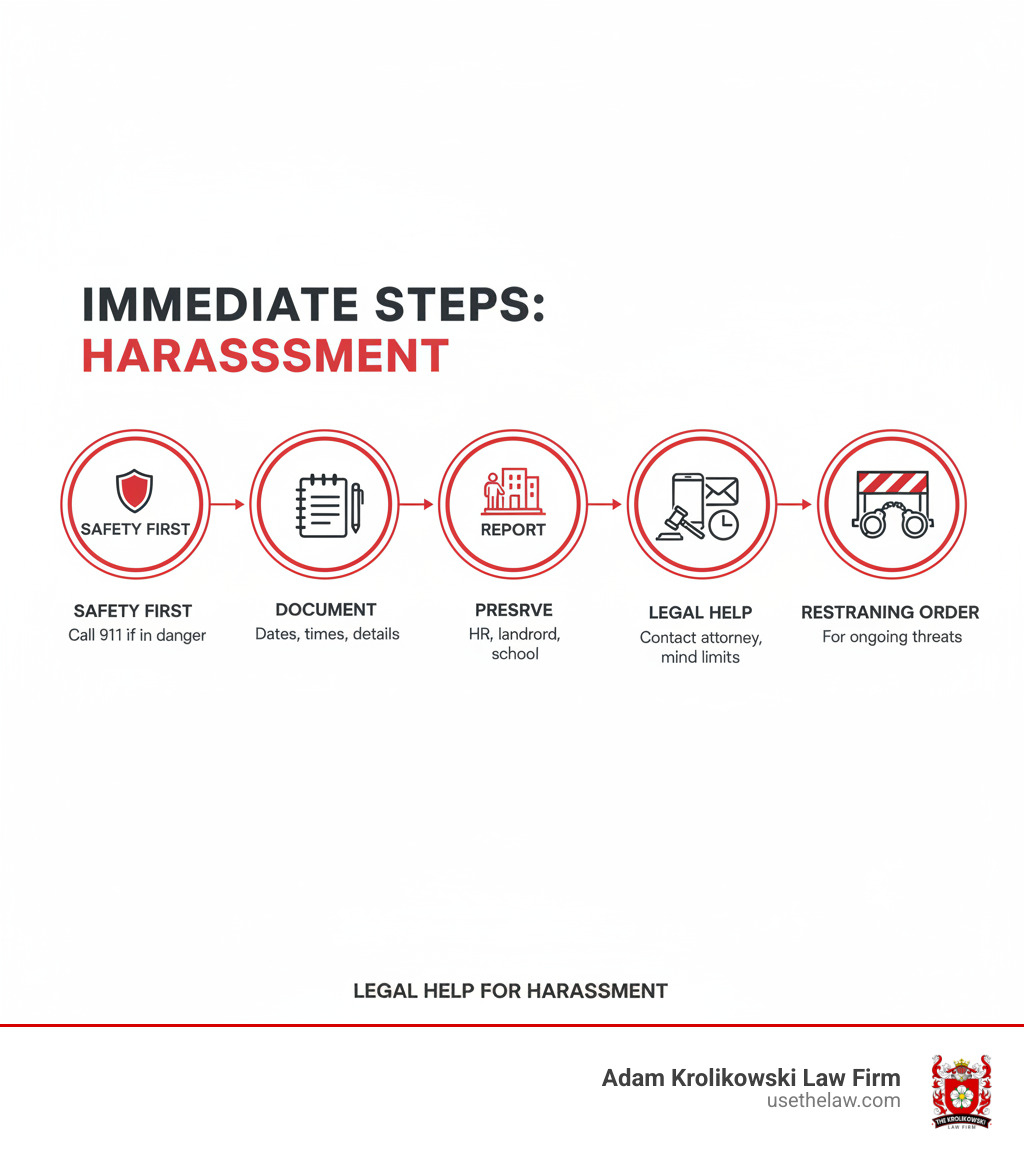
When you are being harassed, it’s natural to feel confused or scared. Taking immediate action is crucial to protect yourself and your rights. The steps you take now can build a strong foundation if you pursue legal help for harassment later.
Your safety is the priority. If you are in immediate danger, call 911. Even without physical threats, you can take steps to strengthen your position and prevent further harm.

Document Everything: Creating a Record
Documentation is a powerful tool against harassment. A detailed record can prevent a “he said, she said” situation. Start a harassment journal today. Use a notebook or a digital document and write down details as soon as possible after an incident.
- Dates and times: Be as precise as possible (e.g., “October 15, 2024, at 2:30 PM”).
- Locations: Note where each incident occurred (e.g., break room, via email).
- What was said or done: Describe the behavior in detail, quoting offensive language if you can.
- Witnesses: Write down the names of anyone who saw or heard the incident.
- Your response: Document how you reacted, such as telling the person to stop. This shows the behavior was unwelcome.
For digital harassment, take screenshots and save emails immediately. Preserve the original digital files. For physical evidence like letters or damaged property, keep it in a safe place. If the harassment affects your health, keep records of medical visits or therapy sessions.
Reporting the Harassment
After documenting, report what is happening. For workplace harassment, check your employee handbook for the anti-harassment policy and follow the specified procedure, which usually involves HR or a manager. If your supervisor is the harasser, report to their superior or directly to HR. Always put your complaint in writing.
For housing harassment, report incidents to your landlord or property management company in writing. At a school or university, report to the administration or the Title IX coordinator for sex-based harassment.
When to call 911: Call immediately if you are in physical danger. For ongoing threats that are not life-threatening, contact your local police to file a report and get a copy for your records. If someone’s behavior makes you feel unsafe or interferes with your life, it is serious enough to report.
How to Protect Yourself from Further Harm
While documenting and reporting, take steps to create a safety net.
Restraining orders are powerful legal tools that prohibit a harasser from contacting or approaching you. In Orange County, you can apply for a civil harassment restraining order at your local courthouse for free. The process involves filling out forms, getting a temporary order, and attending a hearing. For more details, see this More info about restraining orders.
Block communication on social media, email, and your phone. Also, review your social media privacy settings to limit who can see your information.
Inform trusted people like friends, family, or colleagues. They can offer emotional support and help keep you safe. If the harassment involves someone showing up where you are, consider temporarily changing your routines. This is a smart safety measure while you pursue legal help for harassment. These protective steps also strengthen your legal case.
Navigating the Legal Process: From Complaint to Resolution
Understanding the legal process can make you feel more prepared. The path may involve internal investigations, government agency filings, or a lawsuit. Each has its own timeline, but your initial documentation provides a strong foundation for seeking legal help for harassment.

Gathering Evidence for Your Harassment Claim
Building a strong case requires gathering all supporting evidence.
- Digital evidence: This includes screenshots of texts, harassing emails, and social media posts. Always save the original files, as their metadata can be crucial.
- Witness testimony: Statements from anyone who saw the harassment or whom you told about it can add credibility to your account.
- Medical and psychological records: Doctor visits for stress or therapy sessions help establish the harm you’ve suffered.
- Work records: For workplace cases, performance reviews before and during the harassment can show how the hostile environment affected your work.
- Physical evidence: Keep any inappropriate gifts, letters, or photos of property damage. Request copies of any available security footage.
Understanding Time Limits (Statutes of Limitation)
You cannot wait indefinitely to take legal action. Strict deadlines, called statutes of limitation, apply.
For workplace harassment under federal law, you generally have 180 days from the last incident to file a charge with the Equal Employment Opportunity Commission (EEOC). This extends to 300 days in some states like California.
State laws have their own timelines. For example, California’s Fair Employment and Housing Act allows up to three years for some harassment claims. These timeframes vary, so consulting with a California Workplace Harassment Lawyer early is vital to ensure you don’t miss critical deadlines.
For restraining orders, while there’s no strict statute of limitations, judges prefer to see that the harassment is recent. Waiting can weaken your case. The sooner you seek legal help for harassment, the more options you will have.
The Dangers of Retaliation
Many people fear that reporting harassment will make things worse. However, the law specifically protects you from retaliation.
Retaliation is when an employer punishes you for reporting harassment or participating in an investigation. Examples include being fired, demoted, or receiving undeservedly poor performance reviews.
Filing a complaint, participating in an investigation, or opposing harassment are legally “protected activities.” Federal laws like Title VII and state laws like California’s FEHA have strong anti-retaliation provisions. If you are retaliated against, you may have a separate, sometimes stronger, legal claim.
If you believe you’re facing retaliation in Orange County, a Retaliation Attorney Orange County can explain your rights. Document any changes in your treatment after you report harassment, as this evidence is crucial if retaliation becomes part of your case.
Finding the Right Legal Help for Harassment
Finding the right legal support shouldn’t add to your stress. You have many options, from free consultations to community legal aid programs.
At Adam Krolikowski Law Firm, we have over 25 years of experience helping people with these challenges. We handle complex harassment cases that may seem overwhelming.
Where to Find Legal Assistance for Harassment Cases
Your search for legal help for harassment can start in several places.
- State bar associations offer referral services to connect you with attorneys who handle employment law and harassment cases.
- Legal aid organizations provide free or low-cost legal services to people who qualify based on income.
- Pro bono clinics at universities and law schools often provide free legal advice from law students supervised by attorneys.
- Private law firms like ours focus on workplace harassment, discrimination, and civil rights violations. We have the background to build strong cases for our clients.
For those in Canada, the Law Society Referral Service offers free initial consultations, and similar programs exist in the U.S. through local bar associations.
Are There Free or Low-Cost Legal Resources?
If you’re worried about costs, several options make legal help for harassment accessible.
- Legal aid eligibility is based on income, and you may qualify for free legal services.
- Sliding-scale fees are adjusted based on your income, making professional help more affordable.
- Contingency fee arrangements mean you don’t pay attorney fees upfront. The attorney takes a percentage of your settlement or award if you win. If you don’t win, you typically owe no attorney fees.
- Free initial consultations, which our firm offers, allow you to discuss your case and understand your options without cost.
How Legal Protections Differ by Location
Harassment laws vary significantly depending on where you live and work.
Federal laws provide a baseline of protection across the U.S. Title VII protects against harassment based on race, color, religion, sex, or national origin. The Americans with Disabilities Act (ADA) covers disability-based harassment, and the Age Discrimination in Employment Act protects workers 40 and older. You can learn more from our Age Discrimination Attorney resources. These laws generally apply to employers with 15+ employees (20+ for age discrimination).
State laws often offer stronger protections. For example, California’s Fair Employment and Housing Act (FEHA) applies to smaller employers (5+ employees) and may allow for broader damages than federal law. This means you might have a claim under state law even if federal law doesn’t apply.
Local ordinances can add another layer of protection. This layered system makes it crucial to work with attorneys who understand your local jurisdiction. At Adam Krolikowski Law Firm, we know California’s legal landscape and can help you steer state and federal laws to build the strongest case.
Conclusion
Facing harassment is overwhelming, but you are not powerless. This guide has shown that legal help for harassment is accessible and that the law protects your rights.
You now know what makes harassment legally actionable, the immediate steps to take—document, report, and protect yourself—and how to steer the legal process. We’ve covered gathering evidence, meeting deadlines, and your protections against retaliation. Whether you need a restraining order or are considering a lawsuit, you have a roadmap.
You have the power to take back control. You do not have to endure harassment silently.
At Adam Krolikowski Law Firm, we have spent over 25 years helping people with these challenges. We handle complex cases involving workplace harassment, housing discrimination, and other forms of unwelcome conduct. We understand the impact this has on your life.
Reaching out for help is the most important step. You don’t have to figure this out alone. If you are in Orange County, Los Angeles, or the surrounding areas and believe you are facing harassment, we are here to listen and help you understand your options. Every person deserves to live and work free from harassment.
