

What Are Negligent Security Cases?
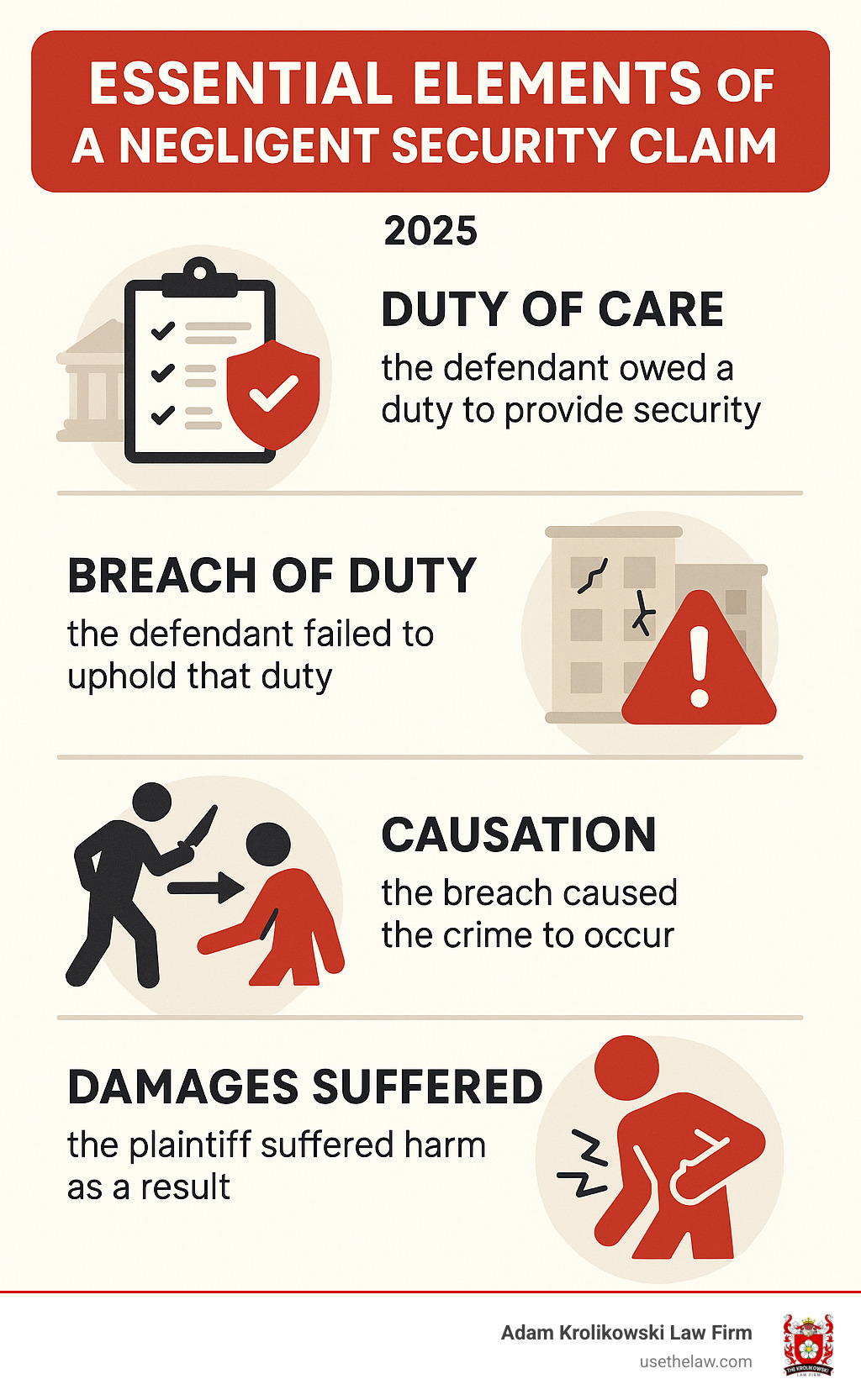
Negligent security cases happen when someone gets hurt by a crime on a property because the owner didn’t provide enough security. It’s about a property owner failing to take reasonable steps to prevent foreseeable criminal acts.
Here’s a quick overview:
- What it is: A legal claim against a property owner for injuries from a crime that could have been prevented by better security.
- Why it matters: Property owners have a duty to keep visitors safe from foreseeable harm, including crime.
- The core issue: Did the property owner know, or should they have known, about the risk of crime, and did they do enough to prevent it?
When a person is a victim of crime, negligent security cases may be to blame. These cases fall under premises liability law. This means property owners have a duty to protect visitors and tenants from crime as a hazard. If they fail to provide adequate security, and someone gets hurt, they might be held responsible. This can include injuries from criminal attacks like assaults or robberies.
Negligent security cases word guide:
What is Negligent Security? The Link to Premises Liability
Ever heard the term “premises liability”? At its heart, negligent security cases are a specific type of claim that falls under this legal umbrella. Premises liability law says that property owners are responsible for injuries that happen on their property because of unsafe conditions. When we talk about negligent security, the “unsafe condition” isn’t a slippery floor or a broken step. Instead, it’s an environment that makes it easier for crime to happen and for innocent people to get hurt.

Simply put, negligent security happens when a property owner or manager doesn’t take reasonable steps to prevent crime on their property. If this failure leads to someone legally on the property getting hurt in a way that was predictable, then it’s a negligent security issue. It means they didn’t provide enough security, which led to injuries or damages for people visiting or living there.
Think of it like an unspoken promise: if you come to my property, I will do my part to keep you reasonably safe. If a property owner fails to put in good lighting, secure entryways, or other necessary measures, and a tenant or visitor becomes a victim of crime and gets injured, that person might be able to sue the owner for negligent security.
You can learn more about this area of law by visiting What is negligent security? and Premises Liability Injury Cases.
The Property Owner’s Duty of Care
A very important part of negligent security cases is understanding the property owner’s “duty of care.” This isn’t just a polite suggestion; it’s a legal requirement. Property owners have a duty to fix any hazards and to keep visitors and tenants safe. This includes protecting them from crime. This duty means they must take reasonable steps to protect people on their property from harm that they could have seen coming, even if it’s from criminals.
What counts as “reasonable steps” can change. It depends on things like the type of property, where it’s located, and what the owner knew (or should have known) about possible risks. For example, a landlord has a duty to make sure common areas, like stairwells and parking lots, are safe for tenants. A business owner has a duty to help ensure shoppers are safe from harm.
The law even looks at why someone is on a property. If you’re an invitee, like a customer in a store or a tenant, the owner owes you the highest level of care. They must check for dangers and make the property safe. If you’re a licensee, like a social guest, the owner must warn you of known dangers. And for trespassers, who are on the property without permission, the owner generally doesn’t owe them a duty to protect them, though they can’t intentionally harm them.
Proving Foreseeability in Negligent Security Cases
One of the trickiest, yet most important, parts of negligent security cases is proving that the crime was “foreseeable.” Property owners aren’t expected to be fortune-tellers. But they are expected to be aware of risks that are reasonably predictable.
So, what makes a crime foreseeable?
One big factor is prior crime statistics. If similar crimes have happened at the property before, or in the area right around it, this strongly suggests the crime was foreseeable. For example, if there have been two muggings in the last month, or if police reports show 82 crimes in a hotel parking lot over three years before an attack, that’s a clear warning sign. We often use crime data from the Bureau of Justice Statistics (BJS) or local police reports to show these patterns.
Known hazards also play a role. If the property owner knew about specific problems that invited crime – like a broken fence, a very dark alley, or a history of drug activity – and didn’t fix them, the crime might be considered foreseeable.
The type of business or location matters too. Some places are just more likely to have crime. Fast-food restaurants, convenience stores, bars, and properties in areas known for crime (like a park in such an area) might have a higher duty to provide security. Selling expensive items or attracting big crowds can also make crime more predictable.
Finally, risk assessments can help. Tools like CAP index reports look closely at crime and loss risks for a specific address. These reports can show how likely crime is and help prove that it was foreseeable.
A property owner isn’t responsible for every random act of crime. But they can be held responsible if there’s a pattern of criminal behavior in the area, or if the type of business attracts criminal activity, and they failed to take sensible precautions. The question isn’t whether they knew when a crime would happen, but whether they knew or should have known that crime might happen on their property, and then did nothing to stop it.
5 Common Scenarios That Lead to Negligent Security Cases
When we investigate negligent security cases, we often see a pattern of specific failures by property owners. These aren’t always grand oversights; sometimes, it’s a series of small neglects that create a dangerous environment. Here are some of the most common examples of inadequate security measures that can lead to such claims:
1. Inadequate Lighting
Imagine walking through a dimly lit parking garage or a dark stairwell. It’s unsettling, right? Poor lighting creates shadows and hidden spots, making it easy for criminals to lurk unseen and target victims. It’s a simple, yet incredibly effective, deterrent that many property owners overlook. We’ve seen cases where victims were injured in dark conditions, directly leading to premises liability claims.
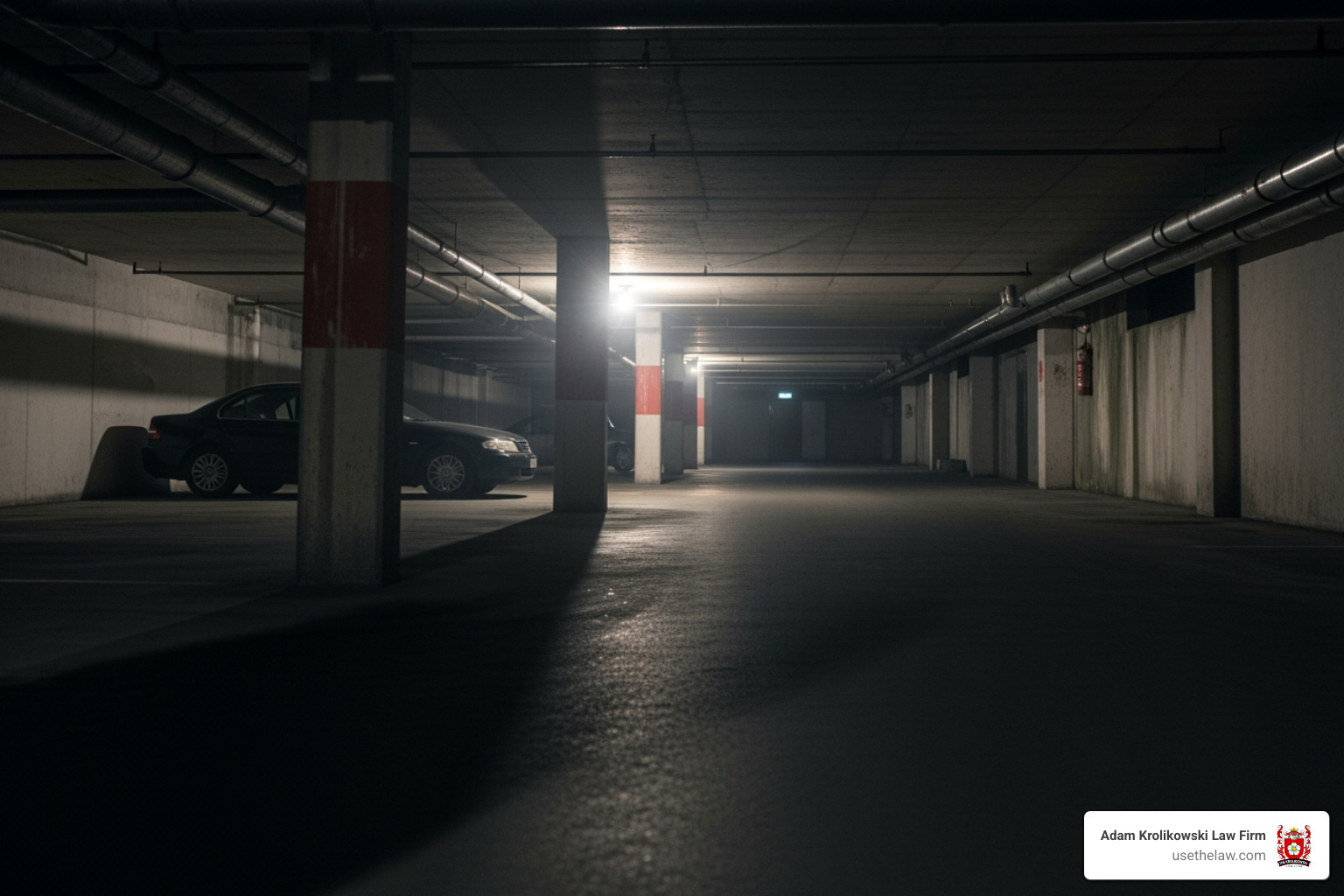
This is particularly common in:
- Parking garages and lots
- Stairwells and hallways
- Building entrances and exits
- Common areas in apartment complexes
2. Defective or Missing Security Hardware
Technology can be a great ally in security, but only if it’s functional and properly maintained. When essential security hardware is broken, missing, or simply not installed, it opens the door for criminals.
Common examples include:
- Broken Locks: Faulty apartment door locks, gates, or entry systems that don’t secure the premises.
- Malfunctioning Gates: Gates to apartment complexes or parking lots that are consistently broken, allowing unauthorized access.
- Non-Working Security Cameras: Cameras that are mere decorations because they don’t record, are pointed incorrectly, or are out of order.
- Unsecured Entryways: Doors left propped open in dorms or commercial buildings, or entry systems that are easily bypassed.
- Faulty Alarm Systems: Alarms that don’t activate or aren’t monitored effectively.
For more on how such failures can lead to claims, check out Premises Liability Accident Lawyer.
3. Lack of Competent Security Personnel
Sometimes, security isn’t about hardware; it’s about people. The absence of security guards, or the presence of untrained or inadequate staff, can directly contribute to negligent security cases. A security firm might be hired, but if their contract only covers “interior security,” and a crime happens outside, that can be a critical flaw.
This category includes:
- No Security Guards: In places where they are clearly needed due to high traffic or known risks, such as large malls, event venues, or high-crime apartment complexes.
- Untrained Staff: Security personnel who don’t know how to respond to emergencies, de-escalate situations, or properly monitor surveillance.
- Inadequate Patrols: Security guards who don’t regularly patrol high-risk areas.
- Negligent Hiring or Supervision: When property owners or security companies fail to conduct proper background checks on security staff, or don’t adequately supervise their employees, leading to misconduct or incompetence.
4. Failure to Respond to Known Threats
A property owner’s duty isn’t just about initial setup; it’s about ongoing vigilance. If they know about a threat and do nothing, that’s a significant failure. This “failure to respond” is a core component of many negligent security cases.
Consider these scenarios:
- Ignoring Tenant Complaints: A tenant complains repeatedly about faulty locks or suspicious activity, but nothing is done, leading to a break-in or assault.
- Unaddressed Criminal Patterns: The property owner is aware of a pattern of criminal behavior (like two recent muggings, or a man being stabbed repeatedly) but fails to implement additional security measures.
- Known Dangerous Individuals: A landlord fails to evict a tenant with known gang affiliations or a history of violence, leading to harm to another tenant.
- Failure to Warn: If a property owner knows of a specific danger but doesn’t warn visitors or implement protective measures.
5. Unsafe Conditions at High-Risk Properties
Certain properties, by their very nature or location, attract higher risks of criminal activity. These require a heightened sense of responsibility and more robust security measures. When these measures are insufficient, it can lead to devastating negligent security cases.

Properties commonly subject to negligent security cases include:
- Bars and Nightclubs: Due to alcohol consumption and large crowds, fights can escalate, and security needs to be proactive. We’ve seen cases where a fight at a nightclub led to a patron being run over by a truck in the parking lot.
- Hotels: Guests expect safety. A hotel found negligent after a guest was shot in the parking lot had failed to act on reports of 82 crimes in their lot in three years prior, plus other alarming statistics from nearby hotels.
- Apartment Complexes: Residents rely on landlords for secure common areas. A tenant being a victim of crime in common areas, stairwells, or parking lots due to inadequate lighting or secured entryways is a common scenario.
- Shopping Malls and Retail Stores: Parking lots, particularly, are frequent targets. One grocery store’s parking lot security was deemed inadequate after a customer shooting, despite awareness of prior criminal activity.
- ATMs and Gas Stations: Often targets for robbery due to the presence of cash, especially at night.
- Amusement Parks: While fun, even areas just outside the park can become dangerous if known gang activity isn’t addressed, as one park learned when held liable for a gang attack outside its premises.
For more information, visit Negligent Security Attorney in California.
Building a Claim: Evidence and Liability in Negligent Security
When something terrible happens because of inadequate security, the immediate pain and shock for the victim are immense. But beyond that personal struggle, there’s a legal path to help make things right. If we find that a property owner’s carelessness played a part in the crime, victims can often pursue a civil lawsuit. This process helps them seek justice and get compensation for their losses. It’s about holding those responsible accountable and helping you move forward. If you’re in Los Angeles and need guidance through this, a premises liability personal injury attorney can help you understand your options.
Essential Evidence to Collect
To build a strong negligent security case, we need to gather all the pieces of the puzzle. Think of it like collecting clues to tell the full story. This evidence helps us show exactly how the property owner fell short and how that directly led to your harm.
We’ll be looking for things like police reports, which document the crime itself and often provide initial details about the scene. Medical records are vital to show the extent of your injuries, the treatments you’ve received, and any ongoing care you might need. If there was security camera footage, that can be incredibly powerful – it shows what happened and whether cameras were even working or properly placed.
We also want to hear from witnesses who saw the incident or noticed anything off about the property’s security. Don’t forget photos of the scene taken right after – they can capture important details like dim lighting, broken locks, or unsecured entryways that might change later. We’ll also dig into property maintenance records to see if security systems were regularly checked, if repairs were made (or not made), or if complaints were received. And crucially, we look for prior incident reports on the property. If similar crimes happened there before, it’s a big clue that the owner knew about the risk.
All this data helps us paint a clear picture for the court, showing how the property owner’s actions (or inactions) led to the incident.
Who Can Be Held Liable in Negligent Security Cases?
One of the key questions in these cases is: who can be held accountable? While the criminal who committed the act is certainly responsible for their actions, they often don’t have the financial means to compensate a victim. This is where negligent security cases against property owners, managers, and security companies become so important.
Here’s a look at who might be held responsible:
- Property Owners: The individual or company that owns the land and buildings. They have the main responsibility for keeping the property safe.
- Landlords: For apartments and other residential places, landlords have a duty to keep their tenants safe, especially in shared areas like hallways and parking lots.
- Property Management Companies: If a company manages the property day-to-day, they might share responsibility for security failures.
- Security Contractors: If a separate security company was hired, and their own mistakes (like untrained guards or not enough patrols) contributed to the crime, they could be held responsible. However, we always look closely at their contract, as sometimes their responsibilities are very specific.
- Business Tenants: In some situations, a business renting space (like a store in a mall) might have specific duties for security within their leased area, which could make them potentially liable.
Property owners can’t just pass the buck. They have a duty to maintain their properties in a reasonably safe way. If they fail to provide the security needed to prevent foreseeable crime, they can be held responsible. You can find more information about this area of law here: Premises Liability Lawyer Near Me.
Damages You Can Recover
Victims of negligent security can suffer devastating physical, emotional, and financial losses. A successful negligent security case aims to recover compensation for these damages, helping the victim rebuild their life.
The types of damages you might be able to recover include:
- Medical Expenses: This covers everything from emergency room visits and surgeries to ongoing physical therapy, medications, and any future medical care you’ll need. For instance, in one case, a restaurant owner had to pay $900,000 after an armed robbery left someone with facial fractures and a brain injury.
- Lost Wages: Compensation for the income you lost because you couldn’t work after your injury, plus any future earnings you might miss out on if your injury prevents you from returning to your old job or reduces your ability to earn money.
- Pain and Suffering: This accounts for the physical pain and discomfort you’ve endured, as well as the emotional distress, mental anguish, and the loss of enjoyment of life caused by the incident. The emotional impact of a crime, where fear can be as hard to deal with as physical injuries, is a significant part of this.
- Emotional Distress: This can include psychological trauma, anxiety, depression, PTSD, and other mental health impacts that resulted from the crime.
- Property Damage: If any of your personal belongings were damaged or stolen during the incident.
- Wrongful Death: In the most tragic situations, where a victim dies due to negligent security, their family can file a wrongful death claim. This can help cover funeral expenses, lost financial support, and the loss of companionship.
It can be really hard to get money directly from the criminal who committed the act, as they are often difficult to find or don’t have the money to pay. This is why pursuing a claim against the property owner, who typically has liability insurance, is often the most practical way to recover what you’ve lost. Liability insurance helps protect businesses and individuals from being held financially responsible in certain situations, and it generally covers these types of damages in successful negligent security cases.
After an Attack: Critical Steps for Victims of Inadequate Security
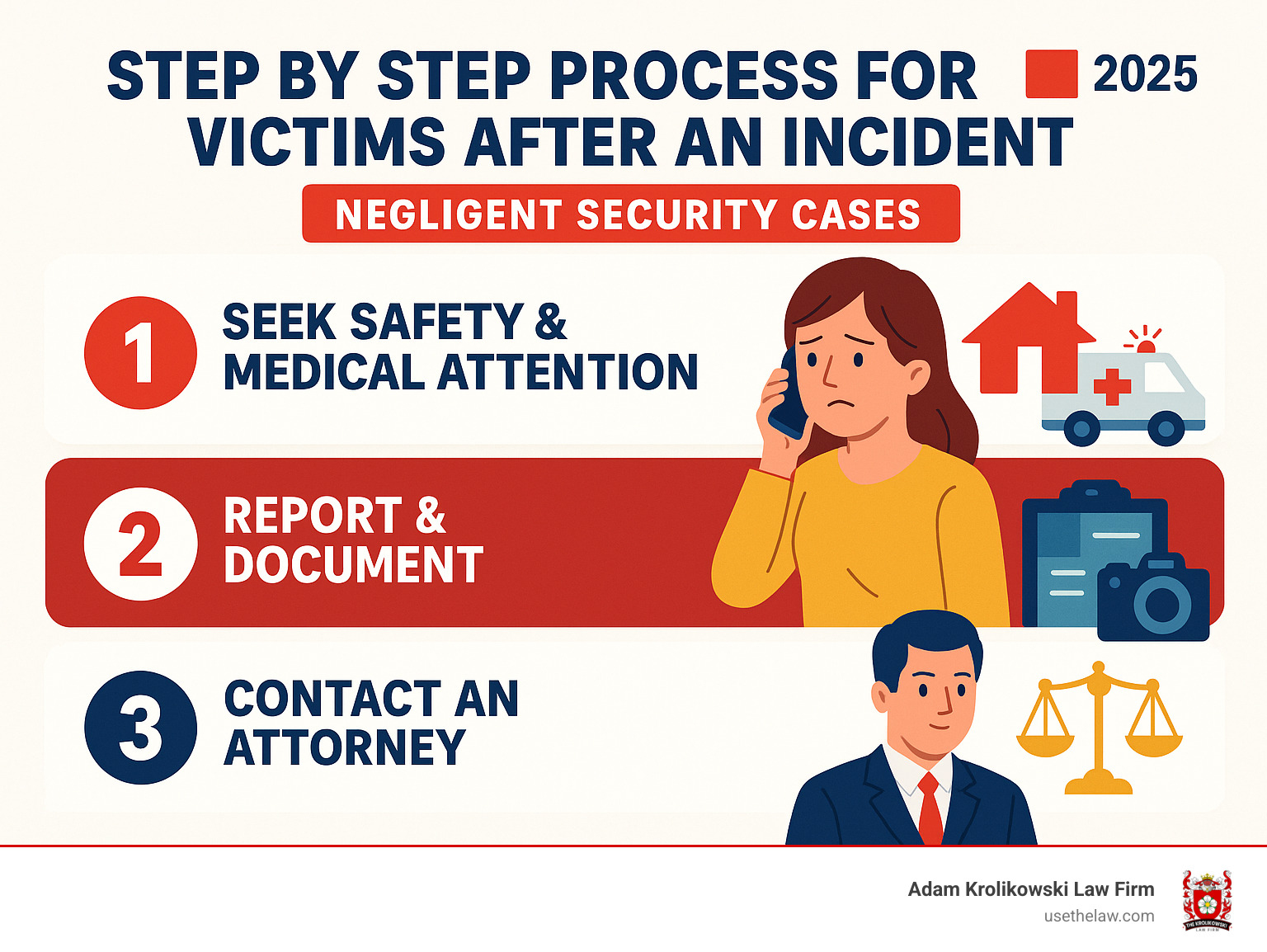
If you or a loved one has been injured due to a crime that you suspect was enabled by negligent security, your immediate actions are crucial. These steps can protect your health and also help preserve vital evidence for a potential legal claim.

1. Seek Safety and Medical Attention Immediately
Your safety and health are the absolute top priority.
- Get to a Safe Location: Remove yourself from immediate danger as quickly as possible.
- Call 911: Report the crime to the police. This creates an official record of the incident, which is indispensable for any future legal action.
- Seek Medical Evaluation: Even if you don’t feel severely injured, or if the adrenaline from the traumatic event masks your pain, get checked out by a medical professional immediately. Injuries like whiplash or internal injuries might not manifest symptoms right away but can have serious long-term consequences. Documenting your injuries by seeking prompt medical attention is vital.
2. Report the Incident and Document Everything
The more information you gather, the stronger your potential claim will be.
- File a Police Report: Ensure the incident is officially recorded. Ask for a copy of the report.
- Report to Property Management/Owner: Inform the property owner or manager about the incident in writing. Request copies of any internal incident reports they generate.
- Take Photos/Videos of the Scene: If it’s safe to do so, immediately after the incident, take pictures or videos of the location. Capture details like poor lighting, broken locks, overgrown bushes, or anything that seems relevant to the security conditions. These conditions might change later, impacting evidence.
- Get Witness Contact Information: If anyone saw what happened or has information about the property’s security, get their name and contact details.
- Keep All Documents: Save all medical bills, police reports, communication with the property owner, and any other relevant paperwork.
- Avoid Signing Anything or Admitting Fault: Do not sign any documents or make any statements to the property owner’s insurance company or representatives without first consulting with a lawyer. And never apologize or admit fault, even if you feel shaken or confused.
3. Understand the Time Limits
Time is of the essence in negligent security cases. There are strict time limits, known as statutes of limitations, for filing personal injury claims. These deadlines vary by state. In California, for example, there are specific time limits for those who want to file a claim, and missing this limit may result in losing the right to seek compensation. These can be as short as one year in some states.
Furthermore, if the property owner is a government entity, the deadlines can be even shorter – sometimes only a few months to file a “notice of claim” before you can even file a lawsuit. Acting quickly allows us to preserve evidence, interview witnesses while memories are fresh, and meet critical filing deadlines.
You can learn more about related legal timeframes at Slip and Fall Lawyer in Orange County, California.
Conclusion
When property owners don’t do their part to keep people safe, and someone gets hurt, that’s where negligent security cases come in. These cases are about getting justice. We’ve talked about how these situations happen – maybe the owner overlooked something, or didn’t take known risks seriously. Things like dim lighting or untrained staff might seem small, but they can lead to terrible consequences for victims.
It’s pretty clear: property owners have a big responsibility. They need to actively look at risks and put good security in place. Think working cameras, trained staff, and bright lights. They also need to act fast when they know there’s a problem. By making safety a top priority and not cutting corners, businesses and property owners can often prevent negligent security cases from happening in the first place.
If you or someone you care about has been hurt because of a crime on someone else’s property, remember this: you have rights. The police system deals with the person who committed the crime, but it often leaves victims without help for their losses. That’s where a civil claim comes in. It can help you get money for things like medical bills, lost pay, and even your pain and suffering.
Dealing with negligent security cases can be tricky. It involves knowing a lot about premises liability law, gathering just the right evidence, and going through the legal process. That’s where we come in. At Adam Krolikowski Law Firm, we’ve spent over 25 years helping injured people all across Southern California, including Orange County, Santa Ana, and Los Angeles. We take on tough cases that others might shy away from, and we’re dedicated to helping our clients get every dollar they deserve.
If you think you might have a negligent security case, we’re here to talk. We can look at what happened, figure out if the property owner was negligent, and walk you through each step of the legal journey.
Contact a Negligent Security Attorney in Orange County, CA today for a consultation.