
Understanding Premises Liability Claims
A premises liability claim is a legal action taken when someone is injured on another person’s property due to unsafe conditions. It’s about holding property owners responsible for keeping their spaces safe.
Here’s the quick overview:
- What it is: A claim against a property owner when an injury happens on their property because it wasn’t safe.
- Who it’s for: People injured due to dangerous conditions like a wet floor, broken stairs, or poor security.
- The core idea: Property owners have a duty to keep their premises reasonably safe for visitors.
- What you need: To show the owner was negligent, their negligence caused your injury, and you suffered damages.
When you’re hurt on someone else’s property, like in a slip and fall or an accident due to poor maintenance, it can turn your life upside down. You might face medical bills, lost wages, and a lot of stress. That’s where premises liability comes in. It’s a way to seek compensation for the harm you’ve suffered.
These claims are common. In fact, premises liability claims make up about 11 percent of all civil cases that go to trial. This means many people find themselves in a similar situation, seeking justice after an accident on someone else’s property.
Understanding how these claims work can help you protect your rights and get the compensation you may deserve.
What is a Premises Liability Claim?
Think of a premises liability claim as the legal way to say “Hey, you didn’t keep your property safe, and now I’m hurt because of it.” It’s really that straightforward at its core.
When you’re injured on someone else’s property because of dangerous conditions, you might have grounds for a premises liability claim. This could be anything from slipping on a wet grocery store floor to tripping over broken pavement outside an office building. The key ingredient here is negligence – the property owner failed to take reasonable steps to keep their space safe.
These cases aren’t uncommon either. Premises liability claims comprise 11 percent of all civil cases that make it to trial, which tells you just how often people find themselves in these unfortunate situations.
The heart of any premises liability claim is proving that the property owner’s carelessness directly led to your injury. It’s not enough to simply get hurt on someone’s property – you need to show they were responsible for creating or ignoring the dangerous condition that caused your accident.
When you win a premises liability claim, you can receive financial compensation for your medical bills, lost wages, pain and suffering, and other damages related to your injury. It’s about making you whole again after someone else’s negligence turned your life upside down.
The Core Principle: Proving Negligence
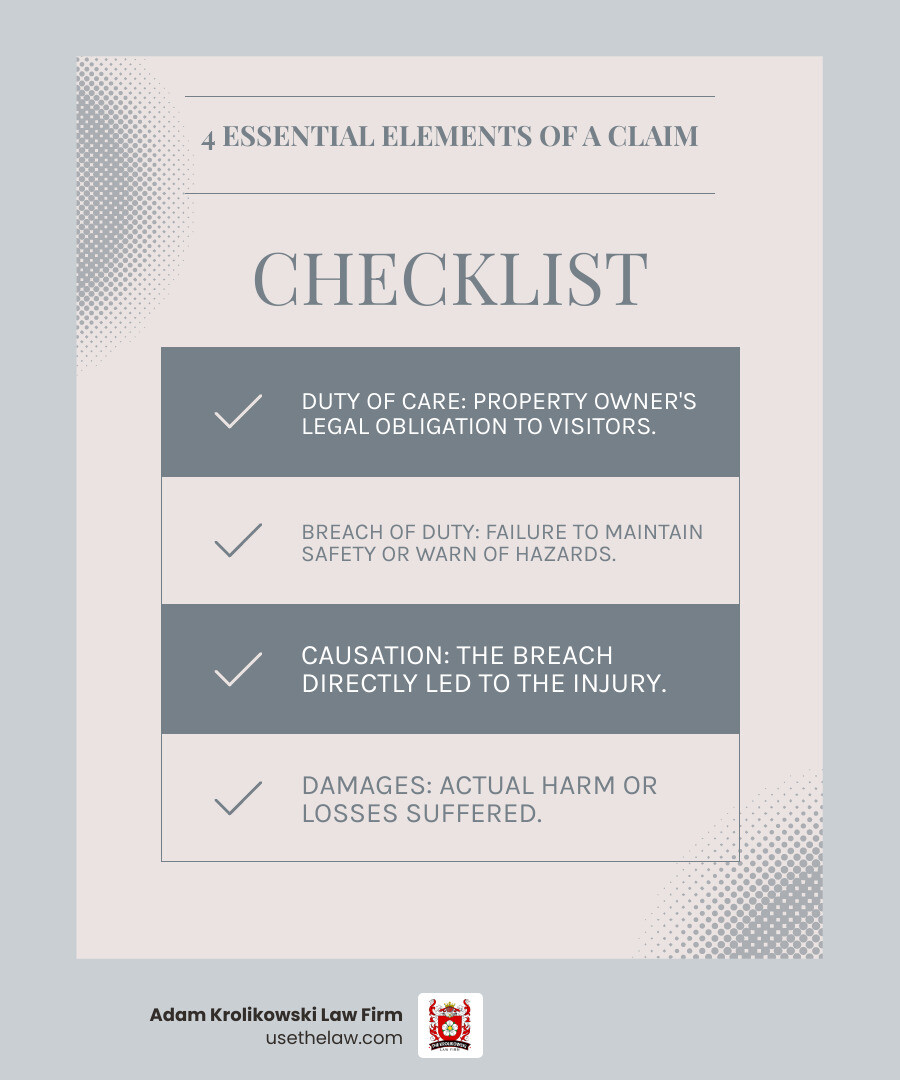
To win a premises liability claim, you need to prove four essential elements that lawyers often call the building blocks of negligence. Think of them as the four legs of a chair – remove one, and the whole thing falls over.
First, there’s duty of care. This means the property owner had a legal obligation to keep their premises reasonably safe for visitors like you. Almost every property owner has this duty, though the level of care they owe depends on why you were there.
Next comes breach of duty. Here, you need to show the owner failed to meet their safety obligations. Maybe they knew about a dangerous condition but didn’t fix it. Perhaps they should have known about it through regular inspections but didn’t bother to look. Or they might have actually created the hazard themselves through poor maintenance.
The third element is direct cause of injury. You must prove that the owner’s failure to maintain safe conditions actually caused your accident. This isn’t always as obvious as it seems – you need to show your injury wouldn’t have happened if they had done their job properly.
Finally, there’s demonstrable harm. You need to have suffered actual damages from the incident. This could be medical expenses, lost income, or pain and suffering. Without real harm, there’s no case.
For a deeper understanding of how negligence works in these situations, you can explore more about understanding negligence and review examples of premises liability injury cases.
Who Can Be Held Liable?
Here’s where things get interesting – it’s not always the person whose name is on the deed who ends up being responsible for your premises liability claim.
Property owners are the most obvious candidates. Whether it’s a homeowner, business owner, or large corporation, they typically bear responsibility for keeping their property safe.
Landlords can also be held liable, even if they don’t live on the property. They’re often responsible for common areas like hallways and parking lots, and they can be liable for dangerous conditions they knew about but failed to fix.
Sometimes tenants can be responsible too, especially if they had control over the area where you were injured or if they created the dangerous condition themselves.
Property management companies frequently handle day-to-day maintenance and safety issues, making them potential defendants in your case. If they were supposed to fix that broken handrail but didn’t, they might be on the hook.
Business owners often face liability when customers are injured in their stores, restaurants, or offices. After all, they invited you onto their property and profit from your presence.
Even government entities can be held responsible when injuries occur on public property like sidewalks, parks, or government buildings. However, claims against government agencies often have special rules and much shorter deadlines.
The key is figuring out who had control over the property when your accident happened. Sometimes multiple parties share responsibility, which can actually work in your favor. To learn more about how liability works in these cases, check out this guide on understanding liability in personal injury cases.
Establishing Fault: The Key Elements of a Premises Liability Claim
When you’re building a premises liability claim, think of it like putting together a puzzle. Each piece needs to fit perfectly to create a clear picture of what went wrong and why the property owner should be held responsible. The key is showing that they had a duty to keep you safe, and they dropped the ball.
It’s not enough to simply say “I got hurt on your property, so pay up.” You need to prove that the property owner knew or should have known about the dangerous condition, and that a reasonable person in their position would have done something about it.
The Property Owner’s Duty of Care
Every property owner has a legal obligation to maintain a reasonably safe environment for people who visit their property. This doesn’t mean they need to wrap everything in bubble wrap, but they do need to use common sense and take reasonable precautions.
Think of it this way: if you owned a business, you’d want to make sure your customers didn’t get hurt, right? That’s exactly what the law requires. Property owners must conduct regular inspections of their premises to spot potential problems before they cause injuries. A store manager who never walks through their aisles looking for spills is asking for trouble.
When dangerous conditions are finded, owners have a duty to repair hazards promptly. That loose handrail won’t magically fix itself, and every day it stays broken is another day someone could get seriously hurt. If an immediate repair isn’t possible, the owner must provide adequate warning signs to alert visitors to the danger. Those bright yellow “Wet Floor” signs you see everywhere? They’re not just suggestions – they’re legal necessities.
The law holds property owners responsible not just for hazards they actually know about, but also for dangers they should have known about through reasonable care and inspection. You can learn more about defining duty of care and how a personal injury lawyer in Orange County handles these cases.
How a Visitor’s Status Affects the Duty of Care
Here’s where things get a bit more complex. Traditionally, the law treated different types of visitors differently, and while California has modernized its approach, understanding these categories still helps explain how duty of care works.
| Visitor Status | Definition | Duty of Care Owed |
|---|---|---|
| Invitees | People invited for business purposes (customers, clients) | Highest duty – must inspect for and warn of all dangers |
| Licensees | Social guests with permission to be there | Moderate duty – must warn of known dangers |
| Trespassers | People on property without permission | Lowest duty – generally only to avoid intentional harm |
If you’re a customer shopping at a store, you’re what the law calls an “invitee.” The business has invited you in to make money from your visit, so they owe you the highest level of care. They need to actively look for problems and fix them.
Social guests at someone’s home are considered “licensees.” The homeowner doesn’t need to inspect every inch of their property for you, but they do need to warn you about dangers they know about. “Watch out for that loose step” isn’t just being polite – it’s a legal requirement.
Trespassers generally can’t expect much protection, though there are special rules for trespassing children under the “attractive nuisance” doctrine.
California’s modern approach, established in Rowland v. Christian, focuses more on the specific circumstances of each case rather than rigid categories. The court looks at factors like the foreseeability of harm and the relationship between the parties.
What Constitutes a “Dangerous Condition”?
Not every bump, crack, or imperfection on a property creates liability. The condition must be genuinely dangerous – something that would pose an unreasonable risk of harm to someone using ordinary care.
Wet or slippery floors are classic examples, especially when there’s no warning. Spills happen, but leaving them unattended or failing to clean them properly can create serious slip hazards. Poor lighting in stairwells, parking lots, or walkways can make it impossible to see dangers that would otherwise be obvious.
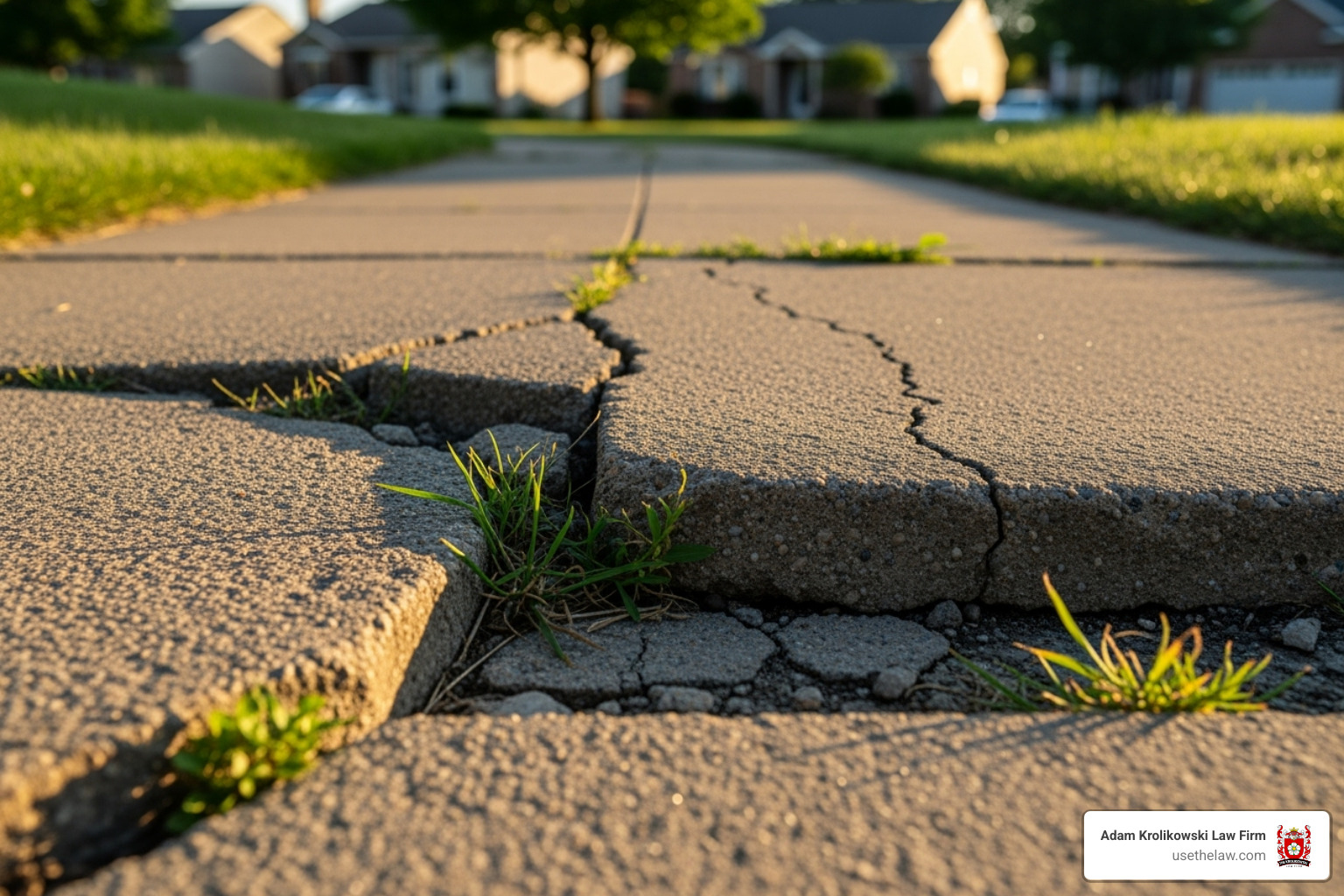
Broken stairs or railings are particularly dangerous because people rely on them for support. When they fail, serious falls are almost inevitable. Uneven surfaces like cracked sidewalks, loose floorboards, or unexpected changes in elevation can catch people off guard and send them tumbling.
Falling objects from poorly maintained buildings or improperly stacked merchandise can cause severe head injuries. Exposed wiring presents both shock and fire hazards that most visitors would never expect to encounter.
Weather can create dangerous conditions too, and property owners can’t just ignore weather-related hazards like ice or snow. While they can’t control the weather, they can take reasonable steps to address the hazards it creates.
Construction sites present their own set of dangers, which you can learn more about in our guide to construction site injury claims. The key is whether a reasonable person would recognize the condition as dangerous and whether the property owner should have addressed it.