

Understanding Your Rights After a Property Injury
Premises liability legal advice helps people understand when a property owner is responsible for accidents on their property. This area of law covers everything from slip and fall accidents to dog bites and inadequate security.
Quick Answer: Key Points About Premises Liability
- Property owners must keep their premises reasonably safe for visitors.
- Three visitor types exist: invitees (customers), licensees (social guests), and trespassers, each with different levels of protection.
- You must prove four elements: the owner owed you a duty of care, they breached that duty, the breach caused your injury, and you suffered actual damages.
- Time limits apply: In California, you typically have two years from the date of injury to file a lawsuit.
- Common cases include: slip and falls, inadequate lighting, broken stairs, dog bites, and swimming pool accidents.
Property owners have a duty to keep their premises safe and should be aware of any dangers, taking steps to protect or warn visitors. When they fail in this duty, premises liability law determines if they can be held accountable for injuries caused by unsafe conditions.
Understanding these legal principles is crucial if you’ve been hurt on someone else’s property. The law recognizes that property ownership comes with responsibility—not just to maintain the property, but to protect the people who enter it.
Terms related to premises liability legal advice:
- premises liability accident lawyer
- premises liability injury cases
- premises liability lawyer santa ana
Defining Premises Liability and the Property Owner’s Duty of Care
Premises liability means a property owner may be responsible for injuries that happen on their property due to their carelessness. This covers a wide range of situations, from a slip on a wet floor to an injury from a broken staircase. The common thread in these cases is negligence—when a property owner fails to take reasonable care of their property, and someone gets hurt.
Whether it’s a busy restaurant or a private home, owners have a legal obligation to keep their property reasonably safe. As one personal injury law attorney puts it, “Landowners or business owners have duty of care to their guests or customers to keep their property in a reasonably safe condition for use.” This means they must regularly check for problems, fix dangerous conditions, and warn people about hazards they can’t immediately repair. When they fail and an injury occurs, premises liability legal advice becomes essential.
At the Adam Krolikowski Law Firm, we have over 25 years of experience helping people in Orange County understand their rights after property injuries.
Visitor Status and the Duty Owed in California
In California, the duty a property owner owes you depends on why you were on the property. There are three main categories of visitors:
- Invitees: These are people invited onto the property for the owner’s benefit, like customers in a store. They receive the highest level of protection. Owners must actively look for hidden dangers, fix them, or warn about them.
- Licensees: A licensee has permission to be on the property for their own benefit, such as a social guest. Owners must warn licensees of known, non-obvious dangers but generally don’t have to inspect for unknown problems.
- Trespassers: These are people on the property without permission. Owners typically owe them a very limited duty, mainly not to intentionally cause harm. However, there are important exceptions, especially for children.
Your visitor status directly affects what the property owner should have done to protect you and is a crucial part of any premises liability claim.
What Is a Dangerous Condition?
A dangerous condition is anything on a property that creates an unreasonable risk of harm. Common examples include:
- Wet floors and slippery surfaces: Spills in grocery stores or recently mopped floors without warning signs.
- Uneven surfaces: Cracked sidewalks, potholes, or torn carpeting that can cause falls.
- Inadequate lighting: Poorly lit stairwells or parking garages that hide hazards and can create opportunities for crime.
- Poor maintenance: Overgrown bushes blocking walkways or accumulated debris creating tripping hazards.
- Defective conditions: Structural issues like broken stairs, wobbly handrails, or unstable balconies.
- Building code violations: When a property fails to meet local or state safety codes, it strengthens an injury case.
- Other hazards: Unsecured falling objects, improperly stored chemicals, or unrestrained animals.
If you’ve been injured by one of these conditions in California, the Adam Krolikowski Law Firm can help you understand your options. We handle complex cases other attorneys might turn away.
Common Types of Premises Liability Cases
While many people think of slipping on a wet floor, premises liability legal advice covers a wide range of situations where a property owner’s negligence leads to injury. These accidents can happen anywhere, from shopping centers and restaurants to apartment complexes and private homes.

At our firm, we handle various premises liability injury cases throughout Orange County and Los Angeles, and we understand what it takes to hold negligent property owners accountable.
Slip, Trip, and Fall Accidents
These common accidents can cause serious injuries like broken bones, head trauma, and spinal cord damage. They are often preventable and caused by a property owner’s carelessness.
- Wet or slippery surfaces: A leading cause, such as a mopped floor without a warning sign or a spilled drink in a restaurant.
- Obstructed walkways: Merchandise left in store aisles or equipment blocking pathways can catch visitors off guard.
- Uneven flooring: Torn carpets, loose rugs, or unmarked changes in floor height can be just as dangerous as obvious hazards.
- Weather-related hazards: In California, this can include rain-slicked entryways or, in mountain areas, ice and snow on walkways.
If you’ve suffered a slip and fall in Orange County, California law requires property owners who knew or should have known about a hazard to take action. For specific guidance, see our page on slip and fall attorney Orange County, CA.
Negligent Security Incidents
Property owners have a legal duty to protect you from foreseeable criminal acts. When they fail to provide reasonable security, the consequences can be devastating.
- Inadequate lighting: Dimly lit parking garages or dark stairwells can provide cover for criminals.
- Broken locks or gates: When security features are left unrepaired, unauthorized people can gain access to a property.
- Lack of security personnel: Some properties, like nightclubs or businesses in high-crime areas, may require security guards to maintain a safe environment.
The key legal concept is foreseeable crime. If a property owner is aware of previous criminal activity, they must take reasonable steps to prevent future incidents. When they don’t, and someone is assaulted or robbed, they can be held liable. Our firm has handled many negligent security cases and knows how to build strong claims for victims.
The Attractive Nuisance Doctrine
This legal doctrine provides special protection for children who are naturally curious and may not understand danger. It changes the usual rules for trespassers, recognizing that certain property features can lure children into harm’s way.
An attractive nuisance is anything on a property that might draw in children while posing a danger. Classic examples include:
- Swimming pools: California law requires proper fencing and gates for pools because of the drowning risk to children.
- Construction sites: Open trenches, piles of dirt, and heavy machinery can attract children who don’t recognize the risks.
- Unsecured equipment: Items like trampolines or ladders in an unfenced yard can lead to injuries for which the property owner may be responsible.
Even if a child was trespassing, the property owner can be held liable under this doctrine. If your child was injured on someone else’s property, don’t assume you have no recourse. The law recognizes that children need extra protection.
Building a Successful Premises Liability Claim
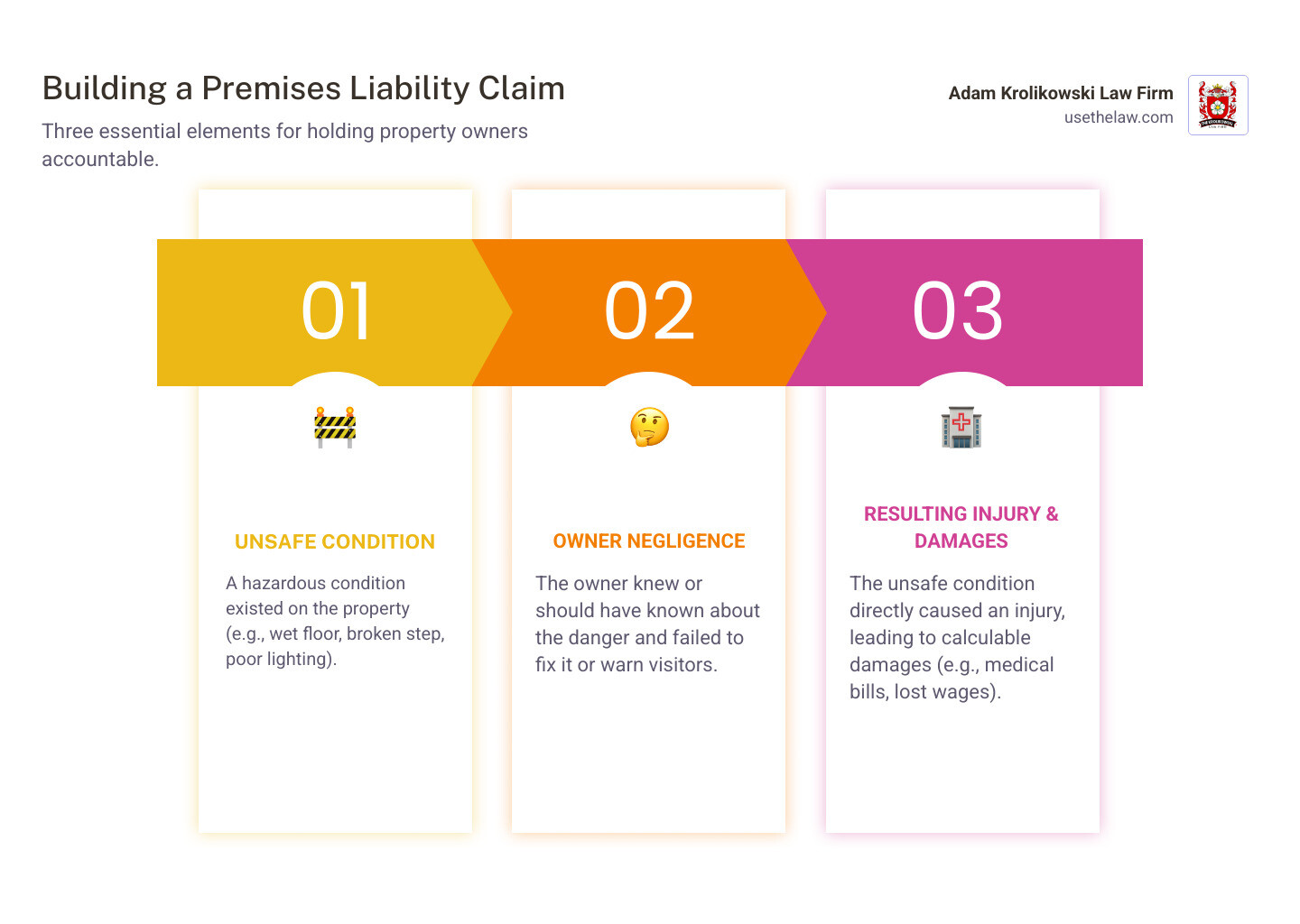
To win a premises liability claim, you must prove the property owner’s negligence caused your injuries. This is known as the burden of proof. It’s not enough to be injured on someone’s property; you must show the owner’s failure to act played a direct role.
As a key legal point states, Liability will only arise if the business owner or landowner either created a danger, knew of the danger, or should have known of the danger and then failed to correct it. Our goal is to provide premises liability legal advice that clarifies this process and helps you secure the compensation you deserve.
The Four Essential Elements of a Claim
Every premises liability case in California rests on four pillars:
- Duty of Care: You must show the property owner owed you a responsibility to keep the premises reasonably safe. This duty varies depending on your visitor status (invitee, licensee, etc.).
- Breach of Duty: You must prove the owner failed to meet their responsibility, such as by not fixing a known hazard or failing to inspect the property.
- Causation: There must be a direct link between the owner’s breach of duty and your injury. The injury must have resulted from their negligence, not an unrelated cause.
- Actual Harm or Damages: You must have suffered documented losses, such as medical bills, lost wages, or pain and suffering.
Proving these elements requires careful investigation, which is why seeking legal advice early is so important.
The Role of the Property Owner’s Knowledge
A critical part of your claim is proving what the property owner knew—or should have known—about the dangerous condition. This knowledge can be established in two ways:
- Actual notice: This means the owner had direct knowledge of the hazard. For example, an employee saw a spill and did nothing, or the owner created the hazard themselves.
- Constructive notice: This means the owner should have known about the danger through reasonable inspection and maintenance. If a hazard existed long enough that a responsible owner would have found it, that’s constructive notice. For instance, a broken tile that has been loose for weeks should have been finded during routine checks.
Proving constructive notice often involves using evidence like surveillance footage or maintenance logs to show the owner was negligent in their duty to maintain a safe environment.
Understanding Compensation: Premises Liability Legal Advice on Damages
If your claim is successful, you can receive compensation for various losses, known as damages. The goal is to restore you, as much as possible, to the position you were in before the injury.
Common types of damages include:
- Medical expenses: All costs for treatment, from emergency room visits to physical therapy, including future medical needs.
- Lost income: Compensation for wages you couldn’t earn while recovering, as well as loss of future earning capacity if your ability to work is permanently affected.
- Property damage: Costs to repair or replace personal belongings damaged in the accident.
- Pain and suffering: Compensation for the physical pain, discomfort, and emotional distress caused by the injury.
- Emotional distress: Damages for the psychological impact, such as anxiety, depression, or post-traumatic stress.
- Loss of consortium: In some cases, a spouse may be compensated for the loss of companionship and support resulting from their partner’s injury.
The value of your claim depends on the severity of your injuries and their impact on your life. Navigating the premises liability claim process with an experienced team can help ensure all your losses are accounted for.
What to Do After an Injury: Securing Your Rights and Seeking Premises Liability Legal Advice
The moments after an injury on someone else’s property are critical. The actions you take can protect both your health and your legal rights, forming the foundation for a potential premises liability claim.
Immediate Steps to Take After an Accident
- Seek medical attention immediately. Adrenaline can mask pain, and some injuries have delayed symptoms. A medical evaluation creates an official record connecting your injuries to the accident.
- Report the incident to the property owner, manager, or an employee. Ask for a copy of the incident report to document when and where the accident occurred.
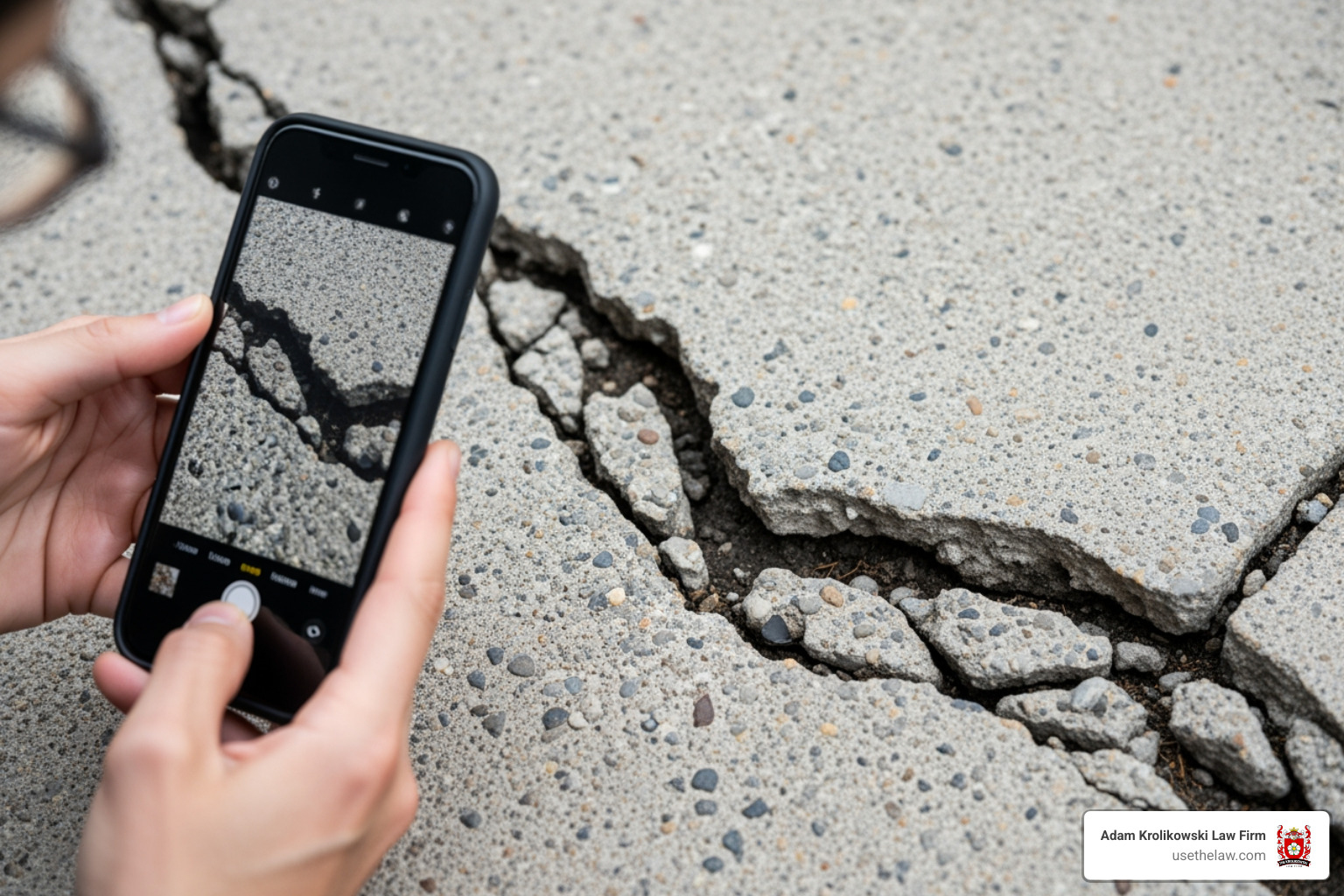
- Document the scene. If you can, take photos and videos of the dangerous condition from multiple angles. This evidence is invaluable, as hazards are often fixed quickly after an accident.
- Get witness contact information. Independent witnesses can corroborate your version of events, which is powerful evidence for insurance companies and juries.
- Preserve the clothing and shoes you were wearing. Do not wash or discard them, as they may contain evidence.
- Avoid discussing the incident on social media. Insurance companies monitor social media for anything that could be used to contradict your claim or minimize your injuries.
- Don’t give a recorded statement to the property owner’s insurance company without first consulting an attorney. Adjusters are trained to protect their company’s bottom line, not your interests.
State Law Differences and Statutes of Limitation
Premises liability laws vary by state. The most critical rule is the statute of limitations—the legal deadline for filing a lawsuit. Missing this deadline, even by a day, can mean losing your right to compensation.
In California, you generally have two years from the date of your injury to file a personal injury lawsuit. This may seem like a long time, but it passes quickly during recovery. Cases involving government property may have even shorter deadlines, sometimes just six months.
California also uses a comparative negligence rule. This means your compensation can be reduced by your percentage of fault. For example, if you are found 20% at fault, your $100,000 award would be reduced to $80,000.
When to Seek Premises Liability Legal Advice
Premises liability cases are complex. An attorney can help you steer the claims process, investigate your accident, and deal with insurance companies whose goal is to pay as little as possible.
An attorney can:
- Assess the strength of your case and identify who is legally responsible.
- Conduct a thorough investigation to gather and preserve crucial evidence.
- Handle all communications and negotiations with insurance companies to protect your rights.
- Calculate the full value of your claim, including medical bills, lost wages, and pain and suffering.
- Ensure all legal deadlines are met and your case is handled properly.
At the Adam Krolikowski Law Firm, we have over 25 years of experience with intricate personal injury claims. If you’ve been injured, contact our team to understand your legal options.
Frequently Asked Questions about Premises Liability Law
Can I file a claim if I was injured while trespassing?
Generally, property owners in California owe a very limited duty of care to trespassers—they must avoid intentionally causing harm. However, there are important exceptions.
If a property owner knows that people frequently trespass in a specific area, they may have a duty to warn of known, non-obvious dangers. The most significant exception is the attractive nuisance doctrine. If a dangerous condition on the property is likely to attract children (e.g., an unfenced pool or construction equipment), the owner may be liable if a child is injured, even if they were trespassing. The law recognizes that children cannot always appreciate risks. Because each case is unique, seeking premises liability legal advice is the best way to understand if an exception applies to you.
What if the dangerous condition was “open and obvious”?
Property owners often use the “open and obvious” defense, arguing they aren’t responsible for a hazard that any reasonable person should have seen and avoided. However, in California, this is not an automatic defense.
A court will consider if the danger was truly avoidable. For example, if the only path forward required passing the hazard, the owner may still be responsible. The owner might also be liable if they should have anticipated that visitors would be distracted. In a grocery store, customers are focused on shopping, not constantly watching the floor. The “open and obvious” nature of a hazard is a factor for the jury to consider, but it doesn’t give negligent property owners a free pass.
How much time do I have to file a premises liability lawsuit in California?
In California, the statute of limitations for most personal injury cases, including premises liability, is two years from the date of your injury. This is a strict deadline.
If you miss this two-year window, you will likely lose your right to pursue compensation, regardless of how strong your case is. There are limited exceptions. For minors, the clock may not start until they turn 18. Claims against government entities often have much shorter deadlines, sometimes as little as six months. In some cases, the “findy rule” may apply if an injury wasn’t immediately apparent, but this is not guaranteed.
Given these strict deadlines, it is crucial to seek premises liability legal advice as soon as possible to protect your rights.
Navigating Your Claim and Finding Representation
An injury on someone else’s property can be overwhelming. While you focus on recovery, understanding your legal rights is the first step toward getting your life back on track. Premises liability legal advice provides the support needed to steer a complex claim.
These cases require thorough investigation and clear evidence to prove a property owner’s negligence caused your injuries. Insurance companies have teams dedicated to minimizing payouts, which is why having an advocate in your corner is so important.
If you’re in this situation in Orange County, the Adam Krolikowski Law Firm can help. With over 25 years of experience, we handle intricate personal injury claims, including complex premises liability cases that other attorneys might turn away. We can help you understand your options whether you slipped in a store, were injured in a poorly lit area, or were harmed due to inadequate security.
Time is critical due to California’s two-year statute of limitations. Waiting too long could mean losing your right to compensation. To understand your legal options and get help with your case, contact a Premises Liability Attorney in Orange County, CA. We are here to listen and help you take the next steps toward justice.
Contact Us
Practice Areas
Recent Articles
- « Previous
- 1
- 2
- 3