

When Workplace Harassment Becomes Unbearable: Finding the Right Legal Help
If you’re experiencing unwanted sexual advances, inappropriate comments, or a hostile work environment at your California workplace, a sexual harassment attorney California can help you understand your rights and take action against your employer.
The Adam Krolikowski Law Firm offers:
- Experience in complex workplace harassment cases
- Representation for FEHA violations (California’s Fair Employment and Housing Act)
- Free consultations on a contingency basis with no upfront costs
- Assistance with retaliation claims
- Help recovering compensation for lost wages, emotional distress, and punitive damages
Sexual harassment is a widespread issue. In 2022, the EEOC received over 19,000 sex-based discrimination claims, with California cases making up a significant portion.
You don’t have to suffer in silence. California law provides strong protections for harassment victims, and the state’s Fair Employment and Housing Act (FEHA) goes beyond federal law to cover all employers, regardless of size. While many victims fear retaliation, California law makes such actions illegal and requires companies to investigate all complaints.
This guide explains California’s sexual harassment laws, from identifying illegal conduct to filing a claim and recovering damages.
Understanding Sexual Harassment Under California Law
California’s Fair Employment and Housing Act (FEHA) provides strong protections against workplace harassment and covers all employers, regardless of size. The EEOC’s sexual harassment definition makes it clear: it’s any unwelcome sexual advances, requests for sexual favors, or other sexual conduct that affects your job, interferes with your work, or creates a hostile environment. The key is that the conduct is “unwelcome.”
Harassment can include:
- Unwanted sexual advances: Repeatedly asking for dates or making inappropriate propositions.
- Verbal conduct: Crude jokes, comments about your body, or sexually explicit stories.
- Physical conduct: Unwanted touching, hugging, or assault. Even blocking your path can be harassment.
- Visual conduct: Displaying sexual images, making obscene gestures, or leering.
Harassment is often about power, not attraction. A sexual harassment attorney California can help you address this abuse of power.
The Two Primary Types of Sexual Harassment
California law recognizes two main types of sexual harassment, as detailed by the EEOC.
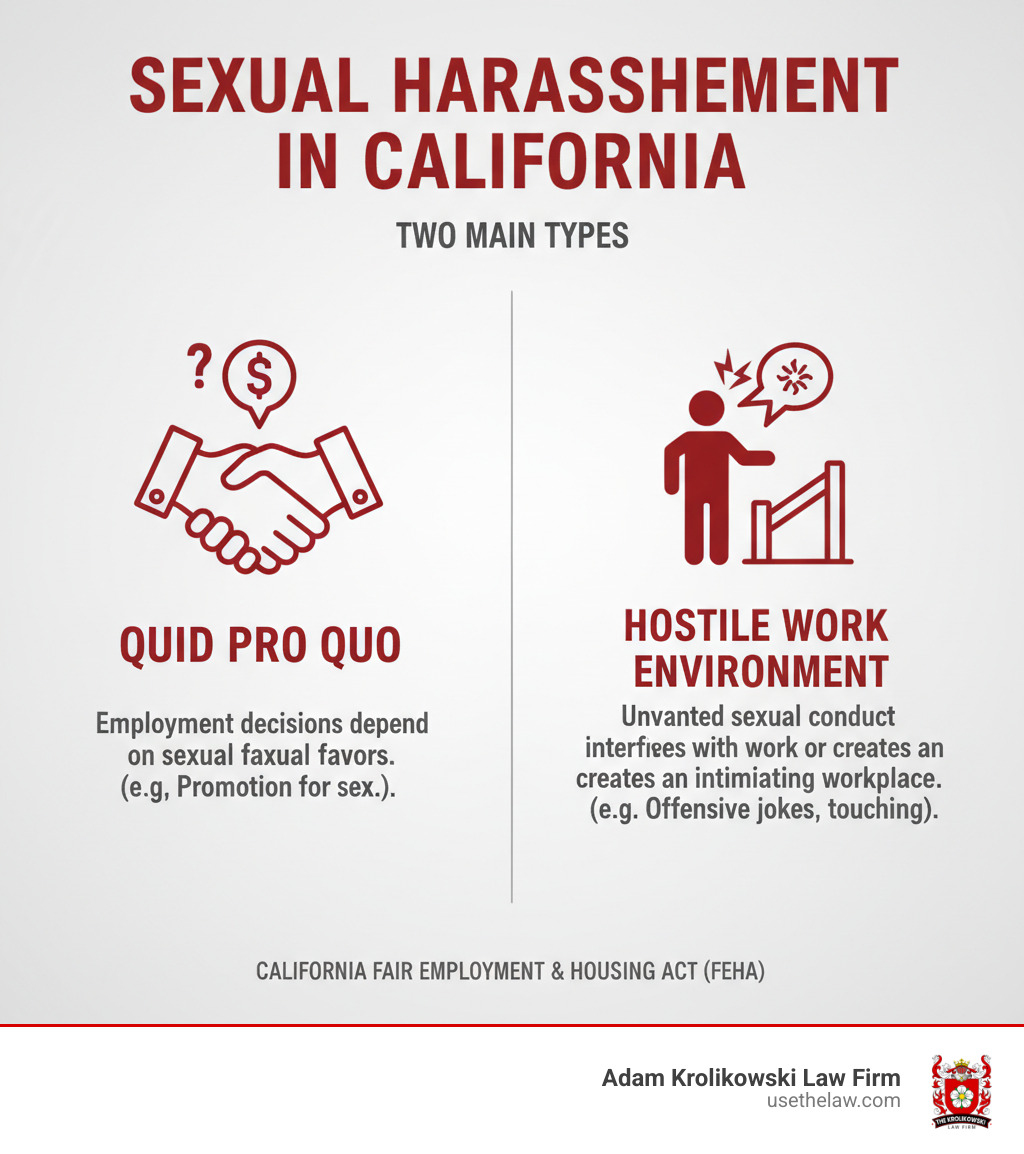
Quid Pro Quo harassment is a “this for that” exchange where a supervisor demands sexual favors for work benefits, like a promotion, or threatens negative consequences for refusal. The threat itself is illegal, even if it’s not carried out.
Hostile Work Environment harassment occurs when sexual conduct is so severe or pervasive that it alters your working conditions. This can include constant sexual jokes, inappropriate touching, or sharing explicit images. The behavior must be offensive to a reasonable person and to you personally. A single severe incident or an ongoing pattern can create a hostile environment. You can learn more about what constitutes a Hostile Work Environment.
The Widespread Impact on Victims
Sexual harassment can have devastating effects on your life. The health effects of harassment are significant.
- Emotional distress: Victims often suffer from anxiety, depression, and trouble sleeping.
- Physical ailments: Chronic stress can lead to stress-induced physical ailments like headaches, stomach problems, and high blood pressure.
- Financial losses: Many victims feel forced to quit, leading to lost wages and career disruption. Research shows women who experience harassment are 6.5 times more likely to change jobs.
How Common is Workplace Sexual Harassment?
The statistics on workplace sexual harassment are sobering, though the problem is significantly underreported.

In 2022, sex-based discrimination accounted for 27% of all charges filed with the EEOC. California-specific EEOC data shows the state had over 4,400 discrimination charges, with more than 20% being sex-based.
However, studies suggest that up to 99.8% of harassed employees never file formal charges, often due to fear of retaliation or not knowing their rights. This silence is why California’s legal protections are so critical and why guidance from a sexual harassment attorney California can be invaluable.
Your Legal Rights and Employer Responsibilities
You have strong protections under California and federal law. While federal law (Title VII) covers employers with 15+ workers, California’s Fair Employment and Housing Act (FEHA) is broader. FEHA applies to employers with five or more employees for discrimination claims and all employers, regardless of size, for harassment claims. This means you are protected even if you work for a very small business.
FEHA prohibits harassment based on sex, gender, gender identity, pregnancy, and related conditions. You can learn more about your broader Employee Rights Protection to understand all your workplace rights.
Employer’s Duty to Prevent and Correct Harassment
California law requires employers to take proactive steps to prevent and correct harassment. This is a legal obligation.
- Written Policy: Employers must have a written anti-harassment policy that explains what constitutes harassment and provides multiple ways to report it.
- Prompt Investigation: When a complaint is made, employers must conduct a prompt, thorough, and impartial investigation.
- Mandatory Training: Employers with five or more employees must provide mandatory harassment prevention training every two years.
- Corrective Action: If harassment is confirmed, employers must take immediate action to stop the behavior and prevent it from recurring.
Employers face strict liability for harassment by supervisors that results in negative job actions (like firing). For harassment by coworkers, an employer is liable if they knew or should have known about it and failed to act.
Protection Against Retaliation
Fear of retaliation is a common reason victims don’t report harassment. However, retaliation for reporting sexual harassment is illegal under California law. The California Labor Code protections are there to shield employees who engage in “protected activity.”
Protected activity includes reporting harassment, filing a complaint with an agency like the CRD or EEOC, or participating in an investigation. Illegal retaliation can include firing, demotion, pay cuts, negative reviews, or any other action that would discourage a reasonable person from reporting harassment.
If you face retaliation, you may have a separate legal claim in addition to your harassment claim. Since retaliation is common, having a sexual harassment attorney California on your side is crucial to protect your rights throughout the process.
Taking Action: A Step-by-Step Guide to Filing a Claim
When sexual harassment makes your workplace unbearable, there are clear steps you can take to protect yourself and seek justice.

- Document Everything: Keep a detailed record of each incident: date, time, location, what was said or done, who was present, and how it affected you. Save all related emails, texts, or other evidence.
- Report Internally: If it is safe, report the harassment in writing (like via email) to HR or your manager, following your company’s policy. If you don’t trust your company’s process, consult a sexual harassment attorney California first.
- Gather Evidence: Collect performance reviews, company policies, and contact information for any witnesses.
- Seek Support: Harassment takes a toll on your health. Reach out to friends, family, or a therapist for support.
Filing a Complaint with a Government Agency
Before filing a lawsuit, you must typically file a complaint with a government agency.
- The California Civil Rights Department (CRD) handles state law (FEHA) violations and covers all employers for harassment claims.
- The Equal Employment Opportunity Commission (EEOC) handles federal law (Title VII) violations and covers employers with 15 or more employees.
You can learn how to file a complaint with the CRD on their website. The agency will investigate and may try to resolve the issue. If not, they will issue a “right to sue” notice, which is required to file a lawsuit.
Critical Deadlines: Statutes of Limitations in California
Missing a filing deadline can permanently bar you from seeking justice.
- CRD: You have three years from the last incident of harassment to file your complaint.
- EEOC: You have only 300 days from the last incident to file.
For survivors of sexual assault, AB 1619 may provide additional time to file. It is crucial to act quickly, as evidence can be lost and memories can fade over time.
When Workplace Harassment Becomes Unbearable: Finding the Right Legal Help
If you’re experiencing unwanted sexual advances, inappropriate comments, or a hostile work environment at your California workplace, a sexual harassment attorney California can help you understand your rights and take action against your employer.
The Adam Krolikowski Law Firm offers:
- Experience in complex workplace harassment cases
- Representation for FEHA violations (California’s Fair Employment and Housing Act)
- Free consultations on a contingency basis with no upfront costs
- Assistance with retaliation claims
- Help recovering compensation for lost wages, emotional distress, and punitive damages
Sexual harassment is a widespread issue. In 2022, the EEOC received over 19,000 sex-based discrimination claims, with California cases making up a significant portion.
You don’t have to suffer in silence. California law provides strong protections for harassment victims, and the state’s Fair Employment and Housing Act (FEHA) goes beyond federal law to cover all employers, regardless of size. While many victims fear retaliation, California law makes such actions illegal and requires companies to investigate all complaints.
This guide explains California’s sexual harassment laws, from identifying illegal conduct to filing a claim and recovering damages.
Understanding Sexual Harassment Under California Law
Sexual harassment is an illegal form of workplace discrimination under California’s Fair Employment and Housing Act (FEHA). This law provides broad protections and applies to all employers in the state, regardless of size. The EEOC defines sexual harassment as unwelcome sexual conduct that affects an individual’s employment, interferes with their work, or creates a hostile environment.
This conduct can include:
- Unwanted sexual advances: Direct propositions or repeated requests for dates.
- Verbal conduct: Lewd remarks, sexually suggestive jokes, or derogatory comments.
- Physical conduct: Unwanted touching, patting, pinching, or assault.
- Visual conduct: Displaying sexually suggestive images or making obscene gestures.
Harassment is often an abuse of power. For more information, you can read about what constitutes a Hostile Work Environment.
The Two Primary Types of Sexual Harassment
California law recognizes two main categories of sexual harassment, as detailed by the EEOC.
- Quid Pro Quo Harassment: This “something for something” harassment occurs when a supervisor conditions an employment benefit (like a promotion) on an employee’s submission to sexual demands or threatens negative action for refusal.
- Hostile Work Environment Harassment: This occurs when unwelcome sexual conduct is so severe or pervasive that it creates an intimidating or offensive work environment. This can be a single severe act or a pattern of behavior like constant jokes, unwanted touching, or graphic messages.
The Widespread Impact on Victims
The impact of sexual harassment extends beyond the workplace, causing significant emotional, physical, and financial harm.
- Emotional and Physical Health: Victims often experience depression, anxiety, and physical ailments induced by stress. The University of Minnesota’s Human Rights Library details these health effects of harassment.
- Financial and Career Damage: Many victims feel forced to leave their jobs, leading to lost income and career disruption.
How Common is Workplace Sexual Harassment?
Sexual harassment is a pervasive issue, though official statistics don’t show the full picture due to underreporting.
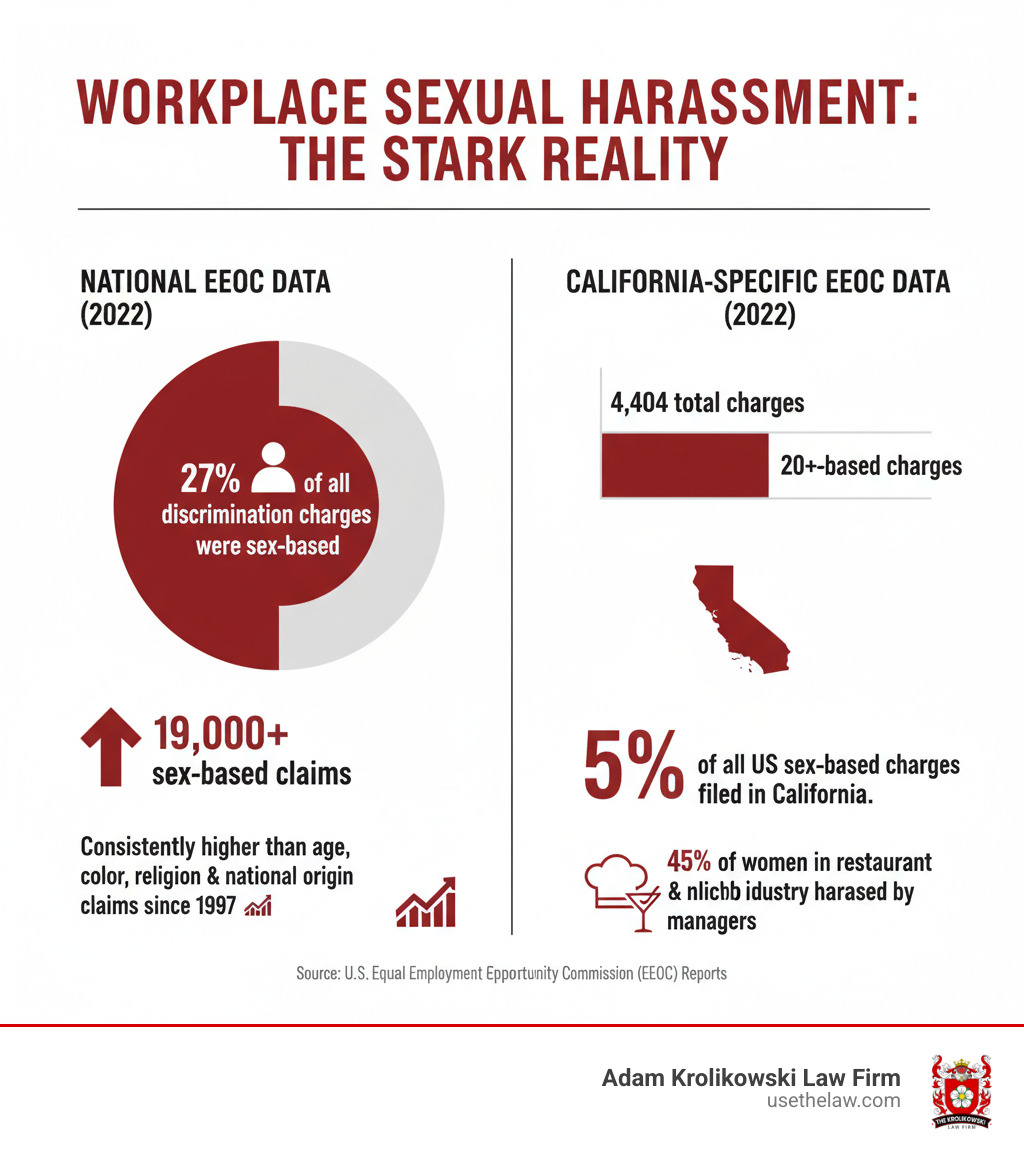
In 2022, 27% of all EEOC discrimination charges were sex-based. In California, over 20% of the 4,404 charges filed were sex-based. However, one study found that 99.8% of harassed employees never file formal charges, often out of fear. This highlights the need for strong legal advocacy for victims in the state.
Your Legal Rights and Employer Responsibilities
California law is on your side when it comes to sexual harassment, offering strong legal protections. While federal law covers companies with 15+ employees, California’s Fair Employment and Housing Act (FEHA) is more expansive. FEHA protects against harassment at ALL employers, regardless of size.
FEHA also prohibits harassment based on sex, gender, gender identity, pregnancy, and related medical conditions. You can learn more about your comprehensive Employee Rights Protection.
Employer’s Duty to Prevent and Correct Harassment
Your employer has a legal duty to prevent harassment, not just react to it. They are required to:
- Maintain a written anti-harassment policy with clear reporting procedures.
- Conduct a prompt, thorough, and impartial investigation into any complaint.
- Provide mandatory harassment prevention training for workplaces with five or more employees, as detailed by California’s harassment prevention training resources.
- Take immediate corrective action to stop confirmed harassment and prevent it from happening again.
An employer is automatically liable if a supervisor’s harassment leads to a negative job action. They are also liable for coworker harassment if they knew or should have known about it and did nothing.
Protection Against Retaliation
It is understandable to fear retaliation, but it is illegal for your employer to punish you for reporting sexual harassment. The California Labor Code provides strong protection from retaliation when you engage in “protected activity.”
This includes reporting harassment, filing a complaint, or participating in an investigation. Illegal retaliation can be firing, demotion, pay cuts, or any other negative action. Since nearly 70% of employees who report sexual harassment face some form of retaliation, having a knowledgeable sexual harassment attorney California is vital. If you are retaliated against, you may have a separate legal claim for additional compensation.
Taking Action: A Step-by-Step Guide to Filing a Claim
When sexual harassment makes your workplace unbearable, taking action feels overwhelming. But you don’t have to face this alone. Having a clear plan can help you regain control and protect your rights under California law.
- Document Everything: Start keeping detailed notes of every incident – write down the date, time, location, exactly what happened, who was there, and how it made you feel. Save any emails, text messages, or other evidence.
- Report Internally: If it feels safe to do so, report the harassment internally through your company’s established channels. This usually means HR, your manager, or whoever your company policy designates. Always do this in writing – email works perfectly because it creates a record. This step often triggers your employer’s legal duty to investigate and can sometimes be required before you can take legal action.
- Gather Evidence: Collect performance reviews, especially if they changed after you reported harassment. Save company policies, any communications related to the harassment, and get contact information for any witnesses.
- Seek Support: Sexual harassment takes a heavy toll on your mental and physical health. Reach out to friends, family, or mental health professionals. Taking care of yourself isn’t just important for your wellbeing – it also helps you stay strong throughout the legal process.
Filing a Complaint with a Government Agency
Before you can file a lawsuit in court, California law usually requires you to file a formal complaint with a government agency first. You have two main options: the California Civil Rights Department (CRD), which used to be called the DFEH, and the federal Equal Employment Opportunity Commission (EEOC).
Understanding the differences between these agencies helps you make the right choice for your situation. The CRD covers all California employers, regardless of size, for harassment claims. The EEOC focuses on federal law and covers employers with 15 or more employees.
The CRD often provides more comprehensive protections. You can learn more about how to file a complaint and obtain a right to sue notice, which you need before filing a lawsuit.
Critical Deadlines: Statutes of Limitations in California
Time limits for filing sexual harassment claims are strict, and missing these deadlines can destroy your case. California law gives you more time than federal law, which is one reason why filing with the CRD often makes sense.
For the CRD, you have three years from the date of the harassment to file your complaint. This three-year deadline gives you breathing room to document incidents, seek legal advice, and prepare your case properly.
The EEOC has a much shorter deadline – you only have 300 days from the harassment to file. That’s less than a year, and it can pass quickly when you’re dealing with the emotional impact of harassment.
For sexual assault survivors, California’s AB 1619 provides additional protections and may extend certain deadlines. This law recognizes that sexual assault trauma can make it difficult for victims to come forward immediately.
Don’t wait to seek legal help. Even if you’re still within the deadline, starting early gives your attorney more time to build a strong case. Evidence can disappear, witnesses’ memories can fade, and company policies might change. The sooner you act, the better your chances of success.
