

Why Sexual Harassment Settlement Cases Matter for California Workers
Sexual harassment settlement cases offer a path to justice and financial recovery for workers who have endured workplace abuse. These legal agreements resolve claims out of court, providing victims with compensation while employers avoid the publicity of a trial.
Quick Settlement Overview:
- Average California settlement (2024): $56,200
- Settlement ranges: $5,000 to $500,000+ depending on severity
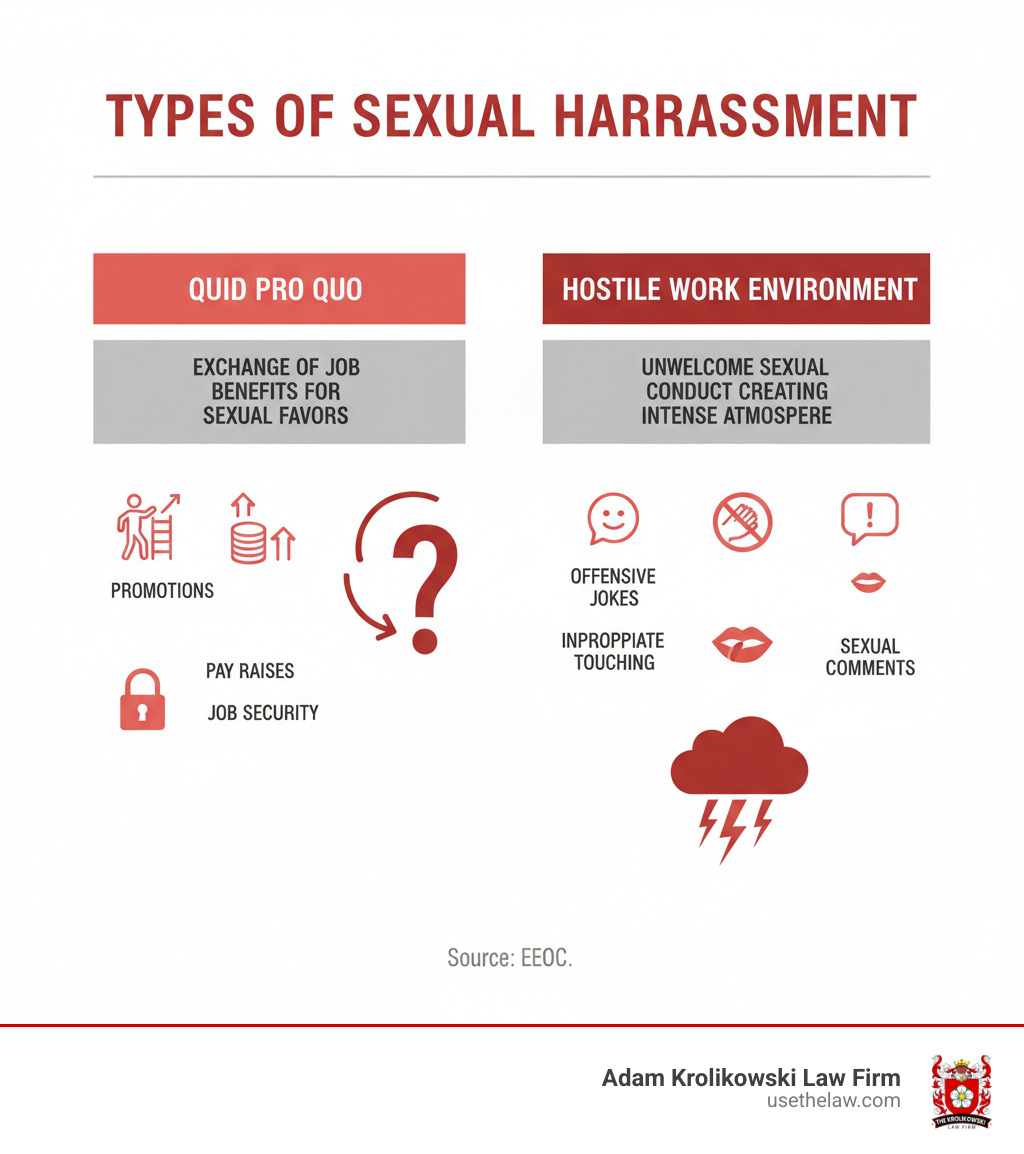
- Types of harassment: Quid pro quo (job benefits for sexual favors) and hostile work environment
- Common damages: Back pay, emotional distress, punitive damages, legal fees
- Timeline: Faster resolution than trials, typically 6-18 months
Sexual harassment is a serious issue in Southern California workplaces. Major corporations have paid multi-million dollar settlements, such as a $5.8 million agreement for claims from 21 female workers, highlighting the scope of the problem.
Settlements compensate victims for lost wages and suffering, hold employers accountable, and often require companies to implement better policies and training to prevent future harassment.
Understanding how settlements work is the first step toward justice. Whether you’re facing unwanted advances, offensive comments, or retaliation, knowing your rights and options empowers you to make informed decisions.
Understanding the Value of Sexual Harassment Settlement Cases
A common question for victims of workplace harassment is, “What is my case worth?” The value of sexual harassment settlement cases varies dramatically, as no two situations are identical. A case’s value depends on a combination of factors, including financial damages (lost wages, benefits), the emotional impact (anxiety, depression), and the employer’s level of fault.

What is the Average Settlement for Sexual Harassment?
In 2024, the average settlement for sexual harassment in California was $56,200. However, this is just a starting point, as individual case values vary. Settlement amounts typically fall into three main categories.
Low-range settlements ($5,000 – $50,000) typically involve limited harassment, such as a few weeks of inappropriate comments, and often resolve quickly if the employer takes corrective action.
Mid-range settlements ($50,000 – $150,000) are common and usually involve repeated incidents over months with clear documentation and a measurable impact on the victim’s well-being or work life.
High-value settlements ($150,000+) are for the most serious cases, such as those involving physical assault, quid pro quo harassment by executives, or a company’s complete failure to respond. These may include significant punitive damages.
Jury verdicts at trial can be substantially higher, sometimes reaching $500,000 to several million dollars, as juries often send a strong financial message to employers who permit harassment.
A study of 50 sexual harassment settlements found an average of about $53,000, aligning with current California figures. But remember, your case’s value depends on your specific circumstances.
If you’re trying to figure out where your situation might fit, our Discrimination Lawyers in Orange County, CA can walk you through a realistic assessment based on your particular facts.
Key Factors That Influence Settlement Amounts
Several critical factors influence the value of sexual harassment settlement cases.
The severity and pervasiveness of harassment is a primary factor. A single inappropriate comment is very different from months of unwanted touching. Courts look at the frequency, duration, and escalation of the conduct.
The type of harassment also matters. Quid pro quo harassment—where sexual favors are demanded for job benefits—often results in higher settlements. Hostile work environment cases require showing the conduct was severe or pervasive enough to alter working conditions.
Strong evidence is your best friend. Detailed documentation, including dates, times, witness statements, emails, and texts, strengthens your position and makes a challenge less likely.
Emotional distress documentation can increase settlement value. Medical records, therapy notes, and personal journals showing anxiety, depression, or sleep problems all contribute to your compensation.
Financial losses include back pay for lost wages and benefits, and front pay for future lost earnings if you cannot return to your job.
Company size and response play a huge role. Larger companies often face higher settlements. An employer’s response is critical; ignoring complaints or protecting the harasser increases liability.
Retaliation can dramatically increase your settlement. Being demoted, fired, or facing other negative actions after reporting harassment is a separate violation that adds significant damages. Our Retaliation Attorney Orange County team has seen these claims substantially increase settlement amounts.
These factors work together to determine a case’s value, which is why early legal guidance is important for maximizing your recovery.
The Legal Path: From Allegation to Resolution
The legal process for sexual harassment settlement cases can feel overwhelming, but it follows a predictable path. The journey begins when you report the harassment to your employer or a government agency like the Equal Employment Opportunity Commission (EEOC). Government agencies play a key role, often facilitating settlements before a case reaches court. Strategic decisions made during this process impact the outcome, making early legal guidance crucial to protect your rights and meet important deadlines.

The Role of the EEOC in Harassment Claims
The Equal Employment Opportunity Commission (EEOC) is a federal agency that investigates sexual harassment claims and helps victims reach a resolution, often without going to court.
Title VII of the Civil Rights Act makes it illegal for employers to discriminate based on sex, including sexual harassment, and gives the EEOC its authority.
Filing a charge with the EEOC is a critical first step. In California, you have 300 days from the last incident to file. This officially notifies the government of the violation.
Once filed, the investigation process begins. The EEOC reviews allegations, interviews witnesses, and examines company records. This can take months but often uncovers evidence that strengthens your case.
Mediation is a faster, voluntary process where a neutral third party helps you and your employer negotiate a settlement. Many successful sexual harassment settlement cases are resolved this way, saving time and money.
If mediation fails, the EEOC completes its investigation. If it finds reasonable cause to believe harassment occurred, it may attempt conciliation. Otherwise, it will issue you a right-to-sue letter.
This letter certifies you have followed the proper procedures and can now file a lawsuit. You can learn more about the EEOC’s work through their official data on sexual harassment in our nation’s workplaces.
Working with an Attorney for Workplace Harassment throughout the EEOC process ensures you present your strongest case.
Settling Out of Court vs. Going to Trial
Deciding to settle your case or take it to trial is a critical choice with different experiences and outcomes.
Confidentiality is a major factor. Settlements are typically confidential, protecting your privacy, while trials are public record.
Cost plays a significant role. Settling is usually less expensive than a trial, which involves extensive legal fees and court time.
Timeline is another crucial consideration. Settlements often resolve within months, whereas trials can drag on for years.
Control over outcome differs dramatically. In a settlement, you negotiate the terms. In a trial, a judge or jury decides the outcome, which introduces uncertainty.
Potential award size varies. Settlements provide guaranteed compensation, which may be lower than what a jury could award. Trials risk receiving nothing but also offer the possibility of a much larger award.
The emotional toll shouldn’t be underestimated. Settlements are generally less stressful than trials, which can be emotionally draining and require you to testify publicly about traumatic events.
Many people choose to settle for certainty and closure, and companies often prefer it to avoid the risks of trial. However, some cases require the public accountability that only a trial can provide.
Our Los Angeles Workplace Sexual Harassment Lawyer team helps you weigh these factors to ensure your decision reflects your needs and values.
Real-World Examples of Sexual Harassment Settlements
While statistics tell part of the story of sexual harassment settlement cases, real-world examples show the true impact. These cases highlight the serious consequences for employers who fail to protect their workers and the meaningful compensation for victims who speak up.

High-Profile Corporate Sexual Harassment Settlement Cases
Significant changes in workplace culture have come from high-profile cases that captured national attention, forcing industries to re-examine their practices.
Gretchen Carlson’s case against Fox News chairman Roger Ailes resulted in a $20 million settlement in 2016. Carlson claimed she was demoted for rejecting Ailes’s advances. The case’s high value and profile encouraged other women to come forward.
Ford Motor Company paid a $10.1 million EEOC settlement in 2017 for widespread harassment at its Chicago plants. The case involved both sexual and racial harassment, plus retaliation against those who reported it.
McDonald’s faces a class-action lawsuit seeking $500 million, alleging systemic harassment of young workers by customers and coworkers across its locations.
Google’s 2018 scandal showed that even tech giants are not immune. When news broke that the company paid a $90 million exit package to an executive accused of harassment, employee walkouts led Google to end its forced arbitration policy for harassment claims—a major win for employee rights.
EEOC-Enforced Settlements and Their Outcomes
The EEOC not only secures monetary compensation but also requires companies to overhaul their harassment policies, creating lasting change.
The ABM Industries case is a stark example. The janitorial company paid $5.8 million to settle claims from 21 Hispanic women who faced severe abuse, including assault by supervisors. The settlement also required an outside monitor, a complaint hotline, and management retraining, showing how the EEOC can enforce systemic changes.
Walmart has faced multiple EEOC cases, paying $30,000 for a manager’s inappropriate conduct and over $415,000 for firing an employee who reported harassment. Each settlement required Walmart to update policies and improve training.
Chipotle’s settlements highlight issues in the restaurant industry. A $400,000 settlement in Washington involved harassment and assault of young crew members. The company was required to appoint compliance coordinators and set up anonymous reporting systems.
These examples prove that sexual harassment settlement cases are about creating safer workplaces for everyone by imposing serious financial and policy-related consequences on companies.
Decoding the Settlement Agreement and Common Myths
When you reach a settlement in your sexual harassment settlement cases, understanding the agreement is crucial. This document defines your future relationship with the employer and what you can and cannot do. It’s important to review every clause to ensure you understand what you are signing.
Key Provisions in a Settlement Agreement
A settlement agreement is a roadmap for your post-harassment life, setting clear boundaries for everyone involved.
Monetary compensation is a primary component. The agreement specifies the payment amount and schedule, often broken down into lost wages, emotional distress, and other damages.
Confidentiality clauses (NDAs) are common but often negotiable. You can sometimes trade a higher settlement for silence or accept less to retain your right to speak.
Non-disparagement provisions prevent both you and the company from speaking negatively about each other, which can protect your professional reputation.
No-rehire clauses mean the company will not employ you in the future. This is often a relief for victims who do not wish to return to that workplace.
The release of claims is your agreement not to sue the company again for the same incident, providing finality for both parties.
Workplace changes are often included. Many settlements mandate non-monetary terms like new training, policy updates, or anonymous reporting systems to protect future employees.
Attorney’s fees and costs are also addressed. Often, the employer will cover some or all of your legal expenses as part of the settlement.
Our California Workplace Harassment Lawyer team reviews every word of these agreements with our clients to ensure nothing is overlooked.
Common Misconceptions About Sexual Harassment Settlements
Let’s clear up some common myths about sexual harassment settlement cases.
“Every settlement is worth millions of dollars.” High-profile cases are the exception. The California average of $56,200 is more representative. Your case’s value depends on many specific factors, and banking on a lottery-ticket outcome is unrealistic.
“If the company settles, they’re admitting they did something wrong.” Companies settle for business reasons, like avoiding legal costs and bad publicity. Most agreements include a no-admission-of-wrongdoing clause.
“I need video evidence or photos to have a case.” While concrete evidence helps, it’s not required. Your credible testimony, witness statements, and documentation of emotional distress are powerful forms of evidence.
“I’ll never be allowed to talk about what happened to me.” Confidentiality clauses are often negotiable. You can discuss with your attorney whether to prioritize your right to speak or a higher settlement amount. The choice is yours.
Understanding these realities helps you make better decisions. Our Employment Law Firm Los Angeles team believes in giving you all the facts so you can choose the path that’s right for you.
Frequently Asked Questions about Sexual Harassment Cases
When facing workplace harassment, it’s normal to have questions. Here are answers to some of the most common concerns we hear from clients handling sexual harassment settlement cases.
What should I do first if I’m being sexually harassed at work?
Taking the right first steps after experiencing harassment is critical for protecting yourself and building a strong case.
- Document everything. This is the most important step. Keep a detailed, private log of every incident: dates, times, locations, what happened, and any witnesses. Save all related emails, texts, or notes.
- Review your company’s policy. Understand the official reporting procedures.
- Report the harassment. If you feel safe, report the issue in writing to HR or management, following company procedure. Keep a copy. If your supervisor is the harasser, go to a higher-level manager.
- Consult an attorney. Legal guidance can help you evaluate your situation and protect your Employee Rights Protection throughout the process.
You’re not alone. Taking action takes courage, but it is the first step toward protecting yourself.
How long do I have to file a sexual harassment claim in California?
Filing deadlines for harassment claims are strict, and missing them can bar you from pursuing your case. California provides more time than many states, but acting quickly is still vital.
- EEOC Deadline: You have 300 days from the last incident to file a charge with the federal Equal Employment Opportunity Commission (EEOC).
- California DFEH Deadline: For state claims with the Department of Fair Employment and Housing (DFEH), you have three years from the last incident (for incidents occurring on or after January 1, 2020).
While three years seems long, waiting can weaken your case as evidence is lost and memories fade. The deadline generally runs from the last incident of ongoing harassment, but determining this can be complex.
Our Labor Lawyer California team can help you determine the correct deadlines for your specific situation and ensure everything gets filed on time.
Are sexual harassment settlements taxable?
The tax rules for sexual harassment settlement cases are complex, and you should consult a tax professional for advice on your specific situation. Here is a general overview:
- Physical injuries: Compensation for physical injuries resulting from harassment is generally not taxable.
- Emotional distress: Damages for emotional distress are usually taxable income unless they stem directly from a physical injury.
- Lost wages: Back pay and front pay are treated as regular income and are almost always taxable.
- Punitive damages: Awards meant to punish the employer are also typically taxable income.
- Attorney’s fees: The tax treatment of attorney’s fees is complex and depends on your case structure.
The wording of your settlement agreement can affect the tax treatment, so it’s worth discussing these issues early in negotiations.
Conclusion
Understanding sexual harassment settlement cases is about recognizing your rights. As we’ve covered, settlement amounts vary based on factors like the severity of harassment, strength of evidence, and company response. The California average is $56,200, but each case is unique.
The legal path, whether through the EEOC or a direct lawsuit, offers different routes to a resolution, including out-of-court settlements or a trial. Real-world examples show these cases provide compensation and drive workplace changes. You don’t need physical evidence to have a valid claim, and most settlements are not multi-million dollar windfalls.
Knowing the filing deadlines in California (up to three years with the DFEH) and understanding the terms of a settlement agreement are crucial steps. Making informed decisions helps you steer this complex process and seek the justice you deserve.
At Adam Krolikowski Law Firm, we’ve spent over 25 years helping employees in Orange County, Santa Ana, and Los Angeles steer these complex cases. We take on the challenging cases that others might avoid, because we believe every person deserves a workplace free from harassment and the right to seek justice when that standard isn’t met.
Your experience matters. Your voice deserves to be heard. And you don’t have to face this journey alone.
Contact a Sexual Harassment Lawyer in Orange County, CA today for a confidential consultation. Let’s discuss your situation and explore the path forward together.
