

Brain Injury Lawsuit: Avoid 1 Costly Mistake 2025
Why Understanding the Legal Process Is Critical for Santa Ana Brain Injury Victims
A brain injury lawsuit is a legal claim filed by someone who suffered a traumatic brain injury (TBI) due to another party’s negligence. These lawsuits seek compensation for medical expenses, lost wages, pain and suffering, and future care needs. The process involves proving fault, calculating damages, and negotiating with insurance companies—often requiring significant medical and legal knowledge.
Key facts about brain injury lawsuits:
- You can file if someone else’s negligence caused your injury (car accident, slip and fall, medical error, etc.).
- Settlements often reach six figures for mild-to-moderate TBIs and millions for severe cases.
- You must prove four elements: duty of care, breach, causation, and damages.
- California’s statute of limitations typically gives you two years to file.
- First settlement offers are usually too low and don’t account for future needs.
- The process requires medical professionals like neuropsychologists, life care planners, and economists.
When the brain is injured, the effects can be devastating. In 2021, over 64,000 Americans died from TBI-related injuries, and in 2020, another 214,000 required hospitalization. For survivors, the impact extends far beyond initial medical treatment.
The financial burden is staggering, with individuals facing mounting medical bills, inability to work, and years of rehabilitation. Many victims must decide between accepting a quick, low settlement from an insurance company or pursuing full compensation through legal action. The difference can be hundreds of thousands—even millions—of dollars.
This guide explains how to prove your case, calculate your claim’s true value, and understand the legal process.
Related content about brain injury lawsuit:
Understanding Traumatic Brain Injuries and Their Legal Implications

A traumatic brain injury (TBI) occurs when an external force, like a blow or jolt to the head, disrupts normal brain function, as defined by the Mayo Clinic.
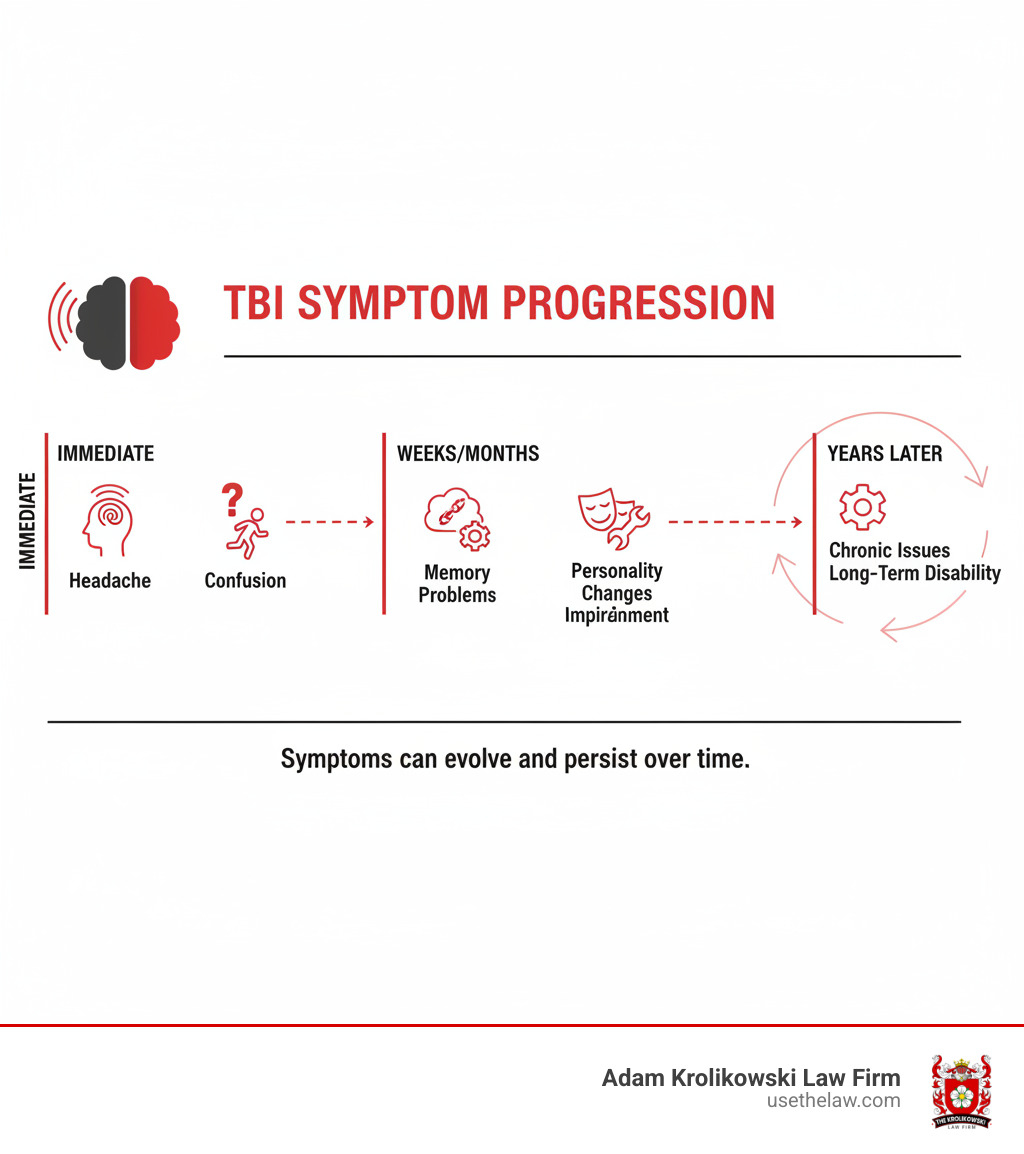
The severity varies. Mild TBIs (concussions) may cause temporary confusion or headaches but can lead to post-concussion syndrome with persistent symptoms. Severe TBIs can cause permanent cognitive impairment, memory loss, and disabilities that prevent independent living, work, or even lead to death. Currently, 5.3 million people live with permanent TBI-related disabilities.
A key legal challenge is that symptoms can appear much later. A person may feel fine after an accident, only to develop serious cognitive or behavioral issues months or years later. This delay can make it difficult to prove the connection to the original incident, highlighting the need for thorough medical documentation in a brain injury lawsuit.
Common Causes of TBIs Leading to Lawsuits
Brain injuries often result from everyday situations where someone acts irresponsibly.
- Car accidents: A leading cause of TBIs, often due to speeding, distracted driving, or DUIs. Learn more about brain injury car accidents.
- Truck accidents: The size and weight of commercial trucks make these collisions particularly dangerous, frequently causing severe head trauma. See our truck accident claim process resource.
- Slip and fall accidents: Occur when property owners fail to maintain safe premises, leading to falls. These fall under premises liability, explained in our premises liability guide.
- Construction sites: Falls, falling objects, and equipment malfunctions can cause devastating head injuries. Learn about your rights in our construction accident section.
- Medical malpractice: Errors during surgery, anesthesia, birth, or a failure to diagnose a TBI can lead to brain damage. We discuss this on our medical malpractice page.
- Workplace incidents: Beyond construction, falls or being struck by machinery can cause TBIs. You may have a workers’ compensation claim, as detailed in our workers’ comp guide.
- Other causes: These include assaults, defective products (like faulty airbags), and sports injuries from reckless conduct.
If someone’s negligence caused your brain injury, you may have grounds for a legal claim. For general guidance, visit our personal injury law firm page.
The Legal Framework for a Brain Injury Lawsuit

You can file a brain injury lawsuit if another party’s carelessness or recklessness caused your injury. A lawsuit holds the responsible party accountable and seeks the compensation you need, especially when insurance companies try to deny or underpay your claim.
Be aware of the statute of limitations, which is a deadline for filing. In California, you generally have two years from the injury date to file a personal injury claim. Missing this deadline can mean losing your right to compensation.
For brain injuries, the findy rule can extend this deadline. Since TBI symptoms can appear months or years later, the clock may start ticking from when you finded (or reasonably should have finded) the injury and its connection to the incident. For example, a slow brain bleed might not cause noticeable symptoms for weeks.
Proving the connection with delayed symptoms is challenging. It requires thorough medical records and testimony from medical professionals. Working with a Personal Injury Lawyer from the beginning helps preserve evidence and build a strong case.
Proving Negligence in Your TBI Case
Winning a brain injury lawsuit requires proving negligence. You must establish four key elements:
- Duty of Care: The defendant had a legal responsibility to act with reasonable care to avoid harming others (e.g., a driver obeying traffic laws).
- Breach of Duty: The defendant failed to meet that responsibility (e.g., a driver was texting and ran a red light).
- Causation: The defendant’s breach directly caused your brain injury, and the injury was a foreseeable result of their actions. This is often the most challenging element in TBI cases.
- Damages: You suffered actual harm, such as medical bills, lost wages, and pain and suffering.
Strong evidence is critical. Key types of evidence include:
- Medical Records: ER visits, diagnostic scans (MRIs, CTs), notes from physician consultations, and rehabilitation progress reports create a paper trail.
- Witness Statements: Testimony from people who saw the accident or have observed changes in your behavior and abilities since the injury.
- Accident Reports: Official reports from police or property managers document the incident.
- Photos and Videos: Visual evidence of the scene, your injuries, or hazardous conditions.
- Professional Testimony: In complex cases, testimony from neurologists, neuropsychologists, vocational counselors, and economists can be crucial to explain the injury, its effects, and your financial losses.
These principles apply to all TBI cases, including car crashes, falls, and medical malpractice. Building a strong case requires attention to detail and an understanding of both medicine and law. With over 25 years of experience, the Adam Krolikowski Law Firm is equipped to handle these complex cases.
Calculating the Full Value of Your TBI Claim

The first settlement offer from an insurance company is almost always too low. Insurers aim to pay less now rather than cover your actual costs over a lifetime.
Calculating the true value of a brain injury lawsuit goes beyond current medical bills. It involves projecting your future needs, lost career opportunities, and diminished quality of life. This requires a team of professionals to understand the full scope of a TBI’s impact.
We work with:
- Medical Professionals: Neurologists and neuropsychologists provide objective testing and assessments to document the full extent of the injury, which is crucial for mild TBIs that may not appear on standard imaging.
- Life Care Planners: For severe TBIs, these planners create a detailed lifetime care plan, projecting costs for medical treatments, therapies, equipment, and daily assistance.
- Vocational Rehabilitation Professionals and Economists: They assess your lost earning capacity, including future wages, benefits, and promotions, and calculate the present value of these financial losses.
The total value also includes non-economic losses like the loss of enjoyment of life. While settlements for mild-to-moderate TBIs often exceed $100,000, severe cases requiring lifetime care can reach millions. For example, a moderate TBI claim could total nearly $3 million when all future costs and losses are properly calculated. This comprehensive approach ensures you fight for the resources you will actually need.
Types of Damages in a Brain Injury Lawsuit
In a brain injury lawsuit, we seek compensation for two categories of damages:
Economic Damages (Calculable Costs):
- Medical Expenses: All past, present, and future medical care, including hospital stays, surgeries, therapy, medication, long-term care, necessary equipment, and home modifications.
- Lost Income and Earning Capacity: Wages you’ve already lost and future income you will lose due to a permanently reduced ability to work.
- Rehabilitation Costs: Programs for cognitive therapy, vocational retraining, and other services to help regain function.
Non-Economic Damages (Intangible Losses):
- Pain and Suffering: Compensation for physical pain and discomfort.
- Emotional Distress: For the psychological impact, such as anxiety, depression, and PTSD.
- Loss of Enjoyment of Life: For the inability to participate in hobbies and activities that once brought joy.
- Loss of Consortium: For the negative impact on your relationship with your spouse.
In cases of extreme recklessness, punitive damages may be awarded to punish the wrongdoer. We work to ensure every category is evaluated to secure the resources you need. Learn more on our Injury Compensation Attorney page.
Navigating the Steps of a Brain Injury Lawsuit

Understanding the steps of a brain injury lawsuit can help you feel more in control. While you focus on recovery, a lawyer can manage the complex legal process on your behalf.
The legal journey typically follows these steps:
- Initial Consultation and Investigation: Your journey begins with a free consultation to discuss your case. If you move forward, we launch a thorough investigation, gathering medical records, accident reports, and witness statements to build a strong foundation for your claim.
- Damage Calculation and Demand: We coordinate with medical and financial professionals to calculate the full value of your claim, including future care and lost income. We then send a detailed demand letter to the at-fault party’s insurance company.
- Negotiation: Insurance companies often make low initial offers. We handle all negotiations, countering their tactics with strong evidence to fight for a fair settlement.
- Filing a Lawsuit: If a fair settlement cannot be reached, we file a formal lawsuit. This begins the findy phase, where both sides exchange information through written questions and depositions (out-of-court testimony under oath). We prepare you for every step.
- Mediation and Trial: Many cases are resolved through mediation, a structured negotiation process with a neutral third party. If mediation is unsuccessful, we are fully prepared to represent you at trial, presenting your case to a judge or jury.
How a Lawyer Can Help with Your Traumatic Brain Injury Lawsuit
The litigation process can take months or even years, as insurance companies may use delays to pressure you into settling for less. Having dedicated legal representation is crucial. We manage the legal burdens—from investigating the accident and calculating damages to negotiating with insurers and representing you in court—so you can focus on your health.
With over 25 years of experience handling complex cases, the Adam Krolikowski Law Firm is ready to guide you through every step of your brain injury lawsuit. Learn more about our approach on our Brain Injury Lawyer page.
Frequently Asked Questions about Brain Injury Lawsuits
We understand that you likely have many questions about pursuing a brain injury lawsuit. Here are answers to some of the most common ones we hear:
How long does a TBI lawsuit take to resolve?
A TBI lawsuit can take several months to several years to resolve. The timeline depends on the case’s complexity, the severity of the injury, and the willingness of the defendant’s insurance company to negotiate fairly. We often advise waiting to settle until your medical prognosis is clear to ensure all future damages are included. Our priority is securing full compensation, even if it requires a longer process.
What if I was partially at fault for the accident?
You can still pursue a brain injury lawsuit even if you were partially at fault. California uses a “pure comparative negligence” rule, meaning your compensation is reduced by your percentage of fault. For example, if you are found 20% at fault for an accident with $1 million in damages, you could still recover $800,000. We work to minimize any fault assigned to you.
Should I accept the first settlement offer for my TBI?
We strongly advise against accepting the first settlement offer. These initial offers are almost always too low and do not account for the full, long-term impact of a TBI. Settling early is risky because:
- The full extent of your injuries and future medical needs may not be known yet.
- Settlements are final; you cannot ask for more money later if your condition worsens.
- Insurers want to settle cheaply and quickly, before you have legal representation.
A proper valuation takes time but is essential for securing compensation that covers your lifetime needs. With legal representation, settlements for TBIs can be significantly higher, often reaching six figures for moderate injuries and millions for severe cases.
Conclusion
A brain injury lawsuit is a complex journey, but securing fair compensation is essential for your recovery and future. These injuries have profound, long-lasting consequences, and the financial burdens can be staggering.
The key is to prove negligence, document all damages, and accurately calculate the lifetime value of your claim. Never accept an early settlement offer from an insurance company, as it will likely fail to cover the true long-term costs of a TBI, leaving you without recourse later.
At Adam Krolikowski Law Firm, we understand these challenges. With over 25 years of experience, we handle complex personal injury, workers’ compensation, and employment law cases that other firms may not. We are dedicated to fighting for the full compensation you need to rebuild your life.
If you or a loved one has suffered a brain injury due to someone else’s negligence, do not face the insurance companies alone. Get help from an Orange County injury lawyer today. Our offices are in Santa Ana, CA, and Los Angeles, CA, and we are ready to assist you.