

Understanding the Truck Accident Claim Process Basics
The truck accident claim process can be overwhelming when you’re dealing with injuries and insurance companies. Unlike car accidents, truck crashes involve complex federal regulations, multiple liable parties, and often catastrophic injuries that require substantial compensation.
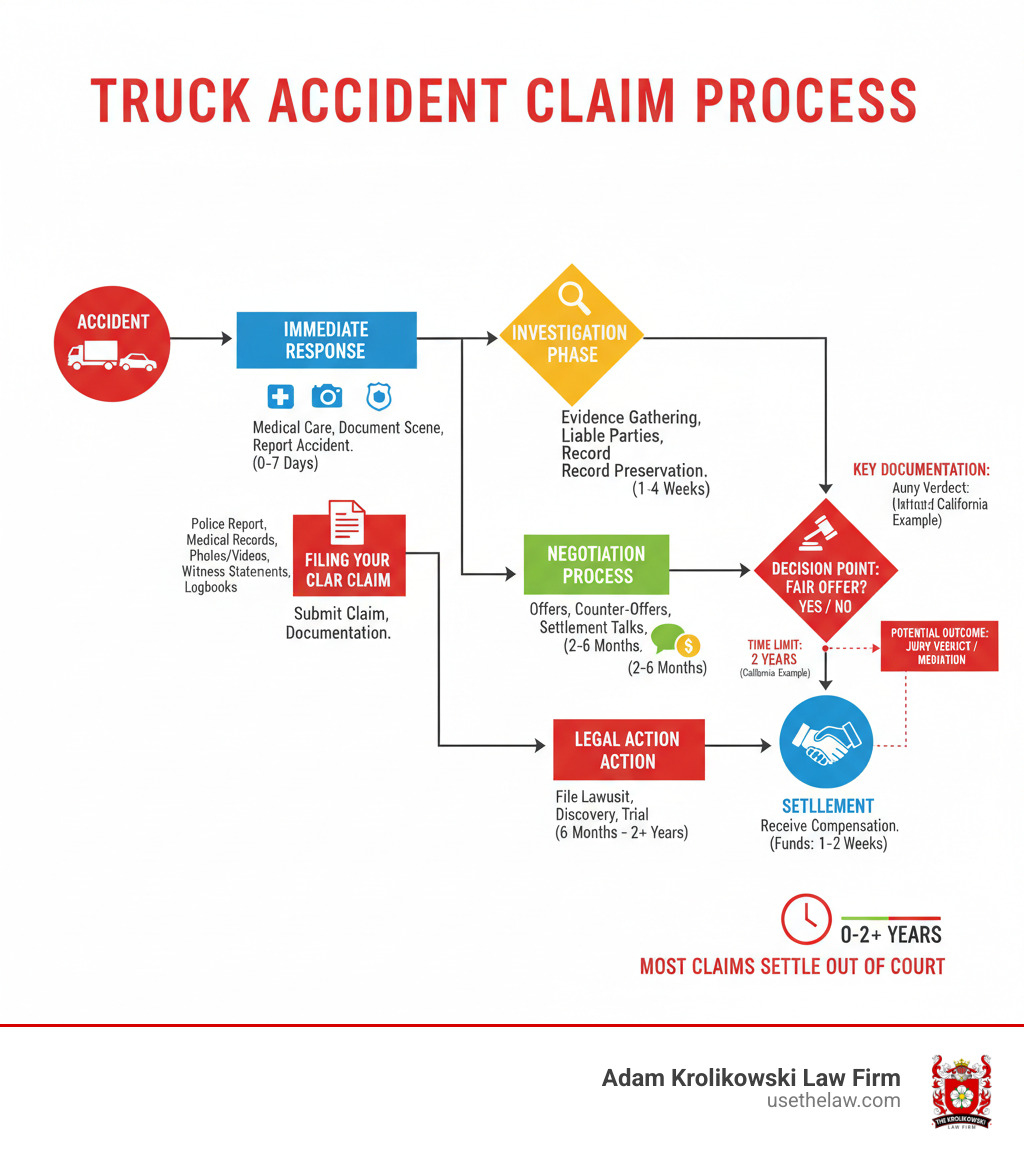
Here’s the essential truck accident claim process breakdown:
- Immediate Response – Seek medical care, document the scene, and report the accident
- Investigation Phase – Gather evidence, identify liable parties, and preserve records
- Filing Your Claim – Submit your insurance claim with supporting documentation
- Negotiation Process – Work with adjusters to reach a fair settlement
- Legal Action – File a lawsuit if negotiations fail
The stakes are higher in these cases. Federal data shows accidents involving large trucks result in about 5,000 fatalities annually, with 96% of deaths in truck-versus-car crashes being occupants of passenger vehicles. These accidents often involve multiple parties—the driver, trucking company, cargo loaders, and manufacturers—making the claims process more complex.
California law gives you two years to file a personal injury lawsuit, but starting your claim immediately is vital to protect crucial evidence. Trucking companies have legal teams working to minimize their liability from day one, so understanding your rights is essential for securing fair compensation.
Most truck accident claims settle without going to court. With proper documentation and legal guidance, you can steer this process and focus on your recovery.
Truck accident claim process word list:
Step 1: Immediate Actions to Take After a Truck Accident
The moments after a truck accident are chaotic, but your actions can make or break your truck accident claim process. The massive size difference between a commercial truck and a passenger vehicle means the aftermath is often overwhelming. Let’s walk through what needs to happen right after the crash.
Safety comes first. If you can, move to a safe location away from traffic. Turn on your hazard lights and set up flares or reflective triangles if you have them.
Call 911 immediately. This is not optional. Police and paramedics must document the scene and check everyone for injuries. Under the Federal Motor Carrier Act, truck drivers are required to stop and exchange information after an accident.
Get medical attention, even if you feel okay. Adrenaline can mask serious injuries for hours or days. Many victims later find they have whiplash, internal bleeding, or other hidden injuries. Getting checked out right away also creates important medical documentation for your claim.
Gathering Crucial Evidence at the Scene
Once everyone is safe, it’s time to gather evidence. What you collect now can be worth thousands of dollars later.

Take extensive photos with your smartphone. From multiple angles, capture vehicle damage, where the vehicles ended up, skid marks, debris, traffic signs, and any visible injuries. More is always better.
Get the truck driver’s information. You’ll need their name, phone number, driver’s license number, and insurance details. Also, write down the trucking company’s name and contact information, including the DOT number on the side of the truck.
Find witnesses before they leave. Get their names and phone numbers. Their unbiased accounts often carry more weight than statements from those involved in the crash.
Document everything about the scene. Note the weather, road conditions, and anything else that might have contributed to the accident, like improperly secured cargo.
Do not admit fault. Resist the urge to apologize. Don’t make statements that could be twisted against you. Be polite, stick to the facts when talking to police, and save detailed discussions for your attorney.
For more detailed strategies on building a strong case, check out our guide on proving liability in truck accidents.
Common Injuries Sustained in Truck Accidents
The physics of truck accidents are brutal, leading to severe and life-changing injuries. This is why truck accident settlements are often much higher than regular car accident claims.
Traumatic brain injuries are common, leading to concussions, memory problems, or permanent cognitive damage. They don’t always show up on initial scans, so ongoing medical monitoring is vital.
Spinal cord injuries can range from painful herniated discs to complete paralysis. Even “minor” back injuries may require surgery and months of physical therapy, while serious ones can mean a lifetime of medical care.
Broken bones are almost expected, especially compound fractures. These injuries often need multiple surgeries and can leave you with permanent disability or chronic pain.
Internal injuries are dangerous because you might not realize you have them. Damage to organs can cause internal bleeding that becomes life-threatening if not caught quickly.
Whiplash and soft tissue injuries might sound minor, but they can cause chronic pain for years. These injuries to muscles and ligaments often don’t show up on X-rays but are no less real.
Psychological trauma is just as real as physical injuries. Many survivors develop PTSD, anxiety, or depression. This emotional damage deserves compensation.
The severity of these injuries is why the truck accident claim process must be handled carefully. Insurance companies know victims face enormous medical bills and will fight hard to minimize what they pay.
Step 2: How Responsibility is Determined in California
Determining who is responsible for a truck accident isn’t always straightforward. Unlike a typical car accident, truck crashes often involve multiple parties who could be held accountable for your injuries and damages.
In California, fault is determined through negligence principles. This means we must prove that someone failed to act with reasonable care and that this failure directly caused your accident. The truck accident claim process is more complex because commercial vehicles are governed by both state traffic laws and federal regulations.
To build a strong case, we must establish four elements: duty of care (the responsible party had a duty to operate safely and follow California traffic laws), breach of duty (they failed that duty), causation (their failure caused your accident), and damages (you suffered real losses).
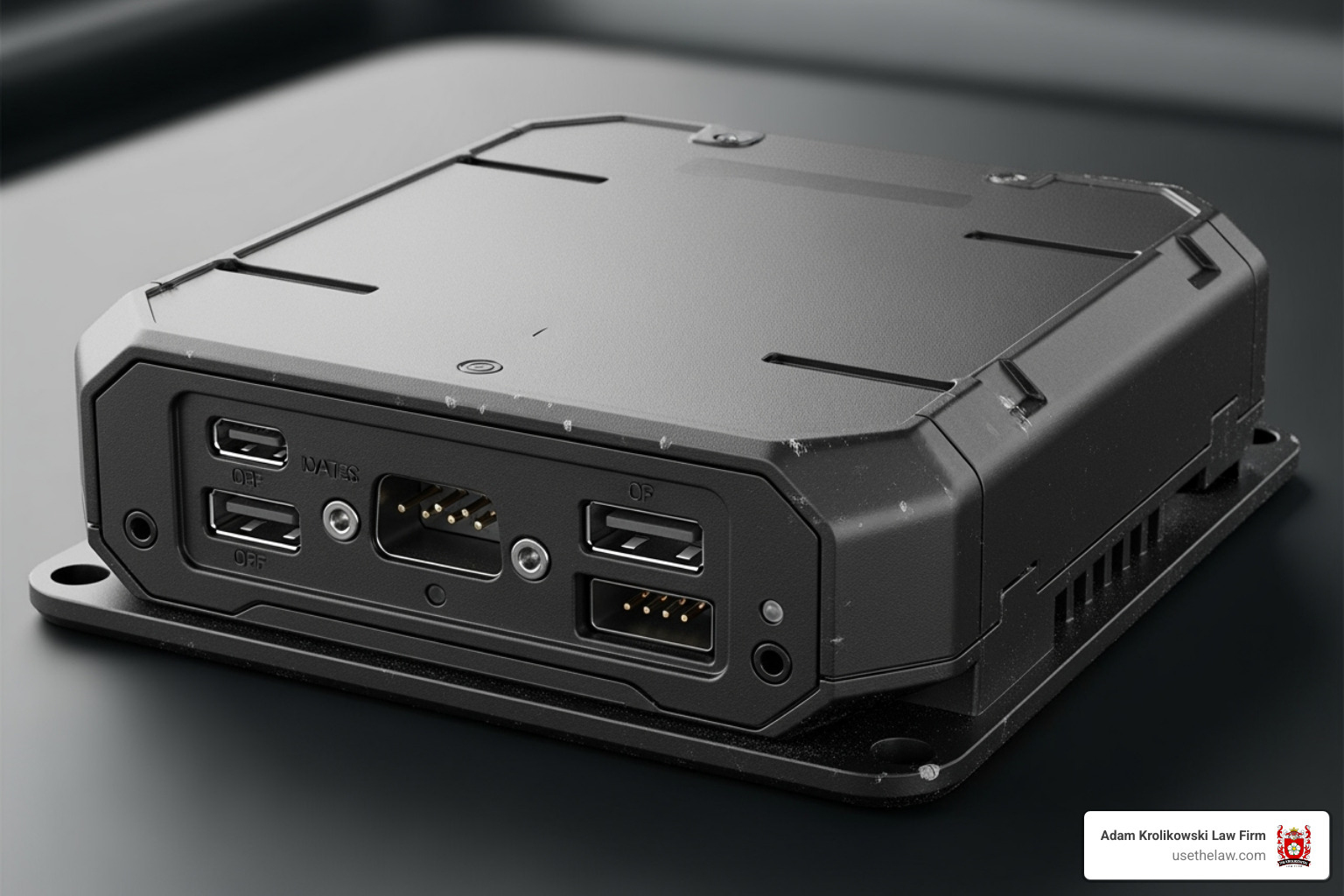
Modern trucks have “black box” data recorders that capture speed, braking, and other crash data. This electronic evidence is often crucial in proving what happened.
Identifying Potentially At-Fault Parties
While your first instinct may be to blame the driver, several parties could share responsibility for your injuries.
The truck driver is often the most obvious defendant for reckless behavior like speeding, distracted driving, or driving under the influence. Driver fatigue is also a common and dangerous issue.
The trucking company frequently bears responsibility. They can be liable for negligent hiring, inadequate training, or pressuring drivers to cut corners on safety. They are also responsible for maintaining their fleet and ensuring drivers follow Federal trucking regulations.
Cargo loading companies can be at fault if improperly secured or overloaded freight causes an accident. If cargo shifts and causes the truck to jackknife or roll over, the loading company may be liable. Our blog post on Cargo loading negligence explores this issue.
Vehicle and parts manufacturers can be held accountable when mechanical failures like brake malfunctions or tire blowouts contribute to accidents.
Maintenance companies that service trucking fleets also face liability if they fail to properly maintain vehicles or miss critical safety issues during inspections.
Common Causes of Truck Accidents
Most truck accidents stem from preventable human errors or corporate negligence.
Driver fatigue is a leading cause. Federal regulations limit driving hours, but delivery pressures can lead to violations. The Drowsy driving risks are well-documented and preventable.
Distracted driving is increasingly problematic. A driver operating an 80,000-pound vehicle looking at a phone or GPS can have catastrophic consequences.
Speeding and aggressive driving often result from unrealistic delivery schedules. Drivers may drive too fast for conditions or make unsafe lane changes.
Poor vehicle maintenance is another common factor. Some companies cut corners on safety to save money, leading to brake failures or tire blowouts.
Improperly secured cargo can shift during transport, causing the truck to become unstable, especially on curves or during emergency maneuvers.
Substance abuse occurs despite strict regulations. Drivers under the influence of alcohol or drugs pose an extreme danger.
Most of these causes represent clear violations of safety regulations, making it easier to prove negligence in your truck accident claim process and hold multiple parties accountable.
Step 3: The California Truck Accident Claim Process Explained
After you’ve gathered initial evidence, the formal truck accident claim process shifts into a more structured phase where legal representation makes a significant difference.
This phase involves methodically building your case from the ground up, requiring an understanding of both California law and complex federal trucking regulations. You don’t have to steer this alone.
The Investigation and Demand Phase of the Truck Accident Claim Process
This is where we dig deep to gather every piece of evidence that supports your case.
Our investigation goes far beyond the police report. We review accident reconstruction reports, interview witnesses, and subpoena critical records from the trucking company. These records—including driver logs, maintenance files, drug test results, and “black box” data—tell the real story.
We may bring in accident reconstruction professionals to piece together what went wrong and analyze Federal Motor Carrier Safety Administration regulations to identify violations.
Meanwhile, we collect all documents related to your damages. This includes medical records and bills, employment records to prove lost wages, property damage estimates, and out-of-pocket expenses.
Calculating your damages involves assessing both current medical bills and future needs, like ongoing therapy or surgery. We may work with financial professionals to ensure we account for all your losses.
Once we have a complete picture, we draft a detailed demand letter. This comprehensive document presents the evidence, explains your injuries and their impact, and makes a compelling case for the compensation you deserve.
Here are the key documents you should keep and provide to us:
- Police report and any accident reconstruction reports
- All medical records and bills related to your injuries
- Lost wage statements and employment records
- Photos and videos from the accident scene
- Contact information for any witnesses
- Details about the truck and trucking company, including DOT numbers
- Your insurance policy information
- Any letters or calls from insurance companies
The Negotiation and Settlement Phase of the Truck Accident Claim Process
After we submit the demand package, the insurance adjuster begins their review. This is where the truck accident claim process becomes a strategic negotiation, as trucking companies have experienced legal teams working to minimize payouts.
The first settlement offer is almost always too low. Insurers know many people are struggling financially and hope you’ll accept a quick payout. These initial offers rarely reflect the true value of your claim.
Our negotiation experience is invaluable here. We respond with counter-offers backed by solid evidence and legal arguments, understanding both the immediate and long-term implications of your injuries.
If negotiations stall, we might suggest mediation or other forms of alternative dispute resolution. A neutral third party helps both sides work toward a compromise, often breaking through impasses.
If a fair settlement still can’t be reached, we are prepared to file a personal injury lawsuit. Filing a suit sends a clear message that we are serious about fighting for your rights and won’t accept an inadequate offer.

Throughout this process, we handle all communication with insurance companies. Your job is to focus on healing while we work to secure the compensation you need to rebuild your life.
Step 4: Recoverable Damages and Key Deadlines
Understanding what compensation you can pursue and the critical deadlines you face is essential for the truck accident claim process. Your case’s value depends on many factors, including the severity of your injuries, insurance policy limits, and California’s comparative negligence rule.
Types of Damages You Can Recover
We fight for compensation that covers every way the accident has impacted your life. These damages fall into two main categories.
Economic damages represent your financial losses. Your medical bills, both current and future, often make up the largest portion. This includes everything from emergency room visits to long-term care.
We also pursue lost wages for missed income and loss of earning capacity if your injuries prevent you from returning to your previous job. Property damage covers your vehicle, while out-of-pocket expenses include costs like transportation to medical appointments or home modifications.
Non-economic damages address the personal toll on your quality of life. Pain and suffering compensates for the physical discomfort you’ve endured. Emotional distress covers anxiety, depression, and PTSD.
Loss of enjoyment of life damages address the inability to participate in hobbies and activities you once enjoyed. In some cases, a spouse can claim loss of consortium for the negative impact on their relationship.
When a trucking company or driver shows extreme recklessness, punitive damages may be available to punish the wrongdoer. We also explore Pursuing compensation beyond insurance limits when damages exceed available coverage.
California’s Statute of Limitations and Claim Timelines
Time is not on your side. California gives you two years from the date of the accident to file a personal injury lawsuit. If you miss this deadline, you could lose your right to compensation forever. For more on this, read our guide on What is the Statute of Limitations for Truck Accident Claims in California?
The typical settlement timeline varies. Simple cases might resolve in months, while complex cases with severe injuries can take years.
Your truck accident claim process timeline generally starts with investigation, followed by your medical treatment period. We typically wait until you’ve mostly recovered before demanding a settlement to know the full extent of your damages.
Negotiations can take weeks or months. If a lawsuit is necessary, the process can extend for a year or more.
Delays can be caused by complex cases with multiple parties, disputed liability, or severe injuries that require long-term assessment. Insurance companies also use delay tactics, hoping you’ll accept less. That’s why having legal representation from the start is so important.
Under California’s comparative negligence rule, your compensation is reduced by your percentage of fault. Our job is to minimize any fault attributed to you and maximize your recovery.
Why You Shouldn’t Steer a Truck Accident Claim Alone
Trying to handle the truck accident claim process on your own is incredibly risky. The reality is far more complicated and dangerous than it appears.
You are immediately up against complex trucking laws, including federal regulations from the Federal Motor Carrier Safety Administration governing driver hours, cargo security, and more. Understanding these intricate rules is crucial for proving negligence and is not something you can master with a quick online search.
Trucking companies have deep pockets and teams of attorneys who begin building a defense the moment an accident occurs. While you’re dealing with injuries, they are already collecting evidence to use against you. They fight every claim aggressively.

Insurance company tactics are designed to save their company money. Adjusters are trained to get you to accept a lowball offer or make statements that could hurt your case. They may sound helpful, but they do not work for you.
A huge mistake is settling too quickly without understanding how to calculate long-term damages. A back injury might require surgery in two years, or you may be unable to return to your job. Without a proper evaluation, you could leave hundreds of thousands of dollars on the table.
The importance of legal representation is clear: studies show that clients with lawyers receive significantly higher settlements. We understand California truck accident law, know how to preserve crucial evidence, and have the resources to take on well-funded trucking companies.
At Adam Krolikowski Law Firm, we have over 25 years of experience handling complex cases. We level the playing field against corporate giants and their insurers. While you focus on healing, we handle everything else.
Don’t let a trucking company’s legal team intimidate you into accepting less than you deserve. Learn more about how we can help as your California Truck Accident Attorney.
Conclusion
The truck accident claim process is challenging, but understanding each step gives you the confidence to protect your rights and pursue the compensation you deserve.
We’ve covered the essential roadmap: from the crucial first moments after an accident, to determining responsibility, through the investigation and negotiation phases, and finally, to understanding the damages you can recover and the deadlines that protect you.
Knowledge is power. When you understand how trucking companies and their insurers operate, you become an informed participant in your own recovery.
Truck accidents impact your health, your ability to work, and your quality of life. Protecting your financial future is about ensuring you have the resources for long-term recovery, not just paying immediate medical bills.
At Adam Krolikowski Law Firm, we have spent over 25 years helping accident victims in Orange County and Los Angeles steer these challenging cases. We shoulder the legal burden so you can focus on getting better.
The clock starts ticking the moment your accident happens. California’s two-year statute of limitations is strict, and the trucking company’s insurance team is already working to protect their interests.
Don’t let another day pass wondering about your options. We’re here to listen to your story, answer your questions, and provide the clear, compassionate guidance you need.
Contact an Orange County truck accident lawyer for a consultation today. Taking this important step can make all the difference for your future.
