

Why Understanding Your Legal Options After an Accident Matters
Accident victim legal help connects injured individuals with the resources and legal representation needed to recover compensation for medical bills, lost wages, and other damages. Whether you’re navigating insurance claims or considering a lawsuit, understanding your options is the first critical step toward recovery.
If you need immediate help, consider these options:
- Emergency victim services: Call your local victim services hotline for support.
- Free legal consultations: Contact Legal Aid Foundation of Los Angeles (LAFLA) at 800-399-4529 or state bar association lawyer referral services.
- Insurance claims: Report the accident to your insurance company promptly.
- Medical attention: Seek immediate treatment to document your injuries.
- Legal representation: For serious injuries, consult a personal injury attorney who works on contingency.
The aftermath of an accident brings overwhelming challenges. Many victims don’t realize they have legal rights to compensation beyond basic insurance coverage. This guide breaks down the legal help available, explaining your rights, how to steer insurance, and when to hire a lawyer.
The Canadian Victims Bill of Rights defines victims broadly, and in at-fault states like California, you have the right to pursue compensation from those responsible for your injuries. Understanding these rights can mean the difference between financial hardship and stability during your recovery.
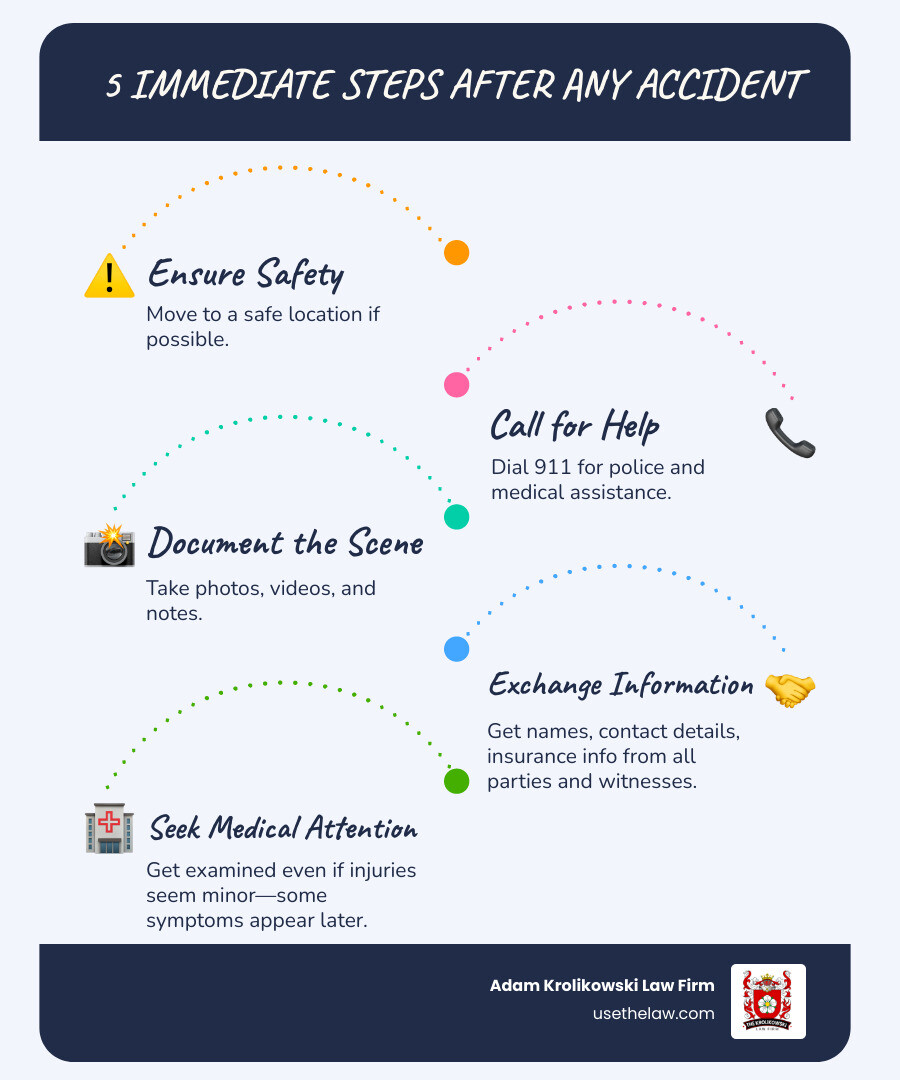
5 Immediate Steps After Any Accident: 1. Ensure Safety (move to a safe location if possible), 2. Call for Help (dial 911 for police and medical assistance), 3. Document the Scene (take photos, videos, and notes), 4. Exchange Information (get names, contact details, insurance info from all parties and witnesses), 5. Seek Medical Attention (get examined even if injuries seem minor—some symptoms appear later)
Similar topics to Accident victim legal help:
Understanding Your Fundamental Rights and Available Benefits
If you’ve been hurt in a car crash, slip and fall, or workplace incident, you have fundamental rights that protect your ability to seek justice. Accident victim legal help is not just for victims of crime.
These rights ensure you have access to information, protection from intimidation, and the opportunity to seek restitution for your losses. In an “at-fault” state like California, the law allows you to pursue compensation directly from the person who caused the accident and their insurance company.
For more information on victim rights, you can visit Canada’s resources for victims of crime, which outlines similar protections. The types of benefits available generally fall into these categories:
- Medical benefits: Covers all treatment related to the accident, from emergency care to physical therapy and future medical costs.
- Disability benefits and income replacement: Replaces a portion of lost wages while you recover. If you cannot return to work, you may be entitled to compensation for lost earning capacity.
- Death benefits: Provides financial support to surviving family members to cover funeral expenses and the loss of financial support from the deceased.
What Types of Compensation Can You Claim?
Compensation, or “damages,” covers the losses you’ve suffered.
- Economic damages: These are direct financial losses with receipts, such as medical bills, lost wages, diminished earning capacity, and property damage.
- Non-economic damages: These compensate for non-monetary losses, including pain and suffering (physical discomfort), emotional distress (anxiety, depression), and loss of enjoyment of life (inability to pursue hobbies or activities).
- Punitive damages: Awarded in rare cases to punish a wrongdoer for particularly reckless or intentional behavior, such as a drunk driver with multiple DUIs.
For a comprehensive look, see our complete guide to injury compensation claims.
Where to Find Initial Support and Information
You don’t have to figure this out alone. Several resources can help:
- Victim services directories: Many California counties have representatives who can guide you through your options.
- Police departments: Can provide your accident report and information on victim support services.
- Non-profit advocacy groups: Offer emotional support and practical guidance.
- The RECOVER Program™: A free consumer advocacy organization that helps accident victims understand their rights and find available benefits.
- Legal Aid Foundation of Los Angeles (LAFLA): Offers free legal information and assistance to qualifying individuals. You can reach them at 800-399-4529.
- Community legal clinics: Provide free or low-cost consultations.
- Emotional support services: Counseling and support groups can help with the psychological impact of an accident.
- Financial counseling: Non-profit agencies can help you manage debt and financial challenges during your recovery.
Navigating Insurance Systems: At-Fault vs. No-Fault
Understanding insurance is key when seeking accident victim legal help. The rules depend on whether you are in an “at-fault” or “no-fault” state.
California is an at-fault state, meaning the person who caused the accident is financially responsible for the damages. You file a claim against the at-fault driver’s insurance. In “no-fault” states, your own insurance pays for your initial medical expenses and lost wages, but your right to sue for pain and suffering is often limited unless injuries are severe. California does not have these restrictions.
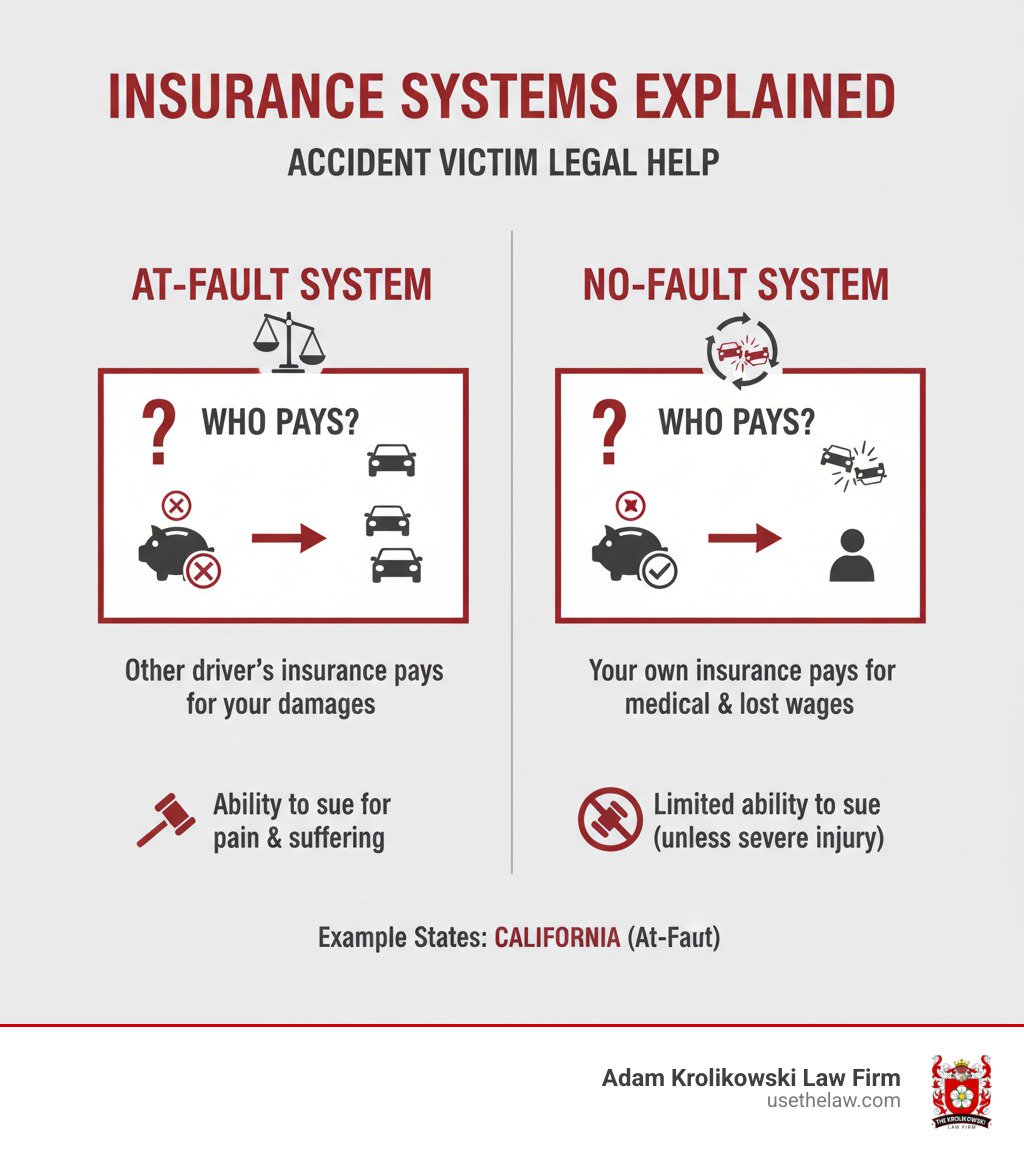
At-Fault vs. No-Fault Insurance Systems
| Feature | At-Fault System (e.g., California) | No-Fault System (e.g., some other states) |
|---|---|---|
| Who Pays? | At-fault driver’s insurance pays for the other party’s damages. | Your own insurance pays for your medical bills and lost wages, regardless of fault. |
| Right to Sue for Damages | Generally, you can sue the at-fault driver for all damages, including pain and suffering. | Limited right to sue, usually only if injuries meet a severe threshold. |
| Typical Required Coverage | Bodily Injury Liability, Property Damage Liability, Uninsured Motorist, Medical Payments. | Personal Injury Protection (PIP), plus liability coverage. |
For more details, see our Information on auto accident injury claims.
In California, Uninsured/Underinsured Motorist (UM/UIM) coverage is crucial. It protects you if the at-fault driver has no insurance or not enough to cover your damages. Medical Payments (MedPay) coverage is also helpful, as it pays for your medical expenses regardless of fault, providing immediate funds for treatment.
Key Steps to Take After a Car Accident in an At-Fault State
Your actions after an accident in California can significantly impact your claim.
- Report the accident to police: A police report creates an official record of the incident.
- Report the claim to your insurer: Notify your insurance company within 24-48 hours, even if you weren’t at fault.
- Document everything: Take photos and videos of the scene, vehicles, and injuries. Collect contact and insurance information from all parties and witnesses.
- Do not admit fault: Avoid making statements like “I’m sorry,” as they can be used against you.
- Seek medical care immediately: This creates a record linking your injuries to the accident.
- Keep all receipts: Document all accident-related expenses, including medical bills and lost wages.
- Understand the claims process: The process can be complex. We guide clients through each step.
For a local guide, see our Car Accident Lawyer Guide Santa Ana 2025.
What to Do if Your Insurance Claim is Denied
A denial is not the end of the road. Accident victim legal help is especially valuable here.
- Review the denial letter: Understand the specific reasons for the denial.
- Gather more evidence: Collect additional medical reports, witness statements, or other documentation to strengthen your case.
- Write a formal appeal letter: Address each point of the denial with supporting evidence and legal arguments.
- Escalate within the insurance company: If the appeal fails, take the matter to a supervisor or internal review board.
- Consider Alternative Dispute Resolution (ADR): Mediation uses a neutral third party to help negotiate a settlement.
- File a lawsuit: If other methods fail, filing a lawsuit shows you are serious about pursuing your rights.
Navigating a denied claim requires a thorough understanding of insurance law. Our firm provides Legal representation for personal injury to help you fight for a fair outcome.
A Step-by-Step Guide to Getting Accident Victim Legal Help
There comes a moment when you realize you need professional legal help, perhaps after receiving a low settlement offer or realizing your injuries are severe. Understanding when to reach out can make the process less daunting.

Consider seeking accident victim legal help in these situations:
- Serious injuries: Broken bones, head trauma, or any injury requiring surgery or long-term care.
- Disputed fault: The other party’s insurer claims you were at fault.
- Unfair settlement offers: The initial offer doesn’t cover your current and future damages.
- Complex cases: Accidents involving commercial trucks, rideshare vehicles, or government entities.
- Feeling confused or overwhelmed: You need an advocate to explain your rights and handle communications.
To find a lawyer, you can use the State Bar of California’s lawyer referral services. Most personal injury firms, including ours, offer free consultations and work on a contingency fee agreement. This means you pay no upfront legal fees; our fee is a percentage of the compensation we recover for you. If we don’t win, you don’t pay our fee. This ensures everyone has access to legal representation.
For more local guidance, see our Personal Injury Attorney in Santa Ana Guide.
What Does Accident Victim Legal Help Entail?
When you work with us, you get a dedicated advocate to handle the entire legal process. This includes:
- Case evaluation: We review the facts and assess the legal strength of your claim.
- Accident investigation: We conduct our own investigation, gathering evidence like surveillance footage and consulting experts.
- Evidence collection: We gather medical records, document lost wages, and collect witness statements. Learn more about The role of witnesses in personal injury cases.
- Communication with insurers: We handle all calls and correspondence with insurance adjusters.
- Calculating total damages: We assess all economic and non-economic damages, including future costs.
- Negotiation: We advocate for a settlement that reflects the full extent of your losses.
- Filing a lawsuit and litigation: If a fair settlement isn’t reached, we are prepared to take your case to court.
For more on this topic, explore Understanding liability in personal injury cases.
How to Prepare for Your First Meeting for Accident Victim Legal Help
Coming prepared to your first consultation helps us assess your case more accurately.
Essential Documents to Bring: Police Report, Photos/Videos of the Scene, Medical Records and Bills, Insurance Policy Information, Contact Information for all Parties/Witnesses, Proof of Lost Wages.
Before your meeting, try to organize your documents, write down your account of the accident while it’s fresh, and prepare a list of questions you want to ask. Be honest and detailed with us. Everything you share is confidential, and we need all the information—even details that seem minor—to build the strongest possible case.
Handling Complex Cases and Specific Accident Types
Not all accidents are straightforward. Some involve multiple parties, severe injuries, or unique legal challenges that require a deeper level of insight, an area known as Complex Injury Litigation.

We understand that when an accident leads to long-term consequences, the legal approach must be just as comprehensive. This includes cases involving:
- Catastrophic Injuries: Injuries resulting in permanent disability or long-term medical care.
- Workers’ Compensation Overlap: When a third party is at fault for a work-related injury, you may have both a workers’ comp and a personal injury claim.
- Third-Party Claims: Claims against an entity other than an employer or the other driver, such as a parts manufacturer or negligent property owner.
- Product Liability: Injuries caused by a defective product.
- Government Entity Claims: Accidents involving government property or employees, which have strict, shorter deadlines.
For example, a construction site injury might involve a workers’ comp claim and a third-party claim against a negligent subcontractor. Our Construction Accident Lawyer Santa Ana California insights can clarify such situations.
Specialized Support for Severe Injuries
Life-altering injuries demand focused legal support to secure compensation for extensive medical care and long-term financial needs. We provide help for victims of:
- Traumatic Brain Injury (TBI): We work with neurologists and life-care planners to assess the long-term cognitive, emotional, and physical impacts. See our Head Trauma Injury Attorney resources for more.
- Spinal Cord Injuries: These can cause paralysis and require lifelong care, which must be factored into the claim.
- Amputations: Compensation must account for prosthetics, rehabilitation, and psychological impact.
- Burn Injuries: Severe burns often require multiple surgeries and long-term pain management.
For these injuries, claims must account for long-term care, vocational rehabilitation, and other support services.
Legal Help for Different Types of Accidents
Our firm provides accident victim legal help across a wide range of incidents:
- Car Accidents: Handling cases involving distracted driving, DUIs, speeding, and other negligence.
- Truck Accidents: Complex cases involving federal regulations and severe injuries. See our Orange County Truck Accident Lawyer page.
- Motorcycle Accidents: Representing vulnerable riders who have suffered serious injuries.
- Pedestrian Accidents: Advocating for pedestrians hit by vehicles who often face extensive medical needs.
- Rideshare (Uber/Lyft) Accidents: Navigating the layered insurance policies of drivers and rideshare companies. Learn more about a Car Accident While Riding in Uber.
- Slip and Fall (Premises Liability): Holding property owners accountable for unsafe conditions.
Frequently Asked Questions
When considering accident victim legal help, it’s natural to have questions. Here are answers to some common inquiries.
How much does it cost to hire an accident lawyer?
Our firm, like most personal injury practices, operates on a contingency fee basis. This means:
- No Upfront Fees: You pay nothing out of pocket to start your case.
- “No Win, No Fee”: We are paid a percentage of the settlement or award we secure for you. If we don’t win your case, you generally owe no legal fee.
- Costs vs. Fees: Case costs (e.g., filing fees, expert witness fees) are separate from our fee and are typically reimbursed from the settlement. We discuss this transparently during your free consultation.
This structure makes legal representation accessible to all accident victims.
What if the at-fault party is uninsured or it was a hit-and-run?
This is a distressing situation, but you still have options for accident victim legal help.
- Your Own UM/UIM Coverage: If you have Uninsured/Underinsured Motorist (UM/UIM) coverage on your auto policy, you can file a claim with your own insurer. This is designed for these exact scenarios and can cover medical bills, lost wages, and pain and suffering.
- State Victim Compensation Funds: For criminal acts like a DUI or a hit-and-run where the driver is charged, the California Victim Compensation Board (CalVCB) may help cover some out-of-pocket expenses like medical treatment and lost wages.
- Suing the Driver Personally: While you can sue an uninsured driver, collecting a judgment can be difficult if they lack assets.
We can help explore every possible avenue for your recovery.
How long do I have to file a claim after an accident?
The time limit to file a lawsuit is called the statute of limitations, and missing it can bar your claim.
- California’s Two-Year Rule: For most personal injury claims in California, you have two years from the date of the injury to file a lawsuit.
- Key Exceptions: The deadline is much shorter for claims against a government entity (often just six months). The clock may be paused for minors until they turn 18. In some cases where an injury isn’t immediately finded, the clock starts when the injury was found (or should have been found).
- Act Quickly: It is crucial not to wait. Evidence disappears and witnesses’ memories fade. Contacting an attorney as soon as possible allows them to preserve evidence and protect your rights.
We advise contacting us promptly to ensure all deadlines are met.
Conclusion: Taking the First Step Towards Recovery
The aftermath of an accident is overwhelming, but you don’t have to face it alone. Accident victim legal help exists for moments like these.
This guide has covered your fundamental rights, the types of compensation available, and the importance of taking prompt action after an accident in California. You’ve learned when to seek legal representation and what that process entails. Knowledge is power, but action is what transforms that knowledge into results.
If you or a loved one has been injured, we encourage you to reach out. Our firm offers free, no-obligation consultations to provide clarity and help you understand the path forward.
With over 25 years of experience representing accident victims in Orange County and Los Angeles, our firm is prepared to handle the complex cases that require thorough investigation and persistence. We understand that certain injuries, like traumatic brain injuries, have devastating, lifelong consequences that demand comprehensive legal representation.
Your recovery journey begins with a single step. Taking action today protects your future. Let us help you secure the justice and compensation you deserve.
Contact Us
Practice Areas
Recent Articles
- « Previous
- 1
- 2
- 3
- Next »