

Understanding the Landscape of Complex Injury Litigation
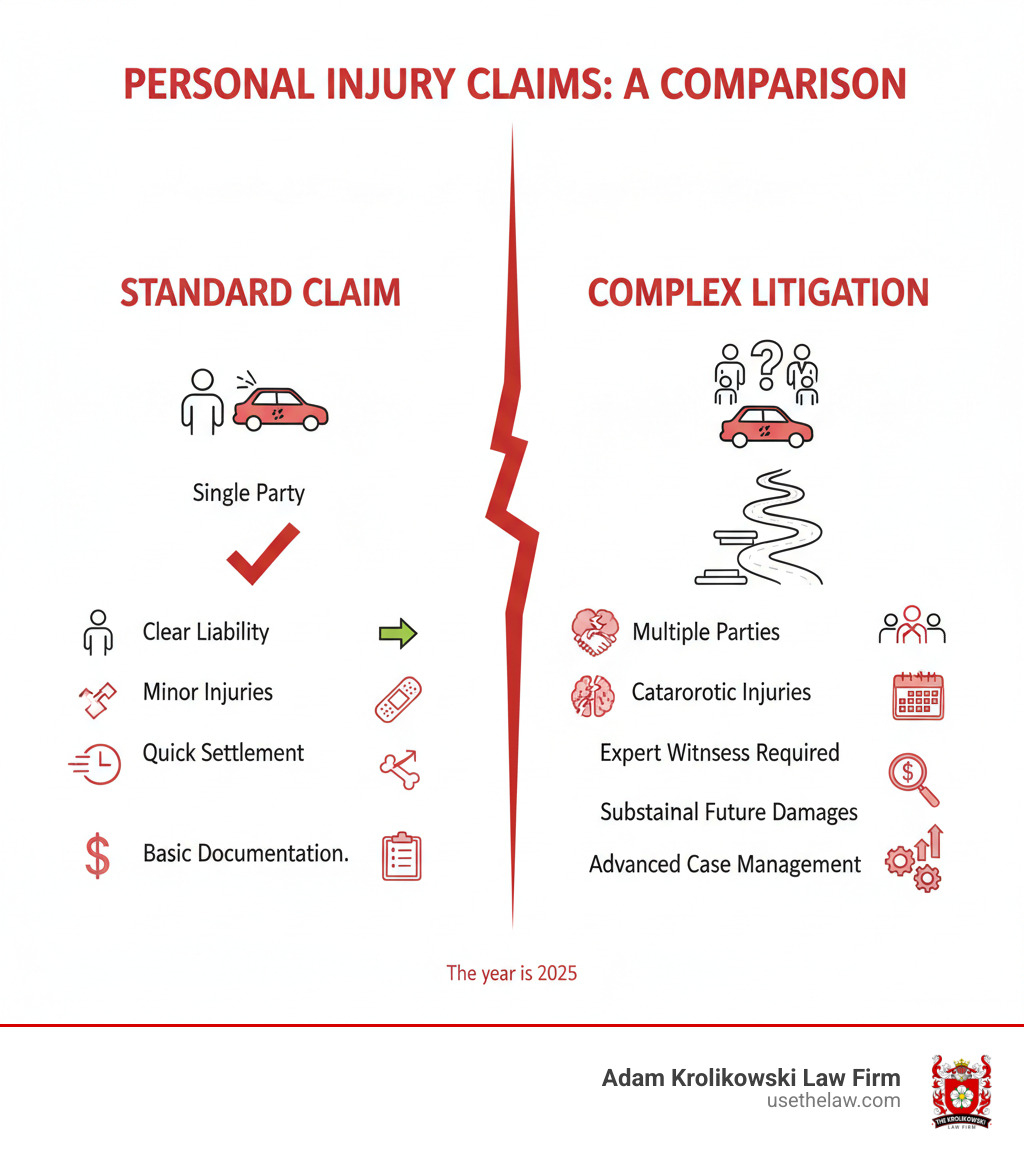
Complex injury litigation involves personal injury cases that are far from straightforward, often including severe injuries, multiple parties, disputed liability, or significant long-term damages that require dedicated legal handling.
Key characteristics of these cases include:
- Catastrophic injuries requiring lifelong care (e.g., spinal cord or traumatic brain injuries).
- Multiple defendants or disputed fault.
- Substantial financial damages, including future medical costs and lost earning capacity.
- The need for testimony from medical, economic, and financial professionals.
- Extended timelines for investigation and findy.
- Higher stakes, with potential awards in the millions.
An attorney at a recent conference noted the harsh reality of delays: “My clients don’t understand this [delay] – especially the 10% that go bankrupt as a result of the litigation.”
In California, many of the over 200,000 injury-causing car accidents in 2023 became complex cases due to permanent disabilities and disputed claims. Unlike a simple fender-bender, these cases demand extensive investigation, coordination with medical professionals, and detailed financial analysis. They can involve multi-vehicle collisions, medical malpractice, defective products, or catastrophic workplace accidents.
The legal process has multiple stages, from evidence gathering and filing a complaint to findy, negotiations, and a potential trial. Adhering to deadlines like California’s statute of limitations is critical. For anyone recovering from severe injuries, understanding this process is a key step toward securing fair compensation.
Important complex injury litigation terms:
- construction accident lawyer
- santa ana trucking accidents attorney
- Santa Ana DUI accident lawyer
What Lifts a Personal Injury Case to ‘Complex’?
Not all personal injury cases are the same. While some are simple, complex injury litigation arises when a case involves life-altering harm, contested liability, or damages that must be projected decades into the future. These cases are fundamentally different and require a more intensive approach.
For example, a traumatic brain injury from a multi-vehicle truck accident involves multiple defendants (driver, trucking company, manufacturer), disputed facts, and the need to calculate medical costs for the next 40 years. If the injury prevents a business owner from working, quantifying those losses adds another layer of financial analysis.
Defining Factors of Complexity
Several factors can lift a personal injury claim to complex injury litigation:
- Multiple at-fault parties: A construction site accident might involve the general contractor, a subcontractor, and a manufacturer. Each party brings its own legal team, complicating the process.
- Disputed facts or liability: When responsibility is not clear, proving fault becomes a battle requiring extensive investigation and accident reconstruction.
- Catastrophic injuries requiring lifelong care: Spinal cord injuries, severe burns, or traumatic brain injuries that alter cognitive function demand detailed medical evaluations and long-term financial projections. Handling Catastrophic Injuries: Long-Term Support from a Santa Ana Lawyer is essential in these situations.
- Substantial future damages calculations: This goes beyond current hospital bills to include future treatments, lost income, home modifications, and daily care. This requires economists and life care planners to build an accurate financial picture.
- Cases crossing state or national borders: Jurisdictional issues can arise, creating legal problems regarding which state’s laws apply.
Common Types of Complex Injury Cases
Certain case types are almost always complex:
- Catastrophic Injuries: Injuries resulting in permanent disability that fundamentally alter a person’s life.
- Traumatic Brain Injuries (TBI): These injuries can have profound, lasting effects that may not be immediately apparent, requiring testimony from neurologists and neuropsychologists.
- A Spinal Cord Injury Claim can result in paralysis, with financial needs reaching into the millions.
- Multi-Vehicle Accidents complicate liability, often leading to finger-pointing among multiple insurance companies.
- Surgical Errors and other malpractice cases require proving a deviation from the standard of care, which is a high bar.
- Defective Products cases may involve going up against large corporations to trace fault through a supply chain.
- Construction Site Injury Claims typically involve multiple parties and complex safety regulations.
Special Focus: Catastrophic Injuries
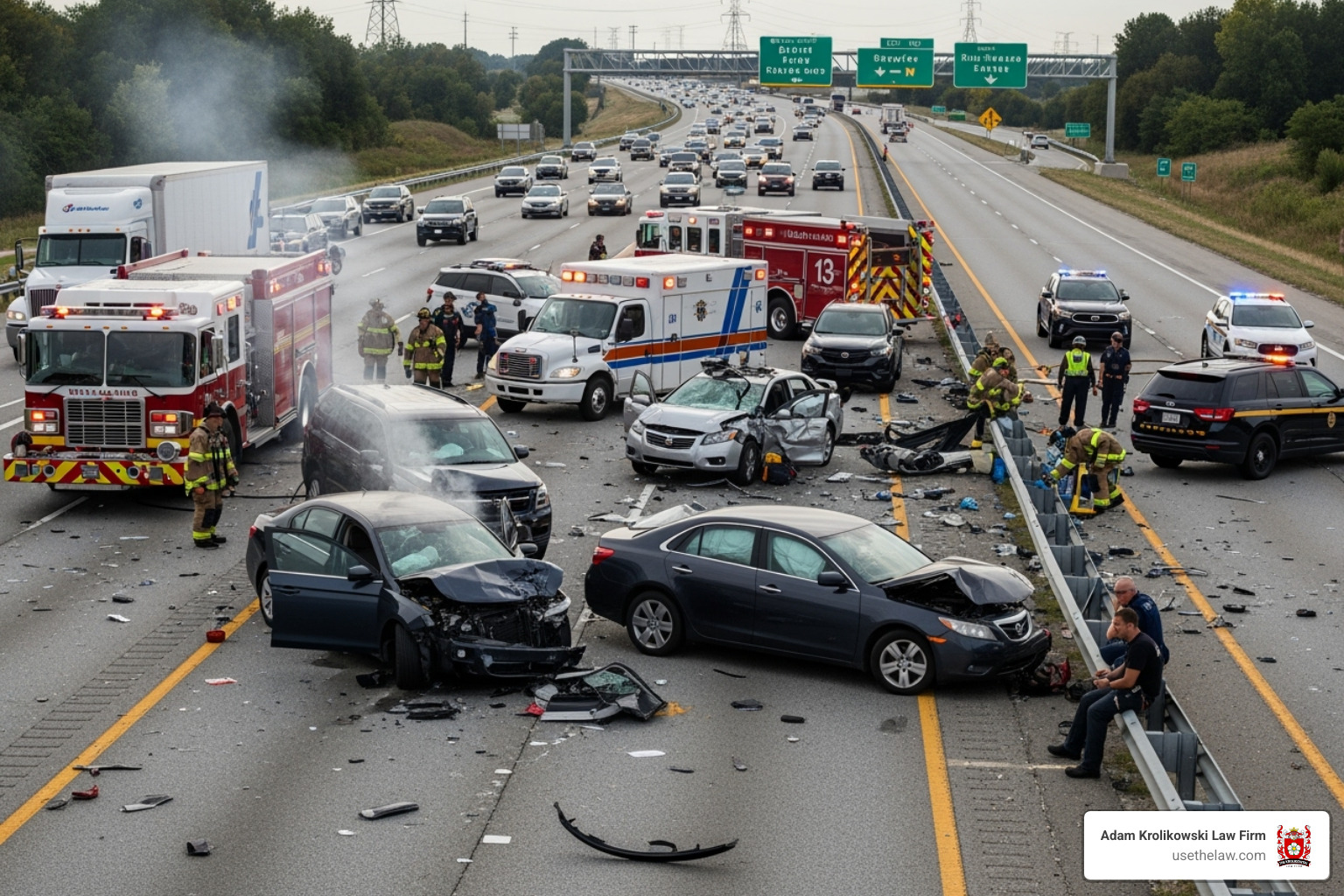
Catastrophic injuries are the most serious area of complex injury litigation. They are life-altering events that result in permanent disability, such as paralysis, amputation, severe burns, or loss of vision.
The legal stakes are higher because compensation must cover a lifetime of needs. In some jurisdictions, a catastrophic impairment designation can open up higher benefit limits, but insurance companies fight these designations aggressively. Proving this level of impairment often requires meeting specific medical thresholds, such as a Whole Person Impairment (WPI) rating of 55% or greater.
Future care planning is paramount. The litigation must account for what a victim will need for decades to come. This is why these cases often result in multi-million dollar settlements or verdicts—the numbers reflect the genuine, long-term cost of care. At Adam Krolikowski Law Firm, we understand that these cases demand meticulous preparation and the willingness to fight for the comprehensive compensation our clients will need.
Navigating the Stages of Complex Injury Litigation
The journey through complex injury litigation is a marathon, not a sprint. It involves multiple stages, and understanding them can help you feel more prepared.
The Critical First Steps: Investigation and Filing
Before a lawsuit is filed, we conduct a thorough investigation. This involves:
- Collecting medical reports, police reports, and photos.
- Tracking down witness statements and conducting interviews.
- Working with accident reconstructionists to recreate how the incident unfolded, which often reveals critical details.
Once we have a solid foundation, we file a formal complaint to officially start the lawsuit. Timing is critical. The California Statute of Limitations for Car Accident Claims sets strict deadlines. Missing them could mean losing your right to seek compensation entirely.
The Findy Process: Uncovering the Facts
“Findy” is the stage where both sides exchange information. In complex injury litigation, this phase is often the longest but is crucial for building a strong claim. It includes:
- Document exchange: A massive amount of paperwork, including medical records, financial statements, and emails, is requested and provided.
- Depositions: Parties and witnesses give sworn testimony outside of court. This locks in stories and clarifies issues before a potential trial.
- Interrogatories: Written questions are exchanged that must be answered under oath.
We use case management technology to organize thousands of documents and ensure nothing is missed. This process also highlights The Role of Witnesses in Personal Injury Cases.
Towards Resolution: Negotiation, Mediation, and Trial
After findy, we focus on resolving your case.
- Settlement negotiations with insurers intensify once all evidence is gathered. We present the full extent of your injuries and what fair compensation entails.
- Mediation is often used. A neutral third party helps both sides work toward a settlement in a less adversarial setting.
- If a fair outcome isn’t reached, we are fully prepared to go to trial. This involves intensive preparation, organizing evidence, and crafting compelling legal arguments to present to a judge or jury.
Our approach to Personal Injury Law Attorneys: Negotiations means we are always ready to argue your case when a reasonable settlement isn’t offered. We handle the legal complexity so you can focus on healing.

Key Challenges in Complex Injury Litigation
Facing complex injury litigation means navigating a maze of challenges while dealing with the physical and emotional toll of a severe injury.
Financial Complexities in Complex Injury Litigation
Putting a dollar amount on a lifetime of needs is difficult. We look beyond today’s medical bills to the full financial impact of a catastrophic injury.
- Quantifying future medical needs: We work with medical professionals to project the costs of future treatments, therapies, and medications, often outlined in a comprehensive life care plan.
- Calculating lost earning capacity: If you cannot return to your job, we account for lost wages over your working life, considering your age, skills, and career path.
- Business owner damages: For business owners, how lawyers can address financial complexities often involves bringing in financial professionals to analyze business records and project losses accurately. Forensic accounting is vital in these situations to present clear findings.
The Crucial Role of Professional Witnesses
In complex injury litigation, we rely on credible, objective voices to explain technical aspects of a case.
- Medical professionals explain your injuries, prognosis, and treatment needs in understandable terms.
- Vocational rehabilitation counselors assess how your injuries impact your ability to work.
- Economists calculate the present value of future financial losses, accounting for inflation and other factors.
- Forensic accountants untangle complicated financial records and can present their findings in testimony.
Our firm works with a network of these qualified professionals. For more insights, see Expert Witnesses in Personal Injury Law: Attorney.
Assessing and Proving Damages
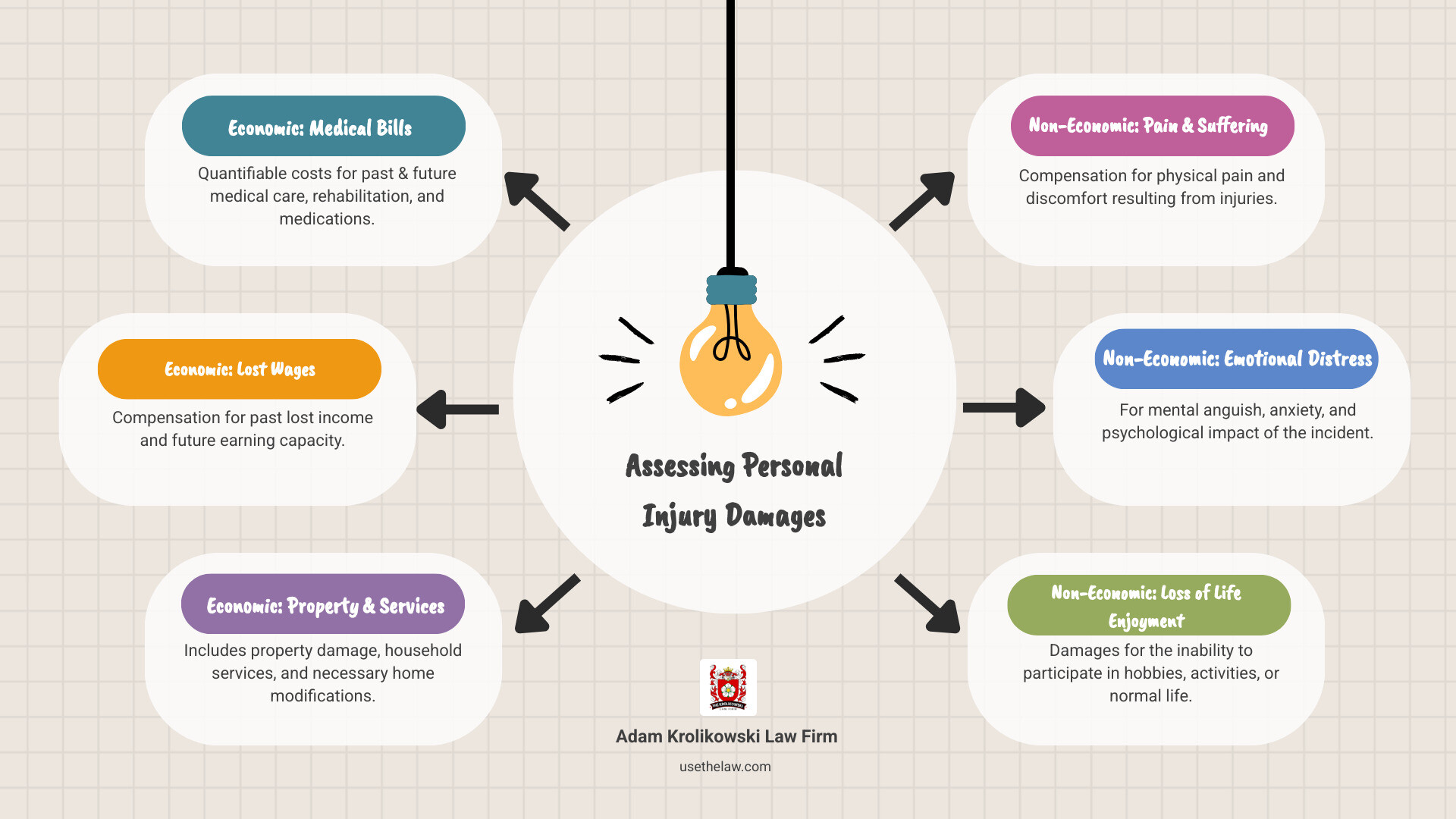
Determining compensation involves accounting for both tangible and intangible losses.
- Economic damages are quantifiable losses like medical expenses, lost wages, and property damage.
- Non-economic damages compensate for losses without a price tag, such as pain and suffering or the Emotional Distress from a life-changing injury.
When valuing multiple injuries, we take a holistic approach, considering the cumulative impact on your life rather than just adding up individual values. We also steer legal principles like the collateral source rule, which can affect how payments from sources like health insurance are treated. Understanding these factors is crucial for securing fair Compensation Available in Los Angeles Personal Injury Cases.
Understanding the Legal and Financial Framework
Complex injury litigation operates within a world of intricate legal rules and financial structures. Understanding this framework is key to protecting your rights.
Governing Laws and Procedures
Every case is guided by a specific legal framework.
- The California Rules of Court dictate procedures to ensure fairness and consistency.
- Case law precedents, or previous court decisions, establish legal principles that help us argue how the law should apply to your case.
- Additional regulations, like federal regulations for trucking, can be crucial in establishing liability in certain accidents.
- Statutes of limitation are strict deadlines for filing lawsuits. In California, you generally have two years for a personal injury claim, but timelines can vary. Missing a deadline can mean losing your right to compensation entirely. Other jurisdictions have similar rules, like The Limitations Act.
The ‘No Win, No Fee’ Model in Complex Injury Litigation
The cost of litigation can be a major concern. The ‘No Win, No Fee’ model, or contingency fee agreement, addresses this. We only get paid if we successfully recover compensation for you. Our fee is a percentage of your final settlement or award.
This model offers two key benefits:
- It reduces your financial risk, removing the barrier of upfront legal fees.
- It aligns our interests with yours, as our payment depends on your success.
While this covers our attorney fees, some out-of-pocket costs for filing or professional testimony may arise. We discuss all potential costs upfront. You can learn more at Understanding No Win, No Fee arrangements.
Why Capable Legal Representation is Non-Negotiable
Handling complex injury litigation on your own is nearly impossible.
- Procedural complexity: The rules of civil procedure and evidence are an intricate web where one misstep can damage your case.
- Accessing professionals: Building a compelling case requires a team of medical, vocational, and financial professionals. We have spent years building a network of these individuals.
- Countering insurance company tactics: Insurance companies have vast resources dedicated to paying out as little as possible. They use sophisticated strategies to minimize claims. Without strong representation, you are outmatched.
Our firm has over 25 years of experience handling complex cases. We know how to respond to insurance company tactics and are prepared to go to trial when an unfair settlement is offered. We build a compelling case that tells your story and leaves no doubt about the compensation you deserve. Explore Working with Personal Injury Attorneys in Los Angeles for more on what a legal team does.

Frequently Asked Questions about Complex Litigation
When you’re facing complex injury litigation, it’s natural to have questions. Here are answers to some of the most common concerns.
How long does a complex injury case usually take to resolve?
There is no quick answer, as complex cases rarely move fast. While a simple claim might resolve in months, complex injury litigation typically takes much longer.
Factors contributing to the timeline include a lengthy findy phase, the coordination of multiple parties, and the need for thorough analysis from qualified professionals. We also often wait until your medical condition has stabilized to ensure we can accurately calculate all future damages.
Most complex cases take two to five years to resolve, and sometimes longer if they go to trial. We know this is difficult to hear, but our commitment is to secure the full compensation you deserve, not just the quickest settlement.
What is my role as a client in the litigation process?
You play a vital role in our partnership. Your key responsibilities include:
- Preserving all evidence related to your injury, including documents, photos, and damaged items.
- Attending all medical appointments to create a clear, documented record of your treatment.
- Maintaining open communication with our team, keeping us updated on your condition and any new expenses. Never speak to the other side’s insurers without consulting us.
- Participating in depositions or hearings, for which we will prepare you thoroughly.
Your commitment to these responsibilities significantly strengthens your case. For more guidance, review these best practices for clients.
Can I still file a claim if I was partially at fault for the accident?
Yes. Even if you bear some responsibility, you can still file a claim and recover damages in California.
Our state follows a “pure comparative negligence” rule. This means the court determines the total value of your damages and then assigns a percentage of fault to everyone involved. Your final award is simply reduced by your percentage of fault. For example, if your damages are $100,000 and you are found 20% at fault, you can still recover $80,000.
Unlike in some other states, California’s rule doesn’t bar you from recovery even if you are found 50% or more at fault. Insurance companies will try to inflate your percentage of fault to pay less, and our job is to build a case that accurately represents what happened. Learn more at Understanding Comparative Negligence in Los Angeles Car Crash Cases. Don’t let concerns about partial fault stop you from seeking the compensation you deserve.
Conclusion
When facing complex injury litigation, the stakes are incredibly high. These cases involve intricate procedures and substantial challenges that require careful preparation, a deep understanding of the law, and strategic case management.
From identifying multiple at-fault parties to quantifying lifelong damages, nothing is straightforward. It requires navigating complex legal frameworks, countering insurance company tactics, and coordinating with medical and financial professionals to build the strongest possible case.
At the Adam Krolikowski Law Firm, we have built our practice around these challenging cases. For over 25 years, we have stood beside individuals in Orange County, Santa Ana, and Los Angeles who have suffered severe injuries. We understand that behind every case is a person whose life has been profoundly changed.
The goal is to secure the resources you need to rebuild your life and hold responsible parties accountable. If you are dealing with the aftermath of a severe injury, you don’t have to steer this alone. Understanding your rights is the first step. We are here to help you take that step and guide you through the journey ahead. Learn more from an Orange County injury lawyer and let us help you with the care and determination your case deserves.
