

Loss of limb lawyer: Your #1 Unwavering Justice
The Life-Altering Impact of Limb Loss in Orange County
A loss of limb lawyer in Orange County helps victims of amputation injuries secure compensation for medical expenses, lost wages, pain and suffering, and future care needs. These attorneys investigate the circumstances of your injury, establish who is at fault, negotiate with insurance companies, and fight for maximum compensation to cover the substantial costs of living with limb loss.
What a Loss of Limb Lawyer Does for You:
- Investigates your accident to identify all responsible parties
- Gathers critical evidence including medical records, witness statements, and testimony from qualified professionals
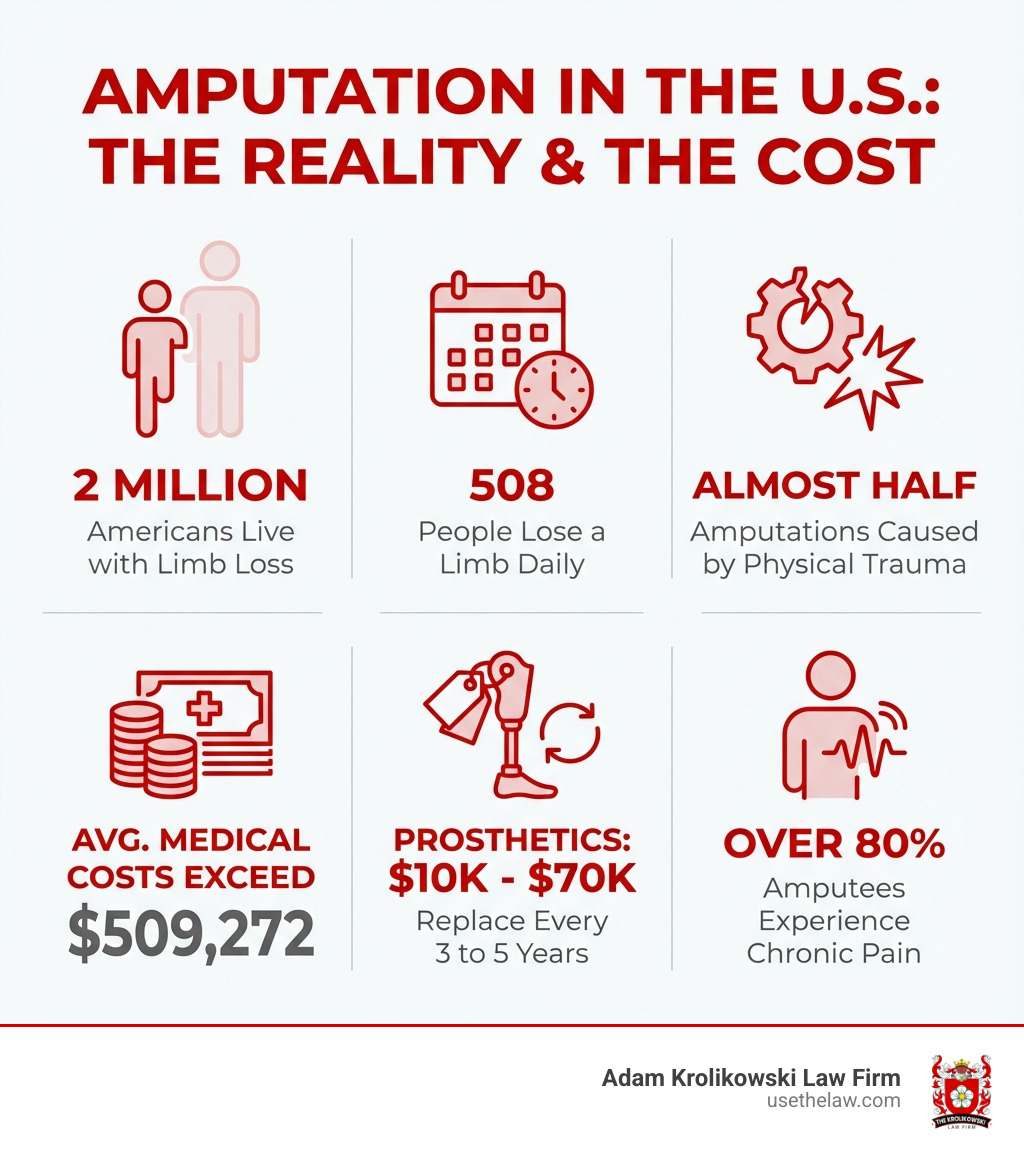
- Calculates your full damages including lifetime medical costs (averaging $509,272 for amputation surgery alone) and prosthetics ($10,000-$70,000+)
- Negotiates with insurance companies to secure fair settlements
- Takes your case to trial if necessary to maximize your compensation
- Provides guidance throughout the recovery and legal process
Losing a limb changes everything. Whether it happened in a workplace accident, a car crash, or due to medical negligence, the impact extends far beyond the physical wound. Nearly 2 million Americans currently live with some form of limb loss, and tragically, about 508 people lose a limb every day in the United States.
For Orange County residents facing this reality, the challenges are immediate and overwhelming. You’re dealing with excruciating pain, multiple surgeries, and the psychological trauma of accepting your new reality. Meanwhile, medical bills pile up, your ability to work vanishes, and insurance companies pressure you to accept quick settlements that don’t come close to covering your actual needs.
The financial burden alone is staggering. Beyond the average $509,272 in initial medical expenses for amputation surgery, you’ll face prosthetic costs that can reach $70,000 for a computerized leg—devices that need replacement every 3-5 years. People living with limb loss pay more than $150,000 additional in lifetime healthcare costs compared to able-bodied individuals. And these numbers don’t account for home modifications, vehicle adaptations, or the fact that a third of individuals with work-related amputation injuries never return to work.
This is where a knowledgeable attorney becomes essential. While you focus on physical therapy, adapting to prosthetics, and managing the emotional weight of your injury, a loss of limb lawyer in Orange County handles the legal complexities. They identify who’s responsible—whether it’s a negligent driver, an employer who failed to maintain safe equipment, or a medical professional who made a catastrophic error—and they build the case to hold them accountable.
Important Loss of limb lawyer terms:
- Catastrophic Injury Lawyer in Santa Ana
- Long term disability attorney
- Emotional distress injury lawyer
Understanding Amputation Injuries in Orange County, California
When we talk about limb loss, we’re discussing one of the most severe and life-altering injuries an individual can experience. It’s a catastrophic event that drastically changes a person’s physical capabilities, emotional well-being, and financial stability. Our goal is to help you understand what these injuries entail and how they can arise, particularly within the context of Orange County, California.
What is a Limb Loss Injury?
A limb loss injury, often referred to as an amputation, is the removal of a body part, whether partially or entirely. This can range from a fingertip to an entire arm or leg. These injuries are generally categorized into two main types:
- Traumatic Amputation: This occurs when a limb is severed or crushed directly in an accident. It’s often sudden and violent, resulting from the immediate impact of an external force.
- Surgical Amputation: This is a planned medical procedure where a surgeon removes a limb. While intentional, it’s typically necessitated by severe damage from an accident, disease (like severe diabetes or vascular issues), or overwhelming infection that threatens the patient’s life or remaining health.
Amputations are also classified by their extent: “minor” amputations might involve digits (fingers or toes), while “major” amputations involve larger parts of a limb, such as above or below the knee or elbow. The location matters significantly, as upper limb amputations can severely impact daily tasks, while lower limb amputations affect mobility.
Here’s a quick comparison of the two main types of amputation:
| Feature | Traumatic Amputation | Surgical Amputation |
|---|---|---|
| Cause | Sudden, violent accident (e.g., car crash, machinery) | Planned medical procedure |
| Timing | Immediate | Often delayed, following injury, disease, or infection |
| Circumstances | Uncontrolled, often unexpected | Controlled, performed by medical professionals |
| Goal | Survival, stabilization, potential reattachment | Preserve life, prevent spread of disease/infection |
For more official information on amputation, you can refer to resources like the NHS guidelines on amputation.
Common Causes of Amputation
Amputation injuries can stem from a variety of tragic incidents, many of which are preventable. In Orange County, like other populated areas, we frequently see these injuries arise from:
- Motor Vehicle Accidents: Car crashes, motorcycle accidents, bicycle and pedestrian accidents, and even truck accidents are leading causes of traumatic amputations. High-speed collisions, rollovers, or being crushed can result in immediate limb loss or injuries so severe that surgical amputation becomes necessary.
- Workplace Accidents: Industrial and construction sites pose significant risks. Workers operating heavy machinery, power tools, or dealing with unguarded mechanical components can suffer severe crushing or severing injuries. We understand the complexities of catastrophic work injuries and how they can lead to limb loss.
- Defective Products: Faulty machinery, defective industrial equipment, or even household products can malfunction and cause devastating injuries, leading to amputation.
- Medical Negligence: While often a last resort, surgical amputations can sometimes be the result of a medical error. This might include a failure to diagnose or treat a severe infection, improper management of a condition like diabetes leading to gangrene, or even a wrong-site surgery.
- Severe Infections: Untreated or mismanaged infections, particularly in vulnerable individuals, can spread rapidly and necessitate amputation to save the patient’s life.
- Other Incidents: This can include firearm accidents, burn injuries, or even accidents involving lawnmowers and snowblowers, especially impacting children and seniors.
Nearly half of all amputations in the U.S. are caused by physical trauma. When someone else’s negligence or wrongdoing is a factor, we can help you pursue accountability.
Immediate and Long-Term Consequences
The impact of losing a limb is profound and far-reaching, affecting every aspect of a person’s life.
- Physical Pain and Medical Needs: Immediately after an amputation, individuals face intense pain, wound care, and the risk of infection. Over 80% of amputees experience chronic pain, including “phantom limb syndrome,” where they feel pain or sensations in the missing limb. The medical journey includes multiple surgeries, extensive physical therapy, and the lifelong need for prosthetic devices.
- Psychological Distress: The emotional and psychological trauma is immense. Victims often grapple with grief, depression, anxiety, body image issues, and post-traumatic stress disorder (PTSD). Adjusting to a new body and lifestyle can be incredibly challenging.
- Adaptation Challenges: Daily tasks that were once simple become monumental problems. Learning to use a prosthetic, navigating stairs, driving, or even dressing requires significant adaptation. Home and vehicle modifications are often necessary to regain independence.
- Lifelong Medical Needs: Amputees require ongoing care, including prosthetic maintenance and replacement (which occurs every 3-5 years), rehabilitation, and psychological support. These needs contribute to the fact that people living with limb loss on average pay more than $150,000 more in lifetime healthcare costs than able-bodied people.
We understand the complex challenges that individuals and families in Orange County face after such an injury. For more insights into navigating these difficult times, you can explore resources like our guide to OC injury lawyers.
The Role of a Loss of Limb Lawyer in Your Orange County Claim
When you’ve suffered a limb loss, the last thing you need is the added burden of navigating a complex legal system. That’s where a dedicated loss of limb lawyer in Orange County steps in. We act as your advocate, handling every aspect of your claim so you can concentrate on your recovery. Our goal is to ensure that the responsible parties are held accountable and that you receive the full compensation you deserve for your devastating injury.
How a Loss of Limb Lawyer Establishes Liability
Establishing who is at fault is the cornerstone of any personal injury claim, especially in limb loss cases. These situations are often intricate, requiring a meticulous investigation. Here’s how we approach it:
- Investigating the Accident: We thoroughly examine the circumstances of your injury. This includes reviewing accident reports, gathering photographic and video evidence, and analyzing the scene of the incident. If it was a workplace injury in Santa Ana, for example, we would look into safety protocols and equipment maintenance.
- Identifying Responsible Parties: Liability can be complex. Depending on the cause, responsible parties could include a negligent driver, a property owner, an employer, a product manufacturer, or even a medical professional. We work diligently to identify all individuals or entities whose actions contributed to your injury.
- Gathering Evidence: This extends beyond initial reports. We collect medical records, witness statements, and any other documentation that supports your claim. This evidence is crucial for building a strong case.
- Proving Negligence: To secure compensation, we must demonstrate that the responsible party owed you a duty of care, breached that duty, and that this breach directly caused your limb loss.
- Accident Reconstruction: In complex cases, we may work with accident reconstructionists to recreate the incident and provide a clear, scientific understanding of how the injury occurred and who was at fault.
These cases often involve complex injury litigation, and our experience in Orange County allows us to steer these challenges effectively.
The Legal Process for Amputation Claims
Navigating an amputation claim involves several distinct stages, each requiring careful attention to detail and legal strategy:
- Filing the Claim: Once we have gathered sufficient evidence and identified the liable parties, we formally file a personal injury lawsuit on your behalf. This initiates the legal process.
- Statute of Limitations in California: There are strict deadlines for filing a lawsuit. In California, for most personal injury claims, you generally have two years from the date of the injury to file your lawsuit. However, there can be exceptions, especially in cases involving minors, medical malpractice, or government entities. It’s imperative to consult with us promptly to ensure your rights are protected.
- Discovery Phase: During this stage, both sides exchange information. This can involve depositions (sworn testimonies), interrogatories (written questions), and requests for documents. We manage this process to ensure all relevant information is obtained.
- Negotiations with Insurance Companies: Many personal injury cases, including amputation claims, are settled out of court. We engage in robust negotiations with the at-fault party’s insurance company, armed with comprehensive evidence of your damages, to achieve a fair settlement. Insurance companies are notorious for trying to minimize payouts, so having a strong legal team on your side is critical.
- Litigation and Trial Readiness: If a fair settlement cannot be reached through negotiation, we are prepared to take your case to trial. Our firm is known for handling complex cases that other attorneys might not pursue, and we approach every case with trial readiness, ensuring we are fully prepared to present your case compellingly to a jury.
For a broader understanding of the legal journey, you can refer to a complete guide to personal injury law.
The Importance of Medical Evidence and Professional Witnesses
In amputation injury claims, the severity and long-term impact of the injury are central to securing fair compensation. This is where comprehensive medical evidence and the testimony of various qualified professionals become indispensable.
- Documenting Injuries: We ensure all your medical records, including initial emergency room reports, surgical notes, rehabilitation records, and ongoing treatment plans, are carefully collected and organized. These documents provide objective proof of your injury and its progression.
- Life Care Planners: These professionals assess your long-term medical needs, including future surgeries, medications, therapies, and prosthetic replacements. They project these costs over your lifetime, providing a crucial component of your economic damages.
- Vocational Professionals: If your ability to work has been affected, a vocational professional evaluates your pre-injury earning capacity versus your post-injury capacity. They can identify potential new career paths and the costs associated with retraining.
- Economists: These professionals calculate the financial impact of lost wages, diminished earning capacity, and other economic losses, presenting these figures in a clear and defensible manner.
- Prosthetists: Prosthetists can provide detailed information on the types of prosthetics you will need, their costs, maintenance requirements, and anticipated lifespan, all of which are vital for accurate damage calculations.
By leveraging these resources, we can paint a complete picture of your losses, ensuring that every aspect of your suffering and financial burden is accounted for. This comprehensive approach is part of what makes a loss of limb lawyer so valuable in Orange County. For more on how such cases are handled, consider our insights from Santa Ana personal injury lawyers.
Securing Your Future: Compensation in Orange County Amputation Injury Claims
Losing a limb imposes an overwhelming financial burden, far beyond immediate medical bills. As your loss of limb lawyer in Orange County, we are committed to carefully calculating all your losses and fighting for every dollar of compensation you deserve. This includes both the tangible costs you can put a price tag on and the intangible suffering that profoundly impacts your life.
Calculating Economic Damages: The Tangible Costs
Economic damages cover all the quantifiable financial losses you’ve incurred or will incur as a direct result of your amputation. These are often the easiest to calculate but require careful documentation and projections.

- Lifetime Medical Expenses: This is often the largest component. It includes the initial surgery, which has an estimated average cost of $509,272. Beyond that, there are costs for hospital stays, medications, ongoing physical and occupational therapy, pain management, and follow-up care.
- Prosthetics and Related Costs: Prosthetic devices are incredibly expensive, ranging from under $10,000 for a basic leg to as much as $70,000 for a computerized leg. Crucially, these devices are not a one-time purchase; they require maintenance and replacements every two to four years, adding up to substantial lifetime costs.
- Home and Vehicle Modifications: To regain independence, you may need to modify your home (e.g., ramps, wider doorways, accessible bathrooms) and your vehicle (e.g., hand controls, wheelchair lifts). These costs are significant.
- Lost Wages and Diminished Future Earning Capacity: Your injury likely forced you out of work, resulting in immediate lost income. More importantly, we calculate the impact on your future earning potential. Even if you return to work, you may be unable to perform the same job or earn the same salary. This long-term financial impact is a critical part of your claim.
We understand how to steer these financial complexities, ensuring that every past, present, and future cost is accounted for. For a deeper dive into how these claims are valued, refer to our guide to injury compensation claims.
Non-Economic Damages: The Intangible Losses
While economic damages cover your financial losses, non-economic damages address the profound, non-monetary suffering caused by your limb loss. These are more challenging to quantify but are equally vital for fair compensation.
- Pain and Suffering: This includes the physical pain from the injury itself, surgeries, rehabilitation, and chronic pain (including phantom limb pain, which affects over 80% of amputees). The emotional distress and mental anguish are also significant.
- Emotional Distress: The psychological impact of limb loss, including grief, depression, anxiety, and PTSD, can be debilitating.
- Loss of Enjoyment of Life: This compensates you for your inability to participate in activities you once loved, hobbies, sports, or even simple daily pleasures that are now difficult or impossible.
- Disfigurement: The permanent alteration of your appearance due to the amputation.
- Loss of Consortium: If you are married, your spouse may also be able to claim damages for the loss of companionship, affection, and intimacy resulting from your injury.
In California, non-economic damages are often calculated using a “multiplier method,” where economic damages are multiplied by a factor (typically between 1.5 and 5, depending on the severity of the injury and impact on your life). This method helps to provide a framework for valuing these profound, intangible losses.
Vocational Rehabilitation and Returning to Work
Losing a limb can profoundly impact your career and ability to earn a living. The challenges are not just physical; they extend to vocational and psychological problems.
- Career Impact: A distressing statistic reveals that a third of individuals with a work-related amputation injury don’t return to work. Even if they do, they may be unable to perform their previous job, leading to a need for retraining or a career change.
- Retraining Costs: If you require new skills or education to find suitable employment, the costs of vocational rehabilitation and training can be included in your claim.
- Assessing Future Earning Capacity: We work with vocational and economic professionals to assess how your limb loss has diminished your ability to earn income over your lifetime. This is a critical component of your compensation, ensuring you are not financially penalized for an injury caused by another’s negligence. Scientific research on return to work after amputation highlights the severe consequences for career prospects.
Beyond legal compensation, many organizations offer invaluable support during your recovery and adaptation:
- Limbless Association
- Steps Worldwide
- Reach
- The London Prosthetic Clinic (While based in the UK, they offer insights into prosthetic advancements and care which are universally relevant.)
These support systems, combined with a strong legal advocate, can help you steer the journey ahead.
Frequently Asked Questions about Amputation Claims in Orange County
We understand you likely have many questions about the legal process and what to expect after a limb loss injury in Orange County. Here, we address some of the most common inquiries.
How much compensation can I get for losing a leg in California?
There is no fixed amount for compensation in California for losing a leg or any other limb. Each case is unique, and the value of your claim depends on a multitude of factors, including:
- Economic Damages: This includes the actual costs of your medical treatment (past and future), prosthetic devices (and their replacements), lost wages, diminished earning capacity, home modifications, and rehabilitation.
- Non-Economic Damages: This covers your pain and suffering, emotional distress, loss of enjoyment of life, and disfigurement.
- Severity of the Injury: The extent of the amputation, its impact on your daily life, and any complications (like chronic pain) will significantly influence the value.
While some general estimates from various cases suggest compensation for losing a leg due to an accident can range significantly, we evaluate each case individually to ensure all your specific losses are accounted for. Our approach is to fight for the maximum compensation available under California law to cover your unique needs and future.
How long does an amputation injury lawsuit take?
The timeline for an amputation injury lawsuit in Orange County can vary greatly. There’s no single answer, as it depends on several factors:
- Case Complexity: Simple cases with clear liability and minimal damages might resolve quicker, but amputation cases are rarely simple. They involve extensive medical evidence and significant financial projections.
- Liability Disputes: If the at-fault party denies responsibility, the case will take longer as we work to firmly establish their negligence.
- Negotiation Length: Many cases are settled out of court. The negotiation process with insurance companies can take time, as we refuse to accept lowball offers that don’t adequately compensate you.
- Trial Schedule: If a settlement isn’t reached and the case proceeds to trial, court schedules and trial length will extend the process.
Generally, an amputation injury lawsuit can take anywhere from several months to a few years to resolve fully. We understand the urgency of your situation and work efficiently while ensuring thoroughness. A Free Consultation with us can provide a clearer estimate of the timeline for your specific case.
Can I file a claim if a medical error led to my amputation?
Yes, absolutely. If a medical error or negligence by a healthcare provider directly led to your amputation, you may have a strong medical malpractice claim. This is a complex area of law, and it’s one we are prepared to handle.
Examples of medical malpractice that could result in amputation include:
- Surgical Errors: Amputating the wrong limb, performing a procedure incorrectly, or causing an infection during surgery. These are considered “never events” or “sentinel events” in healthcare, indicating severe departures from standard care.
- Failure to Diagnose or Treat: A healthcare provider’s failure to timely diagnose or properly treat conditions like severe infections (e.g., sepsis), vascular disease, or diabetes that subsequently necessitate amputation.
- Medication Errors: Incorrect medication or dosage that leads to complications requiring amputation.
To succeed in a medical malpractice claim in California, we must prove that the healthcare provider breached the accepted standard of care, and that this breach directly caused your amputation. This often requires testimony from medical professionals who can attest to the negligence. We have experience dealing with these challenging cases, ensuring that those responsible for such devastating errors are held accountable. For information on how we handle such severe cases, you can visit our page on catastrophic injury lawyers in Santa Ana.
Conclusion: Taking the First Step on Your Road to Recovery in Orange County
Losing a limb is undeniably one of life’s most devastating and transformative experiences. The journey ahead is long, filled with physical pain, emotional distress, and significant financial challenges. Navigating the complex legal system on your own while simultaneously focusing on your physical and emotional recovery can be an overwhelming, if not impossible, task.
At Adam Krolikowski Law Firm in Orange County, we understand the profound impact of limb loss. We believe that you should not have to bear the burden of another’s negligence alone. Our commitment is to lift that legal weight from your shoulders, allowing you to dedicate your energy to healing and adapting to your new life. We are prepared to handle the intricate details of your claim, from thorough investigation and evidence gathering to aggressive negotiation with insurance companies and, if necessary, powerful representation in court. Our firm has a history of handling complex cases that other attorneys might not take, and we bring a compassionate yet determined approach to every client’s situation.
We are here to advocate for your rights, secure the maximum compensation you deserve, and help pave the way for a more stable and secure future.
Take the crucial first step on your road to recovery. We offer a Free Consultation to discuss your rights and evaluate your case in Orange County. There’s no obligation, just clear, straightforward advice.
Contact an Orange County brain injury lawyer for a free case review – we’re ready to listen and help.
Contact Us
Practice Areas
Recent Articles
- « Previous
- 1
- 2
- 3
- Next »