

Why Occupational Disease Cases Require Specialized Legal Help
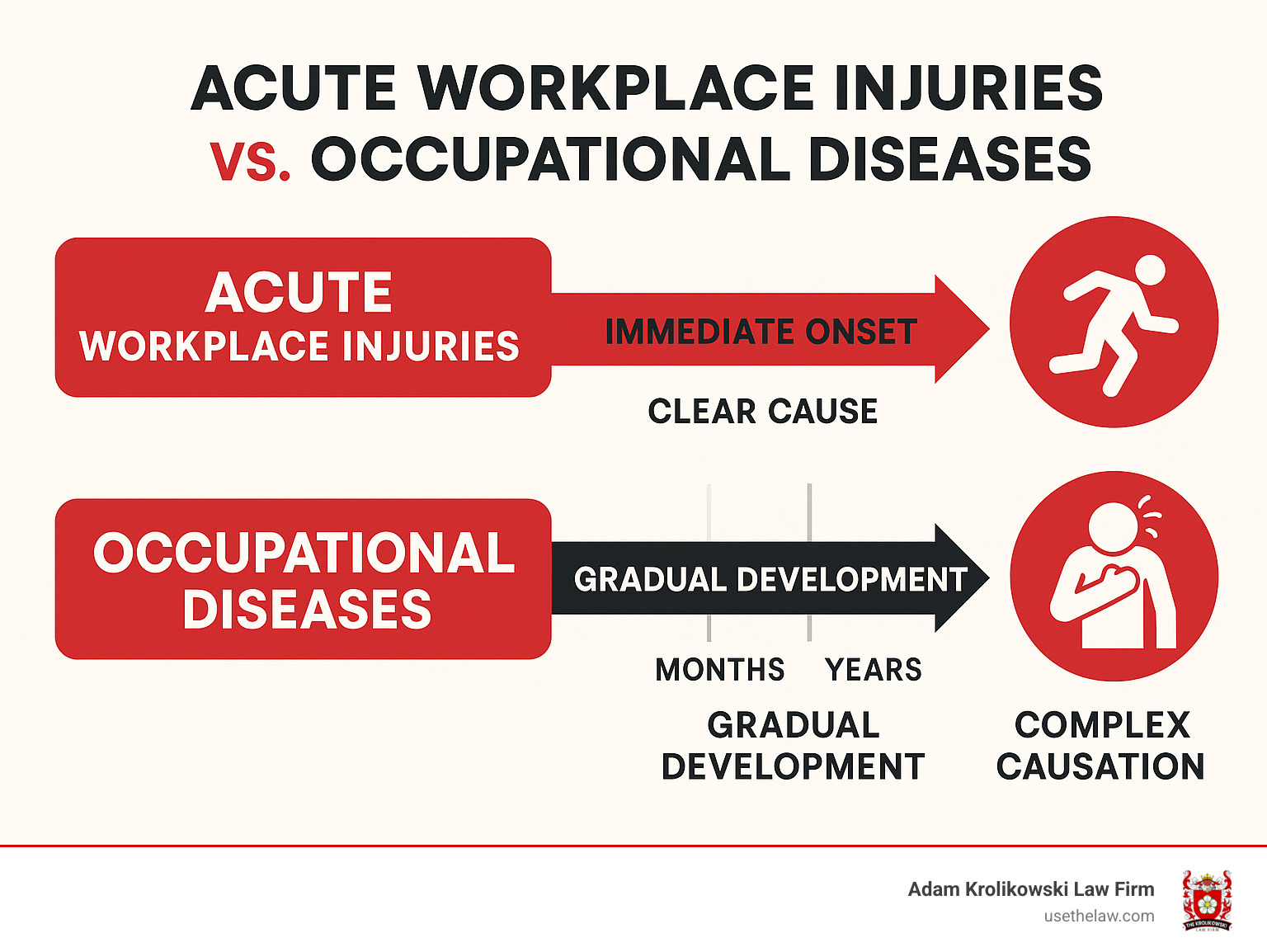
An occupational disease attorney helps workers who develop illnesses from workplace exposure to toxic substances, repetitive motions, or hazardous conditions. Unlike sudden workplace accidents, these diseases develop slowly over months or years, making them much harder to prove and requiring specific legal knowledge to secure compensation.
Key Services an Occupational Disease Attorney Provides:
- Proving your illness is work-related through medical evidence
- Navigating complex workers’ compensation claims
- Filing personal injury lawsuits against negligent third parties
- Gathering medical testimony and exposure records
- Meeting strict filing deadlines and legal requirements
These “invisible injuries” present unique challenges. Unlike a broken bone from a fall, occupational diseases often take years or even decades to surface. By the time symptoms appear, you may have changed jobs multiple times, making it difficult to connect your illness to a specific workplace exposure. In the United States, approximately 300,000 Americans miss at least one day of work each year due to illnesses caused or worsened by their workplace.
Common occupational diseases include respiratory conditions like asbestosis and silicosis, cancers from chemical exposure, hearing loss from loud machinery, and repetitive strain injuries. The key legal hurdle is proving that your specific job—not just general life circumstances—caused your condition.
Relevant articles related to Occupational disease attorney:
Understanding Occupational Diseases: From Exposure to Diagnosis
This section defines occupational diseases, provides common examples, and explains how to recognize the symptoms, which often appear long after exposure.
What is an Occupational Disease?
Unlike an acute injury from a sudden accident, an occupational disease develops slowly over time due to workplace conditions. For example, years of breathing in dust can gradually damage the lungs, or a decade of repetitive typing can lead to chronic wrist pain.
The key difference is the gradual onset. Occupational diseases are causes and conditions peculiar to an occupation, meaning they are more likely to occur in your line of work than to the general public. Minnesota law defines this distinction clearly, separating them from ordinary diseases of life.
A major challenge is the latency period—symptoms may not appear for years or even decades after your first exposure. You could be retired and develop a condition linked to a job you held thirty years ago, making it difficult to connect the illness to past work conditions. An occupational disease attorney can help trace your work history to build a case. For more information, see our guide on being Injured at Work.
Common Types of Work-Related Illnesses
Work-related illnesses can affect any part of the body, depending on the hazards you were exposed to.
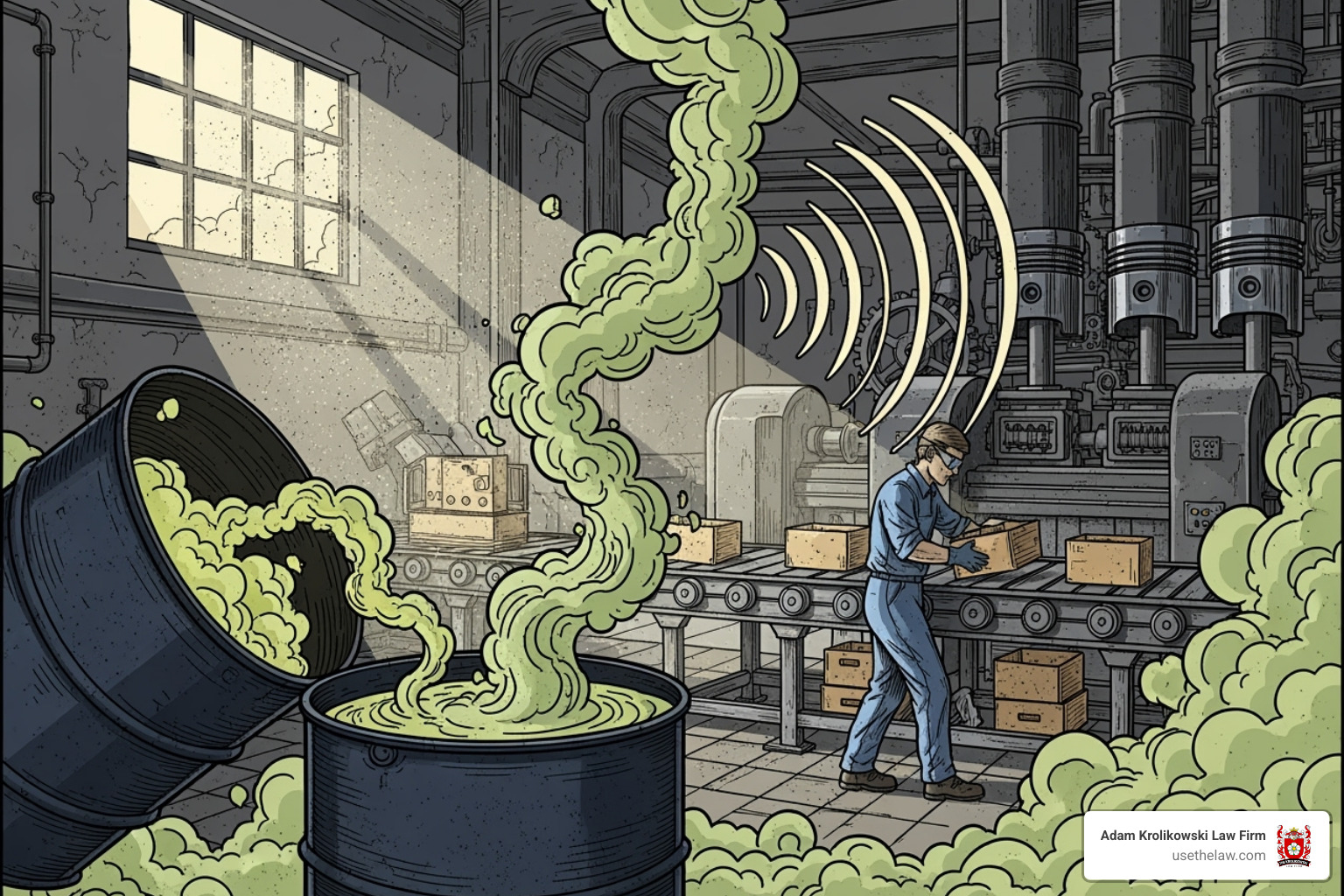
- Respiratory illnesses are common. Asbestosis develops from breathing asbestos fibers, often affecting construction, shipyard, and factory workers. Silicosis comes from inhaling silica dust in mining, quarrying, or sandblasting. These conditions are often irreversible.
- Cancers can be linked to workplace exposure. Mesothelioma is almost exclusively caused by asbestos. Lung cancer can result from breathing in various chemicals, dust, or fumes. Leukemia has been linked to benzene exposure.
- Hearing loss can result from prolonged exposure to loud noise in factories, construction sites, or airports. This damage is often permanent.
- Skin disorders like dermatitis affect workers who handle chemicals or solvents, such as painters, cleaners, and healthcare workers.
- Repetitive strain injuries like carpal tunnel syndrome affect office workers, assembly line workers, and others who perform repetitive hand motions.
Workplace conditions can also impact Workers’ Mental Health in Santa Ana Claims, and these conditions deserve the same attention as physical injuries.
Recognizing the Symptoms and Seeking a Diagnosis
The symptoms of occupational diseases often start small and build gradually, making them easy to dismiss. You might notice a persistent cough, chronic fatigue, shortness of breath, unexplained rashes, or chronic pain.
These symptoms can mimic other conditions, but if you’ve been exposed to workplace hazards, they could be a sign of something more serious.
A medical evaluation is crucial. When you see your doctor, describe your symptoms and provide a detailed work history. Mention the chemicals you handled, the dust you breathed, and the repetitive motions you performed. Many doctors won’t consider occupational causes unless you bring them up. This information is vital for an accurate diagnosis and becomes key evidence if you file a claim.
Early detection helps both your health and your legal case. Medical records connecting your work and your illness are essential for any compensation claim. While organizations like OSHA work to prevent these exposures, you need proper medical documentation when prevention fails. If you suspect your health problems are work-related, see a doctor and consider consulting with an occupational disease attorney.
Your Legal Pathways: Workers’ Comp and Third-Party Claims
After a diagnosis, you have legal options for seeking compensation. The two main routes are workers’ compensation claims and personal injury lawsuits against third parties. In some cases, you may be able to pursue both.
The Role of Workers’ Compensation
Workers’ compensation is a system designed to provide benefits to employees who get sick or injured because of their job.

A key feature is its no-fault system, meaning you don’t have to prove your employer was negligent. If your illness is work-related, you are entitled to benefits. These can include:
- Medical treatment: Covers all necessary medical care, from doctor visits and prescriptions to hospital stays and rehabilitation.
- Lost wages: Provides partial wage replacement through temporary disability benefits if your illness prevents you from working.
- Permanent disability benefits: Offers compensation if your condition causes permanent limitations on your ability to earn a living.
- Vocational rehabilitation: May provide training and support to help you find a new job if you cannot return to your previous one.
- Death benefits: Provides financial support to surviving family members if an occupational disease is fatal.
Time is critical. Once you know your illness is work-related, you have a limited time to notify your employer and file a claim. Missing these reporting deadlines can jeopardize your right to benefits. We have extensive experience with Work Injury Claims and can help you steer the requirements.
When a Personal Injury Claim is an Option
Workers’ compensation is not always your only option. A personal injury claim may be possible if a third party—someone other than your employer—is responsible for your illness. This could include negligent manufacturers of toxic substances or defective equipment, or subcontractor fault on a job site.
Personal injury claims allow for broader damages than workers’ compensation. Most notably, you can seek compensation for pain and suffering, which covers the physical and emotional distress caused by your illness.
| Workers’ Compensation | Personal Injury Claims |
|---|---|
| No-fault system | Must prove negligence |
| Medical expenses covered | Medical expenses covered |
| Partial wage replacement | Full wage replacement possible |
| No pain and suffering | Pain and suffering included |
| Limited to specific benefits | Broader range of damages |
| Generally bars suing employer | Can sue negligent third parties |
Pursuing a personal injury claim does not prevent you from receiving workers’ compensation benefits; you can often pursue both simultaneously. Deciding which path to take depends on your specific circumstances. Our experience with Workers’ Compensation vs. Personal Injury Claims helps us guide clients through this complex process.
Why You Need an Occupational Disease Attorney for Your Claim
Proving an occupational disease claim is complex and often requires navigating significant legal and medical challenges, making legal guidance essential.
Proving Your Illness is Work-Related
The greatest challenge is often proving your illness was caused by your job. Unlike a clear-cut accident, connecting a condition to years of exposure requires building a solid case. The burden of proof is on you to show a direct link between your work and your illness, and insurance companies will scrutinize every detail.
An occupational disease attorney helps gather the necessary evidence, which may include:
- Medical Causation: We work with medical professionals to establish that your diagnosis is consistent with your workplace exposure. Their testimony can be critical.
- Exposure History: We help document the hazardous substances you encountered, the duration of exposure, and the conditions. This may involve reviewing old safety data sheets and company records.
- Witness Statements: Testimony from former coworkers can confirm unsafe working conditions and add credibility to your claim.
- Employer Records: We can legally obtain documents about safety audits, environmental monitoring, and hazardous substances used at your workplace.
- Scientific Research: We use established studies that show known links between certain exposures and specific diseases to strengthen your case.
Simply stating “my job made me sick” is not enough. You need documented proof, especially when dealing with adjusters trained to find reasons to deny claims, such as those involving California Workplace Safety Violations.
Navigating the Claims Process with an Occupational Disease Attorney
The claims process involves complicated forms, strict deadlines, and potential disputes. An occupational disease attorney acts as your advocate, handling the legal work so you can focus on your health.

We assist with:
- Gathering evidence: We efficiently collect medical records, employment history, exposure data, and witness statements.
- Filing paperwork correctly: We ensure all forms are completed accurately and submitted on time to avoid automatic denials.
- Negotiating with insurance companies: We have over 25 years of experience countering adjuster tactics aimed at minimizing payouts.
- Representing you in hearings: If a fair settlement cannot be reached, we will present your case before a judge.
- Appealing denied claims: A denial is not the end. We understand the appeals process and have a strong track record with Appealing Denied Workers’ Compensation Claims. Persistence often pays off.
Understanding State-Specific Laws and Time Limits
Occupational disease laws differ in every state, affecting what is covered and the deadlines for filing. The statute of limitations is the legal deadline for filing your claim, and missing it can bar you from receiving compensation.
For occupational diseases, many states use a “findy rule,” which means the clock starts ticking not from the date of exposure, but from when you were diagnosed or reasonably should have known your illness was work-related. This is crucial for conditions that take decades to develop.
State laws also vary on benefit amounts and covered treatments. For example, Georgia’s legal definition requires filing within one year of diagnosis or findy.
Prompt action is essential because these deadlines are firm. Consulting an attorney who knows your state’s laws can help you take the right steps while you still have time.
Frequently Asked Questions about Occupational Disease Claims
When facing a work-related illness, it’s normal to have questions about your health, finances, and legal options. Here are answers to some common concerns.
What compensation can I receive from a successful claim?
A successful claim can provide significant financial support. Depending on your condition’s severity and state laws, you may receive:
- Medical expenses: Coverage for all past and future medical care, including treatments, hospital stays, medications, and rehabilitation.
- Disability benefits: Temporary disability replaces a portion of your lost wages while you recover. Permanent disability provides long-term support if your ability to work is permanently affected.
- Vocational rehabilitation: Benefits may cover training or education to help you find new employment if you cannot return to your old job.
- Death benefits: If an occupational disease is fatal, surviving family members can receive financial support and coverage for funeral expenses.
- Pain and suffering: While not typically covered by workers’ compensation, a separate personal injury claim against a negligent third party may allow you to recover damages for emotional distress.
Our goal is to ensure all damages are accounted for so you receive the full compensation available under the law.
How much does it cost to hire a lawyer for my claim?
We handle occupational disease claims on a contingency fee basis. This means you pay no upfront fees. We only get paid if we successfully recover compensation for you, with our fee being a pre-agreed percentage of the recovery. If we don’t win your case, you owe us no attorney fees.
We also offer a free initial consultation to discuss your situation and legal options without any cost or obligation. We believe everyone deserves access to legal help, regardless of their financial situation.
What are the biggest challenges in an occupational disease case?
Occupational disease cases present several challenges, but understanding them helps in preparing a strong case.
- Proving Causation: A primary hurdle is medically connecting your illness directly to your workplace exposure, as these diseases develop slowly over time. This often requires testimony from medical professionals.
- Long Latency Periods: Symptoms may not appear for years or decades, making it difficult to pinpoint when and where the exposure occurred, especially if you’ve had multiple jobs.
- Missing Records: Companies may close or lose records over time, complicating the effort to find evidence of past exposure.
- Insurance Company Disputes: Insurers often argue that an illness is not work-related or is due to lifestyle or genetics. They may also downplay the severity of your condition to minimize payouts.
- Complex Medical Evidence: These cases involve complicated medical and scientific information that must be presented clearly to adjusters and judges.
Having an attorney experienced with these specific challenges makes a significant difference. We have developed effective strategies to overcome these issues and present your case effectively.
Conclusion: Taking the First Step Towards Justice
When your job makes you sick, you deserve compensation. As we’ve discussed, occupational diseases are “invisible injuries” that develop slowly from workplace exposures, such as a persistent cough from dust, chronic pain from repetitive tasks, or fatigue from chemical exposure.
Proving these claims is challenging. You must connect your illness to your job, which requires solid medical evidence, a detailed exposure history, and a clear understanding of state laws and deadlines. Your legal options include workers’ compensation for medical bills and lost wages, and potentially personal injury claims for broader damages like pain and suffering.
An occupational disease attorney is crucial for navigating this process. We gather medical testimony, find old employment records, and build a strong case connecting your illness to your work. We are prepared to counter the disputes that insurance companies often raise.
At Adam Krolikowski Law Firm, we handle the complex cases that others may avoid, serving workers in Orange County, Santa Ana, and Los Angeles. Whether you’re facing respiratory problems, a repetitive strain injury, or cancer from workplace exposure, we can help.
Your first step is free. We work on a contingency basis, so you pay nothing unless we win your case. Don’t let the complex nature of your injury prevent you from seeking justice.
Contact us to discuss your case and legal options today. We are here to fight for the compensation you deserve.
