

Why You Need an Orange County Sexual Harassment Lawyer
If you’re facing workplace sexual harassment in Orange County, an experienced sexual harassment lawyer Orange County professional can help you seek justice. No one should have to endure unwelcome sexual advances, inappropriate comments, or a hostile work environment.
Adam J. Krolikowski offers:
- Over 25 years of experience in employment law
- Free consultations for harassment claims
- A contingency fee basis, meaning no fee unless you win
- A focus on complex cases other attorneys may not take
- Service for all of Orange County, including Newport Beach, Irvine, and Santa Ana
Sexual harassment affects thousands of working individuals each year in California. Whether it’s quid pro quo harassment from a supervisor or a hostile work environment created by coworkers, you have legal rights under both federal and state law.
Key facts about sexual harassment in Orange County:
- You have up to three years to file with California’s Civil Rights Department (formerly DFEH).
- You have 300 days for federal EEOC complaints.
- Employers are strictly liable for supervisor harassment.
- You are protected against retaliation for reporting harassment.
The California Fair Employment and Housing Act (FEHA) and Title VII of the Civil Rights Act protect employees from sex-based discrimination. For unwelcome behavior to be legally considered sexual harassment, it must be either severe or pervasive.
If you believe you are a victim of sexual harassment, contact an attorney promptly. Orange County employment lawyers have helped victims secure significant compensation through litigation against employers who failed to provide safe workplaces.
Understanding Sexual Harassment Under California Law

If you work in Orange County, you have strong legal protections against sexual harassment. Understanding these laws can help you recognize when your rights are being violated and what you can do about it.
California’s Fair Employment and Housing Act (FEHA) offers broad protection, often more so than federal law. At the federal level, Title VII of the Civil Rights Act also protects you from sex-based discrimination, including sexual harassment.
For behavior to be illegal, it must be unwelcome and either severe or pervasive. Severe refers to a serious, often single, incident like a physical assault. Pervasive refers to repeated behavior that creates an unbearable work environment.
The key is that the conduct is unwelcome. It doesn’t matter if the harasser claims they were “joking.” If their behavior makes you uncomfortable and you didn’t invite it, it can be considered harassment. You can learn more about federal law on sexual harassment from the EEOC.
Defining What Constitutes Sexual Harassment
Sexual harassment can manifest in various ways, some obvious and others more subtle.
- Verbal and Visual: This includes sexual jokes, crude comments about someone’s body, questions about their sex life, gender-based put-downs, displaying sexual images, or making crude gestures.
- Physical: Any unwanted touching, such as hugging, patting, or blocking someone’s path, constitutes physical harassment.
- Inappropriate Comments: Remarks about your appearance, clothing, or body parts, or suggestions on how to be more “attractive.”
- Requests for Sexual Favors: This involves asking for sexual acts, often by promising rewards or threatening consequences. A single instance can be illegal.
Harassment is not always about romantic interest; it can be a tool for power, intimidation, or cruelty. If you are facing any of these situations, a sexual harassment lawyer Orange County professional can clarify your options. For more information, see our guide on California Workplace Harassment Lawyer.
Quid Pro Quo vs. Hostile Work Environment
California law recognizes two main types of sexual harassment. Understanding the difference helps clarify your situation.
| Feature | Quid Pro Quo Harassment | Hostile Work Environment Harassment |
|---|---|---|
| Meaning | “This for that” | An offensive, intimidating, or abusive work atmosphere |
| Involves | Typically a supervisor or someone with authority | Can be supervisors, coworkers, or even non-employees |
| Action | Job benefits (promotions, raises, keeping job) offered or withheld in exchange for sexual favors | Unwelcome conduct that is severe or pervasive |
| Frequency | A single incident can be illegal | Usually involves repeated offenses, but one severe act can qualify |
| Impact | Direct link between sexual favor and employment outcome | Creates an environment where working conditions are affected |
Quid pro quo harassment occurs when a person in a position of authority, like a supervisor, links job benefits (such as a promotion or keeping one’s job) to sexual favors. This can be explicit or implied. Even a single instance is illegal due to the inherent power imbalance.
Hostile work environment harassment involves conduct that is so severe or pervasive that it creates an abusive, intimidating, or offensive work atmosphere. This behavior can come from anyone at the workplace, including supervisors, coworkers, or even clients. It’s not about a direct trade, but about the overall environment making it difficult to perform your job. The legal standard is whether a reasonable person would find the environment hostile or abusive.
Your Legal Rights and First Steps After Experiencing Harassment
If you are experiencing sexual harassment at work, know that you are not alone and California law provides strong protections. It’s normal to feel confused or scared, but understanding your rights and the steps you can take is crucial for protecting yourself.
Your employer is legally required to investigate your complaint, take effective steps to stop the harassment, and prevent it from recurring. If they fail in this duty or retaliate against you, you have additional legal remedies.
Know Your Rights as an Orange County Employee
As an Orange County employee, you have fundamental rights, including:
- A Safe Workplace: You have the right to a work environment free from harassment.
- Protection from Retaliation: Your employer cannot legally punish you (e.g., fire, demote, or cut hours) for reporting harassment. Retaliation is a separate legal violation. Learn more on our Retaliation Attorney Orange County page.
- The Right to File a Complaint: You can file a complaint internally with your company and with government agencies. Your employer must investigate your report and take corrective action.
- Confidentiality: Your employer should handle your complaint discreetly, protecting your privacy as much as possible during an investigation.
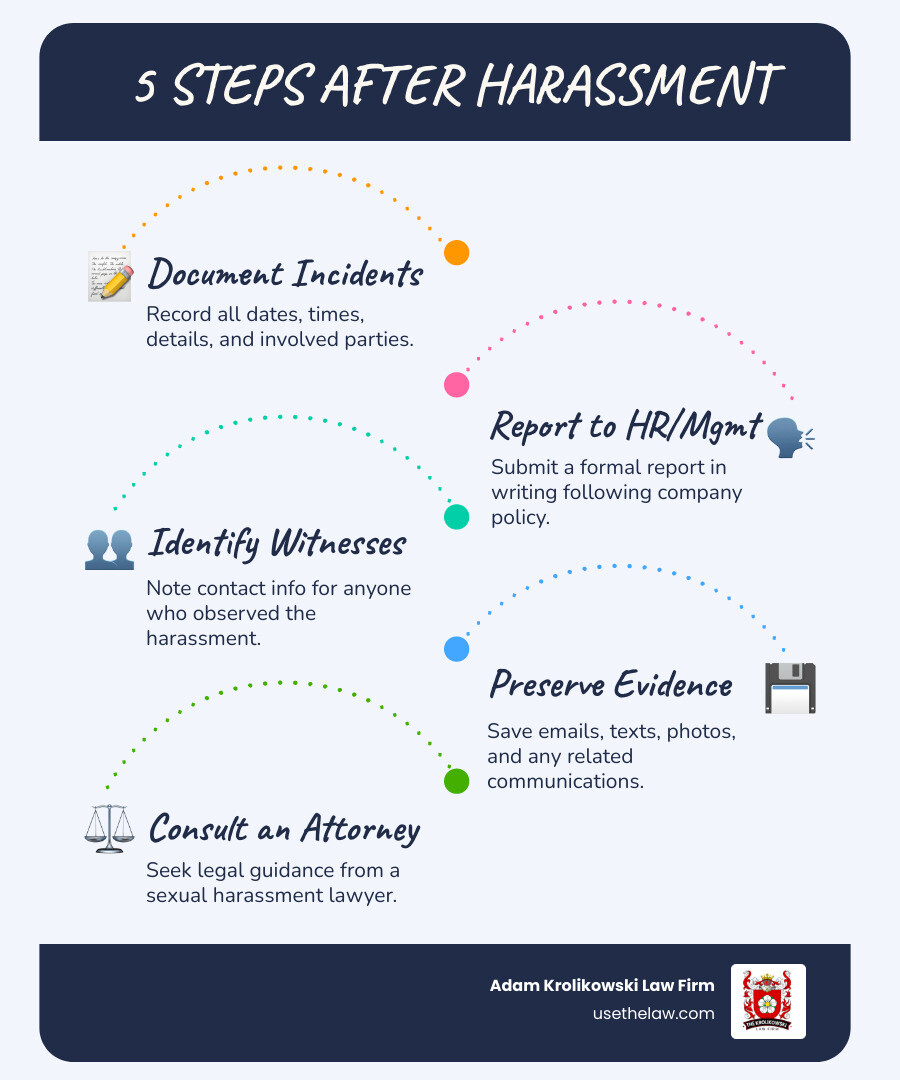
Immediate Steps to Take if You Are Being Harassed
Taking immediate, strategic steps can protect you and strengthen a potential legal case.
- Document Everything: Keep a private journal detailing each incident: what happened, when, where, who was present, and how it affected you.
- Preserve Evidence: Save all related emails, texts, voicemails, and social media messages. Take screenshots and keep any physical items.
- Report the Harassment: Follow your company’s policy to report the harassment to HR or management, preferably in writing. This creates an official record and obligates your employer to act.
- Confront the Harasser (If Safe): If you feel comfortable, tell the person their behavior is unwelcome and must stop. A written communication (like an email) is ideal.
- Identify Witnesses: Note anyone who witnessed the harassment.
- Seek Support: Harassment is emotionally taxing. Reach out to trusted friends, family, or organizations like RAINN. You can find support for victims of sexual assault through their national hotline.
This documentation is vital for a sexual harassment lawyer Orange County professional to build a strong case.
Building Your Case with a Sexual Harassment Lawyer in Orange County
Facing workplace sexual harassment is overwhelming, but you don’t have to go through it alone. An experienced sexual harassment lawyer Orange County professional can help you take meaningful action. An attorney provides legal guidance, evaluates your case, handles negotiations with your employer, and offers litigation support, allowing you to focus on moving forward.

How an Attorney Can Help Your Claim
An attorney acts as your advocate and guide through the complex legal system. Here’s how we can help:
- Investigating Your Claim: We go beyond your story to uncover patterns of behavior, identify witnesses, and review company policies to build a stronger case.
- Communicating with Your Employer: We handle all communication with your employer, protecting you from uncomfortable or strategic conversations with HR.
- Calculating Damages: We assess the full scope of your damages, including lost wages, emotional distress, and harm to your career.
- Filing Legal Documents: We manage all paperwork and deadlines with precision, ensuring your claim is filed correctly with the proper agencies and courts.
- Representing You: In negotiations or in court, we are your voice, presenting evidence and arguing on your behalf to achieve a favorable outcome.
For more insights into how we advocate for employees, you can explore our page on Employee Attorney.
Gathering Evidence for Your Sexual Harassment Case
Building a strong case requires solid evidence. While your testimony is central, supporting documentation makes your claim more powerful.
- Emails and Text Messages: These can provide direct evidence of the harasser’s words and help establish a pattern or a hostile environment.
- Voicemails: The tone of voice in a voicemail can be powerful evidence of a threat or inappropriate communication.
- Photos or Videos: Visual evidence can document inappropriate displays, notes, or gifts.
- Witness Information: Contact details for anyone who saw the harassment or you confided in can corroborate your account.
- Personal Journal: A detailed, contemporaneous log of incidents is crucial for recalling specifics and carries significant legal weight.
- Performance Reviews: Sudden negative reviews after a complaint can indicate retaliation, while prior positive reviews can show the harassment’s impact on your work.
- HR Complaints and Responses: These documents show you attempted to resolve the issue and record your employer’s (potentially inadequate) response.
The Legal Process for Sexual Harassment Claims in California
Understanding the legal process can make a difficult situation more manageable. An experienced sexual harassment lawyer Orange County professional will guide you through each step, handling the complexities so you can focus on your well-being. The path to justice usually begins with an administrative filing before a potential lawsuit.
For more comprehensive information, visit our page on California Employment Law Firm.
Filing with the DFEH/EEOC and Statutes of Limitation
Before suing for sexual harassment in California, you must first file a complaint with an administrative agency. This is a required step to obtain a “right-to-sue” notice.
- California Civil Rights Department (CRD), formerly DFEH: This is the state agency. You have up to three years from the last act of harassment to file a complaint.
- Equal Employment Opportunity Commission (EEOC): This is the federal agency. The deadline is typically 300 days in California.
While you have time, it is crucial to act quickly. Prompt action helps preserve evidence, as memories can fade and witnesses may become unavailable. Contacting an attorney early helps protect your rights.
Potential Compensation and Damages You Can Seek
While no amount of money can undo the harm of harassment, a successful legal claim can provide compensation to help you rebuild. Our firm has helped clients recover significant settlements and awards. Potential damages include:
- Lost Wages and Benefits: This covers back pay and future lost earnings, as well as the value of lost benefits like health insurance or retirement contributions.
- Emotional Distress: Compensation for the psychological impact of harassment, such as anxiety, depression, and humiliation.
- Punitive Damages: In cases of egregious conduct, these damages may be awarded to punish the employer and deter future misconduct. Federal law caps these damages based on employer size.
- Reinstatement: A court can order your employer to give you your job back, although many clients prefer to move on.
- Attorney’s Fees and Costs: In many successful cases, the employer is required to pay your legal fees.
If you were wrongfully terminated, our page on Wrongful Termination Lawyer Orange County provides additional guidance.
Frequently Asked Questions about Orange County Sexual Harassment Claims
When you’re dealing with sexual harassment, it’s completely natural to have questions. We hear these concerns from clients all the time in our Orange County office, and we want to address them honestly and clearly.
Can I be fired for reporting sexual harassment?
No. It is illegal for your employer to fire you or retaliate in any way (such as demotion or cutting hours) for reporting sexual harassment. This is considered a “protected activity” under federal and California law.
If your employer does retaliate, you may have a separate legal claim for retaliation, which can strengthen your overall case. It is important to document any negative changes in your treatment after you report harassment. A sexual harassment lawyer Orange County can help you prove retaliation. Learn more on our Retaliation Attorney Orange County page.
How much does it cost to hire a sexual harassment lawyer?
Our firm handles sexual harassment cases on a contingency fee basis, which means you pay no upfront costs. We only get paid if we win your case, with our fee being a percentage of the compensation we recover for you. This “no win, no fee” arrangement ensures we are invested in achieving a favorable outcome. We also offer free consultations so you can discuss your case without financial obligation.
Does sexual harassment apply to remote work?
Yes. The laws against sexual harassment apply to remote work just as they do in a physical office. Your employer is still responsible for providing a harassment-free work environment.
Digital harassment can occur through:
- Emails and Chat Platforms: Inappropriate messages or content sent via work channels like Slack or Teams.
- Video Calls: Unwelcome comments about appearance, sexual jokes, or suggestive behavior on camera.
- Social Media: Harassing interactions with coworkers that impact your work environment.
In many cases, remote harassment is easier to document due to the digital trail left by messages, emails, and recordings.
Conclusion: Take the Next Step to Protect Your Rights
Experiencing workplace sexual harassment is a difficult and personal ordeal, but you do not have to face it alone. California and federal laws provide strong protections for your right to a safe workplace, free from harassment and retaliation.
Taking action is crucial. Harassment rarely stops on its own, and by speaking up, you protect yourself and help create a safer environment for others. You have the right to file a complaint and seek justice without fear of reprisal.
At Adam Krolikowski Law Firm, we understand the courage it takes to come forward. With over 25 years of experience fighting for employee rights, we are prepared to handle complex cases that other firms may avoid. Our approach is to listen to your story, investigate your claim, and fight for the compensation you deserve.
We make legal help accessible by offering free consultations and working on a contingency fee basis. You pay no legal fees unless we win your case, allowing you to focus on healing while we manage the legal process.
If you have been a victim of sexual harassment in Orange County, do not wait. Time is critical for preserving evidence and meeting filing deadlines. Take the next step to protect your rights. Our sexual harassment lawyer Orange County team is ready to stand with you.
