
Understanding the Serious Threat of Falling Objects at Work
A falling object injury is a serious hazard in workplaces across the United States, especially on construction sites. These accidents happen when tools, materials, or debris fall and strike workers, often causing severe or fatal injuries. Struck-by incidents are one of the “Fatal Four” leading causes of construction deaths.
Quick Facts About Falling Object Injuries:
- 50,000+ injuries are recorded annually by OSHA from falling objects.
- 250 fatal injuries were related to falling or flying objects in 2020 alone.
- Common causes include unsecured tools, unstable stacking, and equipment failure.
- Typical injuries range from traumatic brain injuries to broken bones and internal damage.
What makes these accidents so dangerous? Even small objects become deadly projectiles when falling from a height. A one-pound tape measure falling fifty floors proved fatal when it struck a delivery driver’s head. An object weighing just 2 pounds falling from 150 feet can be lethal.
Certain demographics face higher risks. Workers aged 35-54 account for 42.4% of all fatal struck-by injuries, while those over 55 have a fatality rate 1.6 times higher than younger workers. Hispanic workers also face a disproportionately high fatal injury rate.
This guide explains the physics behind these accidents, the common causes, and your legal rights if you are injured. This information can help you stay safe or recover compensation after an accident.

Handy falling object injury terms:
The Alarming Reality of Falling Object Dangers
Picture a wrench dropping from three stories up on a construction site. This isn’t a rare scenario—it’s a daily reality that leads to thousands of falling object injury cases each year. The U.S. Bureau of Labor Statistics documented 44,760 workers struck by falling objects or equipment in 2020, with 250 of those incidents proving fatal.
These “struck-by” incidents are part of OSHA’s “Fatal Four”—the top causes of construction worker deaths. In 2019, falling objects accounted for 27% of all struck-by fatalities in construction. Each statistic represents a person who went to work and didn’t come home.
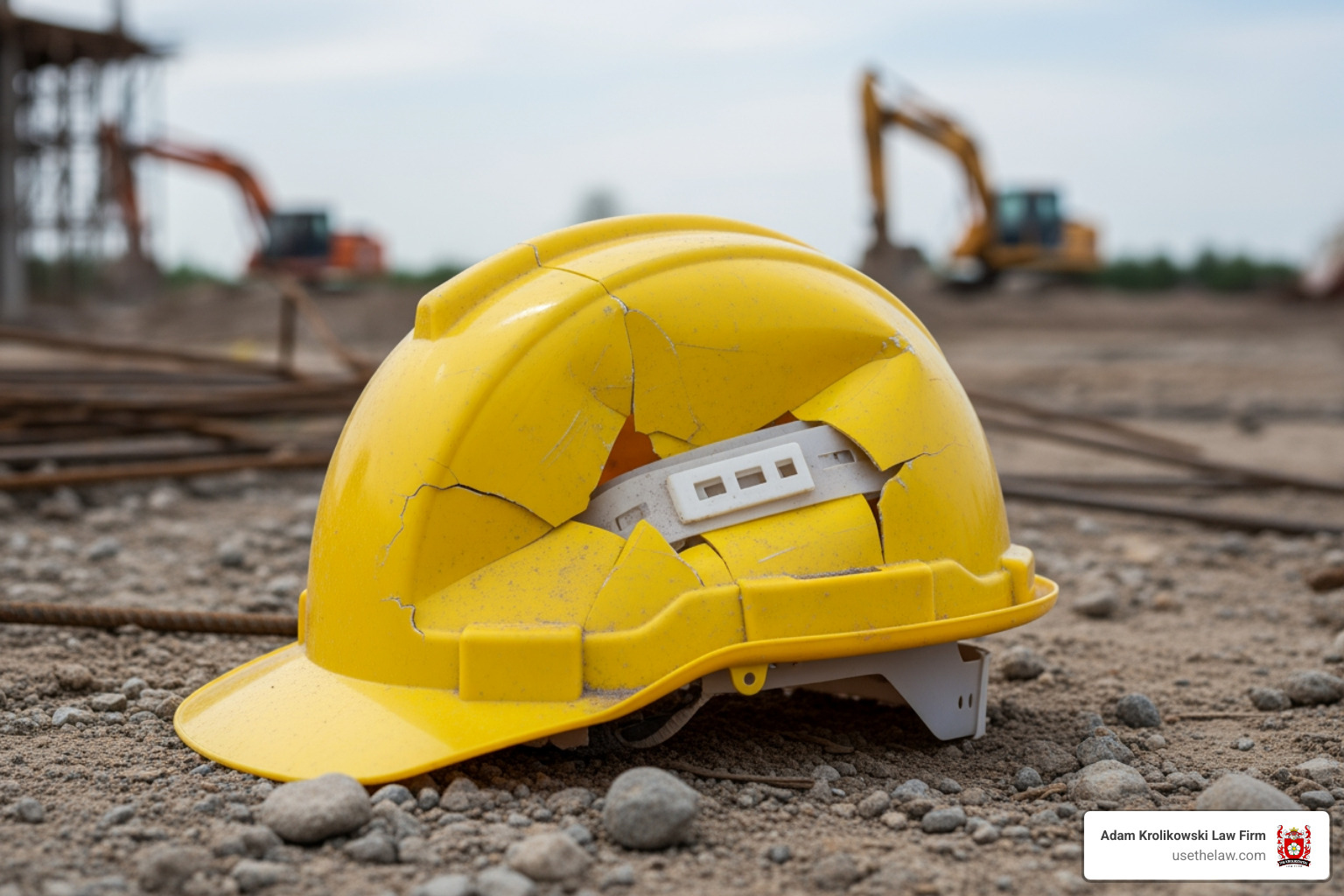
The reality is clear: falling object injury dangers demand constant vigilance and a serious commitment to prevention. For more detailed information, you can review the U.S. Bureau of Labor Statistics data on fatal injuries.
The Physics of a Fall: Why Height and Weight Matter
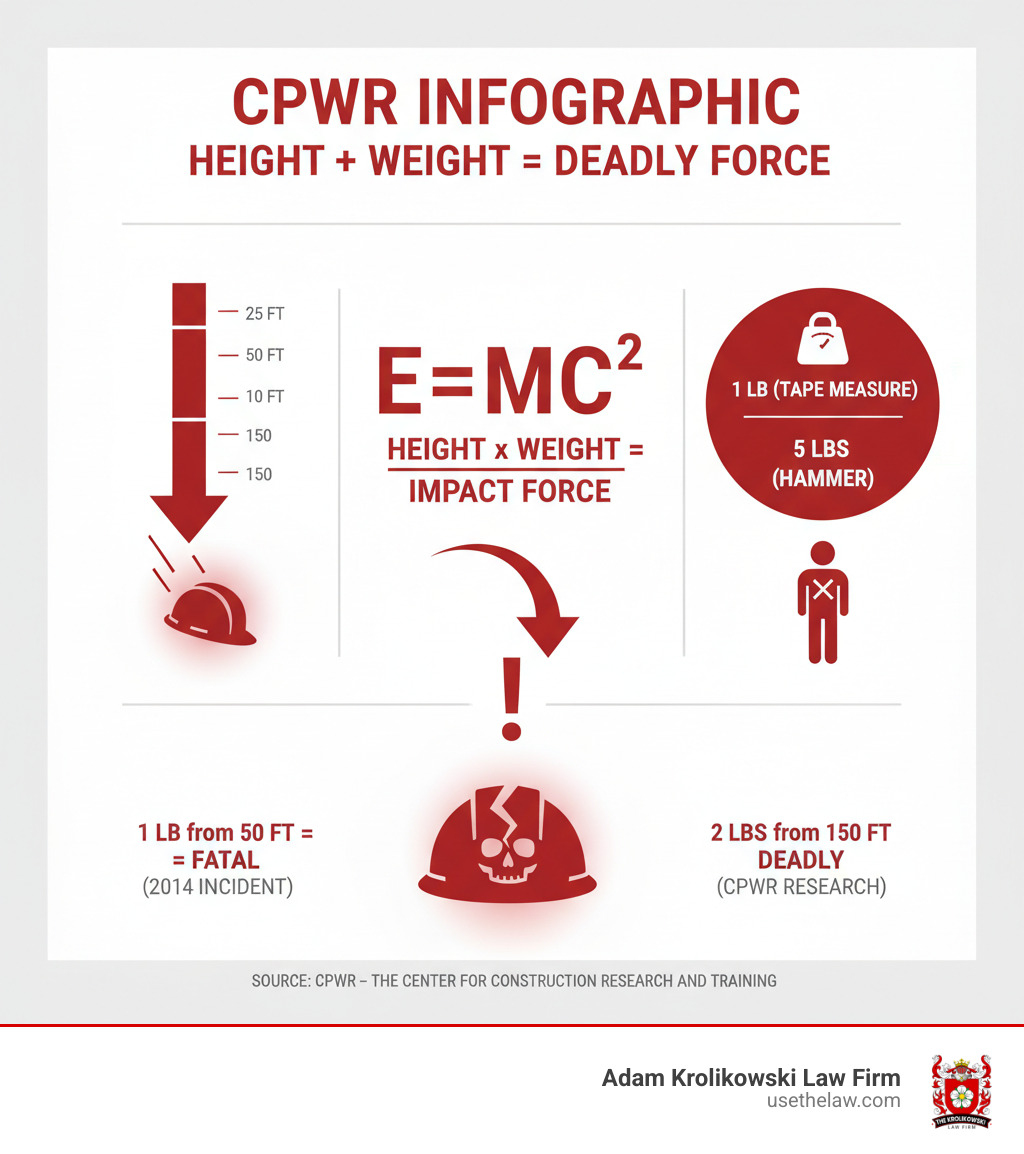
How can a small object become so deadly? The answer is physics. As an object falls, gravity increases its speed, converting that velocity into powerful kinetic energy upon impact. The higher the fall, the greater the force.
Think of it this way: dropping a tennis ball on your foot from your waist might sting. Dropping it from a tenth-story window could break bones. The object’s weight doesn’t change, but the height of the fall dramatically increases the impact force.
Research from CPWR (The Center for Construction Research and Training) shows that an object weighing just 2 pounds falling from 150 feet can be fatal. This means seemingly harmless items—nuts, bolts, or screwdrivers—become lethal hazards when working at height. Understanding this relationship is why preventing objects from falling in the first place is absolutely critical.
Common Causes and High-Risk Scenarios
Most falling object injury accidents are preventable and often stem from negligence. Key causes include:
- Improperly secured tools and equipment: A wrench balanced on a beam or an untethered drill can easily be knocked off by a vibration or gust of wind.
- Unstable material stacking: Stacking lumber, pipes, or bricks too high or on uneven surfaces creates a collapse hazard.
- Equipment failure: Poorly maintained cranes, hoists, or scaffolds can drop loads or components without warning.
- Lack of safety measures: Missing guardrails, toe boards, safety nets, or exclusion zones leave people below unprotected.
- Poor housekeeping and adverse weather: A cluttered worksite with loose debris increases risk, while strong winds or rain can dislodge unsecured items.
While construction sites are highest risk, warehouses and manufacturing plants also pose dangers. Common falling objects include tools (hammers, wrenches), building materials (bricks, lumber), debris (concrete, wood scraps), and equipment parts (nuts, bolts). Many of these incidents trace back to a failure to follow safety protocols, and when that negligence causes an injury, the responsible parties can be held accountable.
The Devastating Impact of a Falling Object Injury
The moment an object strikes from above, life can change instantly. A falling object injury can happen to anyone, from an experienced worker to a passerby on the sidewalk. While some escape with minor bruises, others face life-altering consequences.

Common Physical Injuries from Falling Objects
The head, neck, and spine are especially vulnerable. Depending on where an object lands, any part of the body can suffer serious harm.
- Traumatic brain injuries (TBIs) and skull fractures: A blow to the head can cause anything from a concussion to a penetrating skull fracture, leading to long-term cognitive, mood, and coordination problems.
- Spinal cord damage: An impact to the back or neck can damage the spinal cord, potentially causing partial or complete paralysis.
- Broken bones: Skulls, facial bones, arms, legs, and ribs can fracture or shatter, often requiring extensive surgery and rehabilitation.
- Amputations: A limb crushed beyond repair may require surgical removal, a life-altering injury requiring prosthetics and retraining.
- Lacerations and deep cuts: Sharp objects or sheer force can slice through skin and muscle, causing significant bleeding, infection risk, and permanent scarring.
- Internal organ damage: A blow to the torso can cause life-threatening internal bleeding or rupture organs like the liver, spleen, or lungs.
Not all injuries are immediately apparent. Concussion symptoms can be delayed, appearing hours or days later. It is critical to seek medical attention immediately after any falling object injury, even if you feel fine. For more on this, see these details on delayed concussion symptoms.
The Long-Term Consequences of a Serious Falling Object Injury
For many survivors, the real challenge begins after leaving the hospital. The ripple effects of a serious falling object injury extend far beyond physical healing.
- Permanent disability: Brain or spinal cord injuries can lead to a permanent loss of mobility or independence, requiring lifelong care.
- Chronic pain: Nerve damage and musculoskeletal injuries can result in persistent pain that affects mood, sleep, and quality of life.
- Financial hardship: Lost wages accumulate quickly. Many victims cannot return to their previous jobs, leading to reduced earning capacity and lost future income.
- Rehabilitation costs: Physical, occupational, and psychological therapy can last for months or years, creating overwhelming out-of-pocket expenses.
- Psychological trauma: Post-traumatic stress disorder (PTSD), anxiety, and depression are common after surviving a frightening accident.
When negligence causes this level of devastation, victims deserve compensation that addresses every aspect of their suffering. This is about holding responsible parties accountable and helping victims rebuild their lives.
Prevention and Legal Responsibilities: Who is Accountable?
When a falling object injury occurs, the primary responsibility for worksite safety lies with employers, site managers, and property owners. They have a legal “duty of care” to maintain an environment free from unreasonable dangers.
OSHA’s General Duty Clause requires that workplaces be “free from recognized hazards that are causing or are likely to cause death or serious physical harm.” When this duty is breached, several legal principles determine accountability:
- Negligence: This is the most common basis for a claim. It means someone failed to act with reasonable care, and that failure directly caused harm.
- Premises Liability: Property owners can be held liable for injuries caused by hazardous conditions they knew or should have known about, like unstable shelving or a crumbling facade.
- Third-Party Liability: On complex sites like construction zones, multiple parties (general contractors, subcontractors, equipment manufacturers) can share responsibility if their actions contributed to the accident. This is key for seeking compensation beyond workers’ comp.
Proactive Safety Measures on the Job Site
Most falling object injury incidents are preventable with the right planning and equipment. Key safety measures include:
- Personal Protective Equipment (PPE): Hard hats are essential wherever overhead hazards exist. Safety glasses and face shields may also be required.
- Tool Tethering: Attaching tools to a belt or anchor point with a lanyard prevents them from falling if dropped.
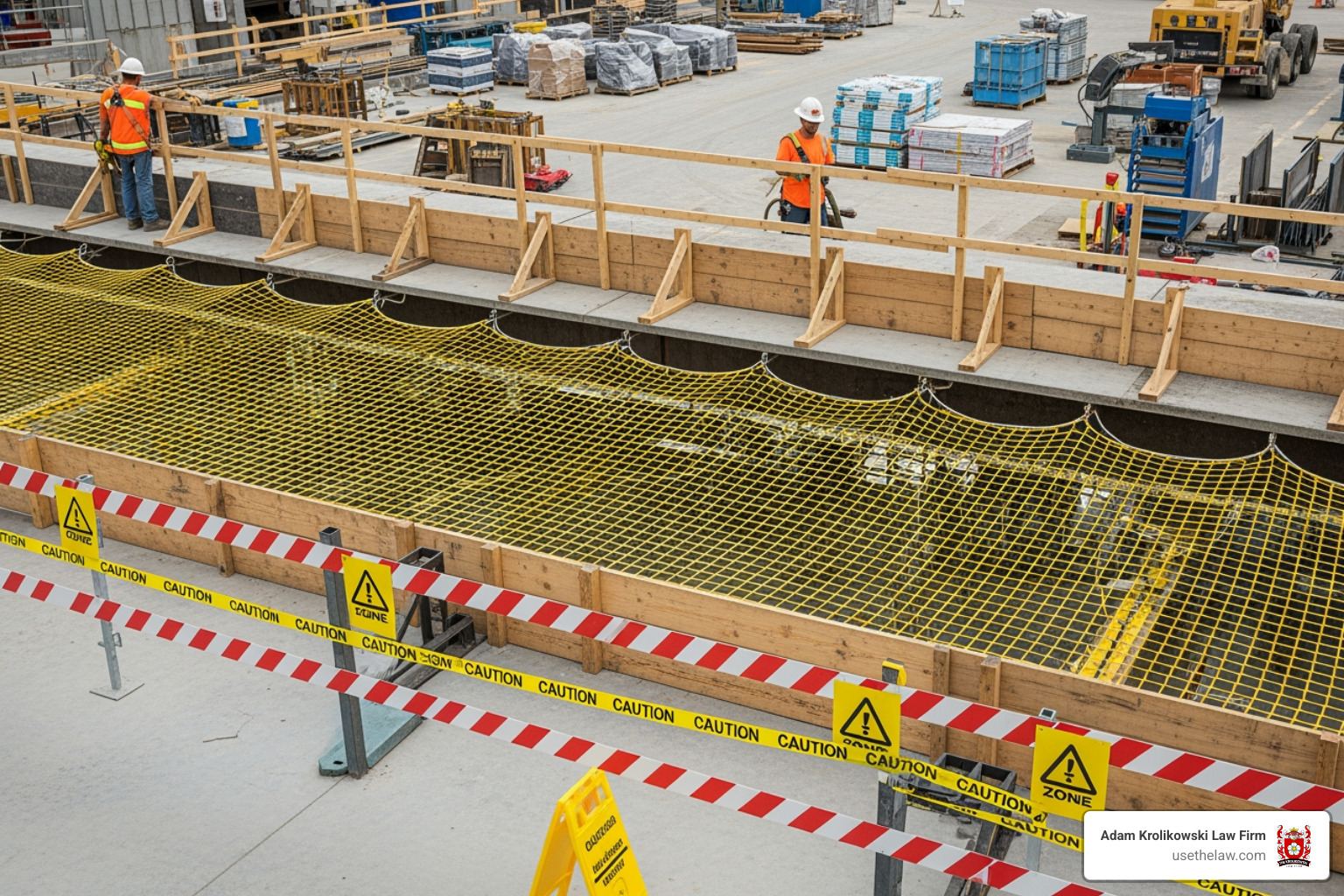
- Engineering Controls: Debris nets, guardrails, and toe boards (barriers at the base of a platform) create physical barriers to catch or stop falling items.
- Exclusion Zones: Barricading the area below overhead work with warning signs keeps people out of the danger zone.
- Proper Storage and Housekeeping: Materials should be stacked securely away from edges. Keeping work areas clean and organized reduces the risk of objects being accidentally knocked over.
- Training and Inspections: Regular equipment inspections and comprehensive worker training on hazard recognition are crucial for a safe worksite. The NIOSH toolbox talk on preventing falling objects offers practical guidance.
How Workers and Bystanders Can Protect Themselves
While employers hold the primary responsibility, everyone can take steps to stay safe.
- Be Aware: Pay attention to your surroundings. Look and listen for signs of overhead work, and don’t walk around distracted by your phone.
- Heed Warnings: Obey all warning signs and barricades. They exist to protect you from potentially lethal hazards.
- Avoid Restricted Zones: Never walk or stand under suspended loads or active overhead work platforms.
- Speak Up: If you see a hazard like an unsecured tool or unstable materials, report it to a supervisor or safety officer immediately.
- Wear PPE: Always wear the required PPE, like a hard hat, when on a worksite, even for a brief visit.
What to Do After an Accident and Understanding Your Legal Rights
The moments after a falling object injury are chaotic, but the steps you take are critical for your health and your legal rights.
Immediate Steps to Take After an Injury
- Seek Medical Help Immediately: This is the most important step. Some serious injuries, like concussions, have delayed symptoms. A medical record also serves as crucial evidence.
- Report the Incident: Inform your supervisor or the property manager as soon as possible. Ensure an official accident report is filed.
- Document the Scene: If you can, take photos of the object that fell, where it came from, your injuries, and the surrounding area.
- Get Witness Information: Collect names and contact information from anyone who saw what happened.
- Preserve Evidence: Keep the object that hit you, your damaged hard hat, and any torn clothing. These items can be vital to your case.
Navigating Your Rights to Compensation
If you were injured at work in California, workers’ compensation is your first avenue for benefits. It covers medical treatment and provides disability payments to replace some lost wages, regardless of who was at fault. However, you generally cannot sue your direct employer for more.
But workers’ comp is often not the only option. If a third party—like a different contractor on site, a property owner, or an equipment manufacturer—was negligent, you may be able to file a personal injury lawsuit against them. A successful personal injury claim can provide compensation for:
- All past and future medical expenses.
- All lost income and reduced future earning capacity.
- Pain and suffering, including emotional distress and loss of quality of life.
In fatal cases, surviving family members may file a wrongful death claim to seek compensation for their financial and emotional losses.
Navigating these legal paths is complex, especially while recovering from an injury. At Adam Krolikowski Law Firm, we have over 25 years of experience handling these exact situations. We investigate the accident to identify all responsible parties and fight to secure the full compensation you are entitled to under the law. You shouldn’t have to face this alone.
Frequently Asked Questions about Falling Object Injuries
If you’ve been hurt by a falling object injury, you likely have many questions. Here are answers to some common concerns.
Can I sue if I’m injured by a falling object at work?
It depends. In California, you typically cannot sue your direct employer due to the “workers’ compensation exclusivity rule.” Workers’ comp provides benefits without needing to prove fault. However, you can sue a negligent third party. On a construction site, this could be another contractor, the property owner, or an equipment manufacturer whose carelessness contributed to your falling object injury. A third-party claim allows you to seek compensation for damages not covered by workers’ comp, such as pain and suffering.
What if a small object caused my injury? Can I still file a claim?
Yes. The size of the object does not determine the validity of your claim; the severity of your injury does. Physics shows that even a small object falling from a significant height can generate enough force to cause a traumatic brain injury or other serious harm. Your claim is based on the documented injuries you suffered and the negligence that caused the accident, not the weight of the object.
How long do I have to file a claim for a falling object injury?
Strict deadlines, known as statutes of limitations, apply. Missing them can mean losing your right to compensation forever.
- Workers’ Compensation: You should report the injury to your employer immediately (within 30 days at most) and generally have one year from the injury date to file a formal claim.
- Personal Injury Lawsuit: In California, you typically have two years from the date of injury to file a lawsuit against a negligent third party. Wrongful death claims also generally have a two-year deadline.
These time limits can have exceptions and complexities. It is crucial to contact an attorney as soon as possible after your accident to evaluate your case and ensure all critical deadlines are met. A consultation costs you nothing and can protect your future.
Secure the Support You Need After an Injury
A falling object injury can turn your life upside down, leaving you with physical pain, mounting medical bills, and lost income. These accidents are often the result of someone else’s negligence—a failure to follow safety protocols, secure a load, or maintain a safe worksite.
You don’t have to steer the aftermath alone. At Adam Krolikowski Law Firm, we have spent over 25 years helping injury victims in Orange County and Los Angeles. We focus on complex cases involving multiple parties, such as those common in construction and industrial accidents. Our job is to investigate what happened, identify every responsible party, and hold them accountable.
We handle the legal fight against insurance companies and negligent parties so you can focus on your recovery. Our goal is to secure the compensation you need for all your medical bills, lost wages, and pain and suffering. We believe that when negligence causes harm, the responsible parties must provide justice for the victim.
If you or a loved one has suffered a falling object injury, contact us for a free consultation. We will listen to your story and explain your legal options. We work on a contingency basis, meaning you don’t pay unless we recover compensation for you. Don’t wait, as strict time limits apply. If you’ve been injured in a construction accident, learn more about your legal options.
Contact Us
Practice Areas
Recent Articles
- « Previous
- 1
- 2
- 3
- Next »