

Why Construction Site Safety Is Critical for Every Worker and Employer
Construction site safety is vital in one of the nation’s most dangerous occupations. According to OSHA, 1 in 5 workplace deaths in the U.S. occurs in the construction industry. These aren’t just statistics—they represent real people and families affected by preventable accidents.
Construction work involves unique dangers, from operating heavy machinery and working at heights to handling hazardous materials. The dynamic nature of job sites, with multiple trades working at once, increases the risk of accidents. However, most of these incidents are preventable with proper planning, training, and vigilance.
Effective safety measures include fall protection, electrical safety, proper use of Personal Protective Equipment (PPE), equipment maintenance, clear hazard communication, and emergency planning. This guide breaks down the essential components of construction site safety, from understanding OSHA’s “Fatal Four” hazards to building a safety program that protects everyone. Understanding these principles can save lives, and if you’ve been injured, knowing your rights is equally important.
Must-know construction site safety terms:
Understanding the Core Risks: OSHA’s “Fatal Four” and Beyond
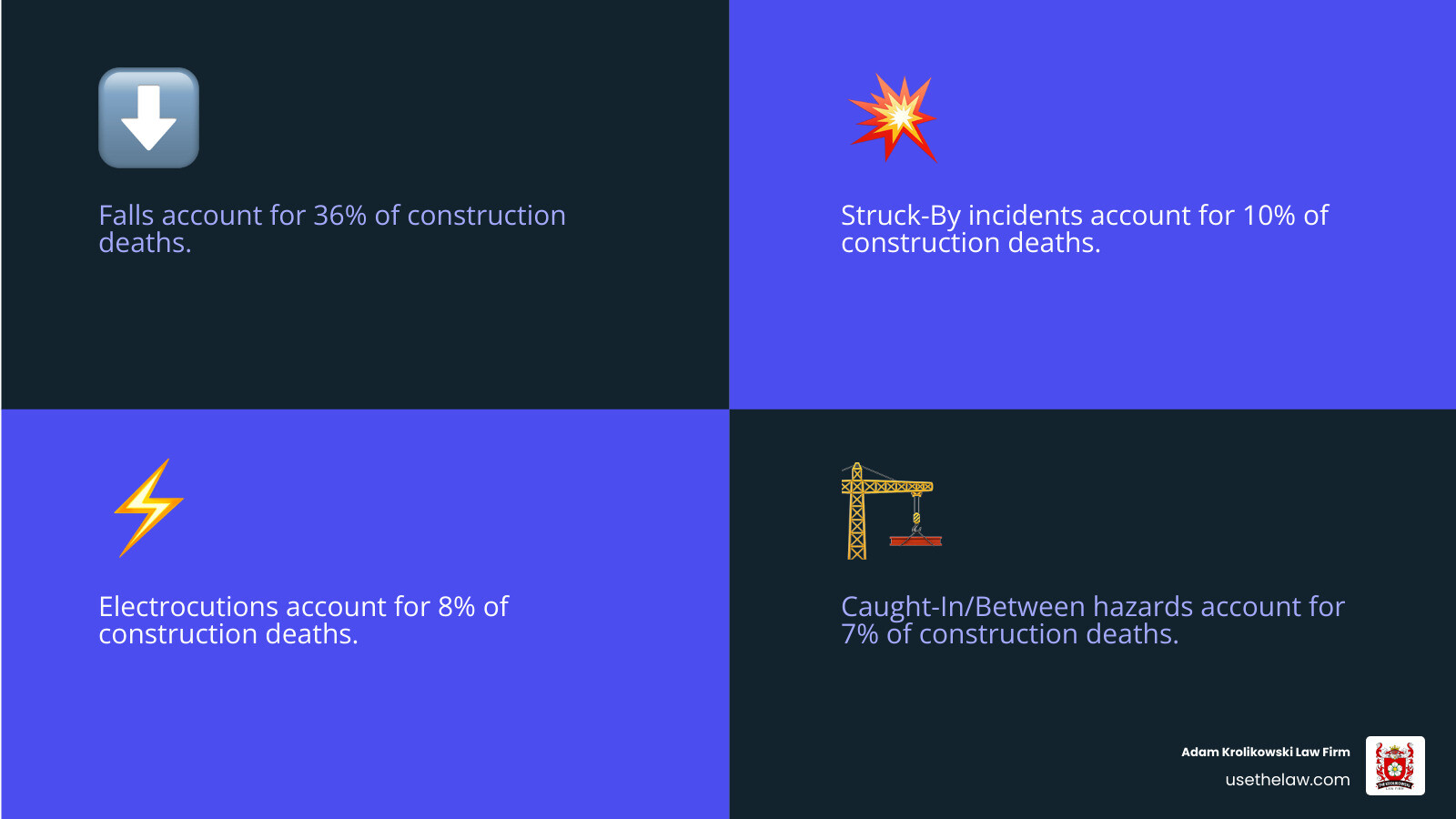
Improving construction site safety starts with understanding the risks. OSHA’s “Fatal Four”—falls, struck-by incidents, electrocutions, and caught-in/between accidents—cause over 60% of construction deaths. While nearly all are preventable, workers also face serious long-term health risks.
The Leading Danger: Preventing Falls from Heights
Falls from heights are the number one killer in construction. Falls, slips, and trips account for approximately 50 percent of all construction accidents. Prevention includes:
- Scaffolding safety: Scaffolds must be properly designed, erected on solid ground with guardrails, and inspected daily. If you’ve been hurt in a scaffolding incident, our Scaffolding Accident Lawyers can help.
- Ladder safety: Maintain three points of contact, use stable ladders of appropriate length, and inspect them before use.
- Fall protection systems: Use guardrails, safety nets, and Personal Fall Arrest Systems (PFAS) with proper training and inspection.
Mitigating Impact-Related Dangers: Struck-By, Caught-In, and Electrocution
The other Fatal Four hazards require specific precautions:
- Struck-by hazards: Prevent incidents with moving equipment or falling objects through clear communication, exclusion zones, high-visibility clothing, and tethered tools. If you’ve been in a Heavy Equipment Accident, we can help.
- Caught-in/between hazards: Avoid being trapped or crushed by using protective systems (sloping, shoring) for trenches deeper than five feet and conducting daily inspections. Learn more from our Trench Accident Lawyer Complete Guide.
- Electrocution: Nearly half of workplace electrical injuries involve construction workers. Prevent electrocution by grounding equipment, using non-conductive ladders, and following Lockout/Tagout procedures during maintenance.
The Hidden Dangers: Long-Term Health Risks in Construction
Construction work also poses long-term health risks:
- Hearing loss: Prevent permanent damage from loud noise with hearing protection.
- Respiratory issues: Construction workers are at a much higher risk of developing restrictive spirometry pattern lung disease. Use proper ventilation and respirators to avoid inhaling dust and chemicals.
- Musculoskeletal injuries: Use proper lifting techniques and mechanical aids to prevent strains and sprains.
- Cardiovascular health: Health screenings and wellness programs can help address associated health risks.
Addressing these long-term risks is a key part of comprehensive construction site safety.
Building a Foundation of Safety: The Construction Site Safety Program
A strong construction site safety program is the blueprint for preventing accidents. It requires a proactive, site-specific safety plan for each project to identify hazards, assess risks, and outline emergency responses. The plan should also cover site security and regular inspections.
Key Elements of an Effective Safety Program
An effective program is written, accessible, and includes:
- Hazard control methods and equipment.
- Emergency preparedness, including first aid and medical transport.
- Site security procedures to prevent theft and vandalism.
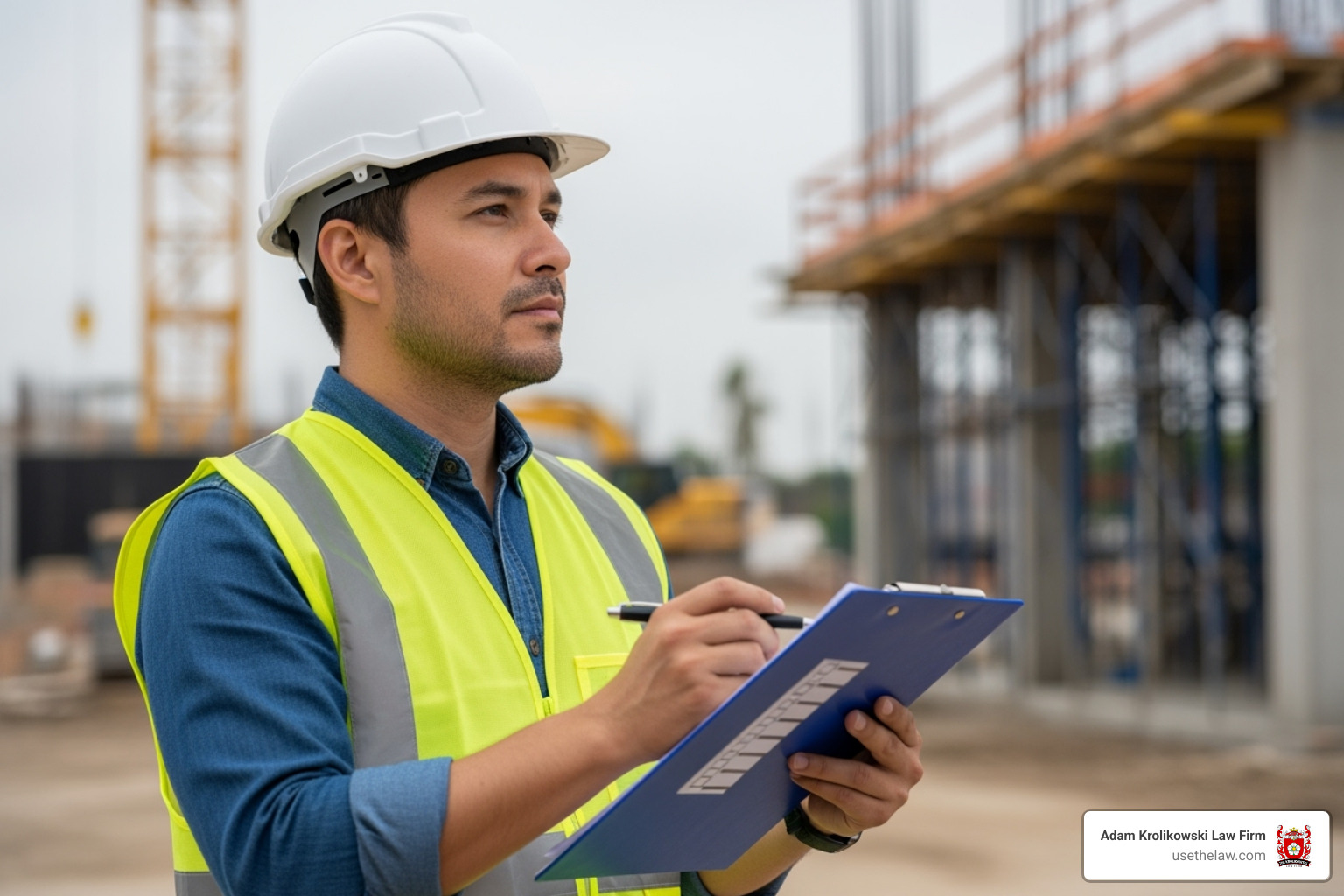
- Routine site inspections and periodic plan evaluations.
- Site-specific rules and worker training.
Proper planning also includes managing site access and maintaining Safety Data Sheets (SDS). If an injury occurs, our team can help you understand Construction Site Injury Claims.
Documentation and Record-Keeping: The Paper Trail of Protection
Good record-keeping is crucial for construction site safety. It demonstrates compliance and helps prevent future accidents. Key documents include:
- Training records: Proof of employee training (e.g., OSHA 10/30).
- Inspection logs: Records of site inspections and corrective actions.
- Safety Data Sheets (SDS): On-site information for all hazardous chemicals.
- Incident and near-miss reports: Documentation of accidents and close calls for root cause analysis.
For more resources, see OSHA’s construction industry resources.
Preparing for the Worst: Emergency Response and Communication
A clear emergency response plan is essential. Key components include:
- Evacuation routes: Marked paths to safe assembly points, reinforced with drills.
- Fire safety protocols: Procedures for fire prevention and response.
- Medical emergency plan: Instructions for responding to injuries.
- Hazard reporting channels: Simple ways for workers to report dangers.
- Toolbox talks: Daily or weekly meetings to review site-specific hazards.
If a construction incident affects you, a Workers’ Compensation Lawyer in Orange County, California can help you understand your rights.
Empowering the Workforce: Training and Personal Responsibility
Effective construction site safety requires a team effort where everyone feels responsible. A strong safety culture makes safety a natural part of every task and encourages workers to report unsafe conditions without fear of reprisal.
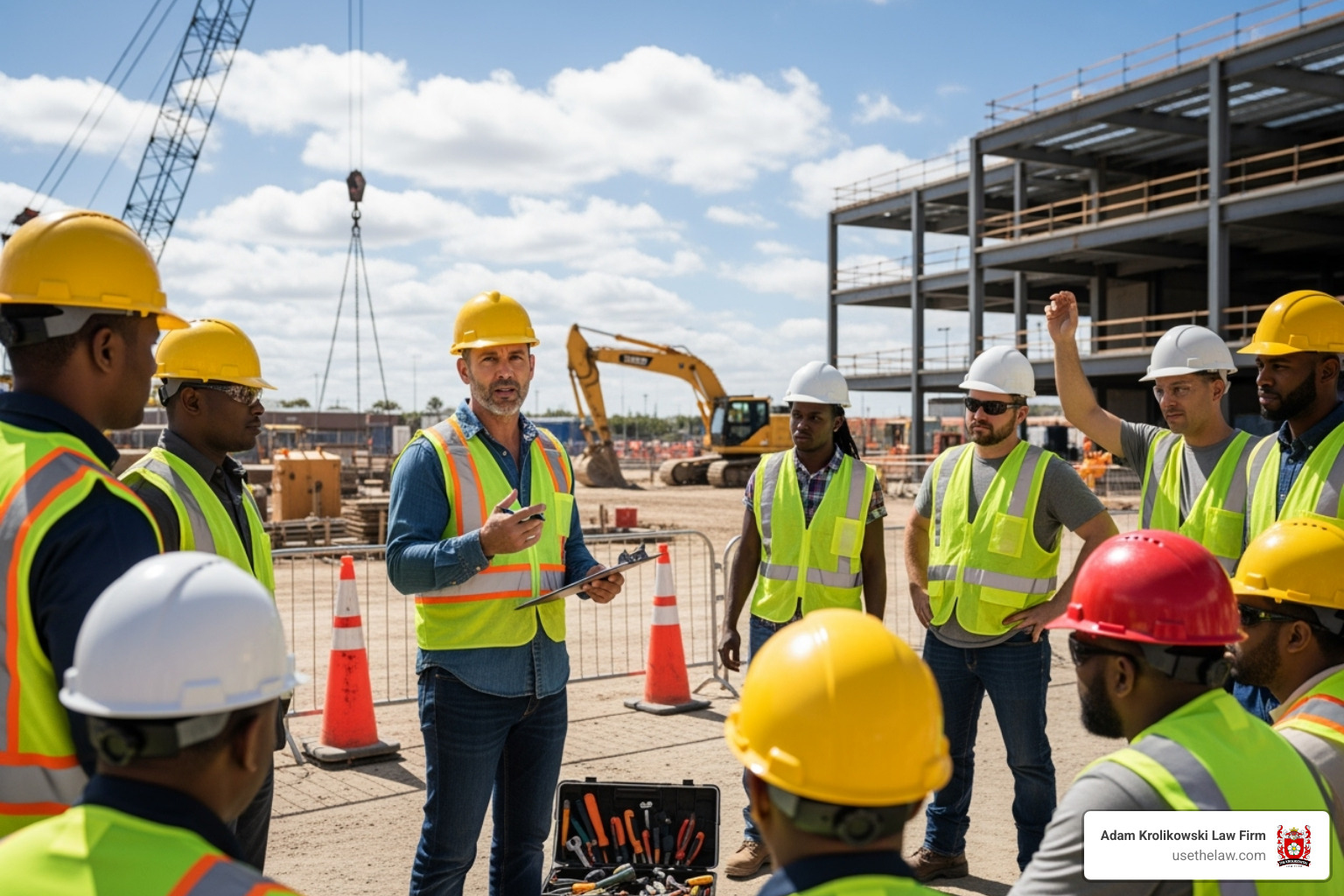
Mandatory Training for Construction Site Safety
Training empowers workers to identify hazards and work safely. Essential training includes:
- OSHA 10-hour and 30-hour training for foundational and in-depth safety knowledge.
- Task-specific training for handling hazardous materials or specialized jobs.
- Equipment operation certification for operators of heavy machinery.
- Custom training adapted to a worker’s role and experience.
Training must stay current with regulations like the Final Rule on Personal Protective Equipment in Construction.
The First Line of Defense: Personal Protective Equipment (PPE)
Personal Protective Equipment (PPE) is the final barrier against a hazard. Proper use, fit, and maintenance are critical. Essential PPE includes:
- Hard hats
- Eye and face protection
- Hearing protection
- High-visibility clothing
- Steel-toed boots
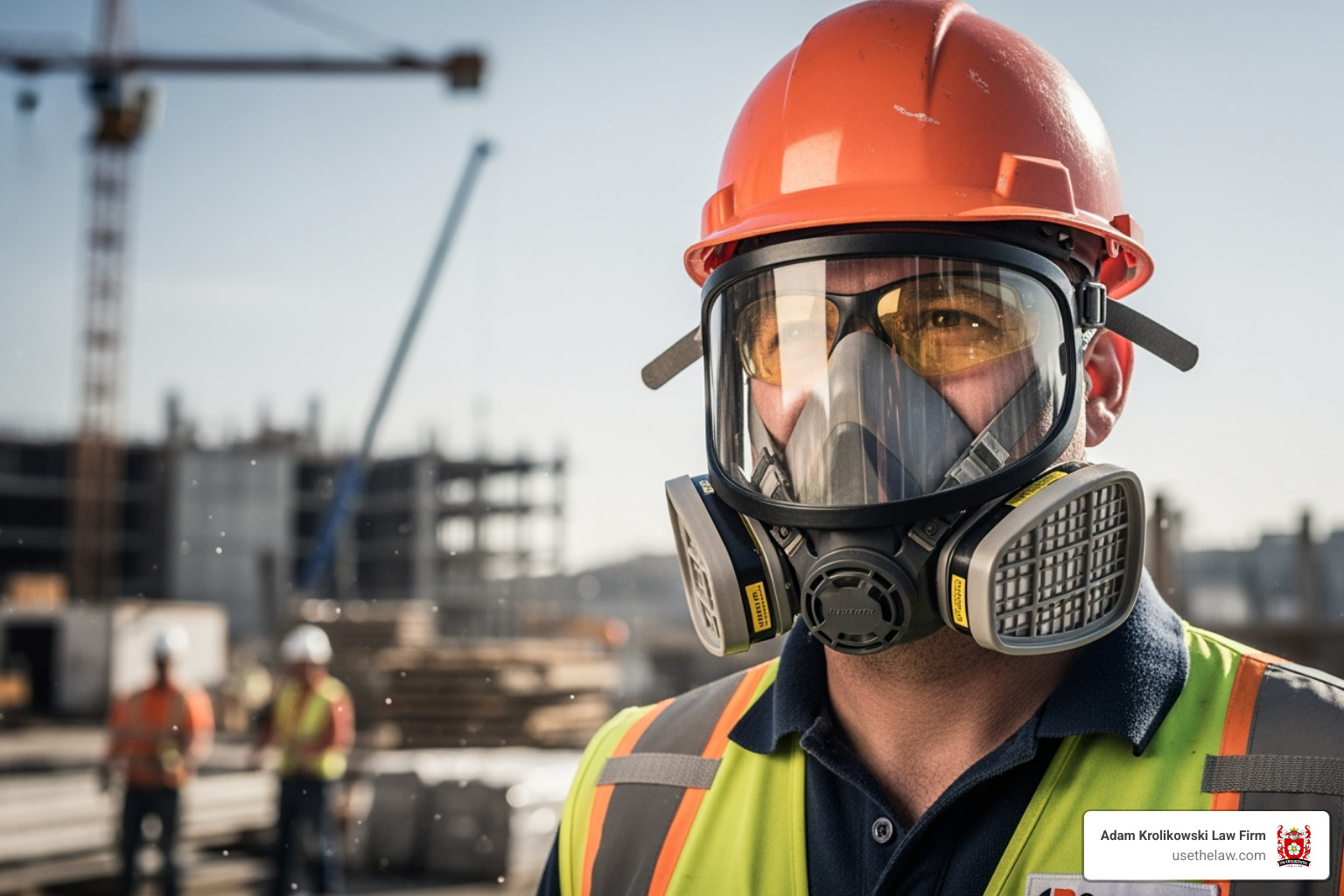
- Respirators for airborne contaminants
All PPE must meet regulatory standards and be appropriate for the task.
Fostering a Proactive Safety Culture
A proactive safety culture makes construction site safety a top priority. Key components include:
- Leadership commitment: Management must invest in and prioritize safety.
- Worker involvement: Include workers in safety discussions and committees.
- No-retaliation reporting: Workers must feel safe to report hazards. If internal channels fail, they can file a confidential report directly to OSHA.
- Recognizing safe behavior: Acknowledge and reward proactive safety practices.
- Continuous improvement: Use incident data to refine safety protocols.
If an injury occurs, our team can help you steer Work Injury Claims Workers Comp Lawyer to understand your rights.
Maintaining a Safe Environment: Best Practices for Site Management
Effective site management is the backbone of construction site safety. It involves controlling hazards through diligent organization, equipment care, and constant vigilance. Key practices include meticulous site organization, rigorous equipment maintenance, clear hazard communication, and stringent access control.
The Importance of a Clean and Organized Worksite
A clean worksite is essential for preventing slips, trips, and falls. Good housekeeping is a proactive safety measure that includes:
- Debris Management: Regularly clear debris and waste from all work areas.
- Material Storage: Store materials securely in designated areas, away from walkways.
- Clear Access: Keep all walkways, stairs, and access points clear for safe movement and emergency egress.
- Waste Disposal: Follow clear rules for waste disposal, especially for hazardous materials.
If a slip or fall occurs, our team can help with your Slip and Fall Attorney Orange County CA case.
Equipment Inspection and Maintenance
Properly maintained equipment is critical for construction site safety. A proactive approach includes:
- Pre-use inspections: Workers should visually and functionally check tools before each use.
- Regular maintenance: Follow manufacturer-recommended schedules for all machinery.
- Lockout/Tagout: Immediately remove defective equipment from service using a Lockout/Tagout system.
High-risk equipment requires special attention. For example, 43 percent of fatal worker injuries involving cranes happened in the private construction industry over a six-year period. Crane safety requires certified operators and daily checks. Our Crane Accident Attorney Complete Guide offers more details. Forklift safety also requires special training and regular equipment checks.
Frequently Asked Questions about Construction Site Safety
Here are answers to some common questions about construction site safety.
What are OSHA’s ‘Fatal Four’ hazards in construction?
OSHA’s ‘Fatal Four’ are the leading causes of death in the construction industry, accounting for over 60% of fatalities. They are:
- Falls: Incidents where workers fall from heights, such as from ladders, scaffolds, or unprotected edges.
- Struck-By incidents: Situations where workers are hit by moving objects, like heavy machinery or falling materials.
- Electrocutions: Deaths caused by contact with electrical current from faulty wiring or power lines.
- Caught-In/Between hazards: Workers being caught in machinery, crushed between objects, or trapped in structural collapses.
Focusing on these four areas significantly improves construction site safety.
Who is responsible for safety on a construction site?
Construction site safety is a shared responsibility.
- Employers must provide a safe work environment, proper training, and necessary Personal Protective Equipment (PPE).
- Site supervisors manage and enforce safety rules on-site daily.
- Workers are responsible for following safety rules, using PPE correctly, and reporting any unsafe conditions they observe.
Everyone on site plays a crucial role in maintaining a safe environment.
How can workers report unsafe conditions without fear of retaliation?
A strong safety culture includes a non-retaliatory reporting policy, allowing workers to report concerns without fear. If you see something unsafe, you can:
- Report it to your immediate supervisor.
- Contact the site’s safety officer.
- Speak with a union representative if you are a member.
If your concerns are not addressed, you have the right to file a confidential complaint directly with OSHA. OSHA can investigate the site to ensure safety standards are met. Reporting hazards is a critical step in preventing accidents.
Conclusion
This guide to construction site safety highlights that while construction is a dangerous industry, most accidents are preventable. A combination of proactive safety programs, comprehensive training, and a strong safety culture can protect lives.
We’ve covered preventing OSHA’s “Fatal Four” hazards, addressing long-term health risks, and building a comprehensive safety program with proper documentation and emergency plans. Empowering workers with training, PPE, and a voice to report hazards is key. Likewise, diligent site management, including housekeeping and equipment maintenance, makes prevention second nature. Vigilance is non-negotiable in this ever-changing work environment.
However, even with the best safety protocols, accidents can still happen. When they do, understanding your rights is crucial.
At Adam Krolikowski Law Firm, we have over 25 years of experience standing up for injured construction workers and their families. We handle complex cases, including workers’ compensation claims and third-party liability issues, to ensure our clients receive strong representation. The people who build our communities deserve to be safe, and if something goes wrong, they deserve to have someone in their corner.
If you or a loved one has been injured in a construction accident, understand your rights by contacting an experienced Orange County construction accident lawyer. Let us help ensure your voice is heard and your future is protected.
