

Why You Need an Overloaded Truck Accident Lawyer After a Catastrophic Crash
An overloaded truck accident lawyer handles complex cases where excessive cargo weight leads to devastating crashes. These attorneys understand federal trucking regulations, investigate weight violations, and identify all liable parties to pursue the compensation you deserve.
Key reasons to hire an overloaded truck accident lawyer:
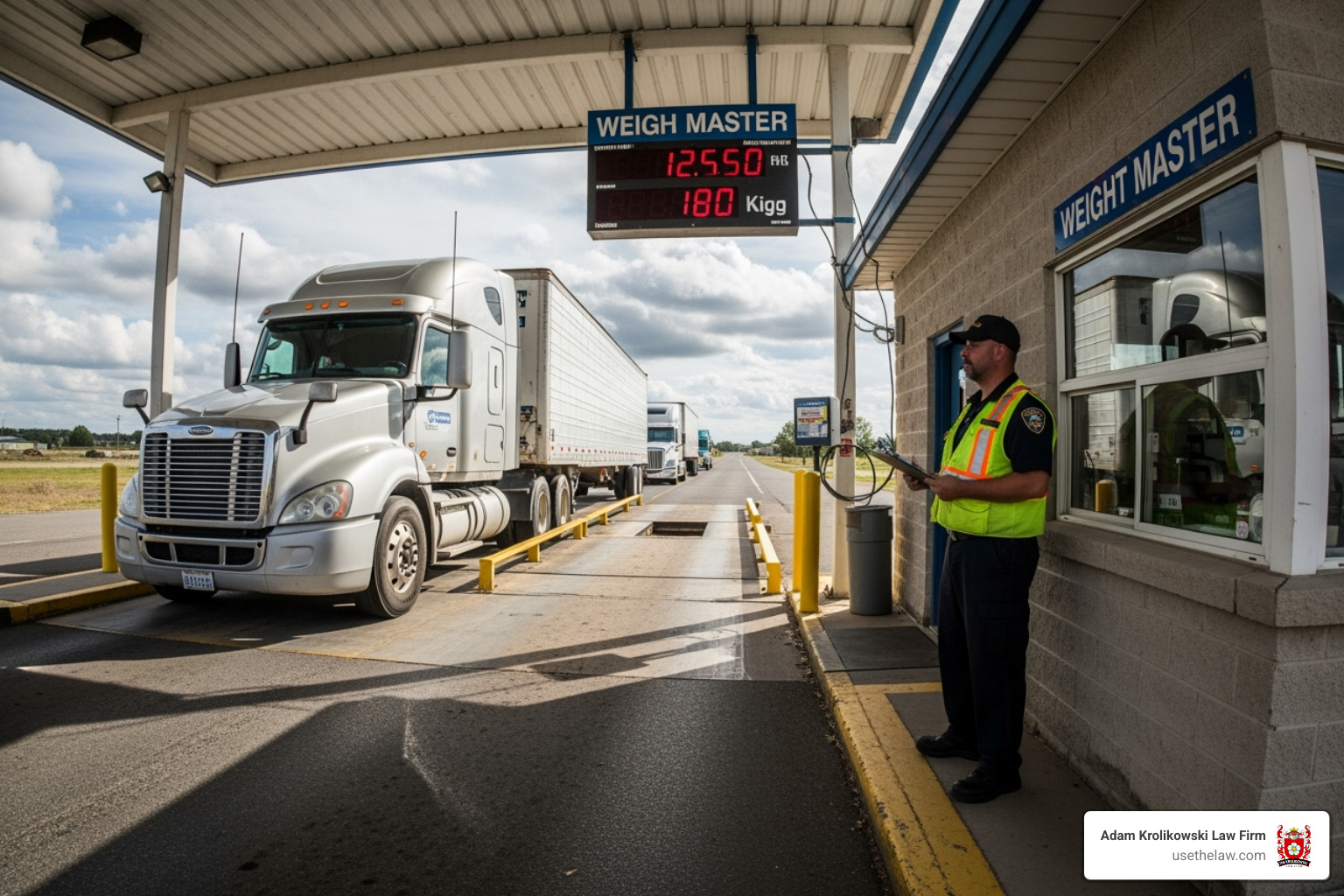
- Prove weight violations with weigh station records and shipping documents
- Steer complex liability involving drivers, trucking companies, and cargo loaders
- Counter insurance tactics that downplay overloading as a crash factor
- Secure compensation for catastrophic injuries and damages
- Meet strict deadlines for evidence preservation and filing claims
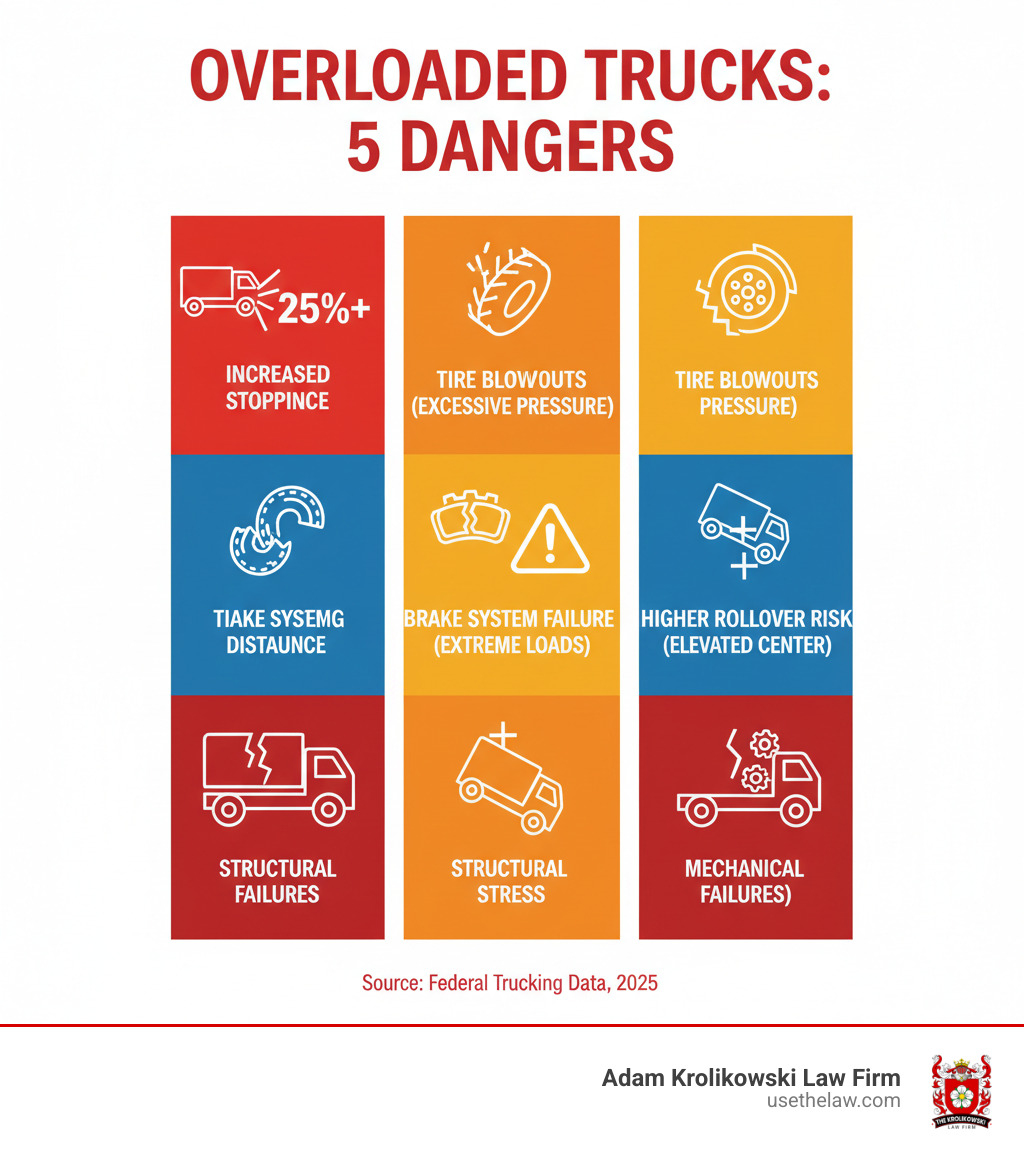
Commercial trucks can legally weigh up to 80,000 pounds. When trucking companies exceed these limits to boost profits, the results are often catastrophic. Federal data reveals a sobering truth: a truck just 10% overweight might need up to 25% more stopping distance. This economic pressure leads to dangerous shortcuts, like skipping weight checks or ignoring safety limits.
Unlike typical car accidents, these crashes involve complex regulations and liability. Insurance companies often use this complexity to their advantage, attempting to minimize payouts or deny valid claims.
Essential Overloaded truck accident lawyer terms:
The Physics of Disaster: How Overloading Causes Catastrophic Accidents
When trucking companies prioritize profits over safety by overloading their vehicles, they turn 80,000-pound trucks into uncontrollable dangers. The laws of physics make these trucks exponentially more hazardous on the road.
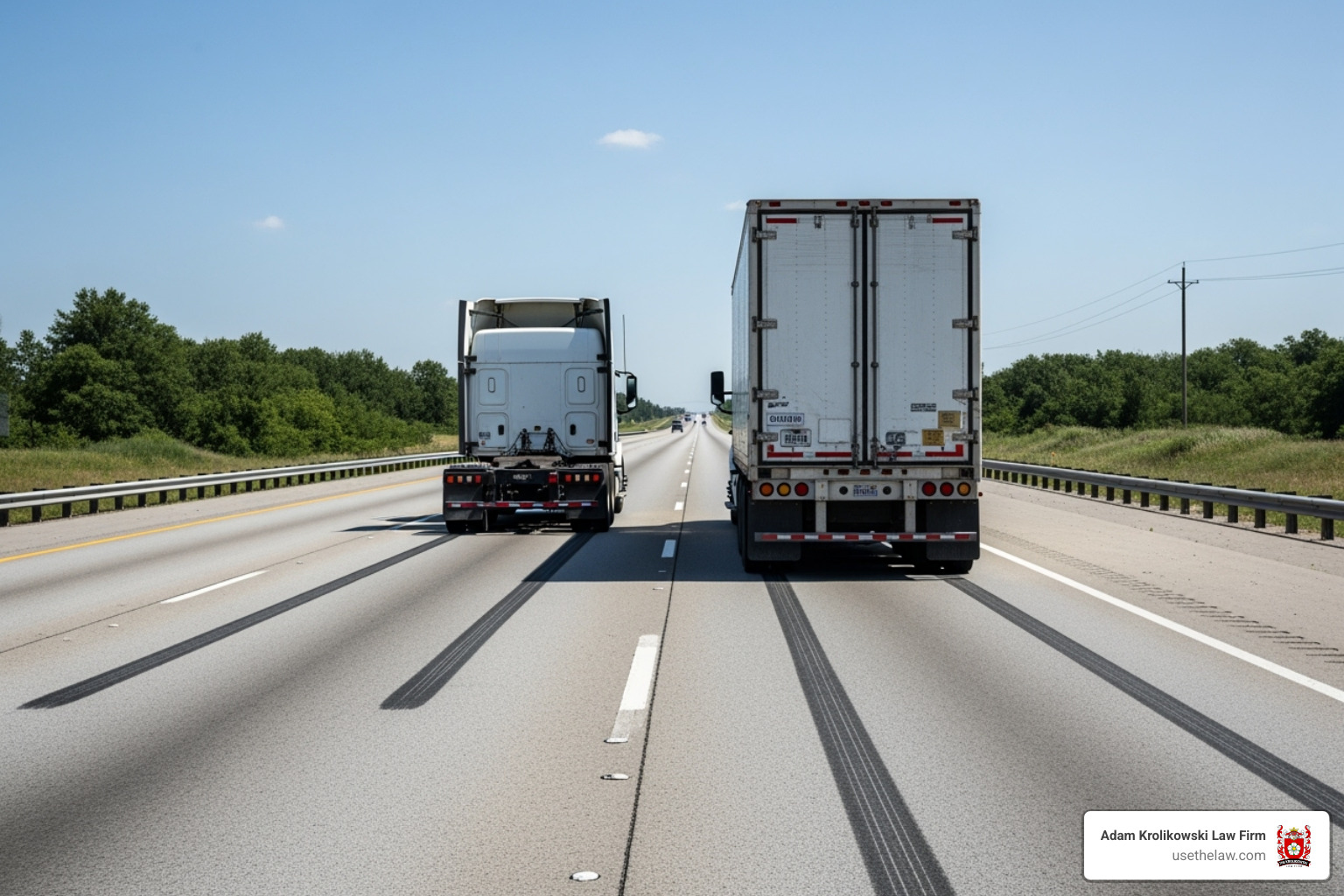
The most significant danger is increased stopping distance. According to the Federal Motor Carrier Safety Administration (FMCSA), a truck just 10% overweight needs up to 25% more distance to stop. That extra length can be the difference between a near-miss and a tragedy.
Overloading also leads to catastrophic mechanical failures:
- Brake failure: The system overheats and fails under the strain of slowing excessive weight, a deadly risk on California’s steep highways.
- Tire blowouts: Exceeding a tire’s weight limit creates intense pressure and heat, leading to explosions that cause a driver to lose control.
- Rollovers: The high center of gravity from excess weight makes trucks unstable. A routine turn or gust of wind can cause a rollover, crushing smaller vehicles.
- Component Stress: Suspension and steering systems buckle under the weight, making the truck difficult to control, especially in an emergency.
An overloaded truck accident lawyer knows how these mechanical failures point to legal liability. Understanding these dangers is key to building a strong case against negligent trucking companies.
For victims dealing with the aftermath of these preventable crashes, resources like Cargo Loading Negligence Legal Advocacy Los Angeles Truck Accident Lawyer provide crucial guidance on holding negligent parties accountable for their dangerous decisions.
Untangling the Web of Liability: Who Is Held Responsible?
When an overloaded truck causes an accident, determining responsibility is complex. The trucking industry involves a network of parties, and a failure by any one of them can lead to disaster. An experienced overloaded truck accident lawyer can untangle this web of liability.
Multiple parties may be held responsible:
- The truck driver: Drivers are required to inspect their loads and can be held liable for operating an unsafe vehicle, though they often face pressure from employers.
- Trucking companies: They often bear the primary responsibility. They may be liable for their driver’s actions (vicarious liability) and for their own negligence, such as encouraging overweight loads or skipping maintenance.
- Cargo shippers and loaders: If a shipper provides incorrect weight information or a loading company improperly distributes the cargo, they share in the liability.
- Maintenance contractors: If faulty repairs on brakes or suspension contribute to a crash, the maintenance company can also be held responsible.
California’s joint and several liability law allows you to recover full damages from any single at-fault party, which is a critical protection in these cases. The key is proving negligence—that a party had a duty of care, breached it, and caused your injuries. Investigating these claims requires a deep understanding of federal and state trucking laws. For more insights into building these cases, check out our guide on Key Strategies for Proving Liability in Truck Accident Cases.
The federal cargo rules provide the foundation for many of these liability claims. When companies ignore these safety requirements to chase profits, they need to face the consequences.
Building Your Case: The Role of an Overloaded Truck Accident Lawyer
After an overloaded truck accident, the legal clock starts ticking while you are still dealing with trauma and injuries. An overloaded truck accident lawyer steps in to manage the legal complexities so you can focus on healing.
Protecting Your Rights and Building Your Case
In the critical hours after a crash, protect your rights. Call 911 to create an official police report and get immediate medical attention, as some serious injuries have delayed symptoms. A medical record is crucial for linking your injuries to the accident.
If it’s safe, document the scene. Take photos of vehicle damage, spilled cargo, and the truck’s USDOT number. Gather contact information from any witnesses. Importantly, avoid admitting fault or apologizing, as these statements can be used against you. Let your lawyer handle all communications with insurance companies, who are trained to get you to say things that minimize their liability.
Gathering Evidence and Seeking Compensation
Proving a truck was overloaded requires a thorough investigation. We gather crucial evidence, including:
- Weigh station records and shipping documents (bills of lading) to prove weight discrepancies.
- Electronic Logging Devices (ELDs) and “black box” data to reveal the truck’s speed, braking, and route.
- Maintenance records to show patterns of wear and tear consistent with chronic overloading.
- Accident reconstruction analysis to scientifically demonstrate how overloading caused the crash.

Insurance companies use tactics like offering quick, lowball settlements or trying to shift blame onto you to reduce their payout. We counter these tactics by building a comprehensive claim that accounts for all your damages, including:
- Medical expenses (current and future)
- Lost wages and diminished earning capacity
- Pain and suffering
- Property damage
An overloaded truck accident lawyer ensures you are not shortchanged and fights for the full compensation you need for your future. For situations where insurance coverage isn’t enough to fully compensate your losses, we explore additional options detailed in our guide on Seeking Compensation Beyond Insurance Limits in Truck Accidents.
Understanding the Rules of the Road and Your Legal Options
When a massive commercial truck causes an accident, understanding your legal rights can feel overwhelming. The trucking industry operates under a complex web of federal and state regulations – and when these rules are violated, especially weight limits, it creates a powerful foundation for your legal case. This is where having an overloaded truck accident lawyer becomes essential to steer these intricate laws and protect your interests.
Federal and California Truck Weight Regulations
Both federal and California authorities set strict weight limits to keep highways safe. The Federal Motor Carrier Safety Administration (FMCSA) sets the national standard, while the California Vehicle Code provides state-level oversight.
| Category | Federal Limit (General) | California Standard (General) |
|---|---|---|
| Gross Vehicle Weight | 80,000 lbs | 80,000 lbs |
| Single Axle | 20,000 lbs | 20,000 lbs |
| Tandem Axle | 34,000 lbs | 34,000 lbs |
| (Note: Exceptions and special permits may apply in both cases) |
While overweight permits exist for special loads, they come with strict conditions. Violating these conditions is as serious as operating without a permit. The FMCSA also has detailed cargo securement rules, as improperly secured cargo can be dangerous even if the truck is within weight limits. Learn more about how these rules apply in Federal Trucking Regulations and Their Impact on Santa Ana Truck Accident Cases.
Common Injuries and Long-Term Consequences
The force of an 80,000+ pound truck collision often results in severe, life-altering injuries, including:
- Traumatic brain injuries (TBI): Ranging from concussions to severe cognitive impairment.
- Spinal cord injuries: Can result in partial or complete paralysis.
- Multiple broken bones: Often requiring extensive surgery and rehabilitation.
- Internal injuries: Such as organ damage or internal bleeding, which can be life-threatening.
- Wrongful death: In the most tragic cases, families are left to cope with immense grief and financial hardship. We help families pursue justice through wrongful death claims, as explained in Seeking Compensation for Wrongful Death in Los Angeles Truck Accidents.
Beyond physical injuries, many accident victims develop psychological trauma including PTSD, anxiety, and depression. These invisible wounds can be just as debilitating as physical injuries, affecting every aspect of a person’s life.
What Is the Deadline for Filing a Claim in California?
California’s statute of limitations sets a strict deadline for filing a lawsuit. For most personal injury claims from truck accidents, you have two years from the date of the accident.
This deadline can change. The findy rule may extend it if an injury wasn’t immediately apparent. Cases involving minors or government entities also have different timelines. Because these rules are unforgiving, it is important to contact an overloaded truck accident lawyer promptly to ensure all deadlines are met. For a deeper understanding of these critical timelines and how they might apply to your specific situation, we encourage you to read What is the Statute of Limitations for Truck Accident Claims in California?.
Frequently Asked Questions about Overloaded Truck Accidents
After a devastating truck accident, your mind is probably racing with questions. Here are answers to some of the most common ones we hear.
How much does it cost to hire an overloaded truck accident lawyer?
We work on a contingency fee basis, which means you pay no upfront costs. We cover all expenses for the investigation and legal process. Our fee is a percentage of the settlement or court award we recover for you. If we don’t win your case, you owe us nothing. This allows you to get legal help without financial stress while you recover.
Can I still file a claim if I was partially at fault?
Yes. California follows a pure comparative negligence rule. This means you can still recover compensation even if you were partially at fault for the accident. Your total compensation will be reduced by your percentage of fault. For example, if you are found 10% at fault, you can still recover 90% of your damages. Insurance companies will try to maximize your fault to reduce their payout, which is why having a lawyer to protect your interests is so important.
How can I tell if a truck is overloaded on the road?
While you can’t be certain without a scale, there are visual clues that a truck may be dangerously overloaded:
- Sagging trailer: The trailer appears to droop in the middle or ride unusually low.
- Bulging tires: The tires look flattened or are bulging at the sides from extreme pressure.
- Poor handling: The truck struggles to accelerate, maintain speed, or stay in its lane, especially on hills or in turns.
- Spilling cargo: The load is visibly overflowing or stacked unsafely.
If you spot these warning signs, give that truck plenty of space. Consider changing lanes or even pulling over if you feel unsafe. Your safety is more important than getting somewhere a few minutes earlier. You can also report dangerous trucks to authorities if you believe they pose an immediate threat to other drivers.
Conclusion
An overloaded truck accident can turn your life upside down. These are not simple accidents; they are often the result of a conscious choice to prioritize profits over safety. You should not have to face the aftermath alone against trucking companies and their insurers.

At Adam Krolikowski Law Firm, we have over 25 years of experience handling complex truck accident cases. We know how to investigate these claims, from analyzing black box data to identifying every responsible party. We handle the legal fight so you can focus on healing.
We work on a contingency fee basis, so you pay nothing unless we win your case. The evidence needed to prove your claim is time-sensitive, and California’s statute of limitations restricts how long you have to act.
Contact an Orange County Truck Accident Lawyer for a free consultation today. Let us put our experience to work for you and fight for the justice and compensation you deserve.
