
Why Dog Bite Law Matters for Victims
Dog bite law protects victims by establishing how dog owners can be held responsible for injuries their animals cause. Understanding these laws is the first step toward getting compensation for your medical bills, lost wages, and pain and suffering. Each year, 4.7 million Americans are bitten by dogs, revealing a troubling reality: dog bites are common, often severe, and frequently preventable.
Quick Overview: What You Need to Know About Dog Bite Law
- Liability varies by state: Some states have strict liability (the owner is responsible regardless of the dog’s history), while others use a “one-bite rule” (the owner must have known the dog was dangerous).
- Virginia follows a modified one-bite rule: Owners are liable if they knew or should have known their dog was dangerous.
- Time limits apply: Most states give victims 2-3 years to file a lawsuit. Virginia’s statute of limitations is typically 2 years for personal injury.
- Compensation covers: Medical expenses, lost income, scarring, pain and suffering, and other damages.
- Owner defenses exist: Trespassing or provoking the dog can reduce or eliminate the owner’s liability.
The legal landscape surrounding dog bites can be confusing, as different states have different rules. If you’ve been bitten, you’re likely dealing with medical treatment and mounting bills, wondering who will pay. The answers depend on where you live and the circumstances of the bite.
This guide breaks down the complex world of dog bite law into simple, actionable information. We’ll explain how liability works, what Virginia and California law require, what damages you can claim, and what steps to take to protect your rights.
Establishing Liability: How Dog Bite Cases Are Proven
When a dog bite happens, the key question is: Who’s responsible? This determines who will pay for your medical bills, lost wages, and pain. Understanding how dog bite law establishes liability is critical for receiving fair compensation.
Dog owners have a duty to control their animals and prevent them from harming others. When they fail, they may be held legally responsible. Proving this responsibility depends on your state’s laws. For specific guidance, consider seeking Dog Attack Legal Advice. The path to proving liability typically follows one of several legal theories: strict liability, negligence, or negligence per se.

The ‘One-Bite Rule’ vs. Strict Liability
Dog bite law primarily uses two approaches: the “one-bite rule” and strict liability.
The “one-bite rule” holds an owner liable only if they knew or should have known their dog had dangerous tendencies. Evidence like prior growling, snapping, or previous bites can establish this knowledge. Virginia uses a modified version of this rule, where negligence can establish liability even without a prior bite.
Strict liability states hold owners automatically responsible for injuries their dogs cause, regardless of the dog’s history. If a dog bites someone, the owner is liable. California follows this rule. California Civil Code Section 3342 makes it clear that an owner is liable for damages if their dog bites someone in a public place or lawfully on private property, “regardless of the former viciousness of the dog or the owner’s knowledge of such viciousness.” Washington state has a similar law under RCW 16.08.040: Dog bites—Liability.. This makes it much simpler for victims to prove their case.
Proving Negligence in a Dog Bite Case
Even in strict liability states, Negligence is important, especially if the injury wasn’t a direct bite (e.g., a dog knocking someone down). Negligence in dog bite law means the owner failed to use reasonable care. To prove it, you must establish four elements:
- Duty of Care: The owner had a responsibility to control their animal.
- Breach of Duty: The owner failed in that responsibility (e.g., left a gate open, didn’t use a leash).
- Causation: The owner’s failure directly caused your injury.
- Damages: You suffered actual harm, such as medical bills, lost wages, or pain.
In one-bite rule states like Virginia, proving negligence is often central to a successful claim.
What is Negligence Per Se?
Negligence per se is a legal doctrine that simplifies proving negligence. If an owner violates a law designed to prevent harm (like a leash law), and that violation causes an injury, they are automatically considered negligent.
In dog bite law, this often applies to:
- Leash Law Violations: Most cities require dogs to be leashed in public. An Unleashed Dog Attack where the owner violated a leash ordinance is a clear case of negligence per se.
- Ignoring a “Dangerous Dog” Order: If a dog has been officially declared dangerous, the owner must follow specific restrictions (e.g., muzzling). Failure to do so, resulting in an attack, proves negligence.
This doctrine is powerful because it removes the need to argue about what a “reasonable” owner would have done. The violation of the law is enough to prove the breach of duty.
California’s Dog Bite Law: A Victim’s Guide
California has one of the most victim-friendly dog bite laws in the nation due to its strict liability statute. This provides a clear path for injured individuals to seek compensation. Our firm serves clients in Santa Ana and Los Angeles, using these specific laws to protect your rights.

Defining a ‘Dangerous Dog’ in California
While California Civil Code Section 3342 establishes strict liability for bites, other laws address “dangerous” or “vicious” dogs to protect public safety. A dog may be declared dangerous by local animal control if it has:
- Aggressively bitten, attacked, or endangered a person or domestic animal without provocation on two separate occasions within 36 months.
- Severely injured or killed a person or domestic animal without provocation.
- Been trained for or used in dog fighting.
Once a dog is declared dangerous, the owner must follow strict regulations, such as special confinement, muzzling in public, and carrying liability insurance. Failure to comply can lead to fines, impoundment, and criminal charges.
Penalties and Owner Responsibilities under California’s Dog Bite Law
Under California’s strict liability dog bite law, the primary penalty for an owner is civil liability for the victim’s damages. California Civil Code Section 3342 makes the owner financially responsible if their dog bites someone in a public place or lawfully on private property, “regardless of the former viciousness of the dog or the owner’s knowledge of such viciousness.”
Beyond civil liability, owners have general responsibilities, including:
- Leashing and Confinement: Following local leash laws and securing dogs on their property.
- Supervision: Actively supervising dogs, especially around children.
- Preventing Nuisances: Stopping dogs from becoming a public nuisance through excessive barking or aggression.
In severe cases, owners can face criminal charges, particularly if the dog was known to be dangerous and the owner was grossly negligent, leading to serious injury or death.
Breed-Specific Laws and Landlord Liability in California
Understanding the state’s stance on breed-specific legislation (BSL) and landlord liability is important in California dog bite law.
Breed-Specific Laws (BSL): California prohibits laws that ban or restrict dogs based solely on their breed. The state focuses on a dog’s individual behavior, not its breed. Local jurisdictions can declare a specific dog dangerous based on its actions, but not its breed alone.
Landlord Liability: A landlord in California can be held liable for a tenant’s dog bite if they knew of the dog’s dangerous tendencies and had the ability to prevent the harm. This is a form of premises liability. Key factors include whether the landlord was aware of prior complaints or aggressive behavior and if the lease gave them the power to have the dog removed. Liability is more likely if the bite occurred in a common area (like a hallway or shared yard) that the landlord is responsible for maintaining. For more on this topic, see our guide on Landlord Dog Liability.
The Victim’s Journey: Steps to Take and Damages to Claim
Being bitten by a dog is a shocking and painful experience that raises immediate questions about medical care and financial responsibility. The steps you take right after a bite are critical for both your physical recovery and your rights under dog bite law.
Taking the right actions can make the difference between a successful claim and a difficult battle. You must document everything, gather evidence, and understand what compensation you are entitled to receive. This section outlines the essential actions to take and the damages you can claim.
After seeking medical care and reporting the incident, focus on building your case. Document your injuries by taking photos of your wounds as they heal and keeping every medical record and receipt. Gather evidence by getting the owner’s contact and insurance information, as well as any witness statements. Photograph the location of the attack and note whether the dog was leashed. The more evidence you collect, the stronger your case will be. For more help, consider reading about Dog Bite Victim Support.

What is the Statute of Limitations?
There is a strict filing deadline, known as the statute of limitations, for taking legal action. If you miss this deadline, you lose your right to sue.
In California, you have two years from the date of the dog bite to file a personal injury lawsuit. Virginia’s statute of limitations is also typically two years. This time passes quickly while you are recovering and dealing with medical treatments. Some injuries, like Dog Bite Nerve Damage, may not reveal their full extent for months.
The consequences of missing the deadline are final. Your case will be dismissed, and you will lose your right to any compensation. This is why it is vital to consult with an attorney as soon as possible.
Types of Compensation in a Dog Bite Lawsuit
When you file a dog bite law claim, you seek compensation, or “damages,” for your losses. These damages fall into two main categories.
Economic damages are calculable costs with clear documentation. This includes:
- Medical Bills: All costs from the emergency room visit to ongoing physical therapy and future medical care.
- Lost Wages: Income lost from being unable to work, including any impact on your future earning capacity.
- Property Damage: Costs to replace torn clothing, broken glasses, or other damaged items.
Non-economic damages compensate for intangible losses that profoundly affect your life. This includes:
- Pain and Suffering: Compensation for physical pain and emotional distress, such as fear, anxiety, and PTSD.
- Scarring and Disfigurement: Dog bites often leave permanent scars, which can impact self-esteem and quality of life.
- Loss of Enjoyment of Life: If your injuries prevent you from participating in hobbies or activities you once enjoyed.
The value of a claim varies widely, from a few thousand dollars for a minor bite to six-figure settlements for severe attacks causing permanent disability. To learn more about potential values, you can read about Dog Bite Settlement Amount.
Defenses, Exceptions, and Prevention
Even with California’s strong strict liability law, a dog bite case is not always guaranteed. Dog owners can raise certain defenses that may reduce or eliminate their responsibility. Understanding these defenses is important for victims, but the best outcome is always prevention.
Common Defenses to a Dog Bite Claim
While California’s strict liability statute favors victims, it is not absolute. An owner may argue that certain circumstances shift the blame. Common defenses include:
- Trespassing: Strict liability applies when the victim was lawfully on the property. If you were trespassing, the owner might not be automatically liable, though exceptions exist if the owner knew their dog was dangerous.
- Provocation or Teasing: If the victim deliberately tormented or teased the dog, causing the attack, the owner may argue the victim was at fault. This requires showing the victim’s actions directly led to the bite.
- Assumption of Risk: This applies if someone knowingly entered a dangerous situation despite clear warnings about an aggressive dog.
- Police or Military Dogs: California law exempts governmental agencies from strict liability if a police or military dog bites someone while lawfully performing its duties, such as apprehending a suspect. This exception does not apply to innocent bystanders.
The success of any defense depends on the specific facts of the case, which is why consulting an attorney familiar with dog bite law is crucial.
How to Prevent Dog Bites
Prevention is always the best approach. While owners have the primary responsibility, everyone can take steps to reduce the risk of a dog bite.
For Dog Owners:
- Spay or Neuter Your Dog: This can reduce aggressive behaviors and the tendency to roam.
- Socialize and Train Your Dog: Expose your puppy to various people and situations. Basic obedience training gives you control and helps you read your dog’s body language.
- Use Leashes and Secure Fences: Always leash your dog in public and ensure your yard is securely fenced. An Unleashed Dog Attack creates significant legal liability.
- Supervise Around Children: Never leave young children alone with any dog, even a family pet.
For Everyone:
- Educate Children: Teach kids to ask for permission before petting a strange dog and to leave dogs alone when they are eating or sleeping.
- Recognize Body Language: A stiff body, tucked tail, or flattened ears are signs of stress. Give the dog space.
- Avoid Provocation: Never tease, frighten, or hurt a dog. Respect its space.
Frequently Asked Questions about Dog Bite Law
After a dog bite, you are likely facing pain, medical bills, and uncertainty. Here are answers to the most common questions we hear from victims.
What should I do immediately after being bitten by a dog?
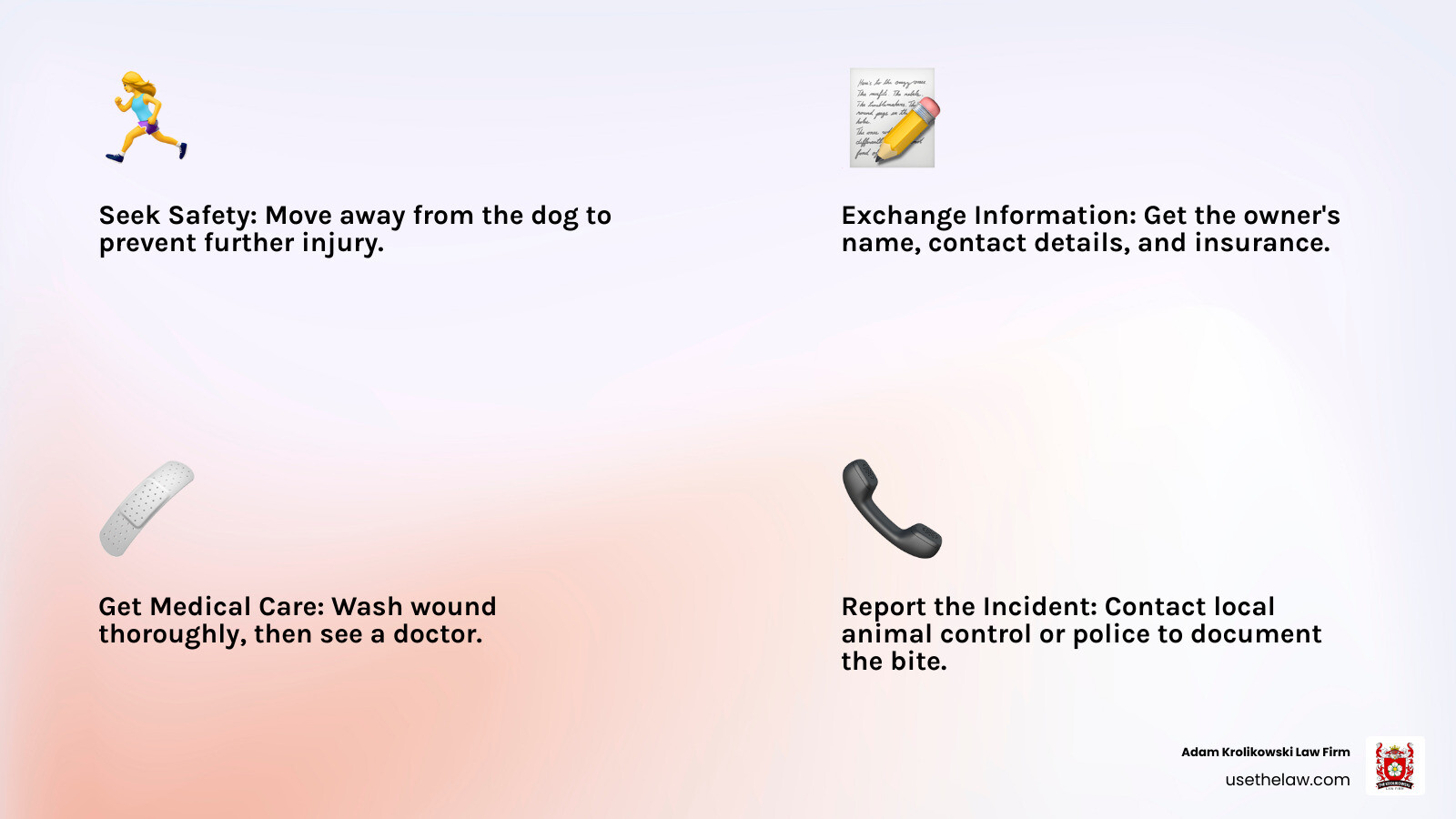
Taking the right steps immediately protects your health and legal rights. Follow these steps:
- Get to Safety: Move away from the dog to prevent further injury.
- Administer First Aid: Wash the wound thoroughly with soap and water to reduce the risk of infection.
- See a Doctor: Get medical attention right away, even if the bite seems minor. This creates an official record of your injuries.
- Exchange Information: If possible, get the owner’s name, contact details, and homeowner’s insurance information.
- Report the Bite: Contact local animal control or the police in Orange County or Los Angeles. An official report is crucial for your claim.
- Document Everything: Take photos of your injuries, the location, and the dog. Write down all the details of the incident.
Can I still sue if the dog has never bitten anyone before?
Yes. In California, you do not need to prove the dog had a history of aggression. California Civil Code Section 3342 establishes strict liability, meaning the owner is responsible for damages regardless of the dog’s past behavior.
This is different from “one-bite rule” states, where you must prove the owner knew their dog was dangerous. In California, if a dog bites you while you are in a public place or lawfully on private property, the owner is liable. This makes it much easier for victims to recover compensation.
Who pays for the damages in a dog bite case?
In most cases, the dog owner’s homeowner’s or renter’s insurance policy covers the damages. These policies typically include liability coverage for injuries caused by a pet. You will likely deal with the insurance company, which has the resources to pay substantial claims.
If the owner is uninsured or their policy excludes dog bites, the owner is personally responsible for your damages. Recovering compensation in this scenario is more complex but still possible by pursuing a claim against the owner’s personal assets. An attorney can help steer this process to maximize your recovery. The goal of California’s dog bite law is to ensure victims are compensated for their injuries.
Conclusion
If a dog has bitten you, you are facing physical, emotional, and financial challenges. Understanding dog bite law is the first step toward getting your life back on track.
California’s strict liability law works in your favor. Unlike in many other states, you do not have to prove the dog had a history of aggression. If a dog bites you while you are lawfully in a public or private place, the owner is responsible for your damages. This clear rule makes it easier for victims to receive the compensation they deserve.
However, knowing the law is not the same as winning a claim. You must act quickly to document your injuries, report the incident, and gather evidence before California’s two-year statute of limitations expires. Navigating this process alone can be overwhelming, especially when dealing with insurance companies.
At Adam Krolikowski Law Firm, we have spent over 25 years helping accident victims in Orange County and Los Angeles. We handle complex cases that require persistence and detailed investigation. We understand that behind every case is a person dealing with real pain and financial stress.
You do not have to face this alone. We are here to answer your questions, manage the legal complexities, and fight for the full compensation you are entitled to. Whether you are dealing with nerve damage, scarring, or the trauma of the attack, we will work to ensure you are made whole.
Do not let the deadline run out or settle for less than you deserve. Reach out to us to discuss your case. For more information, visit our page on Dog Bite Lawyer. We are ready to help you move forward.
Contact Us
Practice Areas
Recent Articles
- « Previous
- 1
- 2
- 3
- Next »