

You Don’t Have to Endure a Hostile Work Environment
Santa Ana workplace harassment lawyer services are available to help you fight back against workplace mistreatment. If you’re facing harassment at work, you don’t have to suffer in silence or feel powerless in a hostile work environment.
Finding Legal Help in Santa Ana:
- Local Representation: Experienced employment law firms serve Santa Ana and Orange County.
- Free Consultations: Many harassment attorneys offer initial consultations at no cost.
- Contingency Fees: Many lawyers work on a “no win, no pay” basis.
- Proven Track Record: Look for attorneys with successful case outcomes.
- Quick Action Required: California has a one-year deadline from the last incident to file a claim.
Many workers in Santa Ana face derogatory remarks, offensive comments, or jokes that create a hostile work environment based on protected characteristics like race, gender, religion, or sexual orientation.
California law protects you under the Fair Employment and Housing Act (FEHA), which covers employers with five or more employees—a broader scope than federal law. You have the right to work in an environment free from harassment and discrimination.
A successful harassment claim often requires proper documentation and acting within legal deadlines. Failing to report harassment to your employer can complicate recovery, but a skilled attorney can help you steer this process.
Defining Workplace Harassment Under California Law
California law provides clear definitions and strong protections for employees facing difficult situations involving workplace harassment.

Workplace harassment involves unwelcome conduct based on protected characteristics that is severe or pervasive enough to create an intimidating, hostile, or offensive work environment. The harasser’s intent is not the focus; what matters is how the conduct affects you and your ability to do your job. A Santa Ana workplace harassment lawyer can help determine if your experience meets the legal definition of harassment.
The conduct must create a Hostile Work Environment or involve a “quid pro quo” situation, where job benefits are tied to enduring unwelcome advances.
What Constitutes Workplace Harassment in Santa Ana?
California law defines workplace harassment as unwelcome behavior based on legally protected characteristics. Common forms include:
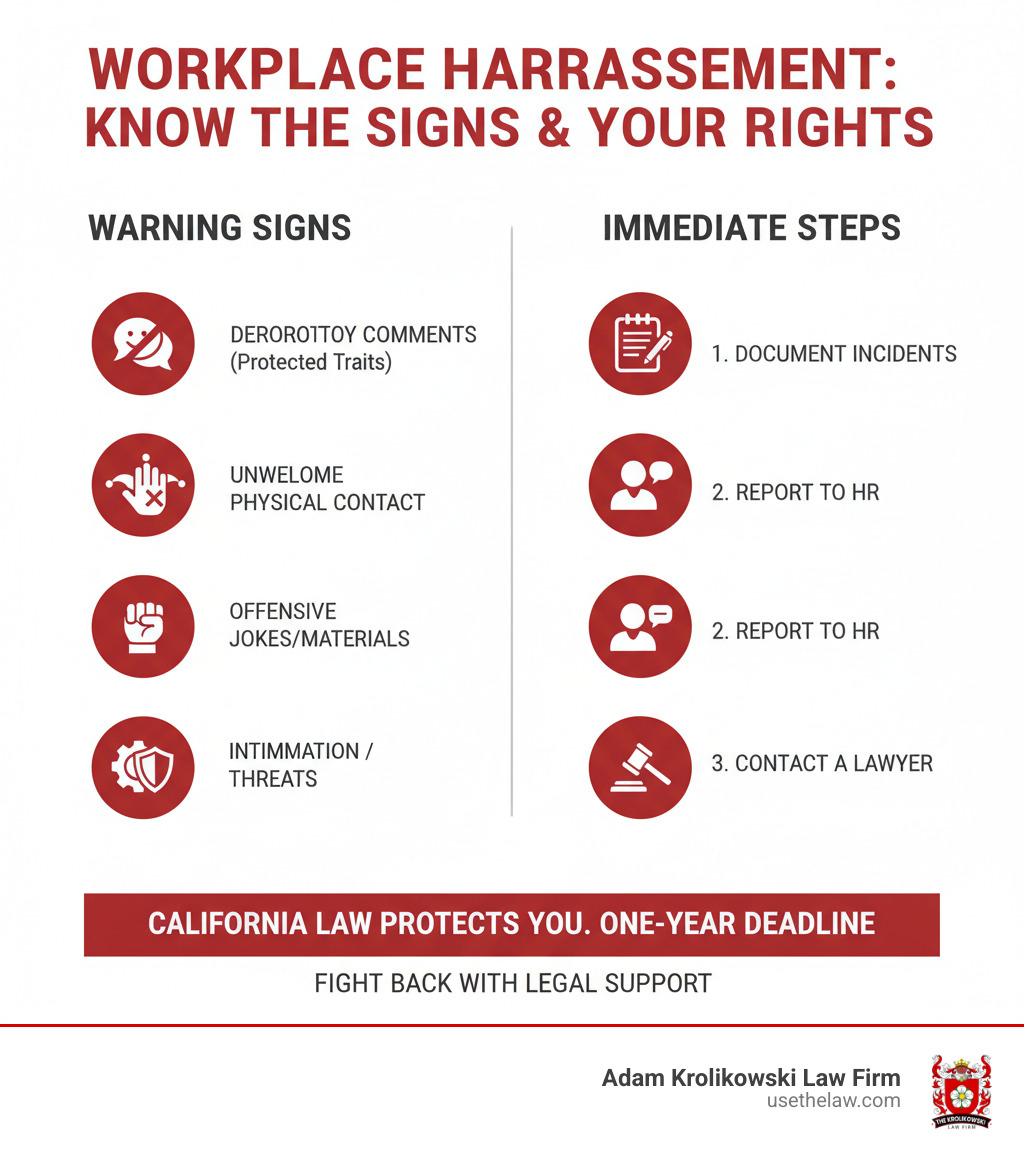
- Derogatory remarks about your race, gender, religion, or other protected traits.
- Offensive jokes that target specific groups and create an uncomfortable atmosphere.
- Unwanted physical contact, such as inappropriate touching or blocking your path.
- Intimidation, including threats or aggressive behavior that makes you feel unsafe.
When this conduct is severe or frequent, it can interfere with your work performance, causing you to dread work or avoid certain people. California protects you from harassment based on protected characteristics like race, color, religion, gender (including pregnancy and gender identity), national origin, disability, medical condition, marital status, sexual orientation, and age (40 and over). For cases involving racial harassment, you might find our information about Racial Discrimination Lawyers in Los Angeles helpful.
The Different Types of Workplace Harassment
Workplace harassment generally falls into two categories:
- Quid pro quo harassment (“this for that”) occurs when a person in authority conditions job benefits (like a promotion) on your acceptance of unwelcome sexual advances or threatens your job if you refuse.
- Hostile work environment harassment occurs when unwelcome conduct is so severe or pervasive that it makes your workplace intimidating or offensive. This conduct can be based on any protected characteristic, not just sex.
| Feature | Quid Pro Quo Harassment | Hostile Work Environment Harassment |
|---|---|---|
| Definition | Employment benefits conditioned on sexual favors. | Severe or pervasive unwelcome conduct creating an abusive work environment. |
| Perpetrator | Almost always someone in authority (supervisor). | Can be a supervisor, co-worker, client, or even a non-employee. |
| Nature of Conduct | Sexual advances, requests for sexual favors. | Can be sexual, racial, age-based, disability-based, etc. |
| Frequency | Can be a single, severe incident. | Usually involves repeated offenses, but a single very severe act can qualify. |
| Direct Impact | Tangible employment action (e.g., hiring, firing, promotion). | Alteration of working conditions, making work difficult. |
| Economic Injury | Often involves direct economic injury. | Can occur without direct economic injury. |
| California Law | Illegal under FEHA. | Illegal under FEHA. |
Harassment is typically a pattern of behavior, not just an isolated comment, unless the incident is extremely severe. For more information about gender-based workplace issues, check out our Los Angeles Gender Discrimination Lawyer page.
How California Law Defines Sexual Harassment
California’s Fair Employment and Housing Act (FEHA) defines sexual harassment as unwelcome sexual advances, requests for sexual favors, and other verbal, physical, or visual conduct of a sexual nature. This conduct is illegal when submitting to it is a condition of employment, affects job decisions, or creates a hostile work environment.
- Verbal conduct includes suggestive comments, inappropriate jokes, or slurs.
- Physical conduct includes unwanted touching, grabbing, or assault.
- Visual conduct includes displaying suggestive pictures or making offensive gestures.
The victim and harasser can be any gender, and the harasser can be a supervisor, coworker, or even a non-employee like a client. You can be a victim even if the conduct wasn’t aimed at you, as long as it affects your work environment. You do not need to have suffered economic injury for the conduct to be illegal. The key is that the behavior is unwelcome. For more detailed information, you can review Facts About Sexual Harassment from the EEOC. Our Los Angeles Workplace Sexual Harassment Lawyer page provides additional guidance.
Your Legal Protections Against Harassment in Santa Ana
As a Santa Ana employee, you have strong legal protections against workplace harassment under both federal and state laws. These laws empower you to take action when something goes wrong.

Santa Ana workplace harassment lawyers help workers steer these laws every day. Our California labor laws require employers to maintain safe, respectful workplaces.
Federal vs. California Anti-Harassment Laws
Federal laws provide a baseline of protection, while California’s laws are often stronger and cover more employees.
-
Federal Laws: Title VII of the Civil Rights Act of 1964 and the Americans With Disabilities Act (ADA) protect against harassment but typically only apply to companies with 15 or more employees.
-
California Laws: The California Fair Employment and Housing Act (FEHA) offers much stronger protections, covering employers with just five or more employees. FEHA also protects against harassment based on a wider range of characteristics, including marital status, sexual orientation, and gender identity. Additionally, California law can sometimes hold individual supervisors personally liable for harassment.
Employer Responsibilities for Prevention and Correction
California law requires employers to take proactive steps to prevent harassment. Under Government Code Section 12940(k), they must “take all reasonable steps necessary to prevent discrimination and harassment from occurring.”
This legal duty means your employer should:
- Establish clear anti-harassment policies that provide multiple ways to report problems.
- Provide mandatory harassment prevention training to supervisors and, in many cases, all employees.
- Conduct a prompt and thorough investigation when a complaint is made.
- Take immediate corrective action to stop the harassment and prevent it from recurring.
Employers are also responsible for protecting you from harassment by non-employees like customers or vendors if they are aware of the behavior and fail to act. The Employee Protection Act and related statutes create a comprehensive framework for a safe workplace.
Protection Against Retaliation for Reporting Harassment
The law provides strong protections against retaliation for reporting harassment. It is illegal for your employer to punish you for reporting harassment or participating in an investigation, whether you report internally to HR or to an agency like the Equal Employment Opportunity Commission (EEOC).
Retaliation can include firing, demotion, pay cuts, negative performance reviews, or even more subtle actions like excluding you from meetings or giving you worse assignments. This protection covers “protected activities” such as reporting harassment, serving as a witness, or filing a complaint. If you believe you are facing retaliation, our Retaliation Attorney Orange County page provides more information.
What to Do If You Are Being Harassed at Work: A Step-by-Step Guide
If you’re experiencing workplace harassment, taking specific steps can protect you and support a potential legal claim. This guide outlines how to document incidents, report them, and understand legal deadlines.

Following these steps can help you take control of the situation and build a strong foundation for legal action.
Step 1: Document Every Incident
Detailed documentation is crucial. For each incident of harassment, no matter how small, keep a private record of the following:
- Date, time, and location of the incident.
- What was said or done, using exact words if possible.
- Names of any witnesses who were present.
- Your response to the conduct.
- How the incident affected you emotionally and professionally.
Save all related communications, such as emails, texts, and voicemails. Keep these records in a safe, personal location—not on a work computer. A timeline of events can help organize your documentation.
Step 2: Report the Harassment Internally
Reporting the harassment to your employer is a critical step. It gives your company a chance to address the problem, which is often a legal prerequisite for a lawsuit.
- Review your employee handbook for the company’s reporting procedure.
- Make your complaint in writing (e.g., an email) to create a paper trail. If you report verbally, follow up with a written summary.
- Report to the correct person. If your supervisor is the harasser, go to HR or another manager designated in the policy.
- Be specific in your complaint, referencing your documentation and stating that you believe the conduct is harassment based on a protected characteristic.
Document your report, noting when you made it, who you spoke with, and their response. If your employer fails to investigate or stop the harassment, this documentation will be important evidence.
Step 3: Understand the Time Limits for Filing a Claim
Strict deadlines, known as statutes of limitations, apply to harassment claims. Missing a deadline can prevent you from seeking compensation.
- In California, you generally have one year from the last incident to file a complaint with the California Civil Rights Department (CRD).
- For federal claims, you have 300 days to file with the United States EEOC.
After filing, the agency will investigate or issue a “right-to-sue letter.” Once you receive this letter, new deadlines apply: you typically have one year to file a lawsuit for state claims and only 90 days for federal claims.
Due to the complexity of these deadlines, it is wise to consult a Santa Ana workplace harassment lawyer to ensure you protect your rights.
The Role of a Santa Ana Workplace Harassment Lawyer in Your Claim
When facing workplace harassment, a dedicated Santa Ana workplace harassment lawyer can provide crucial support and guidance through the legal process.

At Adam Krolikowski Law Firm, we understand the personal and professional toll of harassment. With over 25 years of experience, we have a history of representing employees in complex cases that other attorneys might shy away from. For more general information, visit our Employment Attorney Orange County page.
How a Santa Ana Workplace Harassment Lawyer Can Assist You
A lawyer acts as your advocate, taking the legal burden off your shoulders. Key services include:
- Explaining Your Rights: We listen to your story and assess whether your situation qualifies as unlawful harassment under California law.
- Investigating Your Claim: We dig into company policies, interview witnesses, and look for patterns of behavior to support your case.
- Gathering Evidence: We help organize your documentation and identify additional proof, such as emails, witness statements, and company records.
- Communicating with Your Employer: We handle all correspondence with your employer and their legal team, which often prompts them to take the matter more seriously.
- Filing Legal Documents: We manage all paperwork and deadlines with agencies like the CRD and EEOC to ensure your claim is filed correctly.
- Representing You in Court: If your case goes to trial, we present your story in a compelling way to seek the compensation you deserve.
An Attorney for Workplace Harassment can be your strongest ally in these challenging situations.
What Compensation Can You Recover?
You may be able to recover several types of compensation for the harm caused by workplace harassment:
- Lost Wages: This includes back pay for lost income and benefits, and front pay for future lost earning capacity.
- Emotional Distress Damages: Compensation for anxiety, depression, humiliation, and other psychological harm.
- Punitive Damages: These may be awarded to punish employers for particularly outrageous conduct and to deter future misconduct.
- Attorney’s Fees: In many successful harassment cases, the employer may be required to pay your legal fees.
The amount of compensation depends on the specifics of your case, including the severity of the harassment and its impact on your career.
How Lawyers Help Victims of Discrimination and Harassment
Legal action is about more than money; it’s about holding employers accountable, seeking justice, and preventing future harm to others. It empowers you to reclaim your dignity and professional life after feeling powerless.
When employers face real consequences, they are motivated to create safer workplaces for everyone. Your courage in taking action can protect countless other employees. Our Discrimination Lawyers LA Ultimate Guide provides more insight into how legal action can drive positive change.
Preparing for Your First Meeting with an Employment Attorney
Preparing for your initial consultation with a Santa Ana workplace harassment lawyer will help you get the most out of the meeting. While many firms, including ours, offer a Employment Attorney Los Angeles Free Consultation, being organized allows for a more thorough assessment of your case.

This meeting is your chance to tell your story and get the answers you need to move forward.
What to Bring to Your Initial Consultation with a Santa Ana Workplace Harassment Lawyer
To help the attorney evaluate your case, try to bring the following items to your consultation:
- A detailed timeline of the harassment incidents.
- Copies of any harassing emails, texts, or other communications.
- Your employee handbook and any relevant company policies.
- Recent performance reviews, both positive and negative.
- Contact information for any witnesses.
- Pay stubs, your employment contract, and other employment records.
- Any termination letter or separation documents you received.
- Records of any complaints you made to HR and the company’s response.
- A list of your questions for the attorney.
Don’t worry if you don’t have everything; bring what you can. For more about the role of legal representation, you might find our Employee Attorney page helpful.
Key Questions to Ask During Your Consultation
The consultation is also your opportunity to interview the attorney and see if they are the right fit for you. Consider asking these questions:
- Based on my story, do I have a viable harassment claim?
- What are my legal options and the likely timeline for my case?
- What is your experience handling cases similar to mine?
- How do you charge for your services? Do you work on a contingency fee basis?
- How will we communicate, and who will be my main point of contact?
- What are the potential outcomes, and what is your proposed strategy?
At our firm, we have over 25 years of experience with complex employment cases. You will meet directly with an attorney for your initial consultation, and we maintain direct communication throughout your case. This consultation is your opportunity to get answers and feel confident about your path forward.
Conclusion: Get the Legal Support You Need in Santa Ana
Dealing with workplace harassment can be an isolating experience, but you don’t have to face it alone. Taking the first step to understand your rights and seek legal counsel is an empowering move to reclaim control of your situation.
For over 25 years, the Adam Krolikowski Law Firm has helped Santa Ana employees steer these challenges. We understand California’s employment laws and are known for taking on complex cases that other attorneys may avoid. Our commitment includes a personal approach: you will meet directly with an attorney for your initial consultation, not a paralegal or intake specialist.
Time is critical in harassment claims due to California’s strict deadlines, including a one-year statute of limitations for many claims. Contacting a lawyer promptly helps protect your rights and preserve evidence.
We know that contacting a Santa Ana workplace harassment lawyer takes courage. Your initial consultation with us is confidential and designed to provide clarity and explain your options. We will listen to your story without judgment and help you understand what compensation may be available.
Don’t let another day pass feeling powerless. Reach out to us today to work toward a resolution and peace of mind.
